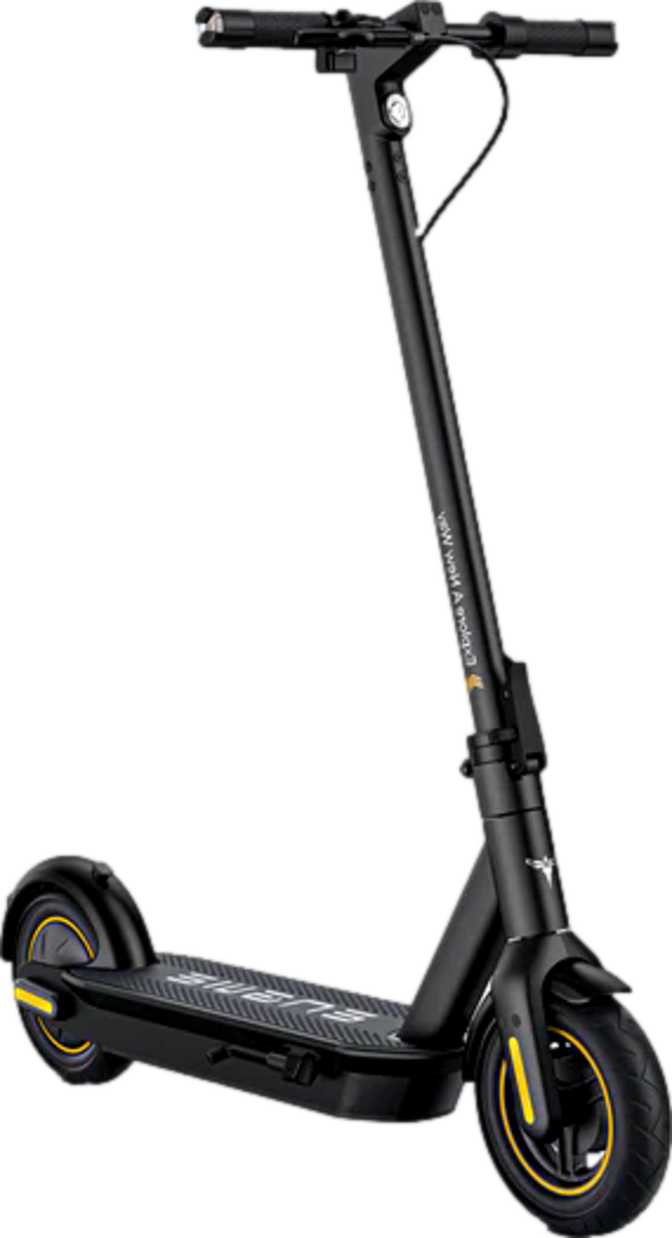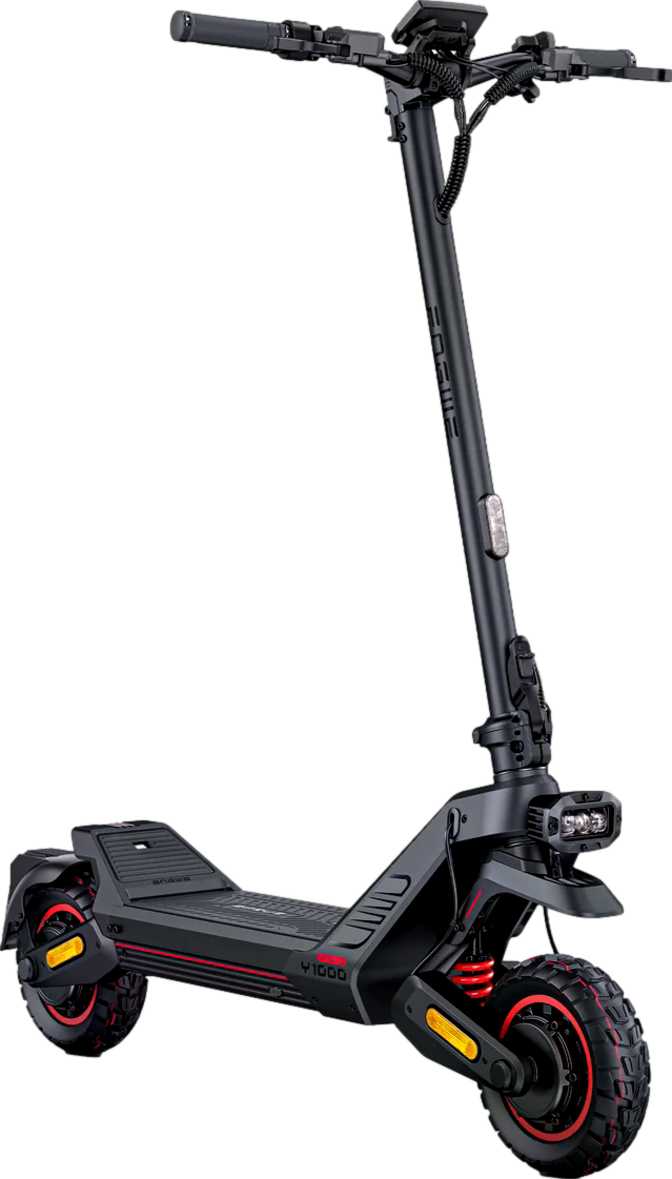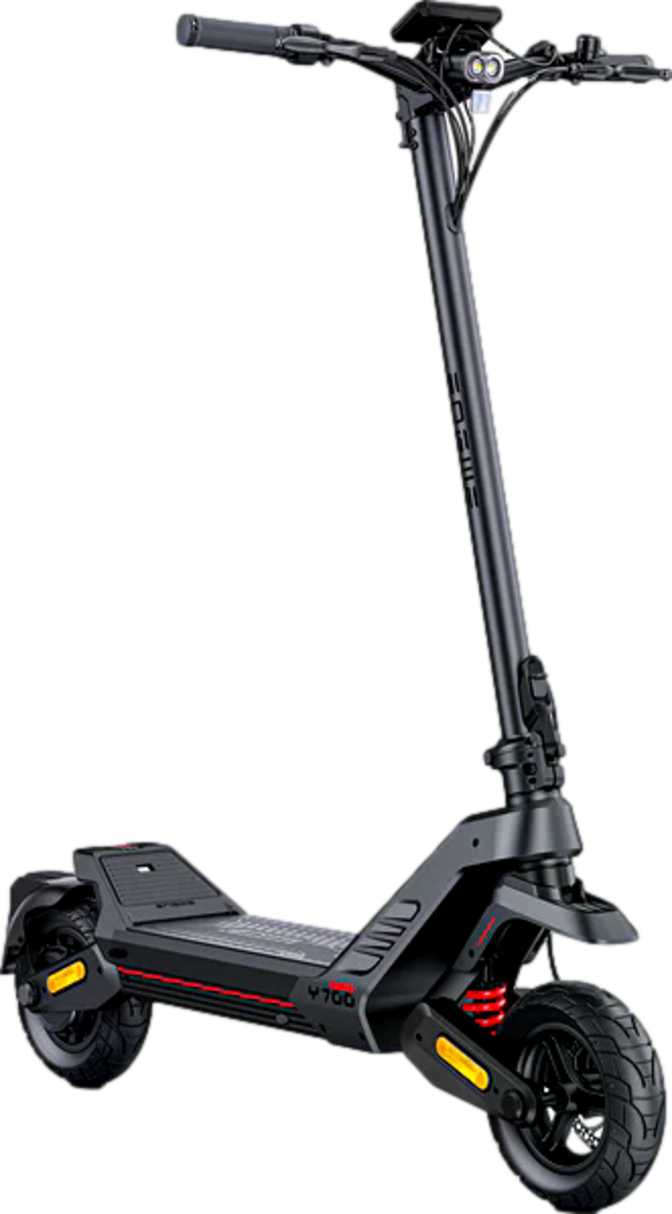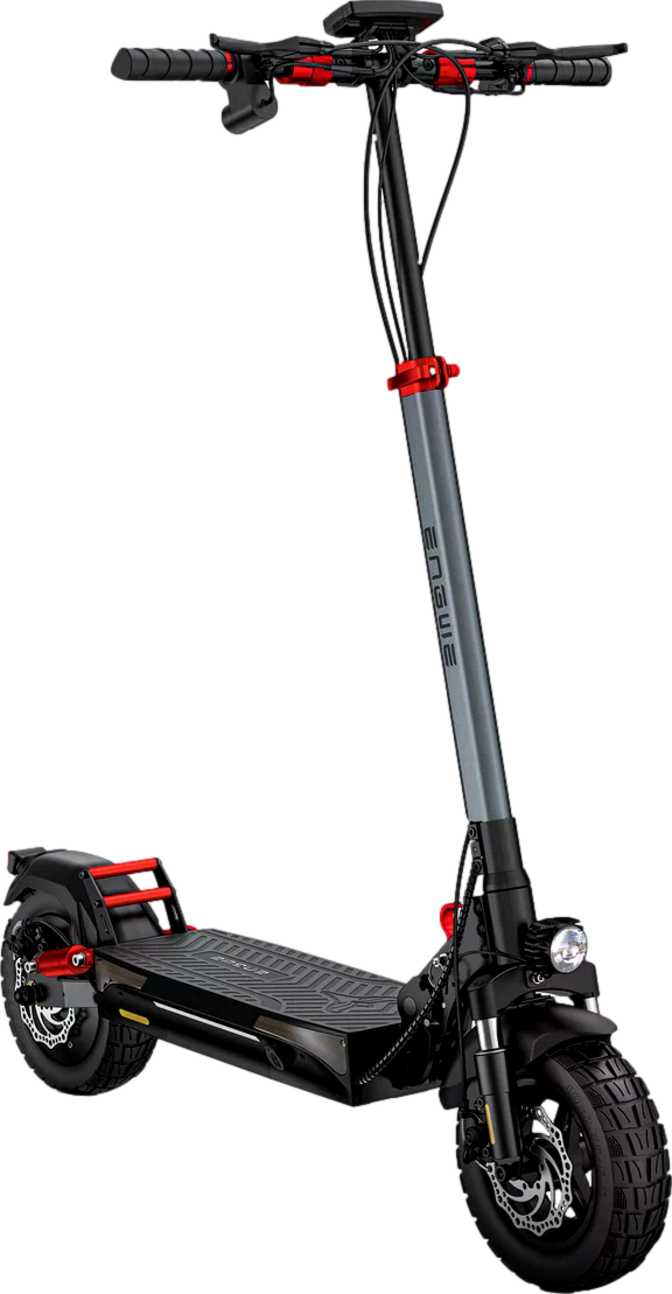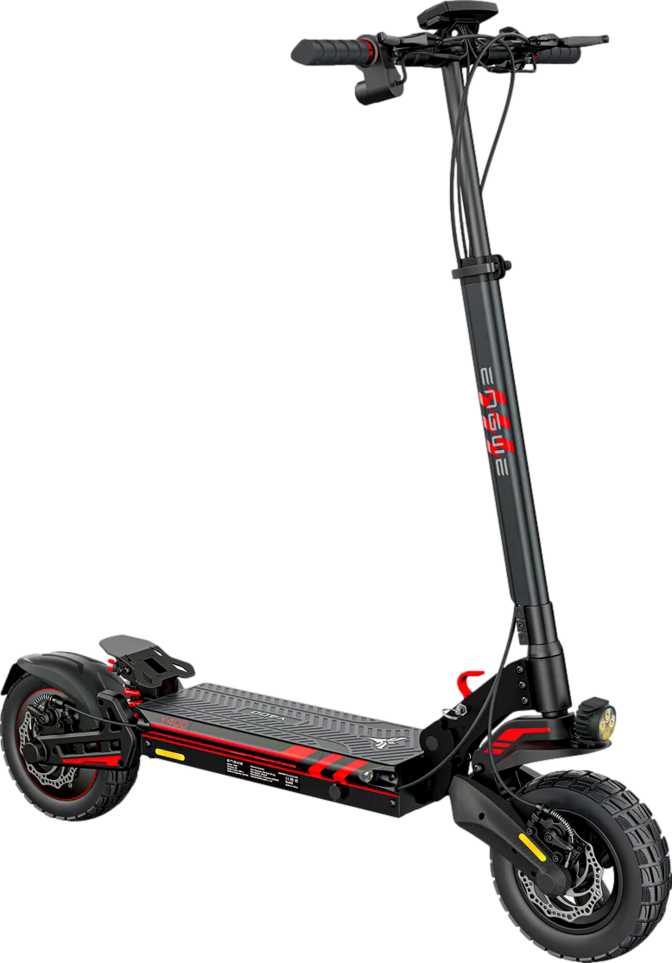
Engwe Y400 Full Review: A Powerful Urban Commuter for Real-World Rides
Electric ScootersNot every electric scooter is built to earn daily trust. Many look the part on a product page and disappoint the moment real-world terrain enters the picture — a cracked pavement, a rain-soaked stretch of road, a hill that arrives without warning. The Engwe Y400 takes a different approach. With a motor output more commonly found in cargo-class vehicles, a battery that places it firmly in the upper tier of urban commuter range, and a fold-flat form factor designed for real life rather than showroom floors, it positions itself as a serious daily driver rather than a novelty.
What makes it worth examining closely is the tension at its core: it carries the power of a performance scooter while capping speed at the limit that keeps it street-legal across most markets. Whether that is a frustration or a feature depends entirely on who you are. This review breaks down every meaningful specification so you can decide which camp you fall into — and whether the Y400 belongs in your commute.
Build Quality and Physical Design
A Machine That Announces Its Weight Class
The Y400 weighs just over 24.5 kilograms. That number matters and deserves honesty: this is not a scooter you will carry up three flights of stairs without noticing. Most entry-level electric scooters weigh somewhere between 10 and 15 kilograms. The Y400 belongs to a different category entirely — closer to what you would carry if you loaded a full backpack onto a smaller scooter and attached it permanently.
That weight exists for a reason. The frame and components necessary to support riders up to 120 kilograms, house a near-500 Wh battery, and mount a 750W motor all demand material. This is structural honesty, not excess. Riders who feel underserved by lighter, flimsier options will immediately understand why the Y400 is built the way it is.
The overall footprint — just over 1270mm tall and 1180mm wide when unfolded — reflects a scooter designed around adult proportions. The deck, handlebars, and stance geometry are calibrated for adult riders, which also explains why the manufacturer explicitly designates this as not intended for children.
Folding Mechanism and Portability
The scooter folds, and that matters enormously for multimodal commuters — people who ride part of the way, then board a bus or train, or carry the unit into an office. The folding system allows the handlebar stem to collapse flat, reducing the vertical profile significantly for storage and transit.
At over 24 kilograms, "portable" is relative. Rolling it onto public transit is achievable; hauling it up stairs is a different matter. Riders with elevator access, ground-floor parking, or the ability to leave the scooter locked outdoors will find the folding design genuinely useful. Those relying entirely on multi-floor carry may want to reconsider before purchasing.
Integrated Lighting Front and Rear
Front and rear lights are built directly into the frame — not afterthought clip-ons. For early morning or evening commuters, this is a baseline safety requirement, and the Y400 meets it without asking you to accessorize. The lighting draws from the main battery and keeps the visual profile clean without secondary charging obligations.
Weather Resistance: What IPX5 Means for Daily Riding
The Y400 carries an IPX5 water resistance rating. In practical terms, the electronics handle water projected from any direction — rain falling on the unit, puddles splashing up from below, a quick surface rinse. It is not rated for submersion, and riding through deeply flooded sections or using a pressure washer sits outside what this rating covers. For typical all-weather commuting on wet streets, IPX5 is the appropriate and reassuring level of protection.
Performance: What 750 Watts Actually Means on the Road
Motor Power and Real-World Feel
A 750-watt motor sits at the upper boundary of what most markets classify as a standard electric scooter before regulations shift the vehicle into a different legal category. Most budget-to-mid-range scooters run on 250W to 500W motors. Doubling the wattage does not simply double the speed — it changes the texture of acceleration, the confidence on inclines, and the composure under a heavier rider.
At lower speeds, this motor delivers effortless pull. At cruising pace, it maintains that speed without working at its ceiling. The practical consequence is reduced heat buildup over long rides and more consistent output when battery charge starts to dip late in a commute.
Top Speed and the Legal Ceiling
The Y400's top speed is set at 25 km/h. In many European and regulated Asian markets, 25 km/h is the precise ceiling for an electric scooter to remain classified as a micromobility vehicle — exempting it from registration, licensing, and insurance requirements in many jurisdictions.
For experienced riders accustomed to higher-speed scooters, this cap can feel like running a powerful engine in a governed vehicle. The motor has more capability; the limit is regulatory, not mechanical. For commuters who want to ride legally in shared bike lanes without navigating vehicle classification requirements, this is precisely the right setup.
Hill Climbing Capability
The Y400 is rated to handle inclines up to 15 degrees. Most urban road gradients fall between 4 and 10 degrees. Steeper residential streets and moderate hills sit around 10 to 12 degrees. A 15-degree capability means the Y400 handles the overwhelming majority of urban and suburban environments with confidence. Only the sharpest grades in genuinely hilly cities will push against the edges of this rating.
Torque: The Force That Gets You Moving
The 28 Nm of torque explains why this scooter accelerates convincingly from a standing start. Torque is rotational force — it is what pushes you back slightly when you open the throttle from zero. On a practical level, this means clean, confident launches at intersections and responsive acceleration when gaps open in traffic, with no hesitation or wheelspin.
Braking: Front and Rear Coverage
Both front and rear brakes are fitted as standard. For a scooter in this power and weight class, a dual-brake system is essential rather than optional. A single rear brake on a 24-kilogram scooter moving at 25 km/h with a heavy rider is an undersized safety margin. The Y400's dual braking configuration distributes stopping force appropriately and significantly improves control during emergency deceleration.
Rider Weight Capacity
The 120 kg maximum load is one of the more rider-inclusive figures in this product category. Many scooters cap at 100 to 110 kg, which excludes a meaningful portion of adult riders. The Y400's higher threshold reflects both the motor sizing and the structural integrity of the frame design throughout.
Ride Comfort: Suspension and Tires Working Together
Pneumatic Tires on 10-Inch Wheels
The Y400 runs pneumatic — air-filled — tires rather than solid rubber or foam-filled alternatives. Pneumatic tires absorb road vibration naturally because the air inside deforms and rebounds under impact. Solid tires transfer every bump directly into the deck and your feet, which becomes genuinely fatiguing over a long commute on imperfect surfaces.
The 10-inch wheel diameter sits in a practical middle ground. Smaller wheels common on compact scooters struggle with cracks, roots, and uneven pavement. At 10 inches, the Y400 navigates urban terrain with composure while remaining compact enough to fold and store without occupying excessive space.
The trade-off with pneumatic tires is puncture risk. Unlike solid tires, they can go flat. Riders in areas with significant debris, glass, or sharp aggregate on roads should consider carrying a basic puncture kit or tire sealant as part of their regular commute kit.
Suspension System
The Y400 includes a suspension system — a feature not universally present on electric scooters and particularly appreciated on rough urban surfaces. Suspension absorbs the sharp impact of potholes, expansion joints, and uneven surfaces that tires alone cannot fully smooth out.
The combination of pneumatic tires and active suspension places the Y400's ride quality above the majority of its competitors in this price range. Over a long daily commute on imperfect roads, this matters more than it appears on paper — the difference between arriving fatigued and arriving comfortable accumulates over weeks and months of daily riding.
Battery and Range: Real-World Distance
What a 499 Wh Battery Actually Delivers
The battery capacity — just under 500 watt-hours — is the energy reservoir from which every kilometer is drawn. A standard commuter electric scooter in the 250 to 350 Wh range typically delivers 25 to 35 kilometers of realistic range. The Y400's battery is roughly 40 to 60 percent larger than those units, which directly explains the substantially longer stated range.
The manufacturer's stated range reaches 50 kilometers per charge. Range figures should always be interpreted with a rider-specific modifier: heavier riders, hilly terrain, cold weather, and higher average speeds all reduce range. A realistic daily expectation for a 90 kg rider on moderately hilly urban streets might land between 35 and 45 kilometers — still excellent by category standards. For a five-day commute with a 10 km round trip, this translates to charging once or twice per week rather than every night.
Charging Time and the Overnight Rhythm
A full charge from empty takes approximately 8 hours. This is a longer window than some competitors, which directly reflects the larger battery. The practical solution is overnight charging — plug in at the end of the day, wake up to a full scooter. For most commuters, this rhythm becomes invisible in daily life after the first week.
The battery is not removable. This matters if you live somewhere without access to a power outlet near where you park the scooter. You cannot take the battery pack upstairs to charge it separately — the entire unit must be positioned near an outlet during charging. Riders with outdoor-only storage need a weatherproof power solution or access to a communal outlet before this scooter works for their situation.
Battery Level Visibility
A battery level indicator is integrated into the display or controls. Knowing your remaining range at a glance — rather than guessing based on feel — is a practical feature that eliminates the anxiety of unexpected range cutoffs mid-commute. It is a small detail that makes a meaningful difference on longer journeys where every kilometer of remaining capacity matters.
Smart Connectivity: The Dedicated Smartphone App
The Y400 pairs with a dedicated smartphone application. The practical functions typically enabled through scooter apps of this nature include ride statistics tracking, speed mode selection, odometer and trip data, and in some cases anti-theft lock functions that allow you to immobilize the scooter remotely — a meaningful security layer that a physical lock alone cannot match.
This connectivity appeals to data-conscious riders who want to monitor usage patterns and optimize range over time. Importantly, the app extends capability rather than gating basic function. The scooter operates fully without it, and riders who prefer to keep things simple are not penalized for ignoring the smartphone integration entirely.
Who Should — and Should Not — Buy the Engwe Y400
- Daily urban commuters covering 10 to 30 kilometers round-trip who want a single charge to last multiple days without nightly top-ups.
- Heavier adult riders who have been limited by competitors capped at 100 to 110 kg and want a machine built to support their full weight without compromise.
- Riders navigating mixed terrain — some smooth tarmac, some rough paths — who want suspension and pneumatic tires working together for genuine comfort.
- Multimodal commuters who need to fold the scooter for train or bus transit and have elevator or ground-level access to a charging outlet.
- Riders in regulated markets who want maximum legal motor output while staying within street-legal speed limits and avoiding vehicle registration obligations.
- Anyone expecting to carry it up stairs regularly. At over 24 kilograms, multi-story carry without an elevator is genuinely demanding and compounds as a daily frustration.
- Riders who need higher top speeds. The 25 km/h ceiling is a deliberate regulatory compliance decision, not a fixable hardware setting. If your commute demands faster movement, this model will frustrate.
- Those without reliable charging access at their storage point. The non-removable battery means the entire scooter must be near an outlet — there is no portable pack workaround.
- Budget-first buyers. The Y400 is a premium-specification product priced accordingly. Entry-level alternatives exist if the full specification depth is not required for your use case.
How the Engwe Y400 Compares to Its Closest Competitors
The Y400's clearest advantages are battery size, motor output, and rider weight capacity. Its clearest trade-off is unit weight — you carry that larger battery and stronger motor everywhere.
| Feature | Engwe Y400 | Typical 500W Competitor | Budget 250W Class |
|---|---|---|---|
| Motor Output | 750 W | 500 W | 250 W |
| Battery Capacity | 499 Wh | 360 – 400 Wh | 180 – 280 Wh |
| Stated Range | 50 km | 30 – 40 km | 20 – 30 km |
| Suspension | Yes | Sometimes | Rarely |
| Pneumatic Tires | Yes | Mixed | Often solid |
| Max Rider Weight | 120 kg | 100 – 115 kg | 90 – 100 kg |
| Water Resistance | IPX5 | IPX4 – IPX5 | IPX4 or none |
| Unit Weight | ~24.6 kg | 16 – 20 kg | 10 – 14 kg |
| Smartphone App | Yes | Sometimes | Rarely |
Competitor data represents typical class-level specifications for comparative context only.
Honest Assessment: Strengths and Real Weaknesses
The Y400 makes a compelling case on the fundamentals that matter most in daily commuting: it goes far on a charge, it handles inclines confidently, and it rides comfortably over imperfect surfaces. The suspension and pneumatic tire pairing is particularly well-judged — it elevates ride quality from tolerable to genuinely comfortable over extended daily use.
The IPX5 rating and integrated front and rear lighting make it a credible all-weather, all-conditions commuter rather than a fair-weather companion. The smartphone app adds meaningful utility without being required for basic operation, which is the correct balance between features and simplicity.
The 120 kg weight capacity is a standout feature for larger riders who have been routinely excluded by the specifications of competing products. The Y400 does not treat this as an edge case — the entire machine is engineered to that standard throughout its structure and drivetrain.
The weight is the most significant weakness and deserves direct acknowledgment. At 24.6 kilograms, this scooter is manageable for riders with level or elevator-accessible storage but creates genuine, compounding friction for anyone navigating stairs daily. This is not a minor caveat — it affects daily usability in ways that add up over time.
The 8-hour charge time demands advance planning. This is an overnight charger by design, not a top-up-at-lunchtime solution. Paired with a non-removable battery, it means your storage location must have reliable power access — or the charging routine becomes a real inconvenience rather than a background habit.
The 25 km/h speed ceiling may frustrate riders who have experienced faster scooters. Understanding before purchase that this limit is a deliberate regulatory compliance choice — not a fixable setting — is essential. Buying this expecting to work around the limit is the wrong approach to a machine deliberately designed around it.
Frequently Asked Questions
Final Verdict: Should You Buy the Engwe Y400?
The Engwe Y400 is a high-specification urban commuter scooter built for riders who have outgrown entry-level options and want something capable of lasting the week without daily charging, handling real terrain without drama, and accommodating a full adult frame without compromise.
It does what it promises — powerfully and consistently — within a clear set of boundaries. Those boundaries are the speed cap, which is non-negotiable by design; the unit weight, which is unavoidable given the battery and motor size; and the fixed battery, which is manageable if your storage setup has power access.
If your commute is 10 to 25 kilometers each way, your storage has power access, and you can live with rolling rather than carrying, the Y400 justifies its position in the premium tier of the electric scooter market. For riders who simply need something light and cheap to cover short distances occasionally, it is overcalibrated for your needs. For riders who want a scooter that treats commuting like a serious job — dependably, every day, in real conditions — it is built precisely for that purpose.
Buy it if
Your commute is 10 – 25 km each way, you have reliable charging access at your storage point, and you want a scooter that handles all-weather urban riding at the top of its legal class.
Skip it if
You need to carry it up stairs regularly, require speeds above 25 km/h, have no reliable charging point at your storage location, or are working with a tight budget.