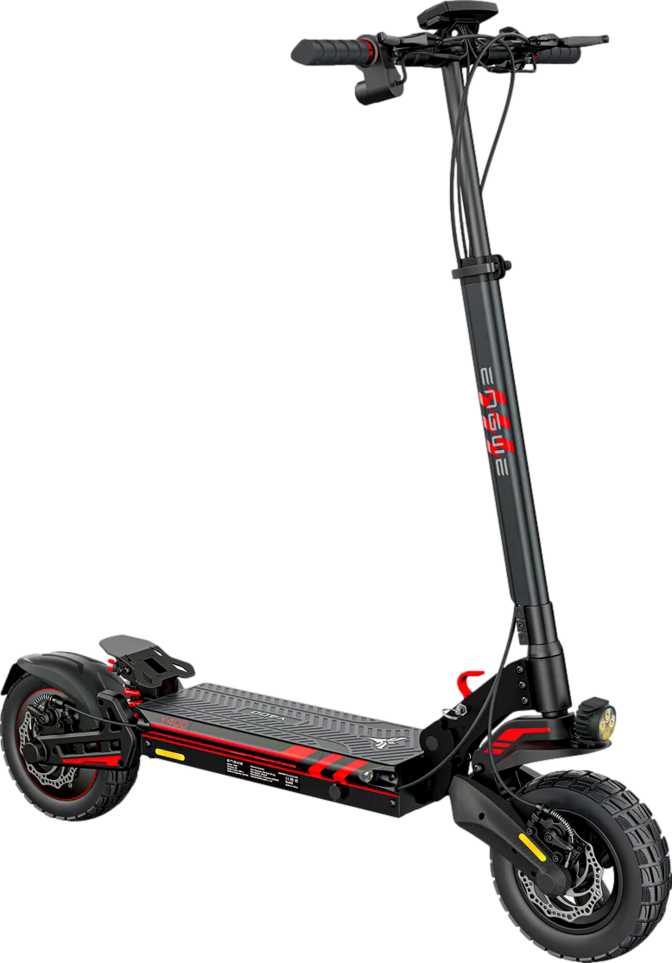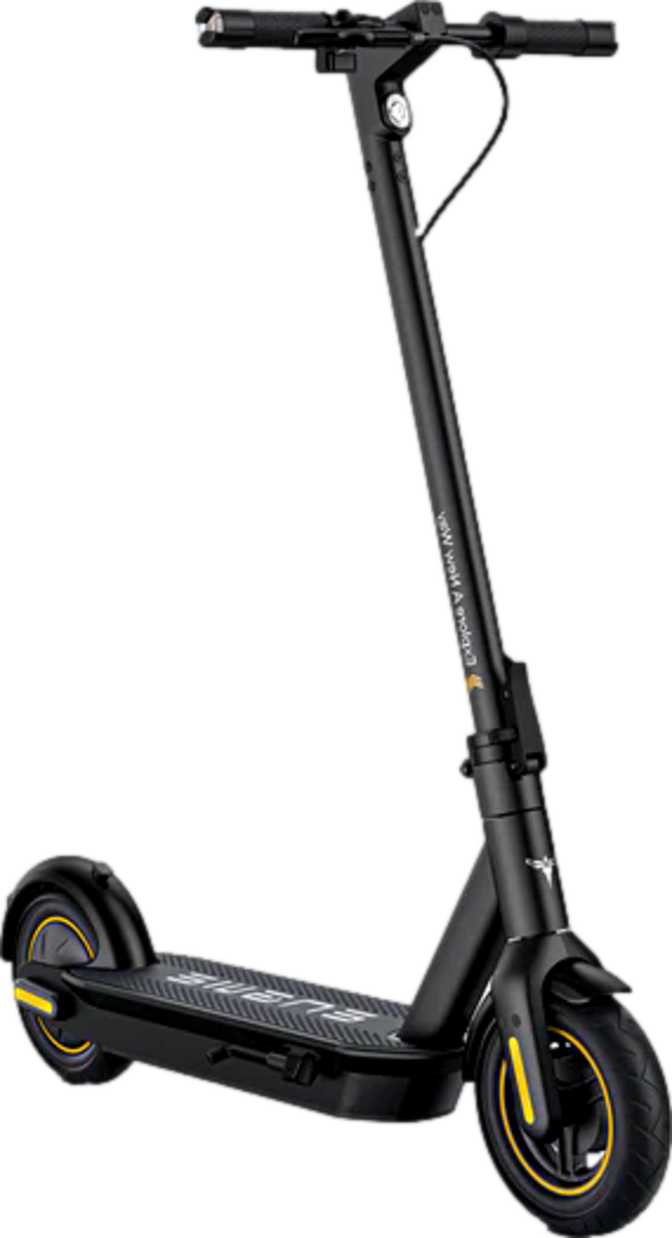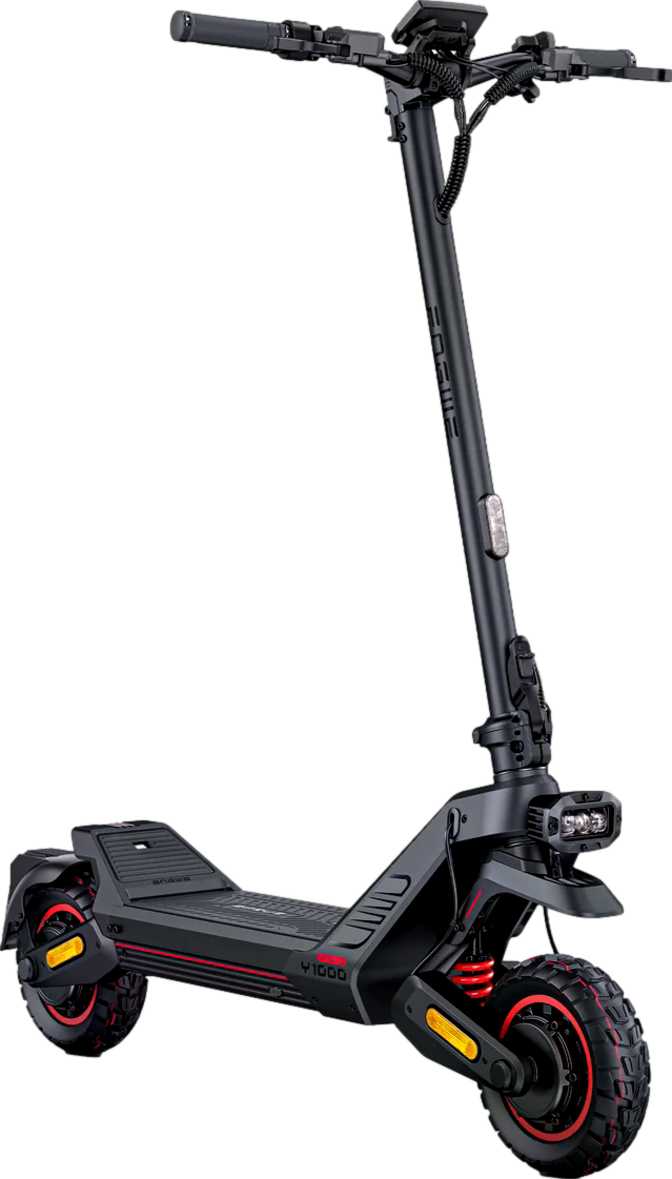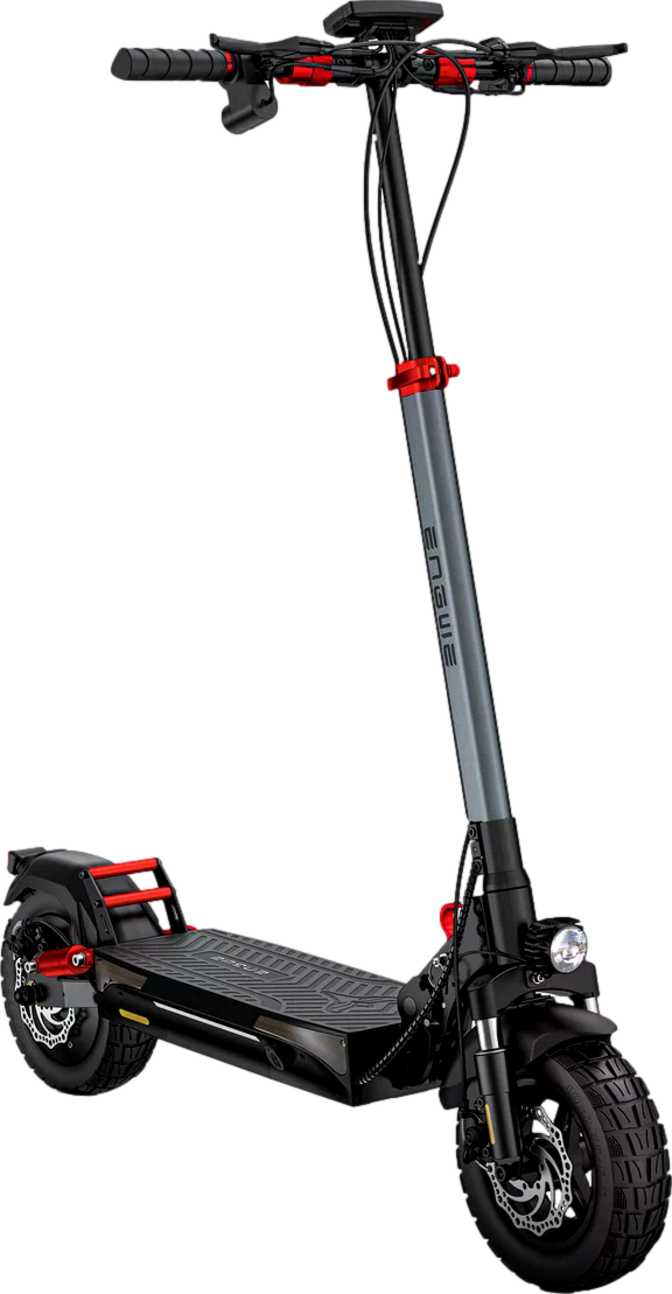
Engwe Y600 Review: A Serious Long-Range Electric Scooter for Daily Commuters
Electric ScootersMost electric scooters compromise somewhere you will eventually notice — the battery dies before the commute ends, the motor strains on any real incline, or the build quality fades after a season. The Engwe Y600 challenges that pattern by fitting an unusually large battery, a genuinely powerful motor, and proper suspension into a foldable frame. The trade-off is weight, and whether that trade-off works for you will define how you feel about this scooter six months from now.
Editor's Quick Take
Best for long-distance commuters who can live with the weight.
Full Specifications at a Glance
Every key figure translated into what it means for real-world use.
Design
- Weight
- 27.5 kg
- Dimensions (H x W)
- 1230 x 1180 mm
- Wheel Diameter
- 10 inches
- Tires
- Pneumatic
- Suspension
- Yes
- Foldable
- Yes
- Front Light
- Yes
- Rear Light
- Yes
- Weather Rating
- IPX5
Performance
- Motor Power
- 830 W
- Top Speed
- 45 km/h
- Max Torque
- 28 Nm
- Climbing Angle
- 15 degrees
- Max Rider Weight
- 120 kg
- Front Brake
- Yes
- Rear Brake
- Yes
- Dual Motors
- No
Battery
- Capacity
- 873.6 Wh
- Max Range
- 70 km
- Charge Time
- 10 hours
- Removable Battery
- Yes
- Battery Indicator
- Yes
- Regenerative Braking
- No
Build Quality and Physical Design
How the Y600 is built, how it rides, and what the physical trade-offs look like in practice.
Size, Weight, and the Folding Question
At just over 27 kilograms, the Y600 sits firmly at the heavier end of the adult scooter category. For context, most city-focused scooters weigh between 12 and 18 kilograms, so this is meaningfully heavier than what most people picture when they think of a portable scooter.
That weight is not excess — it is the physical cost of the hardware packed inside. The large battery, the reinforced frame rated for a 120-kilogram rider, and the suspension components all contribute. The scooter does fold, which matters for storage and transit, but carrying it up a flight of stairs alone requires real effort.
Where the weight pays off is in ride solidity. Heavier scooters feel planted rather than skittish at speed, and the Y600's mass contributes to a stable, confidence-inspiring ride character that lighter machines struggle to match.
Tires, Suspension, and Road Comfort
The Y600 runs on 10-inch pneumatic (air-filled) tires. Pneumatic tires absorb road vibration the way solid rubber tires simply cannot — they compress and rebound over cracks, expansion joints, and rough tarmac rather than transmitting every imperfection directly through the deck and handlebars.
Combined with the built-in suspension system, this scooter is properly equipped for real-world urban surfaces. Suspension on many e-scooters is a cosmetic feature that barely functions — the Y600's suspension complements tires large enough to actually benefit from it, so both elements work together rather than one undermining the other.
Note on wheel size: 10-inch wheels handle typical urban surfaces well. Scooters with 12-inch wheels and above manage severely uneven terrain with slightly more composure, worth considering if your roads are consistently rough.
Lighting and Weather Protection
Integrated Front and Rear Lights
Both lights are factory-fitted — you are road-legal for night riding without buying clip-on accessories. The front light handles visibility at speed; the rear light signals your presence to drivers behind you. Neither feels like an afterthought in placement or output.
IPX5 Weather Resistance
IPX5 certification means protection against water projected from any direction — riding through light rain or across wet roads is within its design tolerance. This is not submersion protection; avoid deep puddles or flooded sections of road. Treat it as a confident wet-weather commuter, not an off-road vehicle.
Performance Analysis
What the motor specifications mean in real riding conditions — not on a test bench.
830W
Motor Power
Firmly in the performance tier. Entry-level city scooters run 250–350W; mid-range models top 500W. At 830W, acceleration from standstill is strong and maintaining higher speeds on flat roads is effortless.
28 Nm
Maximum Torque
Torque is what you feel when pulling away and climbing hills — it is rotational force. 28 Nm is a meaningful figure for a single-motor scooter at this weight class, allowing the Y600 to handle inclines that would stall or significantly slow a lower-powered machine.
45 km/h
Top Speed
Fast enough to share road lanes with urban traffic. Many regions legally cap e-scooters below this — always verify local regulations. For permitted areas, this headroom gives the Y600 capability that lower-powered alternatives cannot offer.
Hill Climbing Capability
A 15-degree climbing angle means the Y600 handles moderate urban gradients without significant speed loss. Most city streets and residential hills fall within this range.
Braking System
Both front and rear brakes are fitted. Having independent braking on both wheels is critical at the speeds the Y600 is capable of — relying on a single brake from 45 km/h creates stopping distances and control issues that dual brakes resolve.
No regenerative braking: The Y600 does not recapture energy during deceleration. All stopping is mechanical. This is a minor efficiency omission rather than a safety concern — the battery is large enough that the efficiency loss is unlikely to be noticeable in daily use.
Battery Life and Real-World Range
The Y600's defining feature — and what it means for how often you actually need to charge.
An Unusually Large Battery Pack
The battery capacity inside the Y600 — 873.6 watt-hours — is exceptional for the scooter category. Most quality city scooters ship with batteries in the 300–500 Wh range. Some premium long-range models reach 600–700 Wh. The Y600's figure is larger still, and it is the single biggest differentiator between this scooter and most of its competition.
Claimed vs. Real-World Range
The manufacturer-stated maximum of 70 kilometres is achievable under optimal conditions — a lighter rider, flat terrain, moderate speed, calm weather. Real-world range for an average adult at mixed speeds across a city with inclines will typically land lower.
70 km
Optimal conditions
50–55 km
Mixed urban riding
40–45 km
Hilly terrain / cold weather
Removable Battery
The battery can be removed from the scooter entirely, which solves a practical problem many scooter owners face. If you live in a flat above the ground floor or work in an office where you cannot plug a scooter in, you can carry just the battery and charge it at your desk — no awkward logistics.
Longer-term, a removable battery means it can be replaced when it eventually degrades over years of charging cycles, without requiring the entire scooter to be serviced.
Charge Time Consideration
Ten hours is a long charge window — a direct consequence of the battery's size rather than poor engineering. For overnight charging, this is not a problem in practice: plug in before bed, fully charged by morning.
Important: There is no fast-charging capability. If you need a top-up during the day with only a few hours available, you will not achieve a full charge. Plan charging around overnight cycles.
Smart Features and App Connectivity
How the Y600 connects to your phone and what that means day-to-day.
The Y600 pairs with a dedicated smartphone application. Scooter apps at this performance tier typically allow speed mode adjustment, ride data tracking, power output customisation, and remote locking functionality — giving you meaningful control over how the scooter behaves rather than just passive monitoring.
The on-board battery level indicator means you always know your remaining range even without checking your phone, which matters when you are mid-commute and cannot stop to look at a screen.
-
Speed Mode Adjustment
Limit top speed for new riders or in restricted areas
-
Ride Data Tracking
Monitor distance, speed history, and battery consumption
-
Remote Locking
Anti-theft deterrent when the scooter is parked
-
Battery Health Monitoring
Track long-term battery condition over charging cycles
Who Should Buy the Engwe Y600 — and Who Should Not
The Y600 is a well-matched scooter for specific riders and a poor fit for others. Here is where it stands.
Ideal For
Long-distance daily commuters
If your round-trip commute regularly exceeds what a standard scooter battery can handle, the Y600's range removes that anxiety entirely. Riders who have previously found themselves running out of charge mid-journey will find this scooter genuinely solves that problem.
Riders in hilly areas
The motor torque and power reserve maintain composure on gradients that expose the limitations of lesser motors. If your neighbourhood has real hills, the Y600 handles them without becoming a liability.
Riders needing indoor charging
The removable battery expands where this scooter can practically be used. Flat-dwellers and office workers who cannot wheel a scooter to a power outlet get a genuinely useful solution.
Heavier riders up to 120 kg
Many lower-capacity scooters are rated to 100 kg and feel underpowered near their limits. The Y600 is designed to carry 120 kg without performance compromise.
Not Suited For
Riders who carry their scooter frequently
27.5 kilograms is not easy to carry repeatedly. Multiple subway staircases, long platform transfers, or daily loading into a car boot alone will become genuinely tiring over time. If portability in the carry sense is critical, look at 15–18 kg alternatives.
Casual, short-distance riders
If you travel 5–10 kilometres a day with easy charging access, you are paying for performance you will never use and carrying mass that serves no purpose. A lighter, shorter-range scooter makes more sense for this use pattern.
Riders wanting a seated option
The Y600 has no seat and is not designed to accept one. If you prefer to sit while riding, this scooter is not the right platform regardless of its other merits.
How the Engwe Y600 Compares to the Alternatives
Where the Y600 sits relative to the broader market — and what it gives up or gains versus the competition.
| Feature | Engwe Y600 | Typical Mid-Range | Premium Long-Range |
|---|---|---|---|
| Battery Capacity | ~875 Wh | 300–500 Wh | 600–900 Wh |
| Stated Range | 70 km | 30–45 km | 50–75 km |
| Motor Power | 830W (single) | 350–500W | 500–1000W |
| Weight | ~27.5 kg | 12–18 kg | 20–30 kg |
| Foldable | Usually | ||
| Removable Battery | Rarely | Sometimes | |
| Suspension | Sometimes | Usually | |
| Pneumatic Tires | Mixed | Usually | |
| Dual Motors | Often | ||
| Weather Rating | IPX5 | IPX4–IPX5 | IPX5–IPX6 |
The Y600 positions itself as a high-endurance single-motor scooter that competes with dual-motor performance scooters on range while keeping the mechanical simplicity and lower energy consumption of a single drivetrain. Dual-motor scooters offer stronger acceleration and better traction on loose surfaces but typically consume battery faster and carry more mechanical complexity. The removable battery combined with the large pack is where the Y600 genuinely distinguishes itself from most alternatives.
Honest Strengths and Weaknesses
No product is perfect. Here is where the Y600 genuinely excels and where it falls short.
Where It Excels
The Y600's greatest strength is also its most honest selling point: it is a long-range scooter that takes range seriously rather than overstating a modest battery. The 873.6 Wh capacity is not a marketing figure — it is a genuinely large pack, and the 70 km claim is closer to achievable in real use than the inflated figures some manufacturers attach to much smaller batteries.
The suspension and pneumatic tire combination is properly implemented rather than cosmetic. Riders stepping up from cheaper scooters with solid tires and no suspension will feel a real difference in comfort over broken urban surfaces — not a marginal one.
The removable battery is a practical differentiator that deserves more credit than it typically receives in specification comparisons. For a large portion of potential buyers, it is the feature that makes this scooter actually workable within their living situation.
Where It Falls Short
The weight is real and non-negotiable. At 27.5 kilograms, it is a consequence of the hardware inside — but that does not make it easier to carry. Riders who genuinely need to transport the scooter frequently will find this a daily friction point that accumulates over time.
The 10-hour charge window will frustrate riders who need a mid-day top-up. This is an engineering consequence of the large battery rather than a design flaw, but it remains an inconvenience for anyone whose charging patterns cannot accommodate an overnight cycle.
The absence of regenerative braking is a missed efficiency opportunity given the battery's size. Even modest energy recapture during urban stop-start riding would extend real-world range meaningfully. It is a minor omission technically but a noticeable one given that the Y600's identity is built around range.
Questions Buyers Ask Before Purchasing
Answers to the questions that come up repeatedly before a purchase decision on the Y600.
Should You Buy the Engwe Y600?
The Engwe Y600 is a scooter built around a specific conviction: that range anxiety is the most significant limitation of electric scooters for serious daily riders, and that the solution is a genuinely large battery rather than an optimistically labelled small one. For that target rider — someone commuting meaningful distances, navigating hills, and needing to charge somewhere other than next to the scooter — the Y600 delivers a coherent, well-specified package that follows through on its promises.
The weight is the price of entry. Accept it as a deliberate engineering choice that enables the range, and the Y600 makes strong sense. Resist it — or find that your daily routine requires frequent carrying — and the weight will undermine the ownership experience regardless of how impressive the battery figures are.
Buy it if:
- Your commute regularly exceeds 25–30 km each way
- You ride in a hilly area where lesser motors struggle
- You need to charge the battery away from the scooter
- You want a scooter built for 120 kg without compromise
Skip it if:
- You carry your scooter up stairs or on public transport regularly
- Your daily trips are short and charging access is easy
- You want or need a seated riding position
For long-distance commuters, heavier riders, and anyone who has consistently found scooter batteries running out before the journey ends, the Engwe Y600 is a well-considered machine that solves the problems it sets out to solve. The 10-hour charge time and missing regenerative braking are real concessions — but they do not undermine a product that gets the most important things right.