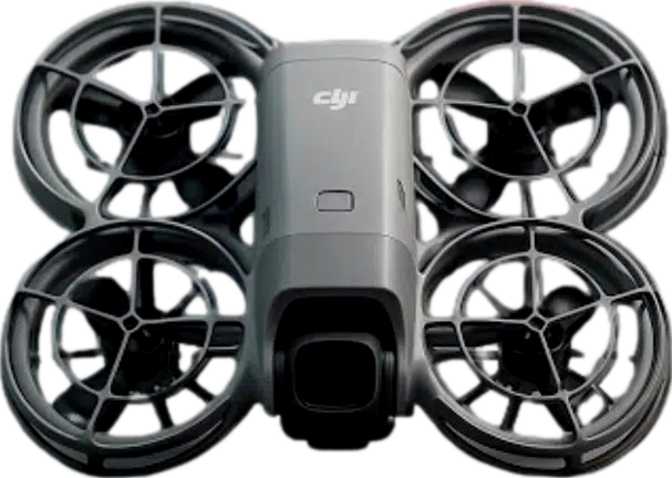
DJI Neo 2 Full Review: Pro-Grade Camera in a 160g Drone Body
DronesOverview
Most people who buy a compact drone want two things: footage they're genuinely proud of, and a device small enough that they'll actually bring it. Those goals usually fight each other. Better cameras need bigger sensors, bigger sensors need bigger bodies, bigger bodies need bigger batteries — and suddenly you're checking a separate bag at the airport. The DJI Neo 2 is a serious attempt to break that pattern. Whether it succeeds depends on which compromises you're willing to accept, and which you're not.
Design & Build
Why 160 Grams Is the Key Number
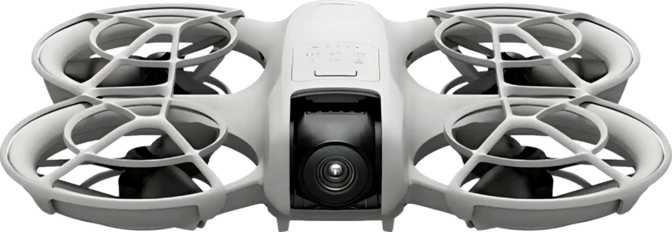
The Neo 2 is a compact machine — roughly the size of a hardback novel when folded, and light enough to sit in a jacket pocket without pulling it out of shape. But the precise figure that matters isn't the size: it's the weight.
At 160 grams, the Neo 2 falls below the 250-gram regulatory threshold that triggers mandatory registration requirements in the European Union, the United Kingdom, the United States under FAA recreational rules, and many other aviation authorities globally. Drones above that threshold face registration fees, airspace restrictions, and insurance considerations that simply don't apply to lighter aircraft. The Neo 2 was clearly engineered to that target — the practical freedom it buys is real and immediate.
The temperature operating range is more capable than you might expect from a device this light. The Neo 2 functions reliably from -10°C up to 40°C, which covers cold-weather winter shoots that would ground many competing mini drones. Moisture is the problem; temperature is largely not.
No Weather Sealing
This drone has zero moisture protection of any kind. Flying in rain, over choppy water, or near coastal sea spray introduces real risk of component damage. This is a meaningful operating boundary, not a minor asterisk.
| Weight | 160 g |
| Dimensions | 171 × 167 × 54 mm |
| Operating Temp | -10°C to +40°C |
| Regulatory Class | Sub-250g |
| Weather Sealed | No |
Camera System
The Standout Argument for Buying This Drone
The Neo 2's imaging system is where it genuinely separates itself from competing drones at this physical size. The combination of 4K slow-motion capture, RAW stills, a wide-angle optic, and a dedicated FPV camera makes a compelling case — and the specifications support it in practice.
4K / 100fps
3× slow-motion at full resolution
120° Wide Angle
Broad landscapes in a single frame
RAW Still Capture
Full tonal data for post-processing
Built-in HDR
Balanced exposures in high contrast
ISO 12800 Ceiling
Useful in overcast and blue-hour light
FPV Camera
Live pilot perspective for precise flight
In-Camera Panoramas
Automated stitch, immediately ready
Burst Mode
Rapid sequence for timing-critical shots
4K Slow Motion That Actually Means Something
The main camera captures 4K footage at up to 100 frames per second. Most drones in this size and price class top out at 4K/30fps. Shooting at 100fps means footage can be played back at standard 30fps speed and achieve more than 3× slow motion — smooth, natural deceleration of real movement without the blurry, artificial look of software-based slow motion.
A surfer carving a wave, a cyclist cornering hard, leaves in wind, water falling — any fast-moving subject becomes cinematic and readable. The footage is encoded at 80 megabits per second, preserving enough detail to grade colour, sharpen selectively, and export for broadcast or client delivery without visible quality loss.
Wide-Angle Optics for Aerial Perspective
The field of view measures nearly 120 degrees — noticeably wider than a standard camera lens, and substantially wider than what human peripheral vision registers as "normal." This is exactly what aerial photography needs. It captures broad landscapes, architecture, and environmental context in a single frame without requiring the drone to be flown back to a greater distance. For tight urban environments where retreating further isn't an option, that wide optic is particularly valuable.
RAW Image Capture
The Neo 2 shoots RAW stills. For photographers who process images in editing software — Lightroom, Capture One, Darktable, or similar — this is the difference between working with fully editable sensor data and working with a compressed, processed JPEG. RAW files retain complete tonal information, allowing recovery of blown-out highlights in bright sky, shadow detail in dark foreground, and full colour accuracy that in-camera processing approximates but never matches. Users who simply want images to look good immediately can shoot automatically without touching a RAW file; the capability exists for those who want it.
Flight Performance
What It Does in the Air
Flight Time
Maximum flight time under ideal conditions — calm air, mild temperature, steady hovering — reaches 18 minutes per charge. In real-world shooting with active flying and headwinds, 14–16 minutes of productive flight per battery is a realistic working estimate.
Heavier alternatives above 250g routinely achieve 25–35 minutes per charge — an inherent trade-off for the Neo 2's weight advantage.
Range & Speed
Transmission range extends to 10 kilometres under optimal conditions — far beyond what virtually any practical shoot requires. The signal limit will rarely, if ever, be your constraint.
Top speed reaches approximately 58 km/h, giving the drone enough authority to hold position against a meaningful headwind and enabling genuine chase shots of moving subjects.
Safety Systems
Obstacle Detection
Identifies objects in the flight path — meaningful protection for new pilots and a reliable backstop in complex environments.
Return to Home
Activates automatically on low battery or lost signal. Uses GPS coordinates from takeoff to navigate back and land autonomously.
Intelligent Flight Modes
Automates cinematic orbits, follow sequences, and preset patterns — professional-looking results without extended manual practice.
Storage & Connectivity
The One Decision You'll Have an Opinion About
Internal Storage
The Neo 2 stores all footage internally across approximately 49 gigabytes of onboard space. Recording at the highest video quality consumes roughly 36 gigabytes per hour of continuous footage. In practice — multiple flights, switching between stills and video, moments of standby — a full day of active shooting will push that storage ceiling if footage isn't offloaded between sessions.
No Memory Card Slot
The Neo 2 has no microSD slot and no way to expand storage. When internal storage fills up, shooting stops until you connect to a computer and transfer files. For multi-day trips without laptop access, this requires deliberate workflow planning before you leave.
Remote Control with Built-in Display
The included controller has a built-in display showing live camera feed and flight telemetry. This is a meaningful practical advantage: you don't need to mount and connect a smartphone to see what the camera sees. Your hands stay on the controls, the flight data is always visible, and there's no dependency on a phone connection that could drop or a device that needs its own charge managed. Smartphone control is also supported for users who prefer a larger viewing screen.
Navigation Hardware
GPS, a digital compass, and a gyroscope work together to enable precise position-locked hovering, drift compensation in wind, and the satellite-based navigation that Return to Home depends on. These are the systems that separate a drone that stays where you put it from one that slowly wanders as wind conditions shift.
| Internal Storage | ~49 GB (fixed) |
| Memory Card Slot | None |
| Controller Display | Built-in |
| Smartphone Control | Supported |
| GPS | Yes |
| Compass | Yes |
| Gyroscope | Yes |
Battery & Charging
Battery Life and Endurance
Removable Battery
The battery is physically removable, which matters more than it might sound. A spare battery is a small, lightweight item — easy to carry in a pocket, quick to swap in the field — and it doubles usable shooting time for the day. Most working users treat two batteries as the minimum sensible kit for a full day of active shooting.
One-Hour Recharge
From completely depleted to fully charged takes approximately one hour — fast by category standards, and fast enough that charging during a meal break or while editing footage from earlier in the day keeps a two-battery workflow running without long gaps. This recharge speed is a genuine operational advantage for location-based creators.
Target Audience
Who Is the DJI Neo 2 Actually For?
Knowing exactly who benefits from this drone — and who doesn't — is more useful than a generic recommendation.
Buy the DJI Neo 2 if...
- Imaging quality and portability are your two primary priorities, and you're willing to manage around fixed internal storage
- Travel is central to how you use a drone — this fits a carry-on, hiking pack, or daytrip without a dedicated carry case
- You create content for social media, travel documentation, event coverage, or personal projects and want footage that holds up professionally
- You're a new pilot who wants capable automation to reduce the learning curve and protect the investment from the most common mistakes
- You shoot primarily video and stills rather than requiring long, uninterrupted endurance sessions in the field
Look elsewhere if...
- You regularly fly in rain, near coastlines in heavy spray, or in dusty outdoor environments — zero weather sealing means real exposure risk
- Your shoots last multiple continuous hours without access to a laptop for offloading — fixed internal storage will eventually stop you cold
- Memory card workflows are non-negotiable — fast card swapping, dual-card redundancy, or direct-to-editor handoff aren't possible here
- Maximum flight time per battery is your primary priority — heavier alternatives with larger batteries extend airtime considerably
Competitive Positioning
How the DJI Neo 2 Compares to Alternatives
The pattern is consistent: the Neo 2 leads on imaging capability and trails on flight endurance and storage flexibility. Drones that match or exceed flight time are almost always heavier.
| Specification | DJI Neo 2 | Entry-Level Compact | Mid-Range Compact |
|---|---|---|---|
| Weight & Compliance | 160g — Sub-250g | 150–200g (varies) | 200–320g (often over limit) |
| Max Video Quality | 4K / 100fps | 4K / 30fps | 4K / 60fps |
| RAW Still Capture | Rarely available | Occasionally available | |
| Obstacle Detection | Rarely included | Commonly included | |
| Built-in Controller Display | No — phone required | Varies by model | |
| Onboard Storage | ~49 GB (fixed) | 8–16 GB + card slot | 8–32 GB + card slot |
| Removable Battery | Varies | Usually yes | |
| Flight Time Per Charge | ~18 minutes | 20–25 minutes | 25–35 minutes |
| Weather Resistance | None | None common | Occasionally partial |
Honest Assessment
Strengths, Weaknesses, and What They Mean for You
Where the Neo 2 Excels
The imaging system is the Neo 2's genuine differentiator. The 4K slow-motion capability, high-bitrate encoding, RAW still capture, and wide-angle field of view are not incremental improvements over competing mini drones — they represent a step up in what's possible from footage captured at this physical size.
The FPV camera adds practical value during flight. The built-in controller display removes a dependency that should never have required a workaround in the first place.
The weight achieves more than physical convenience. Clearing the 250g registration threshold in most jurisdictions reduces the friction of spontaneous use — you can take this drone to a national park, a beach trip, or an overseas flight without first confirming you've completed the right paperwork or paid the right fee.
The obstacle detection, GPS-based Return to Home, and intelligent flight automation make it considerably more accessible than manual-only alternatives — a meaningful advantage for new pilots building their first skill set.
Where It Falls Short
Flight time requires active management. Eighteen minutes is enough for focused, intentional shooting, but not for exploratory or leisurely use without spare batteries on hand. This is an inherent trade-off of the weight-optimised design, not an oversight — but it changes how you plan every shoot.
The fixed internal storage is the design choice most likely to create frustration over time. It is adequate for most single-day sessions, but the absence of any fallback when storage runs out mid-trip is a constraint with no workaround. Develop a strict offloading habit before committing to this drone.
The complete absence of moisture protection limits operating environments in ways that weather-sealed alternatives do not. This isn't about dramatic rain storms — even persistent light drizzle, sea spray, or dusty desert air introduces meaningful risk to an unprotected airframe.
Common Questions
Answers to What Buyers Actually Search For
The questions most people ask before they decide to buy — answered directly.
Final Verdict
Our Recommendation on the DJI Neo 2
A direct assessment based on everything analysed above — no hedging, no filler.
Editorial Rating
for the right buyer
The DJI Neo 2 is a well-built product for a clearly defined purpose: providing the best possible camera performance in a drone that weighs under 250 grams, charges in under an hour, and fits in a bag without requiring a dedicated case. The imaging capability is the genuine reason to buy this over its direct competitors — and the fixed storage and short flight time are real trade-offs, not marketing oversights. Accept them knowingly and they're manageable.
Buy it
If imaging quality and portability are your priorities, you're comfortable managing a storage offloading habit, and your shooting environments are dry. For travel creators, photography enthusiasts, event videographers, and new pilots who want professional aerial results without professional-scale equipment, the Neo 2 earns a confident recommendation.
Look at alternatives
If weather resistance, expandable storage, or 25-plus minutes of airtime per battery are requirements rather than preferences. These are genuine operational limits, not minor inconveniences — and competing drones address them, at the cost of greater weight and the regulatory complications that come with crossing the 250g threshold.