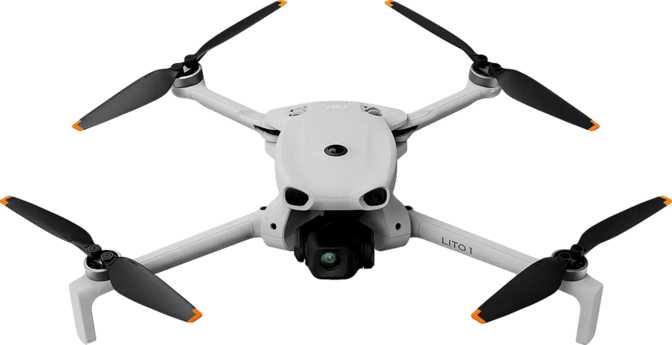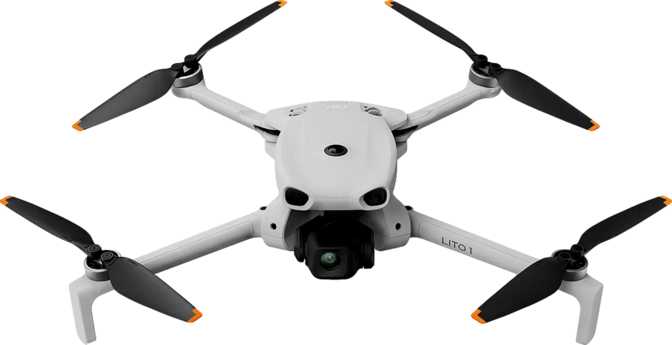
DJI Lito X1 Review: A Travel Drone Built for Serious Imaging
DronesThe market for capable consumer drones has quietly matured. Where early buyers had to choose between a drone they could actually fly and one that took pictures worth keeping, that compromise is no longer inevitable. The DJI Lito X1 positions itself squarely in that evolution — a drone that leads with a serious 48-megapixel imaging system, wraps it in flight performance you can genuinely trust, and packages all of it into a form factor that does not require a dedicated carry-on bag.
Whether you are a travel photographer looking to add aerial perspective without hauling specialized equipment, or an enthusiast ready to step up from entry-level hardware, the Lito X1 is asking for your attention. Here is whether it deserves it.
Design and Build: Compact Without Feeling Compromised
Physical Footprint
At 340 grams, the Lito X1 sits in a weight class that matters — not just for portability, but for regulatory purposes in many countries where sub-250g drones receive lighter oversight. At 340g it just clears that threshold, which prospective buyers in weight-regulated markets should factor into their planning.
The overall dimensions — roughly 251mm across the widest point, 183mm deep, and 79mm tall — suggest a drone designed to fold down meaningfully for travel. This is not a unit built to sit on a shelf; it is built to go with you.
Temperature Range and Durability
The Lito X1 is rated to operate in temperatures ranging from -10°C up to 40°C, covering the vast majority of real-world shooting conditions — winter mountain trips, summer city shoots, coastal mornings.
Flight Performance: Dependable Range, Practical Speed
Real-world sessions of 25–30 minutes accounting for wind, conservative battery management, and the return leg of every flight.
Theoretical maximum under ideal, interference-free conditions. Signal reliability will not be the limiting factor in normal use.
Optimized for controlled, cinematic movement — the right trade-off for photography and videography use cases.
Safety Systems
Return to Home (RTH) gives the drone an automatic pathway back to its launch point if the signal drops or the battery reaches a critical threshold. This transforms a stressful moment — a sudden signal interruption in a complex environment — into a non-event.
Obstacle detection provides spatial awareness during flight, assisting particularly during approach and landing phases and when navigating environments where trees, structures, or other obstacles are present.
GPS and Intelligent Flight Modes
Onboard GPS maintains positional stability even when pilot inputs are minimal. The gyroscope and accelerometer work together to hold position against wind and compensate for environmental drift.
Intelligent flight modes expand what a solo operator can accomplish — typically enabling automated orbit shots, waypoint navigation, and subject tracking, letting one person do the work of a crew.
Camera System: Where the Lito X1 Makes Its Case
48 MP CMOS Sensor
At this resolution, you can crop aggressively without losing usable detail, extract still frames from video for large-format output, and capture images that hold up under scrutiny at full size. CMOS architecture at this level delivers the dynamic range aerial work demands.
RAW File Capture
RAW files contain the full, uncompressed sensor data — white balance adjustable after the fact, exposure recovery far more forgiving, color grading with genuine latitude. Photographers moving from JPEG-only output will notice the difference immediately.
ISO 12800 Ceiling
Meaningful low-light headroom for golden hour, blue hour, and heavy overcast. ISO 12800 is not a number to shoot at carelessly, but its presence as a ceiling indicates a sensor architecture built with sensitivity in mind.
FPV Camera Included
The First Person View camera provides a real-time perspective from the drone's point of view during navigation — particularly useful for precision flying in complex environments where spatial awareness is critical.
4K Cinema Video: More Than a Resolution Number
Video recording tops out at 4K (2160 lines) at 24 frames per second — the cinematic standard that characterizes professional film work and gives footage its natural, theatrical quality. This is not a compromise; it is a creative choice baked into the specification.
The 130 Mbps bitrate confirms this positioning. At this data rate, compression artifacts become a non-issue for most delivery formats, including streaming, broadcast, and social media. Burst mode is also supported for high-speed still capture when the scene demands it.
Field of View and Cinema Mode
The 82.1° field of view strikes a balance between capturing wide environmental context and maintaining natural perspective. Aerial wide-angle shots can look warped at extreme FOVs; 82.1° keeps the image grounded and credible.
A dedicated 24p cinema mode formalizes the cinematic intent — this drone is built to produce footage that looks like footage. The combination of 4K resolution, 24fps, 130 Mbps, and RAW still capture makes the Lito X1 a coherent imaging system, not a spec-sheet exercise.
Battery and Storage: Thoughtful Design Choices
Removable Battery System
The battery is removable — a more important specification than it might initially seem. A swappable battery transforms the Lito X1 from a device limited by one charge cycle into a system that scales with spare batteries.
Bring two batteries and you effectively double your session time without returning to a power source. For location shoots, travel, or any scenario where a wall outlet is not nearby, this is a practical advantage over sealed-battery designs.
Charging Time and Storage Workflow
From flat to full, the battery requires approximately 1 hour and 12 minutes — short enough that a depleted battery can be fully restored during a lunch break or transit window. Paired with a spare, near-continuous shooting availability throughout a full day is achievable.
The 42 GB of onboard storage provides meaningful buffer time before you need to offload. For longer sessions, the external memory slot expands capacity without limit, allowing direct shooting to high-speed cards optimized for your editing workflow.
Who Should Buy the DJI Lito X1
This Drone Is Built For
- Travel photographers and videographers who want aerial capability that does not dominate a bag — the Lito X1's compact folded footprint makes it a realistic travel companion.
- Content creators producing material for platforms where visual quality drives engagement — the 4K/24p cinema output and 130 Mbps bitrate match the expectations of serious production.
- Post-processing photographers with RAW-based workflows who need the editing latitude that JPEG-only output simply cannot provide.
- Semi-professional operators who need dependable flight time and range across extended shoots without constant session interruptions.
- Serious first-time buyers who want a drone with safety features robust enough to build confidence without removing creative control.
This Drone Is Not Right For
- Weight-threshold buyers in markets where 340g triggers additional registration requirements — those who need to stay below 250g to avoid compliance overhead should look elsewhere.
- Operators who regularly fly in rain, mist, or marine environments — the absence of weather sealing is a genuine operational constraint, not a minor asterisk.
- Videographers requiring higher frame rates for sports, action, or slow-motion workflows — 4K is capped at 24fps, which does not serve those use cases.
- Strict budget-first buyers — the Lito X1's camera and feature specification level implies a price point that reflects its capability tier.
Competitive Positioning
How the Lito X1 stacks up against typical alternatives in its class, covering the specifications that matter most to imaging-focused buyers.
| Feature | DJI Lito X1 | Typical Entry-Level | Typical Mid-Range |
|---|---|---|---|
| Main Camera Resolution | 48 MP | 12 MP | 20–48 MP |
| RAW Photo Capture | Often Yes | ||
| Max Video Bitrate | 130 Mbps | 30–60 Mbps | ~100 Mbps |
| Maximum Flight Time | 36 minutes | 20–28 minutes | 30–34 minutes |
| Obstacle Detection | Rarely | Usually Yes | |
| Internal Storage | 42 GB | 0 GB (card only) | 8–16 GB |
| Removable Battery | Usually Yes | Varies | |
| Weather Sealing | Rare | ||
| Remote with Display | Sometimes |
The Lito X1's 42 GB of internal storage alongside an external memory slot is a differentiator that most competitors in this tier do not match. The 130 Mbps video bitrate also sits above the category average.
Honest Assessment: Strengths and Weaknesses
Where the Lito X1 Excels
-
Coherent imaging systemThe combination of 48 megapixels, RAW capture, 130 Mbps 4K video, and a high ISO ceiling is a well-considered package built to serve photographers who will actually push it — not spec-sheet decoration.
-
Flight time that actually worksThe 36-minute maximum endurance translates directly into fewer interruptions, more creative latitude, and less anxiety during demanding location shoots.
-
Display-equipped remote controlOn-screen telemetry eliminates the need to juggle a phone alongside a controller. In bright outdoor conditions, a dedicated display is almost always more legible than a smartphone screen.
-
42 GB storage plus expandable slotMost competitors in this tier ship without internal storage entirely. The Lito X1's combination of onboard capacity and an expansion slot is a genuine differentiator.
-
Transmission range confidenceThe 21-kilometer range ceiling means signal reliability will not be the thing that ends your session early in normal use.
Real Limitations to Know
-
No weather protectionThe absence of any weather sealing means your shooting window is partly dictated by the sky's mood. For a drone likely to travel widely and shoot in varied conditions, this is the most significant caveat to carry into your purchase decision.
-
4K ceiling at 24fps onlyThe 24fps format satisfies the majority of users entirely — but anyone with production requirements that extend into higher frame rates will find the Lito X1 insufficient for those specific outputs.
-
Weight above common regulatory thresholdsAt 340g, the Lito X1 crosses the 250g mark used by many aviation authorities as the dividing line for simplified registration requirements. Verify your local rules before flying.
Questions Buyers Ask Before Purchasing
Final Verdict: A Serious Imaging Tool for Those Ready to Use It
The DJI Lito X1 is not a beginner drone dressed in capable clothing — it is a capable drone that happens to be flyable by beginners who engage with it honestly. The imaging specification is genuine, the flight systems are thoughtfully equipped, and the 36-minute endurance makes it a productive tool rather than a toy with a short attention span.
The trade-offs are real and worth naming clearly: no weather protection, 4K capped at 24 frames per second, and a weight that just clears common regulatory thresholds. None of these are deal-breakers for the audience this drone is built for, but each could be decisive for someone with a specific use case that falls outside that audience.
For travel-oriented photographers, content creators producing cinematic video, and enthusiasts ready to move from casual aerial snapshots to intentional aerial photography, the Lito X1 represents a well-balanced, imaging-first choice. The removable battery, substantial internal storage, display-equipped remote, and RAW-capable 48-megapixel camera combine into a package that earns its place in a working creative's kit.
Recommended For
Photographers and videographers who prioritize image quality and flight endurance, are comfortable managing weather conditions manually, and want a drone that grows with their skills rather than one they will outgrow quickly.
Not Recommended For
Buyers who need weather protection, high-frame-rate video output, or must stay under 250 grams to meet local regulations without additional compliance steps.