DJI Lito 1 Full Review: Real-World Aerial Camera Performance Tested
DronesThe consumer drone market has a clarity problem. At the lower end, you get underpowered toys with mediocre cameras. At the upper end, you get professional rigs that demand professional-level commitment — in both skill and budget. The DJI Lito 1 positions itself in the middle ground that actually matters: serious enough for photographers and videographers who want cinematic results, approachable enough that you don't need a film crew to operate it.
What makes this drone worth examining carefully is its combination of a 48-megapixel stills camera, genuine 4K video capability, obstacle avoidance, and a flight time that comfortably clears the 30-minute threshold most users treat as the minimum for productive shooting sessions. Whether those numbers translate into real-world value depends on context — and that's exactly what this review breaks down.
Design, Build, and Physical Experience
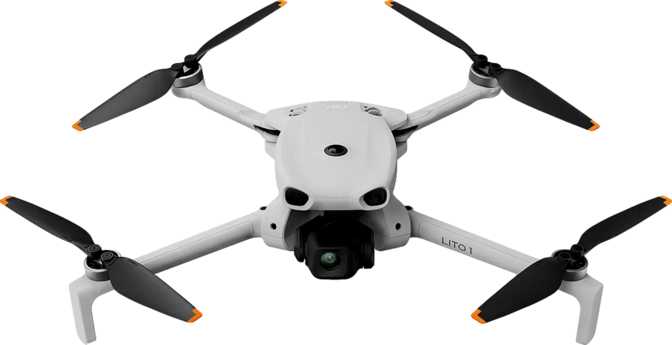
The DJI Lito 1 folds down into a form factor that slips easily into a dedicated drone bag or a large camera backpack. At 320 grams — roughly the weight of two average smartphones stacked together — it sits in a weight class that avoids the heaviest regulatory burdens in many regions, which matters for traveling filmmakers who want to keep paperwork minimal. Substantial enough to feel premium in the hand, light enough that portability stays a realistic feature rather than a marketing claim.
The physical footprint when unfolded — roughly 251mm wide and 183mm in depth — gives it a stable, planted stance in the air without the bulk of larger prosumer models. The 79mm folded height is the real story: this is a drone you'll actually bring with you, rather than one that stays home because packing it feels like a production.
Flight Performance: Range and Endurance
How the Lito 1 performs where it matters most — in the air
How Long Can It Actually Stay Up?
The Lito 1's maximum flight time of 36 minutes is one of its strongest arguments. Most productive drone shoots involve scouting, repositioning, and multiple takes — activities that chew through flight time fast. A drone that lands at 20 minutes forces you into a rhythm of constant battery swaps. At 36 minutes, you gain a genuine working session: enough to frame multiple angles, re-fly a tracking shot, and still return with battery to spare.
The battery is removable — a critical detail. Carrying two or three charged batteries effectively triples your time in the field without any compromise to your shooting rhythm.
Range: More Than You'll Legally Use
The maximum transmission range of 20 kilometers is, in practical terms, irrelevant for most users — not because it's insufficient, but because local regulations typically cap visual line-of-sight requirements well within that envelope. What it does mean is signal stability. A drone with this range operating at a typical legal distance maintains a clean, interference-resistant connection. You're not running the system near its limits; you're cruising comfortably in the middle of its capability band.
Speed and Agility
A top speed of approximately 43 kilometers per hour makes the Lito 1 capable of tracking a cycling athlete, a moving vehicle, or dynamic action sequences — but this isn't a racing drone. Its design prioritizes stability and camera quality over raw speed. For landscape cinematography, real estate coverage, travel content, and documentary-style footage, this speed ceiling is entirely appropriate.
Intelligent Assistance Systems
Three systems that separate capable consumer drones from liability risks:
- Obstacle DetectionActs as a safety net during autonomous maneuvers — especially valuable for newer pilots navigating tree lines, buildings, or complex terrain where one wrong input is costly.
- Return to Home (RTH)When signal is lost or battery reaches a critical level, the drone automatically navigates back to its GPS-recorded launch point. For anyone flying beyond comfortable visual range, this is non-negotiable.
- Intelligent Flight ModesOrbit, follow, and waypoint-style automation allow solo operators to execute shots that would otherwise require a dedicated pilot — letting you focus on the subject rather than the sticks.
Camera System: The Lito 1's Strongest Argument
48 megapixels, RAW capture, 4K cinema video, and an FPV feed — here's what each actually means
48 Megapixels: What That Means for Stills
The main sensor resolves at 48 megapixels, which in practical terms means your aerial photographs can be cropped aggressively in post-production without losing the resolution needed for large prints or commercial licensing. A landscape shot taken at this resolution gives you the flexibility to reframe in editing — choosing a tighter composition after the fact, or extracting a detail without returning to the location.
More importantly, the camera shoots in RAW format. For anyone who edits their own images, RAW capture is the difference between a finished photograph and an adjustable negative. You control the final white balance, exposure recovery, and color grading — the drone doesn't make those decisions for you. Burst mode support further extends shooting versatility, dramatically improving the odds of a sharp, perfectly timed frame when covering fast-moving subjects.
4K Video at 24fps: Cinema First
The Lito 1 records at 3840 × 2160 resolution at 24 frames per second — the cinema standard used in theatrical filmmaking — giving footage that characteristic filmic motion quality that 30fps content often lacks. The 130 Mbps bitrate preserves enough data density to hold up well in color grading, even in textured scenes like forest canopies, urban geometry, or open water. This is a figure associated with serious video tools, not entry-level consumer cameras.
The CMOS sensor reaches an ISO ceiling of 12800, which determines how well the camera handles low-light conditions. At moderate sensitivity levels, image quality should be strong. At maximum ISO, expect some noise — manageable in post-production, but something to plan around when shooting at dawn, dusk, or in heavily shaded environments.
Field of View and the FPV Camera
The 79° field of view on the main camera is a moderately wide angle — wide enough to capture environmental context and architecture without the exaggerated distortion that ultra-wide lenses introduce. Buildings won't lean dramatically inward; landscapes will feel natural rather than stretched.
The inclusion of an FPV (First Person View) camera is a notable secondary feature. FPV cameras provide a real-time pilot's-eye feed that aids in navigation and precise positioning — particularly useful when maneuvering in tight spaces where relying on the main camera view alone becomes disorienting.
Controller, Battery, and Storage
Three supporting systems that shape the day-to-day experience
Controller with Built-In Display
The remote control comes with an integrated display — one less device to manage and no app dependency during the flight itself. The screen is built for outdoor conditions rather than fighting against sunlight like a phone. Smartphone control is also supported, giving operators who prefer that interface full flexibility without compromise.
Battery and Charging
The battery charges fully in approximately 72 minutes. A straightforward rotation — fly one pack while charging the other — keeps you shooting continuously during longer location sessions without gaps.
The removable design means no waiting for the drone itself to recharge and the freedom to carry as many charged packs as the shoot demands.
Storage: Your Card, Your Control
The external memory slot means you choose your own capacity rather than being locked into internal memory. Card retrieval requires no cable, no app, and no wireless transfer latency.
At the video bitrate this drone records, a 128GB card holds roughly two hours of footage. For full-day shoots, carry multiple high-speed cards — cheap insurance relative to a missed opportunity.
Who Is the DJI Lito 1 For?
A focused tool for a specific type of operator — knowing which side you're on changes everything
This Drone Fits You If You Are...
- A travel photographer or filmmaker who wants capable aerial work without checking a large case as luggage
- A content creator producing YouTube, documentary, or social media content where cinematic 4K and high-resolution stills make a visible difference
- A real estate or architecture professional needing large, croppable aerial images and clean 4K footage for property marketing
- An intermediate pilot who wants intelligent assists for complex shots without flying purely manual
- Someone who edits their own footage and photos and needs RAW files and high-bitrate video to work with creatively
Look Elsewhere If You Need...
- Weather-resistant performance — the Lito 1 is a fair-weather drone, full stop, with no splash or moisture protection of any kind
- 4K at higher frame rates for slow-motion capability — 24fps is the ceiling here, which eliminates slow-motion 4K entirely
- Racing or freestyle flight — stability and image quality are the priorities, not agility or top-end speed
- Fully automated output with minimal editing — the RAW-first philosophy serves creators who work seriously in post-production
Competitive Positioning
How the DJI Lito 1 stacks up against typical alternatives in its category
| Feature | DJI Lito 1 | Entry-Level Typical | Mid-Pro Typical |
|---|---|---|---|
| Still Resolution | 48 MP | 12 – 20 MP | 48 – 50 MP |
| RAW Capture | |||
| 4K Video | 24fps | 30fps / compressed | 30 – 60fps |
| Video Bitrate | 130 Mbps | 40 – 80 Mbps | 150 – 200 Mbps |
| Flight Time | 36 min | 20 – 28 min | 34 – 46 min |
| Obstacle Detection | Sometimes | ||
| Built-in Display | Often yes | ||
| Weather Sealing | Sometimes | ||
| Removable Battery |
Comparison reflects typical specifications across competitor categories. Individual models may vary.
Honest Assessment: Strengths and Limitations
A balanced view — because credibility requires naming both sides clearly
Where It Excels
- The 48-megapixel RAW stills camera is genuinely capable for commercial and editorial aerial photography — not a compromise feature bolted on as an afterthought
- The 130 Mbps bitrate at 4K gives videographers material that holds up through serious post-production color grading without falling apart in complex areas of the frame
- At 320 grams, this is a drone people will consistently travel with and actually deploy — which is the only version of a camera that matters
- The 36-minute endurance and 20-kilometer range provide more operating headroom than most users will fully exercise — but headroom is exactly what confident shooting requires
- The built-in controller display becomes a genuine quality-of-life improvement the first time you try to read a phone screen in direct sunlight on location
Where It Falls Short
- The absence of weather sealing narrows the operating window significantly — anyone shooting in unpredictable climates will feel this limitation on a regular basis
- The 4K ceiling at 24fps eliminates slow-motion 4K from the toolkit — a real constraint for action-heavy videographers and broadcast-standard delivery workflows
- At maximum ISO, low-light shooting requires careful expectation management — this sensor is not designed for darkness and the noise becomes evident
- Users who need footage at 30fps for standard broadcast compatibility should weigh whether the 24fps ceiling creates a delivery problem before committing
Questions Real Buyers Ask Before Purchasing
Honest answers to the searches that brought you here
Final Verdict
The DJI Lito 1 earns a strong recommendation for aerial photographers and cinematic videographers who know what they're buying. This is not a general-purpose drone trying to satisfy every use case — it's a camera platform that prioritizes image quality, operational endurance, and portability in a way that coheres into a genuinely useful production tool.
If your work involves aerial stills for commercial or editorial use, or cinematic 4K video for film-style content, the Lito 1's camera system, 36-minute flight time, and travel-friendly weight make a compelling case. The lack of weather sealing and the 4K-at-24fps ceiling are real constraints that should factor into your decision — but for the operator who can plan around both, those limitations rarely become dealbreakers in practice.
Buy it if
You're a photographer-first aerial operator who wants a drone that takes the camera seriously.
Look elsewhere if
Variable frame rates, weather resistance, or entry-level pricing are non-negotiable requirements.