Crossbeats Roar 3.0 Review: Does the 100-Hour Battery Live Up?
HeadphonesOver-ear headphones with active noise cancellation have become one of the most contested product categories in consumer audio. At every price point, you will find promises of studio-quality sound, all-day endurance, and noise cancellation that cuts out the world. Most overpromise and underdeliver. The Crossbeats Roar 3.0 enters this conversation with a specification that is hard to ignore — particularly one number that demands a second look — and this review exists to tell you exactly what that means for your ears, your commute, and your money.
Design and Build: A Foldable Over-Ear Built for Daily Life
Physical Construction and Portability
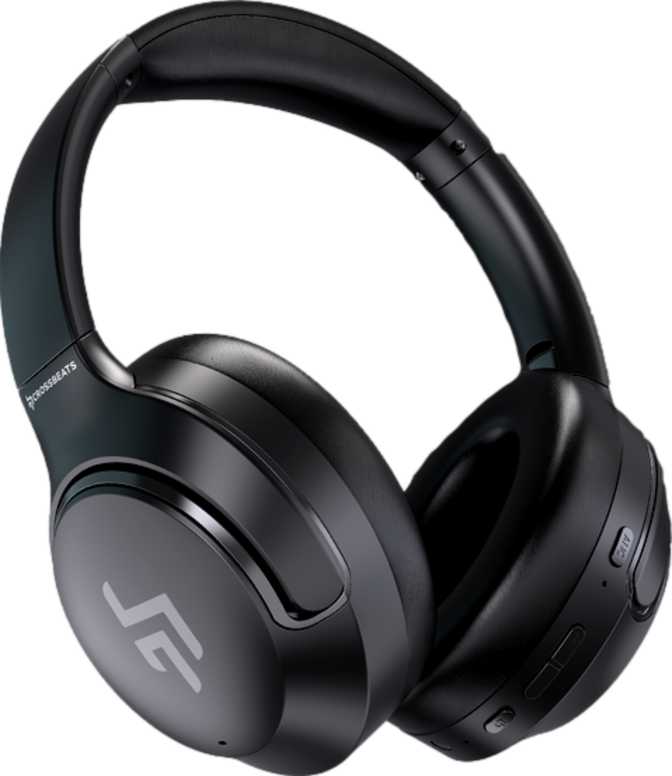
The Roar 3.0 is an over-ear headphone, meaning the ear cups fully encircle the ear rather than pressing directly against it. This distinction matters: over-ear designs create a physical seal around the ear that contributes meaningfully to both comfort during extended listening and acoustic isolation from the environment. For most people, this format is the preferred choice for serious daily use — and the Roar 3.0 leans into that preference with a design optimized for portability as much as performance.
At 252 grams, the headphone sits comfortably in the lighter half of its category. Over-ear headphones with ANC systems can run heavier due to battery and electronics, and weight carried on the head over two or three hours directly affects neck fatigue and headband pressure. Whether 252g stays comfortable across a full workday depends on clamping force and cushion quality — factors a hands-on trial would reveal quickly.
The headphone folds flat, and a carrying case is included in the box. A headphone that does not fold cannot fit in a bag pocket. A headphone without a case arrives scratched and cable-tangled after a week of daily carry. The combination signals that this is a product designed for the transit bag and the gym locker, not just the home desk.
- Over-Ear Closed-Back Design
- Foldable for Portability
- Travel Case Included
- Stereo Speakers
- IPX4 Sweat Resistant
- 252g — Lightweight Build
Water Resistance and Closed-Back Acoustics
The IPX4 rating means the Roar 3.0 handles water splashing from any direction without damage. Wear it through a sweaty gym session, in light rain, or during a humid outdoor commute without concern. What you cannot do is wear it in heavy rain, near a pool, or in any situation involving submersion. The X in IPX4 indicates dust ingress was not formally assessed as part of the certification.
The closed-back cup design — where the outer shell of each cup is sealed rather than open — serves two simultaneous purposes. It prevents ambient noise from bleeding into the acoustic chamber, strengthening passive isolation before ANC even activates. It also keeps your audio contained, so the person next to you on the train will not hear your music even at comfortable volume. For public use, closed-back is the correct architecture.
Sound Performance: Drivers, Frequency, and the ANC Layer
What Large Drivers Deliver
Each ear cup houses a 52-millimeter dynamic driver — notably generous by current standards, where 40mm is typical and anything larger is considered a distinguishing characteristic. Driver diameter alone does not determine audio quality — tuning, materials, and the acoustic geometry of the enclosure matter equally — but larger drivers move more air. That extra air movement typically translates into stronger low-frequency presence and a more physically involving listening experience, particularly for genres where bass impact matters.
The sensitivity of these drivers is exceptionally high, which has two real-world consequences. The headphone can reach loud listening levels even from low-output sources like a phone or tablet without running out of headroom. High-sensitivity drivers also require less power to perform, which directly supports the remarkable battery life claim examined in the next section.
Frequency Response: Where It Reaches and Where It Doesn't
The Roar 3.0 covers frequencies from 60 Hz at the low end to 20,000 Hz at the high end. The upper limit matches the full ceiling of human hearing, so high-frequency reproduction — cymbal shimmer, vocal breath, acoustic guitar brightness — is entirely within range. The lower boundary at 60 Hz is where informed buyers should pay attention.
The 60 Hz frequency floor means deep sub-bass — the rumble of film explosions, lowest organ tones, seismic drops in electronic music — will not be fully reproduced. For pop, rock, podcasts, jazz, and classical, this is a non-issue. For bass-obsessed or cinematic listeners, it is a real constraint.
Active Noise Cancellation: A Two-Layer System
The purely physical first layer — closed-back cups and ear cushions block ambient sound by creating a seal around the ear before any electronics are involved. This layer works regardless of whether the headphone is powered on, charged, or connected to anything. It is always on.
The electronic layer on top — microphones sample the incoming noise environment, and the headphone generates opposing sound waves to cancel it. ANC performs best against consistent low-frequency noise: engine hum, airplane drone, train rattle. It is less effective against sudden sharp sounds like nearby voices or a car horn.
The Roar 3.0 includes a passthrough ambient mode, letting you hear your surroundings without removing the headphones. Useful for catching announcements, having a quick conversation, or staying aware outdoors — handled with a button press rather than breaking the listening session entirely.
Battery Life: The Number That Changes Everything
Claimed battery life — the single most remarkable specification on this headphone
The claimed 100-hour battery life needs to be understood clearly before it becomes the primary reason you buy or skip this headphone. Premium ANC headphones from leading audio brands typically deliver between 20 and 40 hours of playback with noise cancellation active. Budget alternatives cluster in the 20 to 30 hour range. A claim of 100 hours does not just beat the category — it operates in a different dimension entirely.
How It Compares to the Category
Setting Realistic Expectations
Battery claims reflect optimal testing conditions — typically with ANC disabled, at moderate volume, with Bluetooth in an ideal state. Real-world use with ANC active at varying volumes will reduce this figure significantly.
That said, even a significant real-world discount from the rated ceiling leaves exceptional endurance compared to category norms. For most users, this headphone needs to be charged far less than once a week — a fundamentally different ownership rhythm from the daily or every-other-day charging that most ANC headphones require. That shift in routine is the real story behind this specification.
Bluetooth 5.4 and Codec Support: Connectivity in Full
Bluetooth 5.4: Why the Version Matters Here
The Roar 3.0 uses Bluetooth 5.4 — the current generation of the wireless standard. For everyday listeners, Bluetooth version numbers can feel like marketing noise. For this product used in commuting environments, it is not. The key improvement that matters for an ANC commuter headphone is connection stability in dense wireless environments. Busy transit stations, airports, and open-plan offices are places where dozens of overlapping signals compete for the same frequencies. Newer Bluetooth generations handle this interference more reliably — fewer dropouts in exactly the conditions where you most want uninterrupted listening.
The maximum wireless range is rated at 10 meters — adequate for a phone in a pocket or on a desk in the same room, but limited compared to competitors advertising 30 meters or more. If you need the source device connected across multiple rooms or significant distance, this is worth factoring in.
The Codec Question: Who Benefits and Who Doesn't
When audio travels wirelessly from your device to your headphones, it is compressed using a codec — a protocol that governs audio quality. Here is exactly what the Roar 3.0 supports and what that means for your setup.
| Codec | Roar 3.0 | iPhone | Android |
|---|---|---|---|
| SBC (Universal baseline) | |||
| AAC (Apple preferred) | Varies by device | ||
| aptX / aptX HD | N/A | Unsupported | |
| LDAC (Sony hi-res) | N/A | Unsupported |
iPhone users are well-served by AAC support. Android users on LDAC or aptX-capable devices will fall back to a lower-quality transmission standard. For podcasts, streaming, and general music this is unnoticeable. For audiophile-quality listening from high-bitrate sources, it sets a ceiling on what wireless audio quality is achievable.
Daily-Use Features: What's There and What's Missing
The Roar 3.0 covers the essentials for daily use well, but some expected conveniences are absent. Knowing both sides before purchase prevents post-purchase frustration.
Included Features
-
Active Noise Cancellation — Electronic noise filtering ideal for transit, offices, and commuting environments with consistent low-frequency background noise
-
Ambient Sound Mode — Passthrough mode lets you hear your surroundings without removing the headphones; activated via on-device button
-
Noise-Canceling Microphone — Filters background noise from your voice during calls in busy environments so the other party hears you clearly
-
On-Device Physical Controls — Volume, playback, and call management directly on the ear cups; no need to reach for a phone
-
Full Headset Functionality — Answer calls, manage playback, and trigger voice assistants without touching a connected device
-
USB-C Charging + Battery Indicator — Universal cable standard; check charge level before heading out to avoid dead-battery surprises
-
Foldable Design + Travel Case — Collapses flat and ships with a carry case for daily transport without wear or tangled cables
Notable Omissions
-
Auto Ear Detection — No automatic pause when removing the headphones. Playback continues until manually stopped, which wastes battery over time.
-
Hardware Mute Button — No dedicated mic mute on the headphone. Silencing during calls requires managing from the connected device — friction for frequent meeting users.
-
LDAC / aptX Codec Support — Android high-res wireless audio falls back to SBC on non-AAC-capable Android devices. The audio quality ceiling over Bluetooth is constrained.
-
NFC or Fast Pair — No tap-to-pair and no Google Fast Pair. Pairing requires the standard Bluetooth steps, which adds a few seconds on first connection.
-
Wireless Charging — Wired USB-C only. A reasonable trade-off given the fast 1-hour recharge time, but worth noting for users who prefer cable-free charging.
-
Spatial Audio — No binaural or object-based spatial processing. Standard stereo listening only — no immersive surround sound effects.
Who Should Buy the Crossbeats Roar 3.0 — and Who Shouldn't
This headphone makes a compelling case for a specific buyer. Understanding whether that profile fits your situation is the most important part of this review.
Buy It If You Are...
-
A daily commuter tired of hunting for a charging cable every evening — the battery endurance here fundamentally changes the weekly charging rhythm
-
A gym user or outdoor exerciser who needs sweat and splash protection without paying a premium for it — IPX4 covers fitness use reliably
-
An iPhone user looking for wireless ANC with clean AAC support and a complete everyday feature set at an accessible price point
-
A first-time ANC buyer who wants a complete package — case included, USB-C charging, ambient mode, noise-canceling mic — without a steep price tag
-
A frequent traveler where charging access is limited between destinations and battery anxiety is a real, recurring concern
Look Elsewhere If You Are...
-
An audiophile or enthusiast listener who prioritizes maximum wireless audio fidelity — the lack of LDAC and aptX HD sets a ceiling that won't satisfy this use case
-
A bass-first listener who wants the physical impact of deep sub-bass in electronic music or cinematic audio — the frequency floor leaves the lowest registers unaddressed
-
An Android power user who specifically wants Fast Pair, NFC pairing, or LDAC/aptX support on a compatible high-res audio device
-
A user who requires long Bluetooth range — such as leaving a phone in another room while moving freely through a house or large space
-
A heavy meeting or call user who instinctively reaches for a hardware mute button — its absence adds repeated friction across multiple daily calls
Competitive Positioning: Where the Roar 3.0 Sits
The ANC over-ear headphone market falls into three tiers: premium flagship models from specialist audio brands, mid-range options that balance performance against cost, and value-tier products that prioritize accessibility. The Crossbeats Roar 3.0 competes in the value tier, and within that tier it leads on battery life — a dimension where it claims an advantage over virtually every other option at any price. Where it surrenders ground is equally clear.
| Feature | Crossbeats Roar 3.0 | Budget ANC Rival | Premium ANC Option |
|---|---|---|---|
| Battery Life (claimed) | ~100 hours | 20–40 hours | 25–40 hours |
| Active Noise Cancellation | Varies | (Deeper) | |
| Bluetooth Generation | 5.4 | 5.0–5.2 typical | 5.2–5.3 typical |
| High-Res Codec (LDAC / aptX) | Varies | (Often) | |
| Travel Case Included | Varies | (Usually) | |
| Sub-Bass Reproduction | Limited (60 Hz floor) | Varies | Generally deeper |
| Auto Ear Detection (Pause) | Varies | (Usually) |
Comparison values represent general category averages and typical specifications. Individual products within each tier vary significantly in quality and feature sets.
Honest Assessment: Strengths and Limitations
What It Gets Right
The Roar 3.0's most genuine differentiator is its battery endurance. If the real-world figure with ANC active lands anywhere near the claimed ceiling, this headphone offers a qualitatively different ownership experience — one where charging is a weekly, not daily, ritual. For anyone who has abandoned wireless headphones because of charging fatigue, this is a meaningful shift that affects every single day of ownership.
The decision to build around Bluetooth 5.4 rather than an older, cheaper chipset reflects genuine product thinking. Connection stability in dense wireless environments is exactly where ANC headphones are most severely tested, and the newer standard's handling of signal congestion is a practical advantage — not a marketing footnote.
The feature package is complete for daily use. ANC, ambient mode, noise-canceling microphone, on-device controls, foldable build, and an included travel case cover every essential without requiring separate accessory purchases. For a value-segment product, nothing critical is missing from the daily-use formula.
Where It Falls Short
Codec support is the clearest signal of where engineering trade-offs were made. Restricting the library to AAC and the universal baseline standard is a common cost optimization in this segment, but it means Android users in particular encounter a constrained audio experience compared to codec-rich alternatives — particularly on LDAC-capable devices where the difference is audible on quality source material.
The frequency response limitation at the low end is the other area where enthusiast listeners will feel the constraint. The higher frequency floor means this headphone handles the majority of audio content well, but will not satisfy listeners who measure headphones by the physical authority and depth of bass reproduction.
Missing auto-pause, the absent hardware mute button, and the shorter Bluetooth range are smaller irritants rather than dealbreakers — but they are worth knowing before purchase rather than discovering after, particularly for users who come from headphones where these features were standard.
Questions Real Buyers Ask Before Purchasing
These are the questions most commonly searched before deciding on the Crossbeats Roar 3.0, answered directly based on what the specifications confirm.
The Verdict: Built Around One Exceptional Strength
The Crossbeats Roar 3.0 is a headphone built around one unusually bold promise — that you will not be reaching for a charging cable after every few listening sessions — and backs it with specifications that suggest the architecture to support it.
If that promise holds in real-world use, it earns a strong recommendation for the audience this headphone clearly addresses: daily commuters, gym users, travelers, and practical listeners who want ANC functionality, a clean everyday feature set, and freedom from battery anxiety at an accessible price point.
The honest caveats are real but manageable. The frequency response will not satisfy deep-bass enthusiasts. The codec library limits the audio quality ceiling for Android power users. The Bluetooth range is adequate, not generous. These are the expected trade-offs of a value-segment product that invested its engineering budget in battery endurance and modern connectivity rather than audio luxury. For first-time ANC buyers and anyone who has written off wireless headphones because of charging fatigue, the Roar 3.0 presents a genuinely compelling argument.
Buy It If...
-
Battery life between charges is your primary priority and you want a weekly charging rhythm, not a daily one
-
You primarily use an iPhone, where AAC codec support and Bluetooth 5.4 form a well-matched combination
-
You want a complete ANC package — travel case, ambient mode, noise-canceling mic, and USB-C — at an accessible price point
-
You are a practical everyday listener for whom endurance and convenience outweigh audiophile-grade wireless fidelity
Skip It If...
-
You are an Android audiophile who wants LDAC or aptX support — neither codec is available and the wireless audio ceiling reflects that gap
-
Deep sub-bass impact is non-negotiable for your listening habits — the frequency floor leaves the lowest bass registers unaddressed
-
You need extended Bluetooth range to keep a source device connected from another room or across a large space
-
You rely on a hardware mute button across multiple daily video calls — its absence adds friction that compounds quickly over a full workday