Cleer Arc 4 Review: Open-Ear Earbuds Built for the Real World
Wireless EarbudsWhat the Cleer Arc 4 Actually Is — And Why That Changes Everything
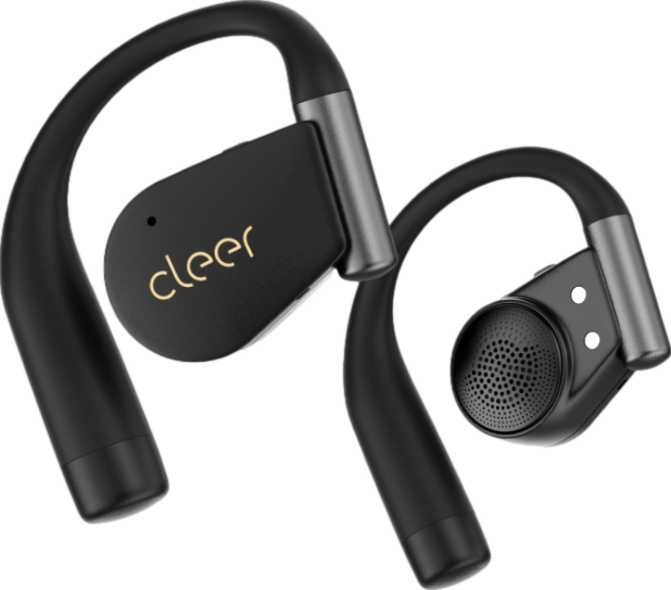
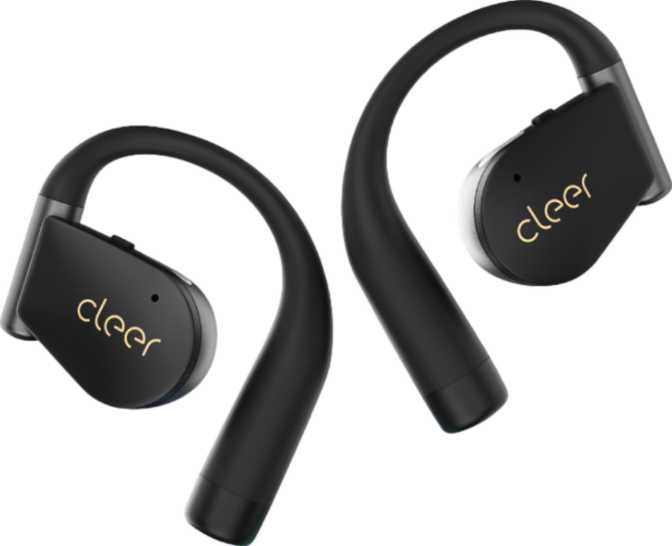
Most earbuds fight for the deepest seal inside your ear canal. The Cleer Arc 4 takes the opposite approach entirely. These are open-ear earbuds — they sit just outside the ear rather than plugging into it. No silicone tips, no pressure build-up, no sense that the world has been muted around you. That single distinction shapes every strength, every limitation, and the entire question of whether this product is right for you.
If you have been burned by earbuds that hurt after an hour, that make you feel isolated from your surroundings, or that fog up during a run, the Arc 4's philosophy will feel like a revelation. If you need deep bass or complete audio isolation, you will need to look elsewhere — and this review tells you exactly where that line falls.
Design and Build Quality
Physical Form and Fit
The Arc 4 tips the scale at just under 22 grams for the full pair — light enough that first-time wearers often forget they are there within minutes. That lightness is partly a consequence of the open-ear form factor, which eliminates the in-canal tip assembly, but it also reflects deliberate material choices on Cleer's part.
Wingtips are included in the box — a meaningful addition for open-ear designs. Without a canal seal to anchor the bud, wingtips hook into the upper ridge of the ear to keep each earbud stable during movement. If you have tried clip-style open-ear earbuds before and had them shift or fall, the wingtip system directly addresses that. Physical controls sit on the earbuds themselves rather than on a cable, which is the right call for a wireless design.
Waterproofing That Means Something
The Arc 4 carries an IPX7 rating — meaning the earbuds can survive full submersion in water up to one meter deep for up to thirty minutes. That is not splash-resistance or sweat-resistance. That is genuine waterproofing you can rely on during a downpour, a poolside accident, or an extremely sweaty workout.
- Safe through heavy rain and extreme sweat exposure
- Survives accidental drops in sinks or puddles
- Exceeds the IPX4–5 protection common at this price tier
Sound Quality: Open-Ear Explained Honestly
What You Gain
Open-ear audio removes the physical barrier between your ear and the environment. Unlike sealed in-ear earbuds that create an acoustic chamber, the Arc 4 lets ambient sound mix naturally with your music. The result is a presentation many listeners describe as more natural and fatigue-free — no "in your head" pressure, and you can hold conversations without pausing playback. For cyclists, runners who need road awareness, and anyone in a shared workspace, this is a safety and social consideration, not just a comfort preference.
The 16.2mm drivers are large for the open-ear category. Driver size correlates with a speaker's ability to move air and reproduce lower frequencies, and these are among the larger units available in this design type. The frequency response spans from 65Hz at the low end to 40,000Hz at the ceiling — a range well beyond what human hearing can detect at the top, suggesting hardware tuned for headroom and detail rather than just numbers on a specification sheet.
The 65Hz floor is the more meaningful figure for everyday listeners. Open-ear designs inherently lose some low-frequency energy because there is no seal trapping bass inside the ear canal. You will hear bass, but sub-bass weight and deep kick drum rumble will be less pronounced than with sealed earbuds. That is physics, not a flaw specific to this product.
- Driver Size
- 16.2 mm
- Low Freq. Floor
- 65 Hz
- High Freq. Ceiling
- 40,000 Hz
- Dolby Audio
- Included
The Honest Limitation
There is no active noise cancellation and no passive noise isolation — by design. The Arc 4 is not meant to block the world out. If you work in a loud open-plan office needing concentration, fly frequently and want quiet at altitude, or use earbuds specifically to shut out noise, these are not the right tool. That is not a criticism; it is a fundamental characteristic of the open-ear category.
Dolby Audio Processing
The inclusion of Dolby Audio processing adds a calibration layer to the listening experience. It does not create a spatial surround effect, but it applies Dolby's tuning to clarity, stereo width, and dynamic range — effects that are subtle but perceptible on podcasts, music with complex layering, and film audio.
Wireless Performance and Codec Support
Bluetooth 5.4 in Practice
Bluetooth 5.4 is the most current generation of the standard. Its presence here means more stable connections with less interference in crowded wireless environments — busy gyms, airports, and city streets. The Arc 4's range extends to 10 meters, standard for earbuds of this class. Expect reliable performance with your phone in your pocket or bag, but don't expect it to hold cleanly across large rooms with walls in between.
Audio Codec Support: A Meaningful Differentiator
Most competing open-ear earbuds cap out at standard Bluetooth audio quality. The Arc 4 goes further — here is what each supported codec means in practice:
aptX Lossless delivers bit-for-bit identical audio transmission to the source file — placing the Arc 4 in a technical tier above most open-ear competitors, and genuinely useful for audiophiles streaming from lossless libraries.
aptX Adaptive adjusts its bitrate dynamically based on connection conditions, delivering cleaner audio in challenging environments and supporting high-resolution playback on compatible Android devices.
AAC is the codec Apple devices use natively — iPhone and iPad users will get efficient, quality audio without any extra configuration required.
Battery Life and Charging
How Long Will These Actually Last?
Each earbud delivers seven hours of continuous playback on a single charge. The case holds enough reserve to refill the buds roughly three and a half times over, bringing the combined total to around 32 hours before you need a wall outlet. For a user who wears earbuds three to four hours daily, that means charging the case roughly twice a week rather than every night — a comfortable rhythm for most people.
Seven hours per session is strong for the open-ear category, where smaller form factors can sometimes compromise battery capacity to keep weight low.
Charging Details
- USB-C ChargingUniversal standard — no proprietary cable needed
- Fast Charging SupportedA short session returns meaningful playtime without a full cycle
- 1.5 Hours to Full ChargeNot instant, but acceptable for the total battery life on offer
- No Wireless ChargingQi charging pad users will need to plan around the cable
Call Performance and Microphone System
The Arc 4 is equipped with four microphones across the two earbuds, with noise-canceling processing applied to call audio. For open-ear earbuds, call quality depends heavily on microphone capture — since there is no seal to naturally block out background sound before it reaches the person on the other end. The four-mic array with noise-canceling processing directly addresses this: the system works to isolate your voice and suppress ambient noise at the mic level, even though your ears remain open to the environment.
The earbuds function as a full-featured wireless headset, including a dedicated mute function that is useful for professionals on video calls who want quick, reliable muting without fumbling for a keyboard shortcut. Voice prompts guide you through connection status, pairing, and battery notifications.
- Full wireless headset functionality
- Dedicated one-touch mute function
- Voice prompts for status and battery
- On-device control panel
Connectivity Features
Multipoint — Two Devices at Once
The Arc 4 maintains simultaneous Bluetooth connections to two devices — your laptop and phone, for instance, or a tablet and a computer. Audio switches automatically when a call comes in from one device while you are listening to media on another, with no manual re-pairing required.
For anyone who works across multiple devices, this becomes quietly indispensable once you are used to it. A travel bag is also included in the box — a genuinely useful accessory for earbuds designed for active, on-the-go use.
Pairing and Setup
Pairing is handled via standard Bluetooth rather than NFC tap-to-pair or Google Fast Pair. It works reliably, but expect slightly more setup steps than the one-tap experience of NFC-enabled earbuds. For users who frequently switch between paired devices, the multipoint connection handles that automatically once both devices are paired.
- 2 simultaneous device connections
- USB-C universal charging port
- Battery level indicator included
- No NFC or Fast Pair — standard Bluetooth pairing only
Who the Cleer Arc 4 Is For — And Who It Isn't
Buy These If...
- You need situational awareness during outdoor activities — running, cycling, hiking, or city commuting where hearing your environment is a genuine safety factor
- You find in-ear earbuds uncomfortable for extended wear and want something that doesn't seal or apply canal pressure
- You spend significant time on calls throughout the day and want earbuds that function as a proper headset
- You value audio codec quality and own devices that support aptX Adaptive or aptX Lossless
- You work in an environment where staying aurally present — hearing colleagues, doorbells, or your surroundings — genuinely matters
Look Elsewhere If...
- Your primary use case is noisy commuting, air travel, or concentration in loud spaces — you need ANC or passive isolation for those scenarios
- You prioritize deep, immersive bass — the open-ear design limits low-frequency reproduction in ways no driver size can fully overcome
- You want wireless charging as part of your daily routine
- You are a Sony ecosystem user who relies on LDAC for high-resolution audio from a Sony source device
How the Cleer Arc 4 Compares to the Alternatives
| Feature | Cleer Arc 4 | Typical Closed-Ear Wireless | Other Open-Ear Earbuds |
|---|---|---|---|
| Ambient Awareness | Natural, always-on | Requires ambient mode toggle | Natural, always-on |
| IP Rating | IPX7 Submersible | Usually IPX4–IPX5 (splash) | Often IPX4 or lower |
| Bass Performance | Moderate (65Hz floor) | Strong (seal amplifies) | Moderate to weak |
| Active Noise Cancellation | None | Often included | Rarely included |
| aptX Lossless | Yes | Uncommon | Rare |
| Wireless Charging | Not included | Increasingly common | Uncommon |
| Call Mic System | 4-mic noise-canceling | Typically 2–3 mics | Typically 2 mics |
| Multipoint Connections | 2 devices | Usually 2 devices | Varies by model |
Honest Strengths and Weaknesses
Where It Gets Things Right
The Arc 4 gets its core proposition right. The combination of a fully waterproof build, substantial battery endurance, and high-quality codec support is not common in open-ear earbuds. Cleer has clearly targeted buyers who wear their earbuds actively and want quality audio — not buyers who want to disappear into sound isolation.
The four-microphone call system is better-specified than most open-ear competitors offer, which matters because call quality is often the weakest point of this design category. The aptX Lossless support signals that this product is not cutting corners on audio transmission — the hardware rewards listeners who care about codec quality.
At just over 21 grams, the Arc 4 is comfortable enough for all-day wear. The wingtip system provides meaningful stability for active use without the bulk of over-ear sport hooks — a balance the open-ear category achieves more easily than sealed designs, but still requires deliberate engineering to deliver correctly.
Where It Falls Short
The 10-meter Bluetooth range is modest by current standards, and in crowded wireless environments this can feel like a tighter leash than expected. The lack of wireless charging is a genuine convenience gap — if your routine depends on dropping earbuds onto a charging pad overnight, you will need to adjust.
There is no spatial audio processing, which buyers coming from earbuds with head-tracking virtual surround will notice. The absence of NFC or Fast Pair means initial setup involves slightly more steps than the one-tap experience some competing earbuds offer.
Open-ear earbuds in shared or quiet spaces can let audio leak to others nearby at high volume levels. This is not unique to the Arc 4, but it is worth factoring in for users who regularly wear earbuds in quiet libraries, open-plan offices, or on transit.
Common Questions Before Buying
Final Verdict
The Cleer Arc 4 is a confident, well-specified open-ear earbud built for buyers who know exactly what they want: situational awareness, extended wearable comfort, genuine waterproofing, and audio quality that doesn't embarrass itself. The aptX Lossless support signals that this product is not cutting corners on audio transmission. The IPX7 rating puts it ahead of most open-ear competitors on durability. The four-microphone call system addresses the category's most common weakness head-on.
This is not the right earbud if noise cancellation or deep bass immersion is non-negotiable for you. But if you have been searching for an open-ear design that doesn't feel like a compromise on everything except awareness, the Cleer Arc 4 makes a strong, honest case for itself.