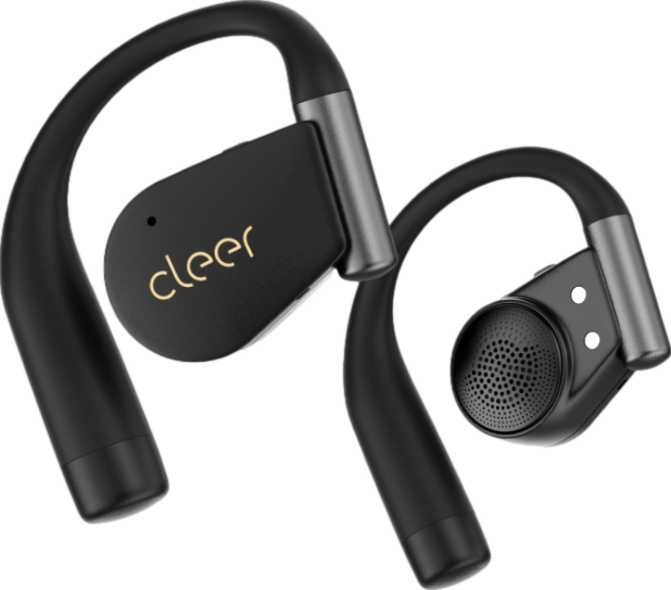
Cleer Arc 4 Plus Full Review: When Open-Ear Earbuds Get Serious
Wireless EarbudsMost earbuds seal you off from the world. The Cleer Arc 4 Plus takes the opposite approach — and there is a large, underserved group of people for whom that is exactly the right call. Runners who need to hear oncoming traffic. Office workers who cannot afford to miss a colleague. Parents who need to stay present without pulling out an earbud every few minutes.
Open-ear audio has a history of sacrificing sound quality so dramatically for the sake of environmental awareness that products end up as little more than novelty gadgets. The Arc 4 Plus — backed by a codec stack that rivals dedicated audiophile earbuds and an IPX7 waterproofing standard rare in this category — makes a genuine case that you do not have to choose between situational awareness and quality sound.
At a Glance
The numbers that matter before reading further
Design and Build Quality
Lightweight, physically secure, and genuinely weatherproof
Fit — Open-Ear Done Right
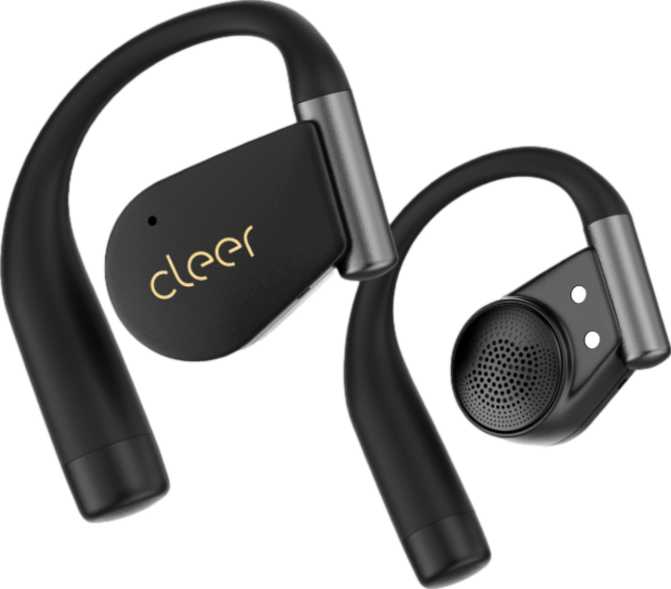
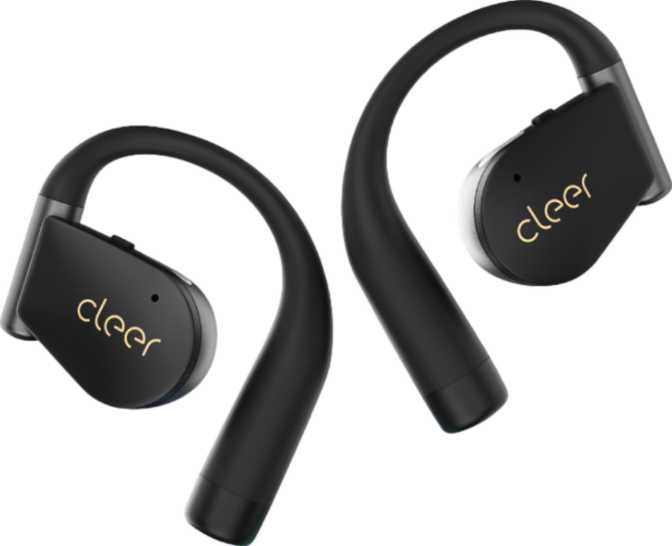
The Arc 4 Plus uses a hook-style open-ear design rather than an in-canal fit. The earbuds rest against the outer ear — at the canal entrance and surrounding cartilage — without inserting into the ear canal itself. Included wingtips, small silicone stabilizers that anchor into the upper ridges of the ear, provide a secure hold across different ear shapes without requiring any pressure inside the canal.
At 21.6 grams for the pair — roughly the weight of a few sugar packets — these are genuinely light. Most users report forgetting they are wearing them during extended sessions. There is no neckband to manage. The physical control panel built into the earbud body handles playback, calls, and volume without reaching for a phone, and voice prompts deliver clear audio feedback for connection status and battery levels.
What Comes in the Box
- Wingtips for active-use fit security
- Charging case with USB-C connection
- Travel bag for daily commuting
- No proprietary cables — any USB-C charger works
The same waterproofing standard used on many flagship smartphones. Certified protection against submersion up to one meter for 30 minutes — not a casual sweat-resistance claim. In real-world use this means:
- Heavy rain during outdoor runs
- Sweat-drenched gym sessions
- Accidental drops in standing water
- Rinse under a tap after use
Most open-ear competitors top out at IPX4 or IPX5. IPX7 is a meaningful step above the category standard.
Sound Quality
Large drivers, extended frequency range, and genuine spatial audio support
The Driver Size Advantage
Each earbud houses a 16.2mm dynamic driver. Most in-ear earbuds use drivers in the 6–12mm range. The extra real estate available in an open-ear housing allows for physically larger transducers, which generally produces better low-end presence and more natural sound staging. It is a meaningful foundation — and the Arc 4 Plus builds on it with a codec stack few competitors in this category even attempt.
Frequency Range
Coverage starts at 65Hz and extends to 40,000Hz — well into hi-res audio territory. The lower bound places mid-bass frequencies clearly in the mix: kick drums and bass instruments register with presence. The extended upper range matters particularly when using the aptX Lossless and aptX Adaptive codecs this product carries, and contributes to improved transient detail and imaging in the audible range.
Spatial Audio and Dolby Atmos
The Arc 4 Plus supports both spatial audio and Dolby Atmos — a combination well above the entry-level open-ear category. Dolby Atmos is the spatial mixing format used in Apple Music, Amazon Music HD, Netflix, and Disney+. On earbuds that support it natively, compatible content takes on a noticeably more expansive, three-dimensional quality. On an open-ear design that already interacts with your acoustic environment, the effect is unusually immersive.
There is no active noise cancellation and no passive noise isolation in the Arc 4 Plus. This is a deliberate architectural consequence of the open-ear format. If blocking out environmental sound is a priority, this product structurally cannot do that. For the audience it was designed for, that is precisely the point.
Wireless Audio Codec Stack
The category differentiator — a lossless and spatial audio stack in an open-ear form factor
Transmits audio without any data reduction, preserving original file quality end-to-end over wireless. Bit-perfect 16-bit/44.1kHz audio — what was recorded is exactly what reaches your ears, with no compression artifacts introduced in transit.
Requires: Qualcomm Snapdragon Sound-certified Android device and hi-res audio source files. Falls back to aptX Adaptive when conditions require.
Adjusts bitrate in real time based on connection conditions — scaling for maximum quality when signal is clean, stepping back gracefully in congested wireless environments. Supports up to 24-bit/96kHz audio with a low-latency mode for video synchronization.
Used when: Lossless conditions are not met, or for standard hi-res Android listening sessions.
Apple's preferred wireless codec, fully supported for iPhones and iPads. Connection quality is clean and reliable. Dolby Atmos from Apple Music works as intended at this tier — the listening experience is consistent and stable across all Apple hardware.
Primary codec for: All Apple devices. Reliable across every iOS version.
LDAC — Sony's high-resolution wireless codec common on Sony and Samsung devices — is absent. Bluetooth LE Audio with its LC3 codec is also not present. For users in the Qualcomm Snapdragon Sound ecosystem, neither absence is meaningful. For those specifically seeking LDAC compatibility, this is a trade-off to factor into your decision before purchasing.
Connectivity
Bluetooth 5.4 with practical everyday features
Bluetooth 5.4
The most current Bluetooth generation brings improved connection efficiency, lower latency in high-throughput modes, and better coexistence with other wireless devices in congested environments. For commuters and office workers, this translates to more stable, reliable connections in the real-world settings where these earbuds will be used most.
Two Devices at Once
The earbuds hold simultaneous connections to two Bluetooth devices. Audio from whichever is actively playing takes priority automatically. Incoming calls ring through from either connected device. For anyone splitting time between a personal phone and a work laptop throughout the day, this eliminates manual reconnection — a small feature with outsized daily impact.
- USB-C charging — universal standard, works with any modern charger
- 10m Bluetooth range — covers a full room reliably; reduced through walls
- 2-device multipoint — phone and laptop simultaneously connected
- No NFC pairing — standard Bluetooth pairing only
- No Google Fast Pair — no one-tap Android pairing
Battery Life and Charging
All-day capable with multi-day case capacity
earbud charge
from case
What This Means Day-to-Day
Nine hours of continuous playback covers a full work day, an all-day outdoor event, or several consecutive gym sessions without touching the case. At typical daily usage of three to four hours, the case extends total capacity to four or five days between cable charges — a meaningful reduction in how often you need to think about power.
Fast Charging
Fast charging is supported. A full charge from empty takes approximately 90 minutes, but a short top-up in the case delivers usable playback time quickly — helpful when you have forgotten to charge overnight. The battery level indicator with voice prompts keeps you informed before you are caught off-guard mid-session.
No wireless charging. The case charges via USB-C only. This may be a daily convenience trade-off for users who rely on Qi pads, but has no effect on battery performance or total capacity.
Call Quality
Four microphones engineered for the realities of remote and hybrid work
The Arc 4 Plus uses a four-microphone array with noise cancellation applied specifically to the microphone signal — processing out background noise before your voice reaches the other end of the call. Four microphones provide sufficient spatial data for the system to accurately isolate a primary voice signal from wind, traffic, crowd noise, and ambient room sound.
A dedicated mute function accessible directly from the earbud controls allows quick mic silencing without reaching for a device. The earbuds operate as a full headset compatible with all major communication apps, video conferencing platforms, and voice assistants. For remote workers who live in earbuds throughout the workday, the four-mic setup is a meaningful advantage over the two-microphone arrangements common in this category.
- 4 microphones — spatial array for precise voice isolation
- NC mic processing — background noise removed before transmission
- Physical mute — silence your mic from the earbud instantly
- Full headset mode — compatible with all major conferencing apps
Who Should Buy This — And Who Should Not
Matching the product to the right buyer before any money changes hands
- Active outdoor usersRunners, cyclists, and hikers who need environmental awareness alongside audio
- Remote and hybrid workersBack-to-back calls throughout the day without losing physical presence
- Ear canal sensitivity sufferersAnyone who finds in-ear earbuds painful or uncomfortable over long wear
- Qualcomm Android usersSnapdragon Sound-compatible device owners who want lossless wireless audio in an active form factor
- Commuters and multitaskersPeople who switch between phone and laptop repeatedly through the day
- Noise isolation seekersOpen plans, busy trains, libraries — the open-ear format cannot block sound by design
- Bass-first listenersDeep sub-bass is physically limited in open-ear designs regardless of driver quality
- iPhone-only users prioritizing audio qualityThe codec stack peaks with aptX Lossless — inaccessible on iOS, which uses AAC only
- Budget-focused buyersThe hardware and codec stack are premium-tier, and the price reflects that honestly
How It Compares to the Competition
The Arc 4 Plus against typical open-ear alternatives at similar price points
| Feature | Cleer Arc 4 Plus | Typical Competitor A | Typical Competitor B |
|---|---|---|---|
| Fit Type | Hook + wingtips | Hook only | Clip-on |
| Water Rating | IPX7 | IPX4–IPX5 | IPX4 |
| Driver Size | 16.2mm | 12–14mm | 11–14mm |
| Hi-Res Wireless Codec | aptX Lossless | SBC / AAC only | LDAC (some models) |
| Spatial Audio | Dolby Atmos | Limited / None | Varies |
| Earbud Battery | 9 hours | 6–8 hours | 5–8 hours |
| Total with Case | 34 hours | 24–32 hours | 24–28 hours |
| Multipoint | 2 devices | 1–2 devices | 2 devices |
| Microphones | 4 (noise-canceling) | 2 | 2–4 |
| Wireless Charging | Some models | Some models |
The Arc 4 Plus occupies a clearly defined position: the open-ear product that takes wireless audio codec quality seriously. The presence of aptX Lossless alongside Dolby Atmos in this form factor is unusual at any price point, and the IPX7 rating places it above the vast majority of category competitors on durability.
Honest Assessment
Strengths that justify the price — and limitations to account for before buying
What It Gets Right
The codec stack — aptX Lossless combined with aptX Adaptive — is better than what you will find on most sealed earbuds at twice the price. That is not a small claim for an open-ear product. The driver size advantage over competitors is real and contributes to more natural staging. Dolby Atmos support in this form factor is genuinely rare. The IPX7 rating is the highest in the open-ear category by a clear margin.
The four-microphone call setup is built for the modern remote worker, not just spec sheet credibility. The 34-hour total battery with fast charging removes power anxiety from active daily use. The physical build — lightweight, hook-and-wingtip secured, no neckband — is well thought through for the audience it targets.
Where It Falls Short
- No wireless chargingUSB-C only — a daily friction point for Qi pad users
- Lossless requires the right ecosystemaptX Lossless needs a Qualcomm Snapdragon Sound source — Apple users cannot access it
- Standard Bluetooth range10m line-of-sight; real-world throughput through walls will be shorter
- Bass is limited by designOpen-ear physics restrict sub-bass regardless of driver size or quality
- No LDACSony and Samsung heavy users seeking LDAC will need to look elsewhere
Common Questions Before Buying
The questions real buyers search for — answered directly
Final Verdict
The Cleer Arc 4 Plus is the clearest argument available that open-ear earbuds can be taken seriously as audio hardware — not just as a safety accessory or a niche comfort option.
For the right buyer, it delivers something genuinely uncommon: lossless wireless audio, Dolby Atmos spatial processing, and best-in-category water resistance in a lightweight open-ear format that keeps you aware of your environment without requiring effort. The four-microphone call setup is built for modern hybrid work realities. The all-day battery with multi-day case capacity removes charging anxiety entirely.
If you have a Qualcomm Snapdragon Sound-compatible Android device and have accepted that isolating earbuds simply do not fit how you move through your day, the Arc 4 Plus earns a direct recommendation without significant reservation. It is the most technically capable open-ear earbud available to general consumers, and it does not ask you to sacrifice audio quality to get there.