Cleer Arc 5 Full Review: Open-Ear Sound and Audiophile Codecs Tested
Wireless EarbudsExpert Score
Editor's Quick Verdict
The Cleer Arc 5 is one of the most technically complete open-ear earbuds available. Its codec support rivals flagship over-ear headphones, its waterproofing exceeds category norms, and its battery system removes charging anxiety from the equation. The trade-offs — no noise cancellation, limited sub-bass — apply to every open-ear design, not just this one.
Why Open-Ear Earbuds Deserve Serious Consideration
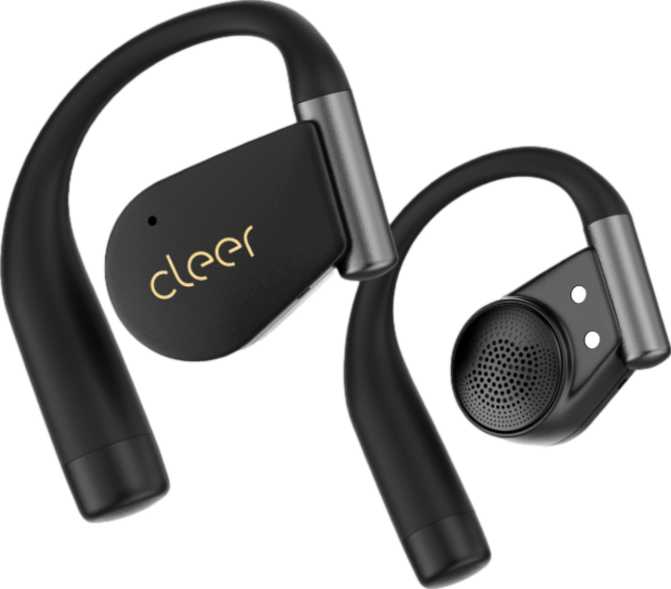
Most wireless earbuds compete by isolating you from the world — better seal, better noise cancellation, deeper bass. The Cleer Arc 5 takes the opposite approach. These are open-ear earbuds, meaning they sit outside your ear canal rather than inside it. You hear your music and the world around you simultaneously, without ever sacrificing situational awareness.
That design philosophy isn't a compromise. For runners, cyclists, remote workers, parents, and office professionals, it's exactly the point. But the Arc 5 isn't just about fit style — it arrives loaded with a codec stack that would embarrass earbuds twice its price, genuine waterproofing, and a battery system built for multi-day use. The question isn't whether these are capable. It's whether open-ear is the right choice for you — and whether the Arc 5 is the best version of that choice.
Design and Build Quality
The open-ear difference, explained plainly
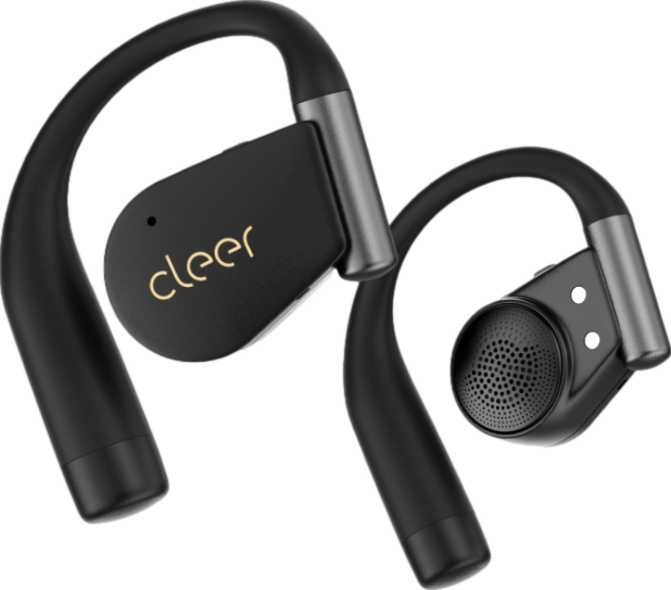
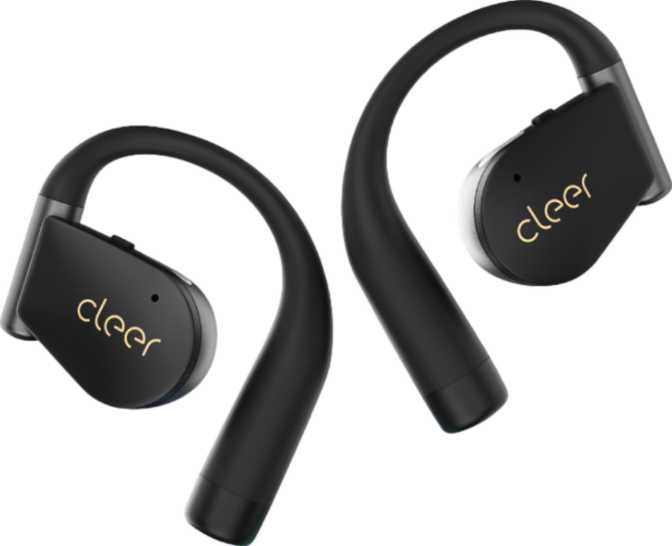
Open-ear earbuds rest on or around the outer ear using a hook, clip, or cradle mechanism rather than inserting a tip into the ear canal. There is no seal, no pressure, and no occlusion — that muffled "head in a bucket" sensation that makes in-ear designs uncomfortable for prolonged wear disappears entirely.
The Arc 5 is fully cable-free — true wireless in the purest sense. No neckband connects the two earbuds, giving each side complete independence for greater freedom of movement and a cleaner aesthetic compared to older neckband-style open-ear products.
The charging case includes a display that gives a precise readout of remaining battery. This is a meaningful step above the vague LED dot indicators found on most competitors — you know whether you have enough charge for your afternoon commute before you leave, not after the fact.
A travel bag is included in the box, which is a small but appreciated touch for commuters and travelers who want a dedicated carry solution without purchasing one separately.
Survives submersion up to one meter for thirty minutes. A meaningful step above the IPX4–IPX5 splash resistance found on most competing open-ear products.
Precise battery readout on the case — no guesswork, no ambiguous colored dots. Rare at this category level.
No cables, no neckband. Each earbud operates independently for maximum freedom of movement.
Sound Quality
High-resolution audio without the seal
Open-ear earbuds face a fundamental acoustic challenge — without a seal, low-frequency sound leaks away rather than building up around the eardrum. This is where the Arc 5's large-format driver becomes critical. It moves significantly more air than typical compact earbud drivers, which partially offsets the bass loss inherent to the open-ear format.
The 65Hz low-end floor is realistic for this format. Deep sub-bass below that threshold dissipates without a seal. Listeners prioritizing clarity, midrange detail, and vocal presence will find this range more than satisfying — listeners who need physical bass impact from EDM or hip-hop should factor this in.
Spatial Audio and Dolby Atmos
The Arc 5 supports both spatial audio and Dolby Atmos — the specific standard used by Apple Music, Amazon Music HD, Netflix, Disney+, and most major streaming platforms for their premium audio tiers. Native Dolby Atmos support means the Arc 5 processes the actual encoded signal rather than simulating or downmixing the format.
For open-ear earbuds specifically, spatial audio is arguably more impactful than on closed designs, because the natural sound bleed from the environment already contributes to a sense of space. The result is closer to listening through speakers in a room than through earbuds on your ears — a distinction that becomes especially evident with well-mastered spatial audio content.
Codec Support
A technical edge that actually matters
The codec is the compression standard used to transmit audio wirelessly from your device to the earbuds. Higher-quality codecs mean less data loss in transmission, which directly translates to more faithful sound reproduction. The Arc 5's codec stack would be impressive on full-size over-ear headphones — on earbuds at this price tier, it is exceptional.
Sony's Hi-Res Wireless Codec
Transmits up to three times the audio data of standard Bluetooth. Required for true hi-res streaming on Tidal, Amazon Music HD, and Qobuz on Android devices.
CD-Quality Over Bluetooth
Lossless audio transmission via Bluetooth. Rare even among premium headphones and represents a genuine differentiator that most open-ear products simply don't offer.
Qualcomm's Dynamic Flagship
Adjusts bitrate dynamically based on connection conditions. Delivers CD-quality or better audio with low latency, and is backwards-compatible with standard aptX devices.
Apple Ecosystem Compatibility
The preferred codec for iPhone and iPad. Ensures strong audio quality on Apple devices without requiring workarounds or codec downgrades for iOS users.
Whether you use Android, iPhone, or a dedicated audio player, the Arc 5 negotiates the best possible audio transmission your source device supports. Most earbuds choose one ecosystem. The Arc 5 covers all of them — and adds aptX Lossless on top for audiophile use cases. The Bluetooth 5.4 standard underpinning all of this is the most current generation, with improved connection stability and power efficiency over the Bluetooth 5.2 and 5.3 found in most current earbuds.
Battery Life and Charging
Built for multi-day use without anxiety
A full workday of continuous listening without touching the case, or a long-haul flight with audio to spare. Most premium earbuds offer six to eight hours per charge — the Arc 5 offers twelve.
Approximately four additional full charges from the case — enough for four to five days of typical use before any cable is needed. The case display shows exact remaining charge without guesswork.
A 15-minute top-up recovers two to three hours of playback — practical for rushed departures. Full charge takes two hours from empty.
Universal standard — no proprietary cables. Note: no wireless Qi charging is available, so a cable is always required for the case.
Earbuds announce battery status audibly when worn. Combined with the case display, you're never caught off guard by an unexpected shutdown.
Call Performance
Four microphones engineered for professional use
Open-ear earbuds can struggle with call quality in noisy environments because they don't physically block background noise the way in-ear designs do. The four-mic array with noise processing is Cleer's direct response to that structural limitation.
Four microphones with active noise reduction processing is an unusually dense array for this category. More microphones allow directional algorithms to capture the user's voice from the front while attenuating noise coming from other directions — the practical result is cleaner voice pickup in moderately noisy conditions.
The Arc 5 functions fully as a headset for phone calls, video conferences, and voice assistant commands. A mute function is available for immediate audio suppression during meetings without reaching for a device. Voice prompts confirm actions like mute toggling and connection status audibly.
- 4 directional microphones with noise processing
- One-touch mute function for meetings
- Voice prompts confirm status changes audibly
- Full headset compatibility across all platforms
- Very loud environments remain challenging — structural to open-ear design, not a product defect
Connectivity Features
Two devices, no hassle
The most current Bluetooth generation, with improved connection stability and power efficiency over the 5.2 and 5.3 versions found in most current earbuds.
Stay paired to a phone and laptop simultaneously. Switching is automatic based on which device plays audio — no manual disconnection required.
Universal charging with no proprietary cables. Fast charging support means a short session delivers meaningful playback time when you're in a hurry.
Pairing note: There is no NFC tap-to-pair, Google Fast Pair, or Microsoft Swift Pair support. Initial pairing uses the standard Bluetooth process — navigate to your device's Bluetooth settings, select the Arc 5, confirm. Not a meaningful drawback for most users, but buyers expecting one-tap proximity pairing should be aware. Bluetooth range is rated at ten meters in open space, which is typical for the category.
Who the Cleer Arc 5 Is Built For
Honest audience fit — no hedging
This product fits well if you...
- Run, cycle, or exercise outdoors and need to hear traffic and environmental sounds while listening
- Work in an open office where full isolation from colleagues is inappropriate or unsafe
- Experience ear discomfort or fatigue with in-ear designs — foam tips, pressure buildup, or occlusion effect
- Are an Android audiophile using LDAC-capable streaming platforms like Tidal or Amazon Music HD
- Want Apple ecosystem compatibility without sacrificing hi-res audio capability
- Frequently take calls from home or in transit and need reliable voice pickup in variable conditions
- Travel regularly and want multi-day battery that covers several days without finding a cable
Likely the wrong choice if you...
- Commute by train, plane, or bus and need active noise cancellation to block engine noise and crowd sounds
- Listen primarily to bass-heavy genres and want physical, chest-hitting low end
- Work in genuinely loud environments — construction, manufacturing, loud kitchens — where isolation matters
- Need to listen privately in a quiet room without others nearby hearing your audio at moderate volumes
- Require wireless Qi charging for a completely cable-free case topping-up experience
Competitive Positioning
How the Arc 5 stacks up against logical open-ear alternatives
| Feature | Cleer Arc 5 | Typical Competitor A | Typical Competitor B |
|---|---|---|---|
| Waterproofing | IPX7 — Submersible | IPX4–IPX5 (Splash-proof) | IPX4–IPX5 (Splash-proof) |
| Earbud Battery | 12 hours | 8–10 hours | 6–8 hours |
| Total Battery | ~60 hours | 24–36 hours | 20–30 hours |
| Hi-Res Codecs | LDAC + aptX Lossless + Adaptive | AAC only or LDAC only | Varies |
| Dolby Atmos | Rare at this tier | Rare at this tier | |
| Bluetooth Version | 5.4 | 5.2–5.3 | 5.2–5.3 |
| Case Display | |||
| Microphones | 4 (noise-canceling) | 2–3 | 2 |
Competitor data represents category averages. Specific models may vary.
Honest Assessment
Strengths and weaknesses stated plainly
The codec support is exceptional — LDAC, aptX Lossless, and aptX Adaptive together on a single product is a combination rarely found even in full-size over-ear headphones at this price range. For a buyer who has invested in a high-quality streaming subscription and wants wireless audio that transmits that quality faithfully to their ears, the Arc 5 delivers the hardware side of that equation properly.
The battery system is similarly hard to fault. Sixty total hours with twelve per charge removes the low-battery anxiety that plagues shorter-life products. The case display removes the guesswork that LED indicators introduce. The IPX7 rating extends usable environments significantly beyond most open-ear products — genuine submersion protection rather than gesture-level splash resistance.
The microphone array, with four noise-processing units, is built for real professional use. Most open-ear products include two microphones and call it done. The Arc 5's four-mic setup reflects a product that takes call quality seriously as a primary use case rather than an afterthought.
The absence of active noise cancellation is inherent to the open-ear design philosophy, not a gap in execution. But buyers need to understand this clearly before purchasing. If noise cancellation is on your must-have list, this product is structurally incompatible with that requirement regardless of how excellent it is in other areas.
Similarly, the bass response — while honest for the format — will not satisfy listeners whose music demands sub-bass presence. The 65Hz lower boundary is realistic and accurate, but below that threshold, open-ear physics simply don't cooperate.
The lack of an ear-detection sensor means music does not pause automatically when you remove the earbuds. For users who frequently pull one earbud out for conversations, this becomes a repeated minor inconvenience. No find-my-earbuds feature is present either — a misplaced earbud requires physical searching.
No wireless Qi charging for the case is the one technical omission that feels out of place with the Arc 5's otherwise comprehensive feature set — a small gap, but one that buyers used to cable-free case charging will notice daily.
Common Pre-Purchase Questions
Answers to what buyers actually search for
Final Verdict
The Cleer Arc 5 is an open-ear true wireless earbud that outperforms its format's typical limitations at nearly every measurable point. The codec support is flagship-tier. The battery is class-leading. The waterproofing is genuinely protective rather than gesture-level splash resistance. The microphone array is built for real professional use, not just occasional calls.
Recommended For
Outdoor enthusiasts, remote workers, audiophiles seeking hi-res wireless audio, and anyone who finds in-ear listening physically uncomfortable. If situational awareness and audio fidelity matter more to you than noise cancellation and deep bass, the Arc 5 makes a compelling, well-specified case for itself in a category where most options make heavier compromises.
What the Arc 5 cannot do — cancel noise, deliver sub-bass impact, auto-pause when removed — is structural to its open-ear design, not a product failure. These are known properties of the format. For buyers whose needs align with what open-ear does well, the Arc 5 is among the most complete and honestly-specified options available in this category.