Coros Pace 4 Review: Lightweight GPS Watch for Serious Athletes
Sports WatchesThe sports watch market is full of devices trying to be everything to everyone — ending up either too expensive for casual athletes or inadequate for serious competitors. The Coros Pace 4 takes a cleaner approach: deliver serious training intelligence in a sub-40-gram body that costs less than most flagship rivals and outlasts nearly all of them on battery. Whether you are building toward your first marathon or refining a triathlon race plan, this review covers performance, battery, sensors, limitations, and real-world fit so you can make a fully informed decision before spending your money.
Design and Build Quality
Lightweight without feeling cheap — engineered for athletes who wear their watch all day and every night
A Case Built Around Athletic Priorities
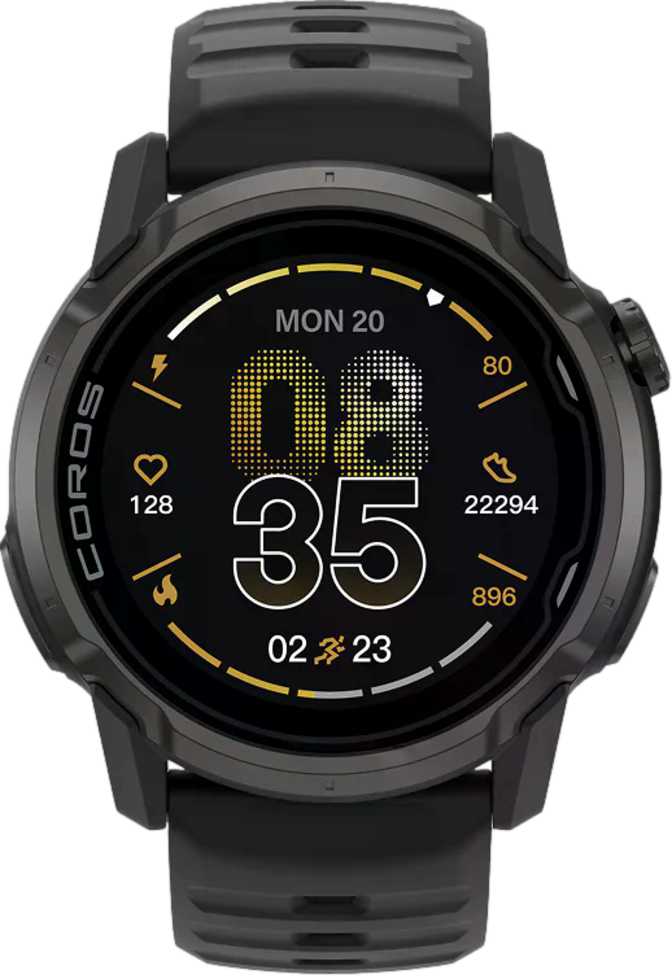
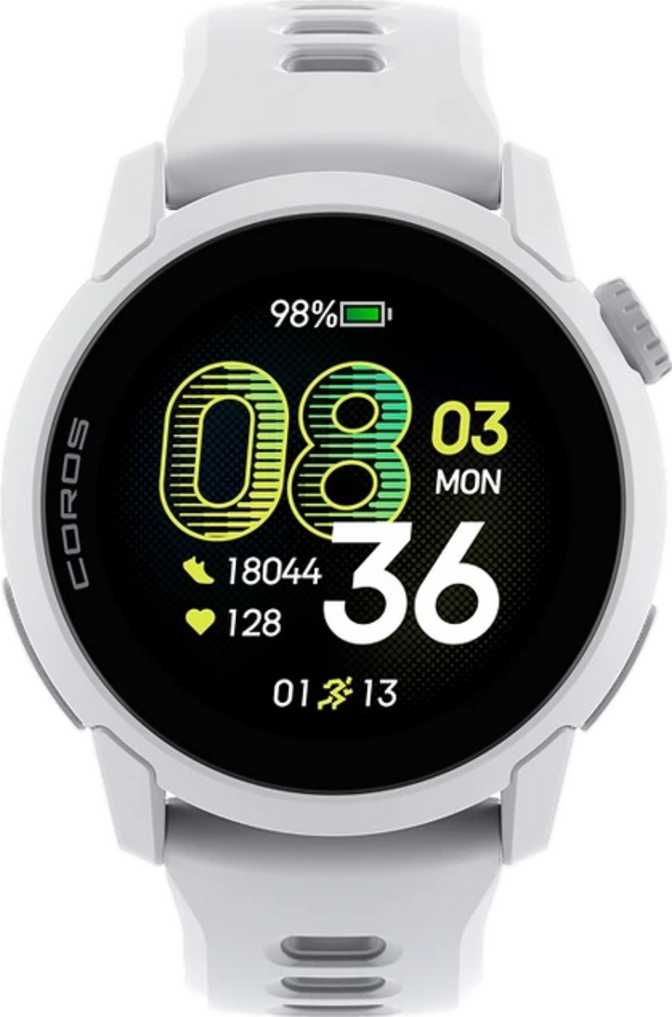
At just 40 grams with a profile barely thicker than a stack of four credit cards (11.8 mm), the Coros Pace 4 is engineered to disappear on the wrist during long training sessions. Athletes who have experienced wrist fatigue from heavier GPS watches will feel the difference almost immediately — no drag on the arm swing during runs, no pressure points during sleep. The 43.4 mm case diameter hits a practical middle ground: large enough to read metrics at a glance mid-stride, compact enough to wear all day without looking out of place away from the track.
The watch face is protected by Gorilla Glass, a branded damage-resistant material that handles the daily abuse of training environments, gym bags, and trail edges far better than standard mineral glass. The 22 mm band uses a universal lug width, which means aftermarket replacement bands from countless manufacturers are widely and cheaply available — a practical long-term ownership benefit that extends well beyond the included strap.
A Display That Rivals Premium Smartphones
The OLED/AMOLED panel running at 390 × 390 pixels delivers 459 pixels per inch — a sharpness figure that competes directly with flagship smartphones. Text is crisp, workout data renders cleanly, and colors stay vivid even in direct sunlight. The always-on display mode keeps metrics visible without requiring a wrist flick, which is practically essential during pool laps, track intervals, or any workout where pausing to wake a screen breaks your rhythm. Touchscreen navigation handles menus intuitively, while physical buttons remain available for wet-hand or gloved use.
Water Resistance and Temperature Durability
Rated to 50 meters (5 ATM), the Pace 4 handles pool swimming, open-water training, shower use, and rain without concern. It is not designed for scuba diving, but for every condition an endurance athlete realistically encounters, this protection level is more than sufficient. The certified operating range from -20 °C to +50 °C confirms it handles genuine winter conditions — cold mountain trail runs, frosty morning rides, and alpine environments will not trigger the sensor failures or battery issues that affect less tolerant watches.
- Weight40 g
- Diameter × thickness43.4 mm × 11.8 mm
- Band width22 mm (replaceable)
- Display typeOLED / AMOLED
- Resolution390 × 390 px
- Pixel density459 PPI
- Glass protectionGorilla Glass
- Waterproof depth50 m (5 ATM)
- Operating temperature-20 °C to +50 °C
Design Highlights
- Always-On Display — metrics visible hands-free
- Standard 22 mm lug — wide aftermarket band choice
- Gorilla Glass protection for daily abuse
- Touch and physical buttons — usable in all conditions
- Light enough for comfortable overnight wear
Core Performance: Sensors and Accuracy
Multi-constellation GPS, health metrics once reserved for elite athletes, and a training intelligence layer that earns its place
GPS That Keeps Up
The Pace 4 connects to multiple global satellite systems — including GPS and Galileo, the European network — and features a fast acquisition mode that locks position within seconds at the start of a session. Galileo adds redundancy in dense cities and forested trails where standard GPS signal can wander. For athletes who track real-time pace, a GPS that locks quickly and holds accurately directly determines the reliability of every split recorded.
Health Sensing Suite
Optical heart rate monitoring sits at the core, backed by a blood oxygen sensor (SpO2) that measures how efficiently your blood carries oxygen — valuable for altitude training and recovery monitoring. A barometric pressure sensor enables accurate elevation gain and loss tracking independent of GPS altitude estimates, meaningfully improving data quality for trail and mountain athletes.
A body temperature sensor, gyroscope, accelerometer, and digital compass complete the onboard array, providing motion tracking, accurate step data, and navigation support across every activity type.
VO2 Max and HRV Intelligence
VO2 max estimation — once a lab-only metric — provides a trend line of your cardiovascular ceiling over weeks and months, giving you a measurable signal of fitness progression without a treadmill test. The Pace 4 derives this from heart rate and pace data continuously.
Heart rate variability (HRV) monitoring tracks subtle variations between beats — one of the most reliable early indicators of nervous system recovery state. Combined with resting heart rate tracking, this feeds a daily readiness score that flags accumulating fatigue before you feel it in your legs.
One Notable Sensor Omission: No ANT+
The Pace 4 does not support ANT+ — the wireless protocol used by many external training accessories including power meters, foot pods, and dedicated cadence sensors common among performance cyclists and triathletes. External devices connect only via Bluetooth. If you rely on an established ANT+ accessory setup, this is a hard constraint to factor into your decision before purchasing.
Activity Tracking: What the Pace 4 Can Follow
Multi-sport coverage with automatic detection — built for athletes who train across disciplines
Map Upload Is Not Supported
The Pace 4 cannot load trail maps, topographic layers, or turn-by-turn navigation courses. Trackback mode guides you back to your start point, but pre-loaded maps are not a feature of this watch. Athletes whose training regularly depends on on-wrist navigation should treat this as a hard constraint.
Sport Profile Library Is Focused, Not Exhaustive
The companion app tracks 11 exercise types — solid coverage for running, cycling, swimming, and multisport. Athletes who train across a broader spectrum of disciplines may find this narrower than competing watches offering 20-plus sport profiles. Know your primary sports before purchasing.
Battery Life: A Genuine Competitive Advantage
Measured in days and ultra-distance sessions — not the hourly constraints of lesser GPS watches
What 19 Days in Smartwatch Mode Actually Means
If you charge the Pace 4 at the start of the week, you will likely not need to charge again for two to three full weeks of training. That assumes daily wear, automatic sleep tracking, and regular short workouts. Most competing GPS watches at this price tier require charging at least once a week — often twice. For athletes who train every day, every charge cycle represents a night without sleep data, a disrupted morning routine, or a pre-race scramble to top up. The Pace 4 largely removes that friction from your life.
41 Hours of GPS-On Endurance
With continuous GPS recording active, the watch sustains up to 41 hours of runtime. That covers an Ironman triathlon comfortably, a 100-mile ultramarathon finish for virtually any runner, and a multi-day bikepacking stage without needing a charge between legs. For the overwhelming majority of endurance events, battery depletion during the activity itself stops being a concern you carry into a race.
Recharging from empty to full takes approximately two hours — fast enough to top up during a recovery morning, an evening at home, or a rest day between training blocks. Wireless charging is not supported, and there is no solar-charging layer, but neither omission meaningfully disrupts a realistic training schedule.
Battery Performance at a Glance
Connectivity and Ecosystem
A training-first watch with a free, capable companion app — and deliberate omissions that keep cost and battery consumption in check
- iOS and Android compatible — no platform restrictions
- Wi-Fi 4 sync — direct app updates without needing your phone nearby
- Free, ad-free companion app — no subscription required for any feature
- Bluetooth chest strap support — pair external heart rate monitors for greater accuracy
- Music playback control — manage tracks on your paired phone from the wrist
- 4 GB onboard storage — local music playback via Bluetooth headphones
- Phone finder — locate a misplaced phone from the wrist
- Wrist notifications — messages, call alerts, and calendar events
- Silent alarm and vibrating alerts for unobtrusive wake-ups
- Thunderstorm risk alerts — weather safety for outdoor athletes
- Sunrise and sunset times — useful for planning sessions in short daylight windows
- Calendar sync — scheduled events from your phone appear on the watch
- ANT+ — no compatibility with ANT+ power meters, foot pods, or cadence sensors
- NFC payments — cannot tap to pay at cafés or shops mid-run
- Cellular connectivity — requires a paired phone; cannot operate independently for calls or data
- Wireless charging — requires a wired cable connection
The App — What You Actually Get
The Coros companion app is free to download and free to use — no subscription tier gates any training feature, coaching tool, or recovery metric. There are no advertisements. Structured training plans, HRV trend data, recovery scoring, route management, and workout history are all fully accessible without paying anything beyond the watch itself.
Web access via PC is supported, and the platform syncs with your calendar and can export workout data by email. The app does require account creation, and Mac OS compatibility is not listed as a supported platform.
Real-World Usage: Who Should Buy the Coros Pace 4
The Pace 4 is a precision tool — it excels for the right athlete and falls short for the wrong one
- Distance runners (5K to ultramarathon) — GPS accuracy, real-time pace, HRV-based recovery scoring, and weeks-long battery life address exactly what high-mileage runners need.
- Triathletes and duathletes at the competitive amateur level — multi-sport session chaining, swim stroke analysis, and barometric elevation tracking across all disciplines.
- Athletes who hate charging their watch — if a full training week or two between charges is a priority, almost nothing in this price category matches the Pace 4's endurance.
- Health-conscious daily wearers — sleep data, SpO2 tracking, body temperature monitoring, and daily readiness scoring in a watch light enough to forget is there.
- Budget-aware performance athletes — training analytics previously found only on significantly more expensive devices, at a mid-range price point with no subscription required.
- Navigation-dependent athletes — trail runners, mountain runners, or hikers who need downloadable maps and topographic displays on the wrist. The absence of map upload is a hard limit for this use case.
- Cyclists with existing ANT+ ecosystems — power meters, cadence sensors, and foot pods connected via ANT+ will not pair with this watch. Bluetooth-only connectivity is a meaningful constraint for this group.
- Athletes who want phone-independence or tap-to-pay — there is no cellular module and no NFC payment support. The Pace 4 is a training watch first, smartwatch second.
- Golfers and divers — the watch was not engineered for these activities and the feature set reflects that clearly. Specialist sport tools are a better fit.
How the Coros Pace 4 Compares to Logical Alternatives
Positioned between entry-level GPS watches and premium flagships — with specific advantages in display quality and battery endurance
| Feature | Coros Pace 4 Mid-Range |
Budget GPS Watch Entry-Level |
Premium Sport Watch Flagship |
|---|---|---|---|
| Display | OLED — 459 PPI | LCD — lower PPI | AMOLED or MIP |
| Weight | ~40 g | ~45–55 g | ~50–80 g |
| GPS-on Battery | ~41 hours | ~20–30 hours | ~30–50 hours |
| Smartwatch Battery | ~19 days | ~7–14 days | ~5–18 days |
| Map Upload | (premium tier) | ||
| ANT+ Support | Often yes | ||
| Cellular Option | Sometimes | ||
| HRV + Recovery Score | Sometimes | ||
| App Subscription | None required | Free or paid | Sometimes paid |
Competitor data represents typical category characteristics and is not based on a single named product.
Strengths and Weaknesses: An Honest Assessment
Credibility comes from balance — here is where the Pace 4 genuinely excels, and where it deliberately falls short
Where It Excels
- The display is sharper than you would expect from a watch at this price tier. At 459 PPI on an OLED panel, it competes with the output of premium devices costing significantly more.
- Battery endurance is class-leading at this price. Nearly three weeks on a charge in daily use and 41 hours of continuous GPS recording make battery management effectively a non-issue for most training schedules.
- HRV tracking, VO2 max estimation, and recovery scoring are genuinely useful features that used to cost far more — and they come with no recurring subscription attached.
- The 40-gram weight is not marketing language — it is noticeably lighter than heavier sport watches, which translates into willingness to wear it during sleep, recovery days, and full-day events where heavier devices become a burden.
- The multi-constellation GPS with fast acquisition provides reliable, accurate position tracking even in environments that challenge single-system watches.
Where It Falls Short
- The absence of ANT+ support is a meaningful gap for performance cyclists and triathletes with established accessory ecosystems built around that protocol. Bluetooth-only connectivity is a genuine constraint, not a minor footnote.
- There is no on-device map upload. For athletes whose training regularly takes them into unfamiliar terrain, this is a hard architectural limit that cannot be worked around with a software update.
- The exercise library of 11 sport profiles is narrower than comparably priced alternatives. Athletes who train across a wide variety of disciplines beyond running, cycling, and swimming will feel this limit.
- Watch face and data field personalization options are more limited than some competitors. Athletes who want deep customization of what appears on screen during workouts may find the flexibility insufficient.
- No NFC payments and no cellular module mean the Pace 4 cannot replace a phone for on-run purchases or standalone navigation. These are deliberate trade-offs that keep the price and battery usage in check — but they are real omissions.
Common Pre-Purchase Questions
The questions real buyers search before spending their money — answered directly
Should You Buy the Coros Pace 4?
The Coros Pace 4 makes a compelling case for athletes who want serious training tools — genuine HRV-based recovery analysis, accurate multi-constellation GPS, and a display that is genuinely good rather than merely adequate — without the weight penalty, price premium, or recurring subscription cost that typically accompany them.
Buy It If
- You are a runner, triathlete, or multisport athlete training consistently
- Battery life and training analytics are your top priorities
- Your accessories connect via Bluetooth, not ANT+
- You want no subscription fees eating into your budget
Skip It If
- You need downloadable maps and on-wrist navigation
- Your training setup relies on ANT+ accessories
- NFC payments or cellular independence are non-negotiable
- You need 20+ sport profiles or deep watch customization
Know which athlete you are, and the Pace 4 makes the decision straightforward. For runners, triathletes, and fitness-focused daily wearers who prioritize training depth, battery endurance, and a light wrist feel over smart features and on-device navigation, this watch delivers more than its price suggests — and does so without asking for anything more after purchase.