Coros Apex 4 Review: A Serious GPS Watch for Serious Athletes
Sports WatchesWhat the Coros Apex 4 Gets Right From the Wrist Up
The outdoor GPS watch market is full of options that either ask you to pay a premium for features you will never use, or cut corners you will regret on mile twenty of a trail run. The Coros Apex 4 lands in the middle with a clear point of view: a capable, endurance-focused sports watch built for athletes who spend serious time outdoors — without requiring a second mortgage.
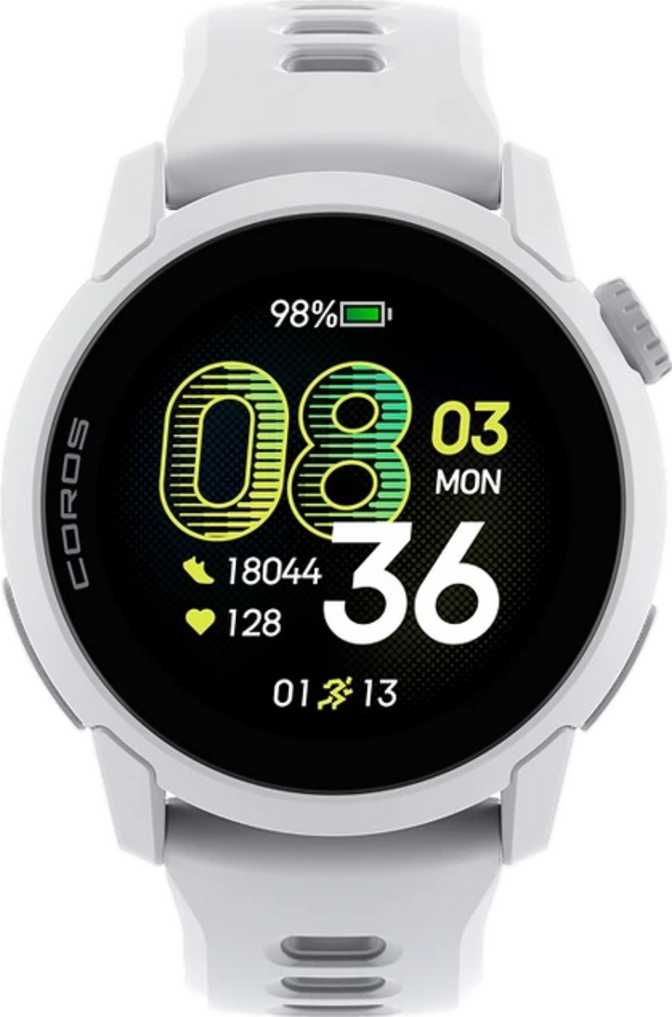
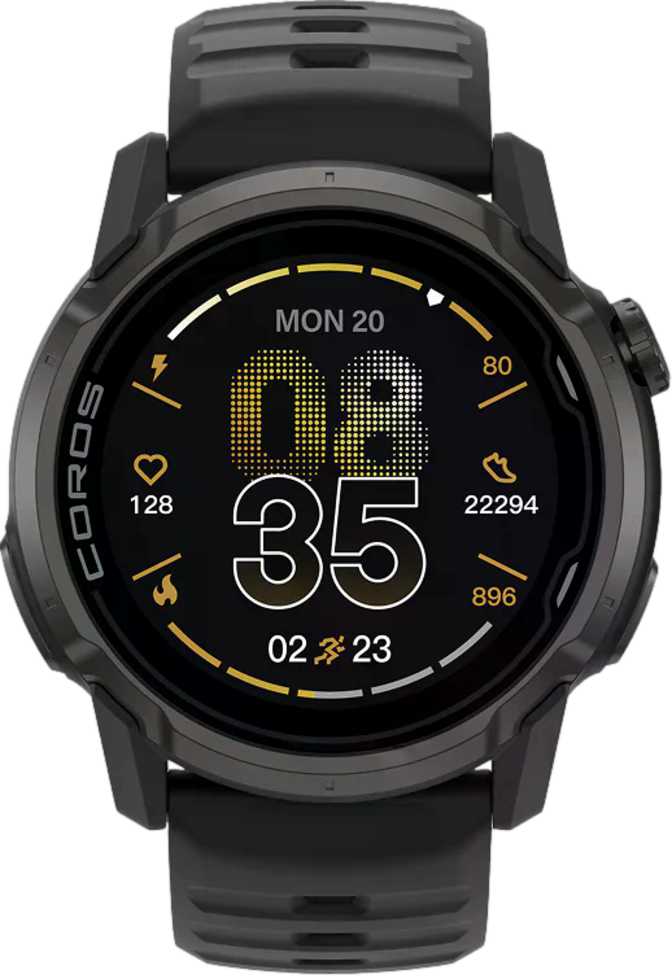
What makes the Apex 4 interesting is not any single feature — it is the coherence of the package. Sapphire crystal protection, 32GB of onboard storage, multi-constellation GPS, an always-on display, and battery life that outlasts a multi-day mountain stage all combine at a price point where competitors regularly compromise on at least one of these fronts.
Highly recommended for trail runners and mountain athletes
Key Specifications at a Glance
Design and Build Quality
How the Coros Apex 4 is constructed — and why the choice of materials matters for outdoor use.
Sapphire Crystal Lens
The display is protected by genuine sapphire crystal — not a scratch-resistant coating, but one of the hardest commercially available materials in watchmaking. Trail debris, rocks, and years of casual impact leave it unmarked. For a watch designed for rough terrain, sapphire protection is the right answer at any price point.
A Case That Earns Its Weight
At 51 grams, the Apex 4 sits in a range where it stops registering as a presence on your wrist after the first mile. The 46.2mm diameter reads as full-sized without being overbearing, and the 13.7mm profile threads the needle between substantial build quality and low-profile wearability under a jacket cuff.
Replaceable 24mm Band
The wider-than-average 24mm band width creates a secure, planted fit during high-motion activity and opens up a solid aftermarket selection for those wanting to swap between a sport silicone for training and something more subdued for daily wear. Replaceability also meaningfully extends the watch's useful lifespan.
The Display: Always On, Always Clear
A 1.3-inch LCD screen with always-on capability built for outdoor readability over indoor glamour.
The 1.3-inch LCD panel renders at a density that keeps text crisp and map details legible in a quick glance mid-stride. This is not an AMOLED screen — color depth and indoor contrast are not its strengths. What it delivers instead is consistent outdoor visibility, including direct sunlight where AMOLED screens frequently become difficult to read.
The always-on mode keeps data visible without requiring a wrist-raise gesture — essential when you need pace or elevation data immediately during a technical descent without the friction of activating the screen. Touch input works alongside physical buttons, giving interaction flexibility whether you are wearing gloves, have wet hands, or need precise menu navigation.
The LCD versus AMOLED trade-off matters more indoors than out. In bright sunlight — exactly where this watch is designed to be used — LCD panels often outperform AMOLED rivals on contrast and readability. The difference becomes most apparent in low-light indoor environments.
Sensor Suite Explained
What each sensor actually does — in plain terms and in real-world practice.
Optical Heart Rate
Continuous wrist-based monitoring throughout workouts and daily wear. Best supplemented by a Bluetooth chest strap when training zone precision is essential — wrist HR for convenience, external for accuracy when it counts.
Pulse Oximeter (SpO2)
Measures blood oxygen saturation — most valuable at altitude, where tracking SpO2 levels helps inform decisions about acclimatisation rate and exertion intensity.
Barometer
Handles both precision elevation tracking and weather trend monitoring. Sustained pressure drops trigger thunderstorm warnings before conditions deteriorate visibly.
Accelerometer & Gyroscope
The combination handles motion data — step counting, activity detection, swim stroke recognition, and movement accuracy that an accelerometer alone cannot achieve.
Magnetic Compass
Real magnetic heading, not GPS-derived. Reliable at a standstill or low speed where satellite-based bearing loses its usefulness.
Body Temperature Sensor
Tracks wrist skin temperature as an input to recovery and wellness monitoring over time — not for in-the-moment medical readings, but as a trending data point.
The Coros Apex 4 does not include a built-in cadence sensor or wind speed sensor. Cyclists who need cadence data will require an external Bluetooth sensor. This is a genuine omission for bike-focused athletes.
Performance Features for Training Athletes
How the Apex 4 processes data into actionable training intelligence.
Derived from heart rate and pace over time, VO2 max estimates aerobic capacity. Wrist-based measurements carry inherent limitations versus lab testing, but the trend across weeks and months is genuinely useful for tracking fitness progression — especially when comparing periods of consistent training against recovery blocks.
Heart rate variability — the subtle variation between heartbeats — is one of the most reliable indicators of recovery status available on a wrist sensor. The Apex 4 measures HRV during sleep and combines it with activity history and resting heart rate data to produce a daily readiness score, guiding whether to push hard or pull back that day.
Continuous resting heart rate monitoring serves two purposes: tracking long-term cardiovascular fitness improvement (lower resting HR typically indicates higher aerobic fitness), and flagging accumulated fatigue or early-stage illness before you consciously feel it — a particularly useful signal mid training block.
Activity Tracking Coverage
Battery Life: The Practical Story
What the Coros Apex 4's endurance figures mean for real training schedules and expedition use.
Daily Wear Endurance
In full smartwatch operation — always-on display active, continuous heart rate, sleep tracking running every night — the Apex 4 reaches approximately three and a half weeks between charges. This practically eliminates battery anxiety. You charge it when convenient, not because you have to.
GPS Activity Runtime
Continuous multi-constellation GPS with heart rate active. This covers a full ultramarathon effort, a long mountain day, or an extended bikepacking route without any mid-activity battery management. For activities under ten to twelve hours, battery considerations disappear entirely.
2-Hour Full Recharge
Topping up on the same evening you return from a long activity gets you back to full before morning. The watch uses a proprietary magnetic charging cable — not USB-C directly at the watch.
No Solar Charging
Athletes planning 20+ day unsupported expeditions with zero charging access will need to weigh this carefully. Solar-assisted models exist in the market for exactly this edge case.
Smart Features and Connectivity
The Apex 4 handles smart features as a secondary function, not its primary identity.
What It Supports
- Smartphone notifications on wrist — incoming messages and alerts visible without reaching for your phone
- Music playback control — manage audio from the wrist with 32GB for offline storage of tracks
- Wi-Fi sync & updates — data syncs and firmware updates over home Wi-Fi without needing the phone present
- Bluetooth 5 — phone pairing, external sensor connection (chest strap HR), and audio device support
- Silent alarm & sunrise/sunset times — wake without disturbing others; plan dawn starts with accurate daylight data
- Thunderstorm warnings — real-time alerts based on barometric pressure data — critical safety for alpine environments
- Android & iOS compatible — full functionality on both platforms via the free, ad-free Coros app
Deliberate Omissions
- No NFC payments — tap-to-pay is absent; your wallet stays in your pocket for every transaction
- No cellular module — no standalone phone-free calls or data; a paired phone is required for communication features
- No ANT+ — power meters, most cadence sensors, and cycling-specific gear typically use ANT+; Bluetooth-only limits options
- No voice commands — all interaction is physical via touch or buttons
- No camera remote — cannot trigger a smartphone or action camera shutter from the wrist
Environmental Toughness
The operating conditions the Coros Apex 4 is rated and built to handle.
Water: 50 Metres
5 ATM water resistance covers pool swimming, open-water training, rain, and shower exposure without precaution. Not designed for diving or significant depth, but everything at the surface is fully handled.
Cold: Down to −30°C
The watch functions at temperatures where most GPS devices start behaving unpredictably. Ski mountaineers, polar athletes, and winter endurance racers operate in conditions that reach this floor — and the Apex 4 is rated for them.
Heat: Up to 50°C
Desert trail runners, athletes training in hot climates, and anyone working in high-heat environments can operate the watch without concern up to 50°C ambient temperature — well beyond typical athletic conditions.
Who Should Buy the Coros Apex 4
Ideal For These Athletes
- Trail runners and ultramarathon athletes who need reliable GPS, accurate elevation data, and multi-hour GPS runtime without the weight and cost of top-tier offerings.
- Hikers and mountaineers who want proper navigation — uploadable routes, onboard maps, magnetic compass, barometric altitude, and weather alerts — on a durable, light platform.
- Multi-sport athletes who train across running, swimming, and cycling and want one device that handles transitions without friction across eleven sport profiles.
- Training data-focused athletes who want VO2 max estimation, HRV recovery scoring, and resting HR trends as genuine training tools rather than passive wellness tracking.
- Anyone who values not charging weekly — three-week standby life fundamentally changes the daily relationship with the device.
Not the Right Fit For
- Casual smartwatch users who want app stores, voice assistants, contactless payments, or a device that competes with Apple Watch or Galaxy Watch on smart features.
- Cyclists needing onboard cadence tracking — no built-in cadence sensor means an external Bluetooth sensor is required for meaningful cycling data.
- Divers — 5 ATM covers surface swimming, not dive profiles. This is a sports watch, not a dive computer.
- Golfers — no golf-specific course mapping, shot tracking, or scoring features of any kind.
- Extreme expedition athletes planning 20+ day unsupported routes with no charging access, who need solar-assisted battery extension as a logistical requirement.
How the Coros Apex 4 Compares
Where the Apex 4 sits relative to logical alternatives at different price tiers.
| Feature | Coros Apex 4 | Mid-Range GPS Rival | Premium GPS Rival |
|---|---|---|---|
| Display Glass | Sapphire | Mineral glass | Sapphire |
| GPS Battery Life | 17 hours | 12–18 hours | 30–60+ hours |
| Standby Battery | ~24 days | 14–20 days | 16–50+ days |
| Internal Storage | 32 GB | 4–16 GB | 16–32 GB |
| Always-On Display | Some models | ||
| Onboard Maps | Some models | ||
| Solar Charging | Some models | ||
| NFC Payments | Some models | Some models | |
| Watch Weight | 51 g | 47–58 g | 53–65 g |
| Cellular | Some models |
Rival specifications represent category averages and typical configurations. Individual models vary.
Honest Strengths and Weaknesses
A balanced assessment of where the Apex 4 genuinely excels and where it falls short.
Where It Earns Its Price
The Apex 4's most impressive quality is its coherence. Sapphire glass, a sub-52-gram body, barometric altitude tracking, 32GB of onboard storage, and a three-week battery are not randomly assembled — they form a package clearly optimized for the athlete who actually spends days in the mountains rather than commuting through city parks. At this price tier, competitors regularly compromise on at least one of these elements. The Apex 4 does not.
The −30°C cold-weather operability is a genuine differentiator most buyers will never need — but for ski mountaineers, winter ultrarunners, and anyone operating in serious cold, it provides a margin of confidence that category averages do not.
Where It Falls Short
The absence of ANT+ is the most consequential limitation for cycling-focused athletes. ANT+ is the standard protocol that power meters, most cadence sensors, and a broad range of cycling-specific hardware uses. Bluetooth-only connectivity is fine for running and swimming, but leaves a noticeable gap for cyclists wanting comprehensive data without additional hardware workarounds.
The LCD display performs well outdoors but cannot match the visual quality of AMOLED alternatives in lower-light conditions. If you have used a flagship smartwatch daily, the display will read as utilitarian. That is an accurate description, not necessarily a criticism — it is a deliberate trade-off for outdoor readability.
The missing NFC for contactless payments is a legitimate absence at this price point. Tap-to-pay on sports watches has shifted from novelty to expected — its absence here requires carrying additional payment methods.
Questions Buyers Actually Ask
Straight answers to the questions that come up before purchasing the Coros Apex 4.
Coros Apex 4: Highly Recommended
The Coros Apex 4 is a well-engineered outdoor sports watch that earns its place in a competitive field by doing the core things — navigation, sensor accuracy, build durability, and battery endurance — without overreaching into smart features it cannot execute well.
The sapphire crystal lens, 32GB of storage, barometric altitude tracking, multi-constellation GPS, and sub-52-gram weight form a package that punches above its price point. The always-on display, three-week battery, and −30°C cold-weather operability make it genuinely suited to the environments it is marketed for — not just spec-sheet capable.
Buy it if you are:
- An endurance runner, trail athlete, or mountain adventurer
- Someone who needs durable navigation-capable hardware
- An athlete who tracks training load and recovery data
- A user who values multi-week battery over smart features
Look elsewhere if you need:
- ANT+ sensor compatibility for power meter data
- Solar-extended battery for extreme expeditions
- NFC contactless payments on the wrist
- Cellular independence from your phone
An exceptional choice for serious outdoor athletes who know what they need and want a watch that keeps up.