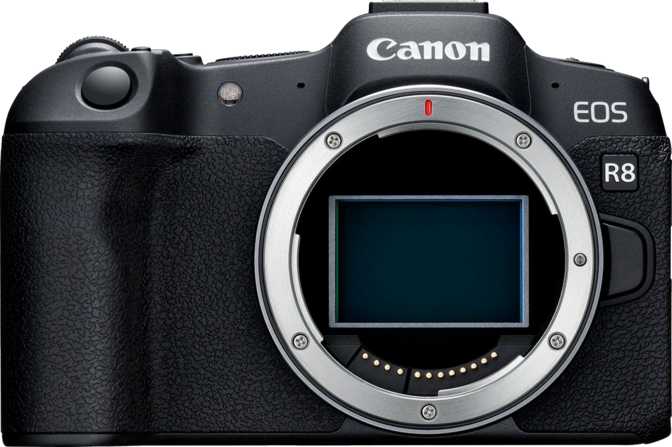
Canon EOS R8 Review: Full-Frame Performance, Real-World Trade-Offs
CamerasThe Canon EOS R8 occupies a position in the camera market that almost didn't exist a few years ago: a genuine full-frame mirrorless body priced within reach of serious enthusiasts who previously had to settle for crop sensors or aging DSLRs. It carries the optical engine of Canon's professional RF lineup, strips away several features the casual shooter will never miss, and delivers the result at a weight lighter than many entry-level mirrorless cameras.
That's either a brilliant value proposition or a troubling list of compromises — depending entirely on what you need it to do.
Overall Score
Excellent image quality. Plan for battery management.
At a Glance: Key Specifications
What the numbers actually mean for your shooting
Sensor
Full-Frame
24.2 MP CMOS
Autofocus
1,053 Points
Phase-detection + tracking
Video
4K / 60fps
230 Mbps bitrate
Battery
~220 Shots
USB-C charging
Weight
461 g
Lightweight for full-frame
EVF
2.36M Dots
120fps refresh rate
Weather Seal
Yes
Dust & light moisture
Card Slots
Single
UHS-II SD only
Design and Build: Compact Without Feeling Cheap
Physical experience, screen, viewfinder, and construction quality
Physical Footprint
The R8 is a small camera by full-frame standards. At roughly 132.5 mm wide, 86 mm tall, and 70 mm deep, it fits comfortably in a large jacket pocket and doesn't overwhelm when paired with a compact prime lens. The weight sits at 461 grams — notably lighter than the bodies it competes against.
For photographers who spend long days walking with a camera hanging from their shoulder, that difference registers by late afternoon. The grip depth is adequate for most hand sizes, though shooters with larger hands may find extended sessions without a battery grip somewhat tiring compared to deeper-bodied alternatives.
Weather Sealing
The R8 carries weather sealing for protection against dust and light moisture. You can shoot confidently in light drizzle, dusty environments, or misty coastal conditions.
Weather sealing at this price point is not universal among full-frame mirrorless cameras. Its presence here is meaningful.
Screen and Viewfinder
Flip-Out Rear Display — 3 inch
The 3-inch rear display is fully articulating — it flips out to the side on a hinge rather than tilting on a fixed axis. This enables:
- Waist-level shooting facing forward
- Low-angle shots without lying flat on the ground
- Overhead compositions without a ladder
- Self-facing framing for video content creators
Electronic Viewfinder
The EVF delivers a sharp experience at approximately 2.36 million dots with a 120fps refresh rate. The image remains smooth and responsive even when panning quickly or tracking fast subjects. Viewfinder coverage is 100% — what you see matches exactly what the sensor captures.
Sensor and Image Quality: Where the R8 Earns Its Credibility
Full-frame advantage, resolution, and low-light capability
The Full-Frame Advantage
The R8 uses a full-frame sensor — the same physical size used in professional studio cameras. For buyers stepping up from smartphones or crop-sensor cameras, this is the most significant single upgrade available in photography. A larger sensor gathers more light per pixel, which translates directly to:
- Cleaner images in dim conditions, such as indoor events or evening streets
- Smoother, more pleasing background blur (bokeh) when shooting portraits
- Greater flexibility when recovering exposure during post-processing
The sensor resolves at 24.2 megapixels — detailed enough for large prints and aggressive cropping, without ballooning to file sizes that slow down storage and editing workflows.
Low-Light Performance
Each individual photosite on this sensor is physically larger than what you'd find on a high-resolution full-frame body, indicating strong light-gathering efficiency per pixel. The practical consequence is that images shot in dim restaurants, evening streets, or candlelit interiors retain more detail and less digital noise than smaller-sensor cameras of comparable resolution.
The sensor is a CMOS design without back-illumination and without a stacked architecture. Both technologies appear in higher-cost bodies and can improve readout speed and rolling shutter behavior. Their absence is addressed in the autofocus and video sections below.
DxOMark Sensor Scores
Independent Lab Results
Excellent highlight and shadow recovery latitude
Smooth skin tones and rich tonal gradation
Competitive at this resolution class
Pixel Size: 6 µm
A relatively large photosite for a 24MP full-frame sensor, indicating excellent light-gathering efficiency that directly benefits high-ISO performance.
Autofocus: The Technical Highlight
Where the R8 punches well above its price class
AF System Depth
The autofocus system is one of the R8's strongest arguments. It deploys phase-detection autofocus across the sensor using over 1,000 individual detection points, covering a wide area of the frame. Phase-detection AF calculates subject distance by comparing light entering from different angles — it's fast, confident, and locks on even with brief, partial views of a subject.
The system includes subject tracking, which means the camera follows a person, animal, or object as it moves across the frame without requiring you to manually reposition an AF point. Canon's tracking algorithms — inherited from the higher-end RF bodies — handle overlapping subjects, partial occlusion, and erratic movement better than most cameras at this price.
Subject Recognition Capabilities
When tracking a person, the camera prefers to lock onto the nearest eye. For candid portraits and moving subjects, this is the feature that produces consistently sharp results without technical intervention.
Continuous Shooting Speed
Sufficient for most shooting scenarios including sports, children, and pets. Not suited to professional-grade wildlife or fast-action team sports coverage.
Enables wide-aperture shooting in bright daylight without overexposure. Fast-moving subjects may show slight rolling shutter distortion due to the non-stacked sensor.
Standard for this camera class. Flash sync speed supports typical studio and off-camera flash setups.
Video Capabilities: A Serious Hybrid Tool
4K resolution, cinema frame rates, and professional audio
Resolution and Frame Rates
The R8 captures 4K video at up to 60 frames per second. At 4K/24p, the footage carries a cinematic quality that works naturally for narrative and documentary content. 4K/60fps allows post-production slow motion at half speed while retaining full 4K detail — valuable for interviews, documentary work, and social media content.
The data rate reaches 230 megabits per second at its highest quality setting, preserving substantial tonal gradation in the encoded file — important for footage that will be graded in post or composited with other sources.
A 24p cinema mode records at the frame rate that film traditionally runs at. This ensures footage edited alongside professional cinema content matches tonally without frame-rate conversion artifacts.
Audio and Monitoring
| Audio Feature | Available |
|---|---|
| 3.5mm microphone input | |
| 3.5mm headphone monitoring output | |
| Built-in stereo microphones (x2) | |
| Continuous AF during video | |
| Native live streaming support | |
| HDMI 2.1 clean output | |
| Slow-motion recording | |
| Timelapse function |
The headphone output allows real-time monitoring of recorded audio while filming — a professional-grade feature that most cameras at this level omit. For solo content creators filming without a camera operator, the continuous subject-tracking AF operating during video is the difference between usable and unusable footage.
Battery Life: The Most Important Limitation
Plan carefully — this is the R8's most significant daily challenge
The R8's battery capacity is modest. Under CIPA standardized test conditions — which simulate a mix of shooting patterns — the battery yields approximately 220 frames. CIPA testing tends to be conservative relative to real-world continuous shooting, but the R8's battery life remains notably short compared to many mirrorless competitors and essentially all DSLRs.
In practice, an active full day of shooting will require either a spare battery or access to recharging. The camera charges via USB-C, which is a genuine convenience — a power bank can top up the battery between sessions without carrying a separate charger unit. The battery is removable and replaceable.
Battery Comparison Context
| Camera | CIPA Shots |
|---|---|
| Canon EOS R8 | ~220 |
| Canon EOS R50 | ~300 |
| Nikon Z5 II | ~430 |
| Sony A7C | ~740 |
Connectivity and Workflow
Wireless, wired, and memory options
Wireless Connections
-
Wi-Fi 4 (802.11n)
Enables image transfer to smartphone or computer, remote control via Canon's Camera Connect app, and cloud-based image management. Functional for transfer workflows.
-
Bluetooth 4.2
Persistent low-power connection for smartphone pairing. Used primarily for location data relay and quick image sharing without the overhead of a full Wi-Fi handshake.
-
No Built-In GPS
Location data can be appended via the smartphone app relay, but this requires Bluetooth and the Camera Connect app to remain active.
Ports and Memory
-
USB 3.2 Type-C
Fast data transfer and in-camera charging from any USB-C power source, including power banks. A meaningful daily convenience improvement over Micro-USB predecessors.
-
HDMI 2.1
Supports clean uncompressed video output at high resolutions to external recorders — relevant for professional video productions using external capture hardware.
-
Single Card Slot Only
No redundancy for photographers whose work carries financial or sentimental stakes they cannot afford to lose. Backup workflows must happen after the shoot, not during it.
The RF Lens Ecosystem
Compatibility, investment, and long-term lens strategy
The R8 uses Canon's RF mount, the bayonet standard introduced with the EOS R system. The native lens catalog is extensive, ranging from professional f/1.2 prime lenses to compact consumer zooms. Critically, Canon's EF and EF-S lenses from the DSLR era mount via Canon's own adapter with full electronic communication maintained.
This means photographers upgrading from Canon DSLRs bring their lens investments with them — a practical argument in favor of this system over competing platforms.
RF Native Lenses
Full compatibility. Best autofocus performance and optical quality.
EF / EF-S via Adapter
Full electronic communication. EF-S produces a crop frame. Excellent value for DSLR upgraders.
EF-M Lenses
Not compatible. EF-M is Canon's discontinued mirrorless crop-sensor standard and does not mount on the R8.
Who the Canon EOS R8 Is For
Match your use case before committing
This Camera Fits Well For
- Photographers upgrading from a crop-sensor camera or older DSLR who want full-frame image quality without paying a professional body price
- Portrait and travel photographers for whom the lightweight body is a practical daily advantage
- Video creators and hybrid shooters who need 4K/60fps, proper audio connectivity, and subject-tracking AF in a compact form
- Content creators who film themselves and need a reliable flip-out screen with fast, accurate continuous autofocus
- Canon DSLR owners with an existing EF lens collection, for whom brand ecosystem continuity removes a major switching cost
This Camera Is a Poor Fit For
- Event photographers — specifically wedding and commercial shooters — who require dual card slots as a professional standard for data redundancy
- Wildlife and sports photographers who need burst rates above 6fps to reliably capture peak action
- Winter or adverse-condition photographers who shoot frequently below freezing temperatures
- Those who need deep battery reserves without carrying spares — 220 shots per charge is a genuine logistical challenge for full-day work
- Videographers sensitive to rolling shutter artifacts when capturing very fast-moving subjects
How It Compares to the Alternatives
Canon EOS R8 vs its most logical competitors
| Feature | Canon EOS R8 | Nikon Z5 II | Sony A7C | Canon EOS R50 |
|---|---|---|---|---|
| Sensor Size | Full-frame | Full-frame | Full-frame | APS-C (crop) |
| Resolution | 24.2 MP | 24 MP | 24.2 MP | 24.2 MP |
| In-Body Stabilization | ||||
| Burst Speed | 6 fps | 14 fps | 10 fps | 12 fps |
| Weather Sealing | Basic | |||
| Dual Card Slots | ||||
| Battery (CIPA) | ~220 | ~430 | ~740 | ~300 |
| Flip-Out Screen | ||||
| 4K Video | 60fps | 60fps | 60fps | 30fps |
The R8's most direct competitive pressure comes from Sony's A7C series and Nikon's Z5 II. Both offer in-body image stabilization — a feature the R8 lacks entirely — which meaningfully benefits handheld photography at slower shutter speeds and video work. The Nikon Z5 II also offers substantially longer battery endurance and dual card slots, making it easier to recommend for paid professional work.
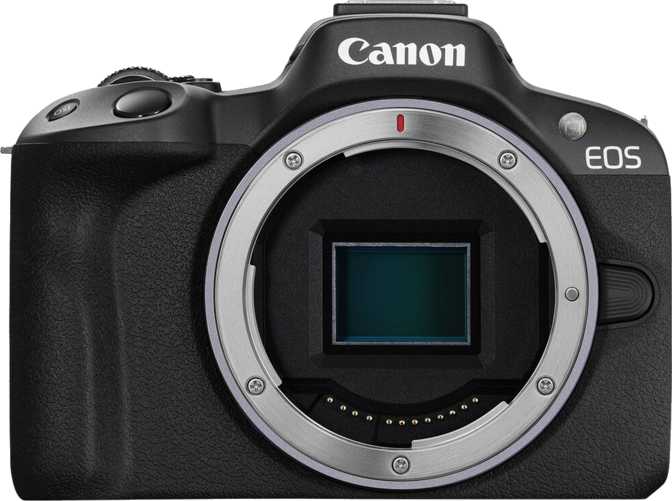
The R8 counters with Canon's subject-tracking autofocus implementation and the fully articulated screen. Against Canon's own R50, the R8's argument is purely the full-frame sensor advantage: better low-light performance, shallower depth of field control, and higher absolute image quality.
Common Questions Before Buying
Answers to what real buyers search for most
Final Verdict
The Canon EOS R8 is a camera that punches above its price class in image quality and autofocus sophistication, then asks you to live with some genuine operational shortcomings in exchange.
If you shoot portraits, travel, street photography, or video content — and you're willing to carry a spare battery as standard practice — the R8 delivers a full-frame experience with autofocus performance that competes with cameras at two or three times the price. The RF ecosystem access is a long-term asset, and the lightweight body makes it the kind of camera you actually bring with you.
If you shoot events professionally, require card-slot redundancy, or prioritize long shooting sessions without interruption, the R8 is not the right tool. For the enthusiast upgrading from a crop sensor, the dedicated hobbyist stepping into full-frame for the first time, or the hybrid photographer who needs credible video capability alongside strong stills — the R8 is one of the most compelling full-frame options available at its price. Buy a second battery the same day.
Score Breakdown
Overall Verdict
8.4 / 10
Recommended for enthusiasts and hybrid creators