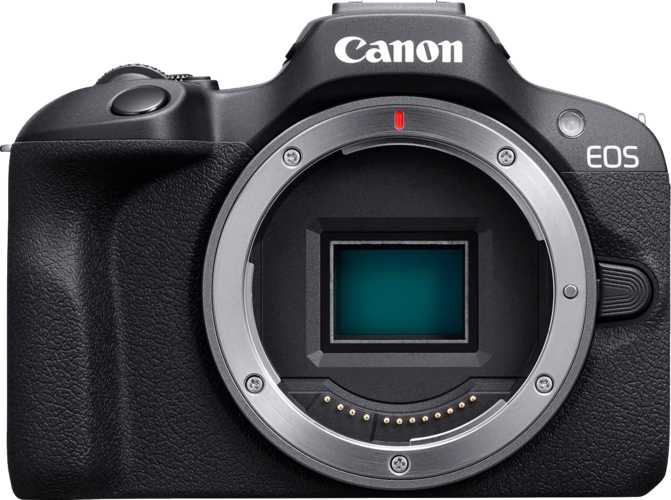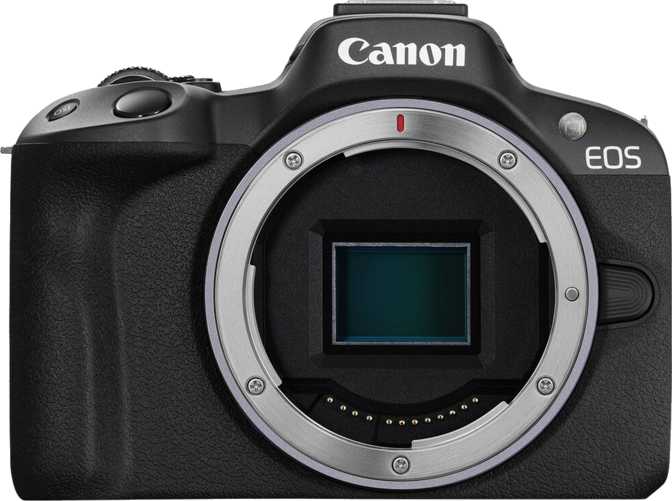
Canon EOS R50 Full Review: Outstanding Autofocus in a Compact Mirrorless Body
CamerasThe Canon EOS R50 occupies a genuinely interesting position in the mirrorless market. It is not Canon's most affordable camera, nor is it anywhere near their most powerful — and that middle-ground status is exactly what makes it worth examining carefully. Too many buyers either underestimate what it can do or misunderstand who it is actually built for. If you are stepping up from a smartphone, coming from an older DSLR, or shopping for a lightweight travel or content creation camera with real creative headroom, this review will tell you whether the R50 deserves your money.
Canon EOS R50 at a Glance
Overall Score
Exceptional autofocus, capable 4K video, and a compact body held back only by absent stabilization and a modest battery.
Sensor
24.2MP APS-C
Autofocus
651 AF Points
Video
4K / 30fps
Burst Rate
12 fps
Battery
~440 Shots
Weight
375g Body
Full Specification Highlights
Design, Build Quality, and Physical Experience
Physical Form Factor
The Canon EOS R50 is a genuinely compact mirrorless body. At roughly 116mm wide and 85mm tall, with a depth just under 69mm, it fits naturally in a medium-sized hand without feeling like a toy. Weighing in at 375 grams, it is light enough to carry for a full day without fatigue — lighter than most entry-level DSLRs, and lighter even than several of its mirrorless competitors in the same class.
That compactness comes with a trade-off that buyers should understand clearly: the grip is shallower than you might be used to if you have handled a larger camera. Paired with heavier RF lenses, the balance can feel slightly front-heavy. With a compact RF-S kit lens, it feels natural and controlled.
Screen and Viewfinder Experience
The R50 features a fully articulating flip-out screen — not just a tilt mechanism, but a screen that rotates forward to face the photographer. At 3 inches and 1,620,000 dots of resolution, it renders detail clearly for both composition and image review. For anyone who shoots selfies, vlogs, or uses the camera on a tripod for self-recorded content, this is a meaningful practical feature rather than a gimmick.
The electronic viewfinder provides 100% scene coverage — what you see in the finder is exactly what the sensor captures, no hidden edges, no surprises in the final image. The screen supports touch-to-focus and touch-controlled menu navigation, making the R50 noticeably easier to operate in unusual shooting positions: low to the ground, overhead, or at arm's length facing the lens.
Physical Highlights
- Fully articulating flip-out touchscreen — rotates forward for solo shoots and vlogging
- Electronic viewfinder with 100% frame coverage and accurate framing
- Hot shoe for external flash, microphone adapters, or lighting accessories
- Built-in flash available for fill light without carrying additional accessories
- Shallow grip — balance shifts front-heavy with large telephoto lenses
- Fixed EVF position — no tilting viewfinder option
Weather Sealing: A Caveat Worth Understanding
The R50 is not weather-sealed. There is no gasket protection against splashes, light rain, or dust ingress. The camera's operational temperature range covers 0°C to 40°C — virtually every normal shooting environment — but this is a camera you should protect when conditions turn wet. If you regularly shoot outdoors in unpredictable weather, this limitation is worth factoring into your decision before committing.
Image Quality and Autofocus Performance
Sensor Capabilities and Resolution
The R50 uses a 24.2-megapixel APS-C CMOS sensor. For practical purposes, this resolution is more than sufficient for large print output, extensive cropping in post-production, and high-resolution social and web content. The APS-C format is slightly smaller than a full-frame sensor, which affects two things most: background blur potential at equivalent focal lengths, and low-light performance ceiling.
The sensor does not use a back-illuminated design — a distinction worth understanding for buyers comparing specifications. Back-illuminated designs rearrange internal circuitry to allow more light to reach each pixel, generally improving low-light image quality. The R50's conventional design is competitive for its class, but it means that while low-light performance is capable, it is not the camera's headline strength.
ISO Range and Low-Light Behavior
The R50's native ISO range extends high enough to support shooting in dimly lit indoor environments, evening gatherings, and poorly lit event spaces with reasonable results. Extended sensitivity settings push further still, though at those levels noise management becomes the limiting factor and images benefit from careful reduction in post. For well-lit environments — outdoors, studios, naturally bright interiors — the sensor delivers clean, detailed output that punches well above entry-level expectations.
Continuous Shooting
The R50 can capture up to 12 frames per second using the mechanical shutter — a competitive burst rate for action and sports photography at this tier. An electronic shutter option enables completely silent shooting in environments where the mechanical click is disruptive: ceremonies, performances, or wildlife where noise matters. The Digic X processor keeps the buffer clearing promptly and menu navigation snappy, making the R50 a responsive tool under sustained burst fire.
Standout Feature
Autofocus System
The R50's Dual Pixel CMOS AF covers the frame with 651 selectable focus points — a system that outperforms what its price tag suggests it should deliver. Face and eye detection works reliably in good light and remains useful in challenging conditions.
- Subject tracking for people, animals, and vehicles across the frame
- Touch autofocus for instant point selection on the rear screen
- Phase-detection autofocus operates in video for continuous subject lock
Raw File Handling
- Shoots uncompressed RAW for maximum post-processing latitude
- Lossless compressed RAW keeps file sizes manageable without quality loss
- Built-in HDR mode for in-camera finished JPEGs
- In-camera panorama stitching without requiring software
Video Performance: Built for Creators
The R50 is not a cinema tool — it is a content creation camera, and it approaches that job thoroughly.
Resolution and Bitrate
The R50 records 4K at up to 30 frames per second with a 170Mbps peak bitrate. This captures meaningful detail and gives editors workable latitude in color grading. A 24p cinema mode is included for the traditional film look, and slow-motion recording opens creative options for travel footage, sports clips, and product videos.
For YouTube, social platforms, and professional content creation, the output quality is more than adequate. The ceiling is 4K/30fps — videographers who require 4K at 60fps should look at higher-tier bodies.
Audio Features
The R50 includes a built-in stereo microphone and — critically for serious creators — both a dedicated microphone input and a 3.5mm headphone jack. The presence of both means you can monitor your audio in real time while recording, catching problems before they become unusable footage.
This combination is not guaranteed at this price tier and is a meaningful advantage for solo creators. The twin-microphone array also provides directional stereo capture straight from the body without accessories.
Streaming and AF in Video
Canon includes first-party live streaming support — the camera can function as a direct streaming source without third-party workarounds in most scenarios. For creators who stream or conduct video calls at broadcast quality, this is a practical built-in capability.
Phase-detection autofocus operates throughout video recording and tracks subjects reliably across clips. For solo creators who cannot manually pull focus while speaking, the R50 handles subject tracking well enough to be genuinely useful.
No In-Body Stabilization: The Key Video Consideration
The R50 has no sensor-shift stabilization. For video creators, this means a stabilized RF-S lens is effectively required for smooth handheld footage. Without optical stabilization in the lens, a gimbal or deliberate shooting technique becomes necessary. Photographers shooting primarily from a tripod or stable surface will notice this far less — but for run-and-gun video work, it is a genuine constraint worth planning around before purchasing.
Battery Life and Connectivity
Battery Life: Realistic Expectations
The R50's battery is rated to approximately 440 shots on a single charge under standard testing conditions. In real shooting, this translates to a comfortable half-day of active photography before you need to recharge or swap batteries. Heavy live-view use, video recording, and frequent wireless connectivity will reduce that figure meaningfully.
For a full day of shooting, carrying a spare battery is practical advice rather than optional preparation. The battery is removable — worth stating explicitly, since some compact cameras have moved to non-removable designs that strand you without a backup option.
Charging via USB-C means you can top up from a power bank, a laptop, or any modern phone charger, which adds real flexibility on the road. The battery level indicator ensures you are never caught off-guard by sudden shutdowns mid-shoot.
Wireless and Connectivity
The R50 connects via Wi-Fi and Bluetooth. The Wi-Fi standard is sufficient for transferring images to a smartphone, using remote control via Canon's mobile app, or connecting to a network for live streaming. Bluetooth handles persistent low-power connections for pairing with a smartphone — primarily for instant file transfer or location tagging via a connected phone.
There is no built-in GPS. Location data must come through a paired smartphone, which works but adds a dependency on keeping your phone connected and the app running.
Connectivity Summary
Who the Canon EOS R50 Is Actually Built For
Strong Match
-
Smartphone Upgraders
First-time interchangeable lens camera buyers who want professional image quality and creative control without an overwhelming learning curve or a body that feels intimidating to pick up.
-
Content Creators and Vloggers
Solo vloggers, travel creators, and social media photographers who need reliable autofocus, capable 4K video, a flip-out screen, and a compact form factor — all in one package.
-
Family and Event Photographers
Parents who need fast, reliable subject tracking to capture children, pets, and candid moments without fussing over manual focus points during fleeting scenes.
-
Travelers and Minimalist Shooters
Photographers who need a capable camera that does not dominate the bag — and who want access to a world-class lens system they can grow into over time.
-
Returning Photographers
Those returning to photography after years away who want a modern mirrorless system with a future-proof lens mount and an approachable touch-driven interface.
Not the Right Choice If You Need...
-
Weather Protection for Outdoor Work
Working professionals or enthusiasts who regularly shoot in rain, dust, or harsh outdoor conditions need a weather-sealed body. The R50 cannot deliver this protection.
-
4K/60fps or Cinema-Grade Video Output
Videographers needing 4K at 60fps, 10-bit color output, or log profiles for heavy post-production color work should look at higher-tier bodies where these features are available.
-
Professional Action or Wildlife Shooting
Sports or wildlife photographers who require a deep buffer, dual card slots, and a larger body for long telephoto lenses will find the R50 underpowered for demanding professional assignments.
-
Maximum Technical Image Quality
Studio photographers focused on extracting the highest possible image quality at base ISO would benefit more from a full-frame body where the sensor size advantage is significant.
-
Frequent Handheld Low-Light Shooting
Photographers who regularly shoot in dim conditions without fast glass or a stable surface will find the absence of IBIS a recurring constraint that affects every session.
How It Compares to the Alternatives
The R50 sits alongside several capable APS-C mirrorless cameras in the same price bracket. Here is how it stacks up on the features that matter most at this level.
| Feature | Canon EOS R50 | Sony ZV-E10 II * | Fujifilm X-S20 * | Canon EOS R10 |
|---|---|---|---|---|
| Sensor Size | APS-C | APS-C | APS-C | APS-C |
| Resolution | 24.2 MP | ~26 MP | 26.1 MP | 24.2 MP |
| In-Body Stabilization | No | No | Yes | No |
| Flip-Out Screen | Yes | Yes | Yes | Tilt-only |
| 4K Video | 30 fps | 60 fps | 60 fps | 30 fps (cropped) |
| Headphone Jack | Yes | Yes | Yes | No |
| Weather Sealing | No | No | No | No |
| Battery Life (CIPA) | ~440 shots | ~440 shots | ~800 shots | ~210 shots |
* Competitor specifications are sourced from publicly available manufacturer data and are included for comparative context only.
What the Table Tells You
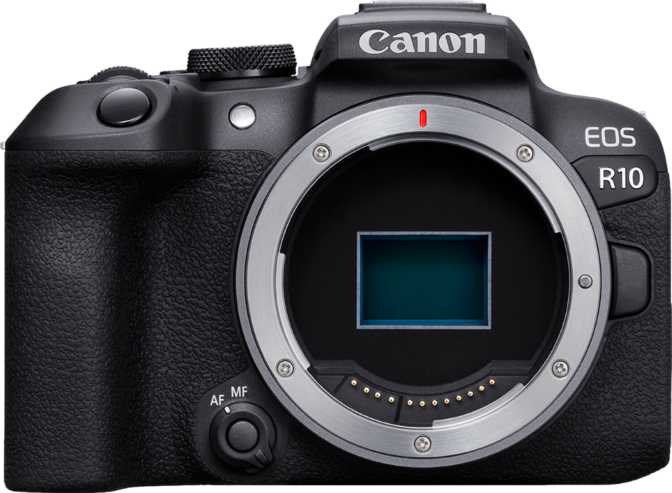
The R50's clearest advantage over alternatives at its price is autofocus performance — Canon's tracking and subject detection system is among the most capable in this class. The Fujifilm X-S20 is the only camera here with IBIS, making it the stronger choice for handheld video without a stabilized lens. The Canon EOS R10 — the R50's sibling — offers a larger grip and a slightly more advanced physical control layout, but lacks the fully articulating screen and delivers notably shorter battery life. The R50's trade-offs lean toward content creators; the R10 leans slightly toward traditional photographers.
Honest Strengths and Real Limitations
Where the R50 Genuinely Impresses
The R50's autofocus system outperforms what the price tag suggests it should. This is not incremental improvement over entry-level competition — it is a tracking and subject detection system that was simply unavailable at this tier a few years ago. For photographers whose subjects refuse to stand still — children, pets, events, street — this changes the shooting experience meaningfully rather than marginally.
The articulating screen combined with touch autofocus creates an intuitive shooting experience from the very first session. There is no learning curve to using the flip-out display for vlogging or creative angles — it works exactly as expected, every time, without fuss.
The video specification is legitimately useful for content creation. The combination of 4K footage, a high bitrate, and a headphone monitoring jack makes the R50 a complete solo creator package at a price where these features often come separately — or not at all.
The Digic X processor keeps the camera responsive throughout. The RF mount gives buyers access to one of the most optically advanced lens systems available today — a compelling long-term investment argument for committing to Canon's ecosystem from this entry point.
Limitations Worth Stating Plainly
The absence of sensor stabilization is not a dealbreaker for most photographers, but it is a recurring limitation that surfaces in specific situations — handheld low-light stills, video without optical stabilization, and telephoto work where even small vibrations translate to blur. It is a deliberate trade-off for size and cost, but one you will encounter with some regularity depending on how you shoot.
The single card slot and USB 2.0 data transfer speed are practical inconveniences rather than creative limitations. Photographers who rely on simultaneous backup for critical events will need a different body. Those who simply shoot and transfer later will find the USB 2.0 speed mildly frustrating with large RAW burst sequences — a dedicated card reader solves this effectively.
Battery capacity requires managed expectations. A single charge through a full day of mixed shooting and video is optimistic. Carrying a spare is sensible preparation rather than excessive caution.
No weather sealing is common at this price tier, but it bears repeating clearly: this is not an outdoor adventure camera. Conditions that are routine for sealed bodies require genuine care and caution with the R50. If you shoot in rain regularly, plan accordingly.
Questions Buyers Ask Before Purchasing
Straight answers to what people actually search for before committing to the R50.
Final Verdict
A Well-Considered Camera That Does Its Job Very Well
The Canon EOS R50 is a well-considered camera that does a specific job extremely well: it gives a photographer or content creator access to professional-grade autofocus, a capable 4K video system, and a compact, travel-friendly body within an entry-level price bracket. Its limitations are real — no stabilization, modest battery, a single card slot, and no weather protection — but none of these are hidden or unexpected. They are deliberate trade-offs in favor of size, weight, and cost.
If you are buying your first serious camera, stepping up from smartphone photography, or building a lightweight content creation setup, the R50 earns a clear recommendation. The RF lens ecosystem it opens access to is one of the strongest reasons to commit: as your skills and ambitions grow, the glass and bodies available to you grow with it.
If your shooting requires IBIS, 4K at 60fps, or the durability to work in adverse conditions, the R50 is not the tool for that work — and no amount of enthusiasm for its other qualities changes that calculus. For the photographer it is actually designed for, however, the Canon EOS R50 is a genuinely impressive machine that earns its place in the lineup.
Our Verdict
Recommended
Best For
- Content creators and vloggers
- First-time mirrorless buyers
- Travel and family photographers
- Smartphone upgraders