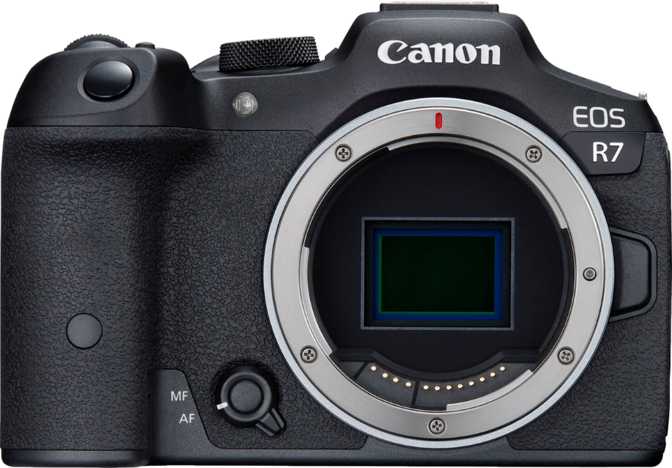
Canon EOS R7 Review: Fast, Sharp, and Built for Serious Shooters
CamerasThe Canon EOS R7 makes a specific bet on a specific type of shooter — and it makes that bet with impressive conviction. This is a 32.5-megapixel APS-C mirrorless camera built around speed, reach, and Canon's most capable autofocus technology, packaged into a weather-sealed body that costs significantly less than a full-frame alternative. For wildlife photographers, sports shooters, and advanced enthusiasts who have outgrown entry-level gear, the R7 lands in an almost eerily comfortable sweet spot.
Editor's Ratings
-
Autofocus
-
Image Quality
-
Video
-
Build Quality
-
Battery Life
Design and Build Quality
Physical experience, ergonomics, and weather resistance
How It Feels in the Hand
At just under 590 grams with a body footprint of 132mm wide by 90.4mm tall, the R7 occupies a size class that feels substantive without becoming burdensome. It is noticeably more solid than compact mirrorless bodies targeted at beginners, but it does not approach the weight of professional full-frame flagships.
The result is a camera that feels confidence-inspiring during a long day in the field — there is enough mass to stabilize handheld shots, but not so much that your wrist protests after three hours.
The body wears weather sealing, rated for operation between 0°C and 40°C. This covers the realistic range of temperate outdoor use — alpine winter conditions below freezing are outside the spec, so pack accordingly if you shoot in extreme cold.
Physical Specifications
- Width
- 132 mm
- Height
- 90.4 mm
- Depth
- 91.7 mm
- Weight
- 589.7 g
- Camera Type
- Mirrorless
- Weather Sealed
- Yes
- Operating Temp
- 0°C – 40°C
- Hot Shoe
- Advanced
- Built-in Flash
- No
Screen, Viewfinder, and Controls
Fully Articulating Screen
3-inch flip-out touchscreen at 1,620,000 dots. Flips fully for video work, ground-level wildlife shots, and overhead angles — not just tilt.
100% EVF Coverage
Electronic viewfinder with complete frame coverage. What you see is exactly what you capture — no edge surprises or cropping guesswork. Once a pro-only feature.
Advanced Hot Shoe
No built-in flash, but the multifunction hot shoe supports Canon Speedlites and third-party accessories with full electronic TTL communication.
Sensor and Image Quality
Resolution, pixel density, dynamic range, and RAW capture
Resolution and Pixel Density
Thirty-two and a half megapixels on an APS-C sensor represents a meaningful technical commitment. At this resolution, you capture images large enough to print at poster scale with detail to spare, and you retain enough pixel real estate to crop aggressively — useful when a bird of prey is 40 meters away and simply will not cooperate by coming closer.
The individual photosites measure 3.2 micrometers across. That is a relatively small pixel size — a direct consequence of fitting this many pixels onto a sensor smaller than full-frame. Canon's answer is the Digic X processor, their top-line image engine previously reserved for the flagship 1D X Mark III. Its presence here genuinely shifts what this sensor tier is capable of in terms of noise control and autofocus computation.
The sensor uses traditional front-illuminated CMOS architecture rather than the back-illuminated (BSI) design found in some competitors. BSI sensors typically offer better light efficiency at the photosite level. The R7's answer is processor-side noise management — a defensible approach, though worth understanding if maximum low-light performance is your primary criterion.
Dynamic Range and RAW Capture
RAW capture and lossless compressed RAW support give photographers maximum flexibility in post-processing. Lossless compressed RAW is particularly practical for burst shooters — full tonal information at a smaller storage footprint than uncompressed RAW. The in-camera HDR mode handles scenes where a single exposure cannot capture the full luminance range.
| Sensor Format | APS-C CMOS |
| Resolution | 32.5 MP |
| Pixel Size | 3.2 µm |
| BSI Architecture | No |
| Processor | Digic X |
| Native ISO Range | Up to 51,200 |
| Shoots RAW | Yes |
| Lossless Comp. RAW | Yes |
| HDR Mode | Yes |
| Pixel Shift | Yes |
| Panorama Mode | In-camera |
| Lens Mount | Canon RF |
Autofocus System
Speed, coverage, and tracking that define this camera's purpose
Coverage and Subject Tracking
Six hundred and fifty-one autofocus points distributed across the frame provide both coverage and density. The camera can acquire and maintain focus on subjects that are not centered — a fundamental requirement for tracking birds in flight, athletes in motion, or any unpredictable moving subject. Phase-detection autofocus operates across this entire grid, providing fast subject acquisition without the hunting behavior associated with contrast-only systems.
AF tracking combines with the Digic X processing engine to enable subject recognition. For a wildlife or sports photographer, the practical result is dramatically improved keeper rates on moving subjects. Touch autofocus works through the rear screen, allowing natural tap-to-focus during live view or video recording.
Continuous Shooting Performance
At 15 frames per second with the mechanical shutter, the R7 shoots fast enough to capture decisive moments in high-speed sequences. The electronic shutter pushes to 1/16,000 of a second — useful when shooting wide-open apertures in harsh sunlight or freezing extreme motion.
AF & Shooting Specs
-
651 Phase-Detect Points
Full frame coverage, not just center cluster -
15 fps Mechanical Burst
High-speed capture for sports and wildlife -
1/16,000s Electronic Shutter
Double the mechanical maximum speed -
AF Tracking Active
Locks on and follows moving subjects -
Phase-Detect in Video
Tracking continues while recording -
Touch AF
Tap-to-focus via rear screen
In-Body Stabilization
What sensor-shift stabilization means for your shooting
The R7 includes sensor-shift stabilization — the system physically moves the sensor to compensate for hand movement. This is particularly valuable for telephoto shooting where even small movements are amplified, for video handheld work, and for low-light stills where a slower shutter speed is needed.
It is worth noting that this camera's stabilization system does not combine electronically with Canon RF lens-based stabilization to produce a coordinated hybrid system. Each operates independently. In practice, users with optically stabilized RF lenses have both systems active — but without the additional compensation stops that a fully coordinated dual-IS implementation provides. For most shooting situations this distinction is theoretical rather than limiting, but telephoto shooters pursuing maximum stabilization performance should be aware of it.
-
Sensor-Shift IBIS
Physically moves sensor to counter camera shake -
Benefits Telephoto Work
Amplified gains at longer focal lengths -
No Coordinated Dual IS
Lens IS and body IS work independently
Video Capabilities
4K performance, audio, and content creation credentials
4K at High Frame Rates
The R7 records 4K video at up to 60 frames per second — directly enabling smooth slow-motion footage at half speed when delivered at 30fps, or ultra-smooth real-time video for sports and action content. At a recording bitrate of 340 megabits per second, the camera captures substantially more data per second than most consumer cameras, preserving fine detail and reducing compression artifacts during editing.
The 24p cinema mode delivers the classic motion cadence that filmmakers and narrative content creators have used for decades. Phase-detection autofocus operates during video recording with continuous tracking — the same subject-recognition system that handles stills continues working while the camera rolls. For solo videographers, this is the difference between locked-on talent tracking and a constant battle with focus hunting.
The camera also supports timelapse recording and live streaming directly, meaning content creators can use it for broadcast-style output without a complex external capture card workflow.
Audio and Monitoring
The 3.5mm microphone input accepts any professional standard source — a lavalier for interviews, a shotgun for ambient capture. The matching 3.5mm headphone output allows real-time audio monitoring while recording. Discovering a bad audio track after the shoot is not an option in professional work, making this pairing non-negotiable for serious video production.
| Max Resolution | 4K (2160p) |
| Max Frame Rate | 60fps at 4K |
| Recording Bitrate | 340 Mbps |
| 24p Cinema Mode | Yes |
| Slow Motion | Yes |
| Timelapse | Yes |
| Live Streaming | Native |
| AF During Video | Phase-detect |
| Continuous AF | Yes |
| Mic Input (3.5mm) | Yes |
| Headphone Jack | Yes |
| Built-in Stereo Mic | Yes |
| HDMI Output | Yes |
Battery Life and Power
Endurance, charging options, and real-world planning
The battery delivers a CIPA-rated 660 shots per charge. CIPA ratings measure battery life under standardized test conditions — real-world performance varies based on how heavily you use the EVF versus the rear screen, how often you review images, wireless feature usage, and ambient temperature.
In practical terms, 660 shots is a solid single-day figure for a travel or event shooter. For a high-volume sports photographer firing 15fps bursts through an afternoon game, it is lighter duty — carrying a spare battery is wise and recommended.
The battery is removable and rechargeable, and the USB-C port supports in-body charging, which means you can top up from a power bank between shoots without hunting for a dedicated charger — a genuine convenience in the field.
Battery Performance Breakdown
A spare battery is strongly recommended for burst-heavy or video-intensive sessions.
Connectivity and Storage
Dual card slots, wireless transfer, and external connections
Dual Card Slots
Two card slots allow photographers to shoot with a simultaneous backup copy of every image, or to overflow between cards when one fills. For professional work where images cannot be re-created — a wedding, a news event, a once-in-a-lifetime wildlife encounter — dual slots are not a luxury; they are a workflow requirement. Their presence here is one of the clearest signals that Canon designed this camera for working photographers rather than casual users.
Wireless and External Connections
Wi-Fi 5 (802.11ac) enables fast image transfer to a smartphone or computer — fast enough to move large RAW files without patience-testing delays. Bluetooth 4.2 handles persistent low-power connectivity for remote control via Canon's smartphone application without draining the battery at the rate Wi-Fi would. Remote smartphone control enables live view composition, shutter release, and file transfer from your phone — useful for wildlife hides, remote tripod setups, or self-portraits.
The USB connection runs at USB 3.2 speeds for fast tethered shooting and file transfers. HDMI output is present for clean video output to a monitor or external recorder.
Connectivity Features
- Wi-Fi 5 (802.11ac) + Wi-Fi 4 (802.11n)
- Bluetooth 4.2 — low-power persistent remote
- USB 3.2 Type-C — fast tethering and charging
- HDMI output — clean signal for monitors/recorders
- Dual card slots — simultaneous backup or overflow
- Remote smartphone control supported
- No built-in GPS — smartphone logging via Bluetooth
- No NFC — Wi-Fi pairing handles device connection
Lens Ecosystem and RF Mount
Canon RF compatibility, APS-C reach advantages, and legacy glass
The 1.6x Reach Advantage
Because the APS-C sensor is smaller than full-frame, RF lenses produce a 1.6x field-of-view multiplication. A 400mm telephoto behaves like a 640mm equivalent — a compelling argument for wildlife and sports photographers who want maximum reach without paying for a prime super-telephoto.
Shared Full-Frame RF Mount
The R7 draws from the same growing RF lens library as Canon's EOS R5 and R6 — a significant advantage over proprietary APS-C-only mount systems with more limited glass selections. Canon RF-S lenses, designed natively for APS-C R-series bodies, are also expanding.
Legacy EF/EF-S Compatibility
Existing Canon EF and EF-S DSLR lenses mount via the Canon Mount Adapter EF-EOS R, purchased separately. This provides genuine backward compatibility for photographers with an established Canon glass collection making the transition from DSLR to mirrorless.
Competitive Positioning
How the R7 compares against logical APS-C mirrorless alternatives
| Consideration | Canon EOS R7 | APS-C Competitors in Class |
|---|---|---|
| Resolution | 32.5 MP — High for APS-C | Typically 24–26 MP in this tier |
| Burst Speed | 15 fps Mechanical | Comparable; some rivals offer higher electronic |
| AF Points | 651 Phase-Detect | Competitive; subject recognition varies |
| Sensor Architecture | Front-Illuminated | Some rivals offer BSI sensors |
| Video Quality | 4K/60fps at 340 Mbps | Rivals vary widely in bitrate and frame rates |
| Mount Ecosystem | RF — Shared with Full-Frame | Sony E-mount is the primary rival in breadth |
| Dual Card Slots | Not universal at this price | |
| Weather Sealing | Common in this class | |
| In-Body Stabilization | Common in this class | |
| GPS | Available on select rivals |
R7 vs Canon EOS R10 (Step-Down)
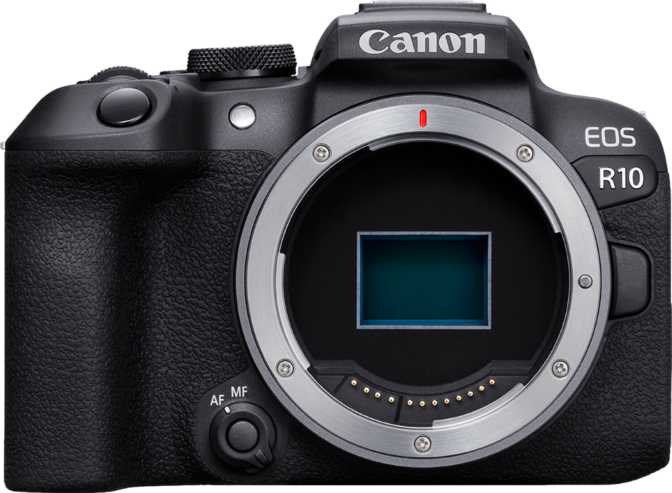
The R7 justifies its premium over the R10 through faster burst rates, superior build quality, weather sealing, dual card slots, and the more capable autofocus implementation. The gap between these two bodies is meaningful, not cosmetic.
R7 vs Full-Frame R6 (Step-Up)
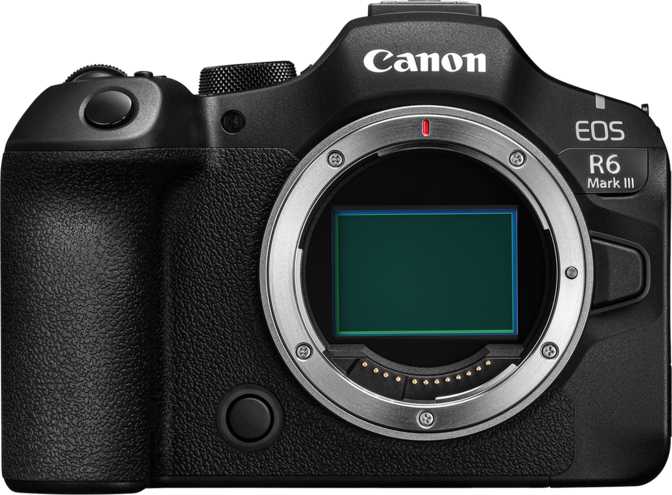
The full-frame R6 Mark II offers a larger sensor with better light efficiency per pixel and coordinated dual-IS — but at a significantly higher price point. For telephoto reach and budget-conscious performance, the R7 often wins the argument.
Who This Camera Is For — and Who It Is Not
Real-world usage scenarios and honest audience matching
-
A wildlife photographer
Fast AF, 15fps burst, and the 1.6x reach advantage make this the natural choice for birds, mammals, and fast-moving outdoor subjects. -
A sports shooter
651-point phase-detect tracking and 15fps means fewer missed peak moments. The mechanical shutter's 1/8,000s ceiling handles most outdoor sports cleanly. -
A hybrid photo/video creator
4K/60fps, 340 Mbps, continuous phase-detect AF in video, and full audio I/O make this a legitimate single-operator video tool. -
An intermediate shooter ready to grow
If you have mastered a kit camera and want a body that stays ahead of your skills for years, the R7 is an excellent investment.
-
Primarily a low-light or event photographer
The front-illuminated sensor and small pixel size mean high-ISO performance is respectable but not class-leading. A BSI-sensor competitor or full-frame body serves dark venues better. -
A true beginner buying their first ILC
The R7 works for beginners, but you will be paying for capabilities you may not use for years. The R10 or a simpler kit camera is a more appropriate starting point. -
A dedicated cinema production shooter
Demanding video production wanting internal RAW video, higher bit depths, or very long uninterrupted takes will find purpose-built cinema cameras more appropriate. -
Someone who depends on built-in GPS
There is no onboard GPS. Geotagging requires a paired smartphone via Bluetooth — functional, but less precise than dedicated hardware GPS.
Questions Real Buyers Ask
Answers to the most common pre-purchase questions about the Canon EOS R7
Strengths and Weaknesses
An honest assessment — the good, the limitations, and what they mean for your decision
The R7's strengths are concentrated and distinctive. The autofocus performance, continuous shooting speed, and resolution combination create a genuinely difficult package to match at this price point, particularly for moving-subject photography.
The body's build quality and weather sealing are rare at this tier, and the choice of the Digic X processor signals that Canon prioritized performance over cost reduction in ways that show up in real use.
For video, the 340 Mbps 4K/60fps output paired with continuous phase-detect AF and full professional audio I/O delivers a hybrid capability that would cost considerably more in a dedicated video body.
The front-illuminated sensor architecture means low-light performance, while respectable given the pixel count, falls short of what a BSI sensor of similar resolution would achieve. Photographers whose primary domain is dimly lit events or night photography will find full-frame or a BSI-equipped competitor worth comparing.
Battery endurance is adequate rather than impressive. Serious professional use — particularly heavy video work or high-frame-rate burst sessions — makes a second battery a practical necessity rather than an optional accessory.
The lack of coordinated dual-IS is a missed opportunity relative to what the technology allows. Single-axis IBIS remains genuinely useful, but telephoto shooters pursuing maximum stabilization efficiency will note the limitation.
The Canon EOS R7 Earns a Confident Recommendation
The Canon EOS R7 is a focused, capable camera built for a specific type of photographer, and for that photographer it is an excellent choice. If you shoot sports, wildlife, or any fast-moving subject — or if you want a high-resolution APS-C camera with serious video credentials and professional-grade build quality without crossing into full-frame pricing — this camera delivers without meaningful compromise in its core disciplines.
The weaknesses are worth acknowledging but are not disqualifying for most buyers. For the wildlife photographer wanting reach and speed, the sports shooter needing burst rates and tracking that locks on and holds, or the advanced enthusiast who wants a body that will stay ahead of their skills — buy it paired with a Canon RF or RF-S lens from the outset, and you will have a system worth growing into.
Highly Recommended
Best for: Wildlife, Sports & Hybrid Shooters