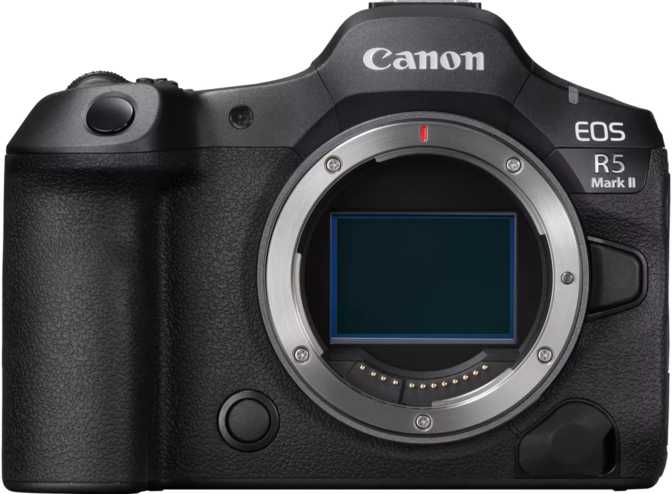
Canon EOS R5 II Full Review: The Mirrorless Camera That Raises the Bar
CamerasCanon's second-generation flagship mirrorless occupies a position very few cameras have ever held: a single body capable of satisfying a working portrait photographer, a wildlife specialist, and a professional video producer — all without compromise. The original R5 earned a devoted following but also a pointed list of criticisms, particularly around overheating and autofocus refinement. The R5 II arrives as a direct response, built on an entirely new sensor architecture and a processing pipeline that makes its predecessor feel like a rough draft.
This is not a camera for casual shooters dipping their toes into mirrorless. It is a professional tool with a professional price tag, and every specification on its sheet reflects that intent. Whether that investment is justified for your specific work is exactly what this review unpacks.
At a Glance
Editor's Score
Design and Build Quality
Body construction, ergonomics, and physical experience
Body and Ergonomics
At 138.5 mm wide, 101.2 mm tall, and 93.5 mm deep, the R5 II fits Canon's established ergonomic language. Photographers coming from the original R5 or Canon DSLRs will find the grip depth and control layout immediately familiar — there is essentially no relearning curve in terms of handling. The body weighs in at 746 grams with battery and card, which is substantial but well-distributed. After a full day on a shoulder strap or in hand, that weight feels purposeful rather than fatiguing.
The external dimensions translate to a body that pairs naturally with Canon RF lenses across the size spectrum — from compact primes to the largest telephoto glass — without feeling front-heavy or imbalanced.
Weather Sealing
The weather sealing is designed for professionals who cannot afford to pack up when conditions change. Rated to operate from 1°C to 40°C, the camera handles a cool morning in a forest or a hot midday shoot without protest. Sealing addresses dust and moisture ingress at joints, dials, and card slot covers — the areas where most bodies eventually fail under repeated field use. This is not rain-shower invincibility, but it is genuine, production-tested protection.
Screen and Viewfinder
The 3.2-inch fully articulating rear touchscreen offers 2,100,000-dot resolution — sharp enough to hold up when reviewing RAW files or navigating menus at arm's length. The flip-out design means the screen can face fully forward, a significant advantage for solo video creators monitoring their own framing, or for photographers shooting from low angles without pressing their face to the ground.
The electronic viewfinder delivers 100% frame coverage with no cropping or blind spots at the edges of the frame. What you compose in the EVF is precisely what the sensor captures. There is no built-in pop-up flash — the right call at this level. The advanced multi-function hot shoe supports Canon's full range of external flash units and radio accessories.
Physical Specifications
- Width
- 138.5 mm
- Height
- 101.2 mm
- Depth
- 93.5 mm
- Weight (with battery)
- 746 g
- Screen Size
- 3.2 inches
- Screen Resolution
- 2,100,000 dots
- Operating Temperature
- 1°C – 40°C
Sensor Performance
Why the stacked architecture changes everything
45 Megapixels, Rebuilt from the Ground Up
The R5 II uses a 45-megapixel back-side illuminated stacked CMOS sensor — and that word "stacked" carries enormous practical weight. Traditional sensors process image data sequentially, which creates a rolling shutter effect during fast electronic shutter use and limits how quickly the sensor can be read. A stacked sensor places the processing circuitry directly behind the photosite layer, dramatically accelerating readout speed.
For photographers, this means the electronic shutter can be used confidently for fast action without the warped-lines distortion that plagued earlier high-resolution bodies. For videographers, it means 8K footage can be captured without the jello-like skewing that ruins handheld or panning shots. At 45 megapixels on a full-frame sensor, each image contains extraordinary spatial information — providing a cropping safety margin that smaller-resolution cameras simply cannot offer.
ISO Range and Low-Light Behavior
The native sensitivity range extends to ISO 51,200, with an expanded setting reaching ISO 102,400. On a back-side illuminated full-frame sensor of this density, the native range is where the real-world story is told. The BSI architecture improves how efficiently each photosite gathers light, meaning the R5 II handles available-light indoor shooting and early-morning or late-evening natural light with noticeably more grace than sensors of similar resolution but older design. The expanded settings push into territory where noise is visible but usable — appropriate for emergencies, not everyday practice.
Processor: Digic X with Digic Accelerator
The dual-processor pipeline — a Digic X augmented by a secondary Digic Accelerator — handles the simultaneous computational demands of 45-megapixel bursts, 8K video processing, AI-driven subject recognition, and real-time stabilization calculations. This architecture is what makes the performance ceiling of the R5 II possible. A single-chip solution at this data rate would require either speed compromises or significant thermal challenges.
8.5 Stops IBIS
Canon rates in-body stabilization at 8.5 stops under CIPA standards — enough that a shot requiring 1/500s to freeze camera shake could theoretically be captured approaching 1 second. Combined with compatible RF lens stabilization, this figure is achievable in real-world use.
Core Sensor Specs
- Full-Frame FormatMaximum light gathering; full lens angle-of-view
- Stacked BSI CMOSFastest sensor readout in the R5 series
- Native ISO up to 51,200Expanded to 102,400 for demanding situations
- RAW + Lossless Compressed RAWFull post-processing headroom preserved
- Built-in HDR ModeExtended dynamic range capture in-camera
Autofocus System
The most complete AF system Canon has ever built
5,850 Phase-Detection Focus Points
The autofocus system maps 5,850 individual detection points across the sensor plane using phase-detection technology — the same approach professional sports and wildlife cameras have used for years, now implemented directly on the imaging sensor. Phase detection works by analyzing incoming light from two slightly different angles simultaneously, allowing the camera to calculate both the direction and distance the lens needs to move. The result is fast, confident acquisition that does not hunt or oscillate before locking in.
That density of focus points means the system can track a subject across nearly the entire frame without requiring the subject to stay within a central zone. Whether a subject moves from center to edge, the camera follows without hesitation.
Subject Recognition and Tracking
AF tracking operates at a fundamental level, with subject recognition covering people, animals, and vehicles. For portrait and event photographers, eye detection locks onto the nearest eye automatically, maintaining sharp focus through head turns and subject movement. For wildlife work, animal eye tracking performs the same function through foliage and changing light — identifying and sticking to the animal's eye across the frame. This is a set-and-forget workflow improvement that frees the photographer to concentrate entirely on composition and timing.
AF Feature Checklist
- Phase detection for photos
- Phase detection for video
- Continuous AF during recording
- Touch autofocus
- Manual focus override
Speed and Shooting Performance
Mechanical versus electronic — when to use each
Mechanical Shutter
The mechanical shutter delivers 12 frames per second in continuous burst mode — competitive for action photography and wildlife work. At 45 megapixels per frame, the buffer and write speed requirements are significant. Dual card slots help manage this, allowing the camera to write to two cards simultaneously or use one as overflow.
The mechanical flash sync speed of 1/250th of a second is the industry standard for a full-frame body at this level, compatible with high-speed sync modes on Canon flash accessories for work above that ceiling.
Electronic Shutter
The electronic shutter runs completely silently and reaches speeds the mechanical shutter cannot. The fastest available speed reaches 1/32,000th of a second — a figure that allows shooting at wide apertures in bright sunlight without overexposure and enables precise freezing of extremely fast motion without the flicker issues that affect artificial lighting at lower speeds.
Thanks to the stacked sensor's rapid readout, rolling shutter artifacts — a major weakness in electronic shutters on older designs — are dramatically reduced, making silent electronic shooting a genuinely practical everyday option rather than a niche workaround.
Video Capabilities
A cinema-grade system built into a stills body
8K at 60 Frames Per Second
The headline video specification — 8K resolution at 60 frames per second — is one the R5 II's predecessor could not achieve without thermal penalties. The stacked sensor's faster readout, combined with the new dual-processor pipeline, allows the camera to sustain this output. At 8K/60p, each frame contains approximately 33 megapixels of resolution. When downscaled to 4K, the resulting footage benefits from oversampling, producing sharper, cleaner images with finer detail than native 4K capture from competing bodies.
2,600 Mbps Bitrate — Why It Matters
The maximum recording bitrate of 2,600 megabits per second is a specification that matters primarily to colorists and post-production workflows. A higher bitrate preserves subtle tonal gradations and fine detail that compression discards at lower rates. For footage intended for color grading, commercial delivery, or archival mastering, this headroom is meaningful. For run-and-gun event work, it is more than strictly necessary — but having it costs nothing beyond storage capacity.
Audio and Monitoring
The camera accepts professional external microphones via a 3.5mm input jack, while a matching 3.5mm headphone output allows real-time audio monitoring during recording. The built-in stereo microphone array handles two channels of onboard audio for reference recording or lower-stakes production. The 24p cinema mode records at the frame rate standard for theatrical and broadcast content. Slow-motion and timelapse modes round out the toolkit for documentary, commercial, and creative work.
Video at a Glance
- Max Resolution8K / 60p
- Max Bitrate2,600 Mbps
- Cinema 24p
- Slow Motion
- Timelapse
- 3.5mm Mic Input
- 3.5mm Headphones
- Continuous AF in Video
- HDMI Output
Connectivity and Workflow
Card slots, wireless standards, and professional I/O
Card Slots and Data Transfer
Dual card slots allow simultaneous recording to two cards — useful for in-camera backup of critical material, separating RAW and JPEG outputs, or extending available recording time. The USB 3.2 Type-C connection enables fast tethered shooting for studio work and rapid offloading when a dedicated card reader is unavailable.
Wi-Fi 6 and Wireless Performance
Wi-Fi 6 (802.11ax) support places the R5 II among a small group of professional bodies with next-generation wireless capability. In environments with multiple competing devices — a busy press area, a shared studio network, a congested venue — Wi-Fi 6's improved handling of device density delivers more consistent transfer speeds than older Wi-Fi standards. Backward compatibility with Wi-Fi 4 and 5 ensures the camera works with any existing network infrastructure.
Bluetooth 5.3 enables persistent low-power connection to a paired smartphone for remote control, image transfer, and location tagging workflows. Note that built-in GPS and NFC are both absent from this body — location data requires a Bluetooth smartphone link, and NFC-based pairing is not available.
What's Included
Not Included
- Built-in GPSLocation requires paired smartphone via Bluetooth
- NFCPairing via Wi-Fi or Bluetooth only
- Built-in FlashAdvanced hot shoe provided instead
Battery Life
The one honest limitation — and how to manage it
In practice, shooting behavior significantly affects real-world endurance. Heavy continuous AF use, video recording, and active wireless transmission all accelerate drain. A predominantly stills shooter who half-presses sparingly and disables unused connectivity features will see meaningfully better results than the rated figure suggests.
The battery is removable and rechargeable, which matters for multi-day trips or locations where wall power is unavailable — spare batteries in a jacket pocket remain the most reliable solution for sustained professional use. A battery grip attachment further extends endurance for demanding long-form assignments, and the USB-C port allows in-body charging when a power bank is available.
Battery Facts
- CIPA Rating
- ~340 shots
- Battery Capacity
- 2,130 mAh
- Removable
- Yes
- Rechargeable
- Yes
- Battery Indicator
- Yes
Who Should Buy This Camera
Honest guidance before you commit
Right For You If...
- Wedding and Portrait Photographers
High resolution for large print delivery, reliable eye-detection AF across diverse lighting, and a silent electronic shutter for ceremony shooting without mechanical noise during key moments.
- Wildlife and Sports Photographers
Subject-tracking AF, competitive burst performance, and 45 megapixels that allow substantial cropping without losing usable detail. The 8.5-stop stabilization supports longer telephoto focal lengths with sharper handheld results.
- Commercial and Advertising Photographers
Shooting for large-format output or heavy retouching workflows will find 45 megapixels at this dynamic range level appropriate for the demands of high-end print production.
- Hybrid Shooters and Video Professionals
Operating where a dedicated cinema camera is impractical. 8K/60p capability, professional audio I/O, and a versatile stills body in one package removes the need for a separate camera across a wide range of production scenarios.
Look Elsewhere If...
- Speed-First Sports Specialists
Photographers whose primary need is 20–30 fps for extended bursts will find purpose-built sports-oriented bodies better suited to that singular demand. The R5 II is versatile, not the outright fastest option.
- Travel Photographers Prioritizing Portability
The 746-gram body and substantial dimensions are difficult to justify when lighter mirrorless alternatives meet the demands of leisure travel photography with much less bulk.
- Beginners Entering the RF System
The R5 II's cost is unjustifiable for a new Canon RF user. The system offers excellent entry-level options that deliver outstanding image quality without the professional-tier price tag or the full professional-tier complexity.
How It Compares to the Competition
Canon EOS R5 II vs. Sony A7R V vs. Nikon Z8
| Feature | Canon EOS R5 II | Sony A7R V | Nikon Z8 |
|---|---|---|---|
| Resolution | 45 MP | 61 MP | 45.7 MP |
| Sensor Architecture | Stacked BSI CMOS | BSI CMOS | Stacked BSI CMOS |
| In-Body Stabilization | 8.5 stops Best | 8 stops | 6 stops |
| Max Video Resolution | 8K / 60p | 8K / 25p | 8K / 60p |
| Continuous Shooting | 12 fps | 10 fps | 20 fps |
| AF Coverage | 5,850 points Best | 693 zones | 493 areas |
| Weather Sealing | |||
| Built-in GPS | |||
| Wi-Fi Standard | Wi-Fi 6 | Wi-Fi 4 | Wi-Fi 6 |
| Lens Mount | Canon RF | Sony E | Nikon Z |
All data sourced from manufacturer specifications. "Best" badge marks the highest value in that row across these three cameras.
Strengths and Weaknesses
An honest assessment beyond a simple checklist
Where It Excels
The R5 II's strengths are concentrated, consistent, and meaningful. The stabilization system is class-leading and changes how the camera feels in low-light or telephoto situations — not marginally better than competitors, but by a margin that shapes how you approach entire categories of work. Being able to handhold telephoto lenses in conditions that previously demanded a tripod is not a convenience; it is a workflow transformation.
The stacked sensor architecture represents a genuine generational step rather than an incremental update. The combination of 45 megapixels with fast, reliable electronic shutter usability was not available in this form factor before this generation. Combined with the dual-processor pipeline, the result is a camera that shoots faster, stabilizes better, and records more demanding video than its resolution class previously allowed.
The video specification is genuinely professional-grade — not a marketing tier. The 2,600 Mbps bitrate, 8K/60p capability, professional audio I/O, and phase-detection AF during recording make this body a credible single-camera solution for a wide range of production work that previously required a dedicated cinema body alongside a stills camera.
Where It Falls Short
The weaknesses are real but manageable. Battery endurance is the one specification that requires active planning rather than passive acceptance. The approximately 340-shot CIPA rating means anyone who wants to shoot all day without anxiety about power needs a multi-battery strategy from the first outing — not unusual at this level, but a genuine inconvenience compared to bodies with larger cells or better efficiency.
The absence of GPS is a legitimate gap for photographers who rely on geolocation metadata for editorial, travel, or geotagged stock workflows. The Bluetooth smartphone link can supply location data through Canon's companion app, which resolves the gap for most workflows, but requires the phone to be present, charged, and actively connected throughout the shoot.
The body's size and weight, while appropriate for its capability, mean it is not the camera you reach for when traveling light is the priority. At 746 grams before glass, the R5 II commits you to a certain kind of shooting day. For professionals working long assignments or multi-location days on foot, that physical commitment is a real variable in daily planning.
Common Buyer Questions
Answers to what photographers actually search for before purchasing
Final Verdict
Our recommendation after a complete analysis
The Canon EOS R5 II is one of the most technically accomplished cameras currently available to professional photographers and serious enthusiasts. It succeeds at the difficult task of being genuinely excellent across multiple disciplines — stills resolution, burst performance, autofocus intelligence, video specification, and image stabilization — without the compromises that typically follow from trying to serve too many masters at once.
The stacked sensor architecture is the structural reason this camera performs the way it does, and it represents a meaningful generational step rather than an incremental update. Combined with the dual-processor pipeline, the result is a camera that shoots faster, stabilizes better, and records more demanding video than its resolution class previously allowed.
Buy It If
You work professionally across stills and video, require high resolution with fast performance, shoot in variable weather conditions, and are building or expanding a kit within the Canon RF ecosystem.
Hold Off If
Your work is exclusively high-volume burst sports photography, budget is a primary constraint, or portability matters more to your shooting style than maximum capability in a single body.
For professionals whose work demands the best available combination of resolution, speed, stabilization, and video capability in a single weather-sealed body — the Canon EOS R5 II is the answer the market currently offers.