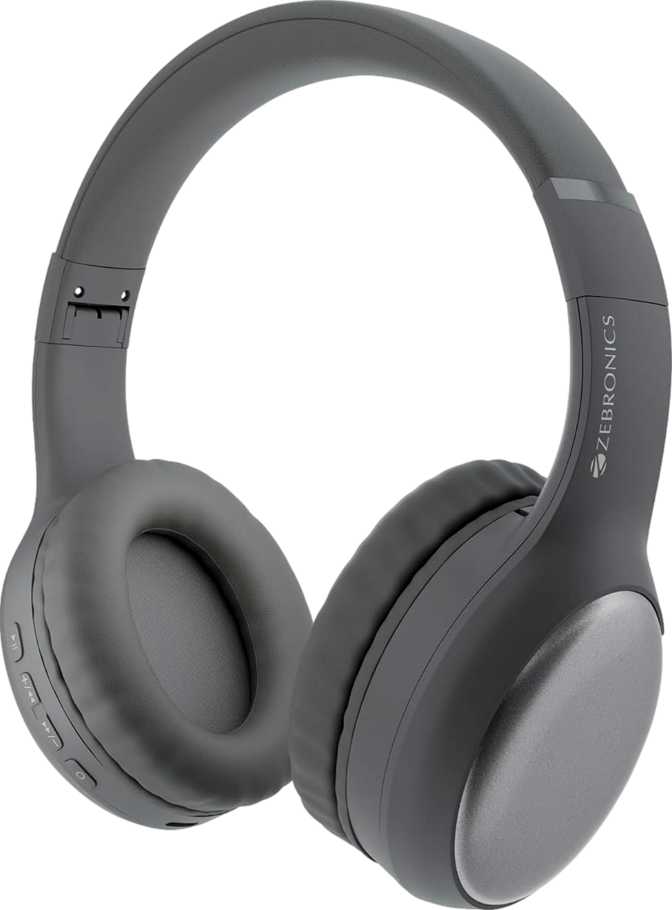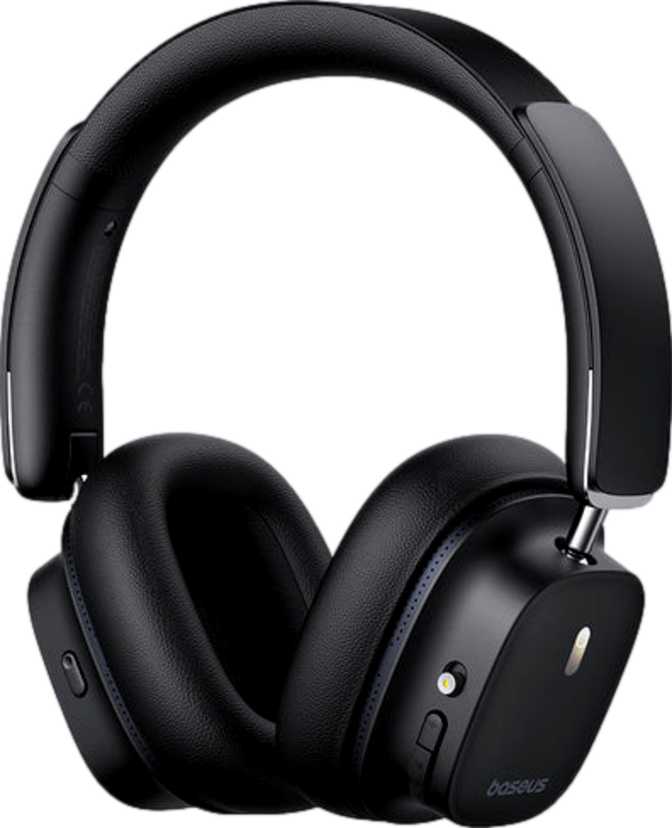
The wireless headphone market at the mid-range price point has never been more competitive — or more cluttered. Most options recycle the same feature set with different branding, and battery claims look impressive until daily reality trims them down. The Baseus Bowie 30 Max enters this space with a proposition that is harder to dismiss: a closed-back, over-ear headphone built around battery endurance so extreme it reframes what wireless freedom means at this price tier. Whether the rest of the headphone holds its own alongside that headline figure determines everything.
out of 5
At a Glance
65h
Max Battery
50mm
Driver Size
BT 5.4
Bluetooth
ANC
Noise Cancel
The Baseus Bowie 30 Max is a closed-back over-ear headphone built around battery endurance that reframes wireless freedom. It is aimed at commuters, travelers, and remote workers who value longevity and audio quality above all else.
Design and Build: Purposeful Over Flashy
The Bowie 30 Max is a closed-back over-ear headphone, with earcups that fully enclose the ear rather than resting on top. The physical seal plays a direct role in noise isolation before any electronics get involved, and the closed-back construction contributes a more immersive, bass-forward sound character by design.
At 320 grams, the weight sits in the expected mid-range for full-size over-ear headphones — comparable models typically fall between 240 and 360 grams. The headphone folds flat, which makes the included travel bag a practical asset from day one. The purchase arrives travel-ready without requiring separate accessories.
The detachable audio cable provides a wired fallback for any situation: a depleted battery, a preference for zero-latency audio, or a device without Bluetooth. The cable is tangle-resistant — a small but appreciated detail for bag-heavy commuters. There is no in-line remote on the cable, so all controls remain on the earcup in both wireless and wired modes.
No Water Resistance
The Bowie 30 Max carries no water resistance rating and is not suitable for workouts, rain, or any moisture exposure. This is a headphone for commuting, office use, travel, and home listening exclusively.
- Fit Type Over-Ear (Closed)
- Weight 320 g
- Foldable Yes
- Detachable Cable Yes
- Tangle-Free Cable Yes
- Travel Bag Included
- Water Resistance None
- Stereo Speakers Yes
Sound Quality: Making Sense of the Hardware
Driver Size and What It Implies
Each earcup houses a 50-millimeter driver — the transducer that converts electrical signal into sound. At this size, the drivers sit on the larger end of the over-ear spectrum, where 40mm is more typical. Larger drivers provide more physical surface area to tune low-frequency response and perceived soundstage width. This doesn't guarantee superior sound in isolation, but it signals design priorities that lean toward warmth and depth.
The frequency response spans the full range of human hearing, confirming there is no artificial curtailment at either end of the spectrum. Spatial audio support adds a three-dimensional quality to compatible content, making films, games, and certain music genres feel more immersive than flat stereo.
The Magnet Question
The Bowie 30 Max's drivers do not use neodymium magnets — the standard in most modern consumer headphone drivers at this price tier. Neodymium is favored for its high magnetic strength-to-size ratio, which typically supports tighter, more responsive transient performance and precise bass attack.
The alternative magnet materials used here tend to produce a different character: warmer and fuller in the low end, but potentially less punchy in bass transient response. Listeners who prioritize enveloping warmth may find this character natural; those who prefer fast, precise bass should treat this as a meaningful hardware distinction worth weighing before buying.
Unlike most headphones at this price tier, the Bowie 30 Max does not use neodymium magnets. This unusual engineering choice may produce a warmer but less transient-precise sonic character compared to neodymium-equipped competitors. Worth considering for listeners who prioritize bass precision.
- Driver Size 50 mm
- Frequency Range 20–20,000 Hz
- Spatial Audio Supported
- Neodymium Magnet No
- Stereo Output Yes
Active Noise Cancellation and Ambient Awareness
The Bowie 30 Max includes both active noise cancellation and an ambient sound mode. ANC uses microphones to detect incoming environmental noise and counters it with opposing audio signals, reducing the sound around you. Ambient mode flips the intent: it amplifies surrounding sound through the headphones so you can stay aware of your environment without removing the headphones entirely.
The dual-microphone arrangement supports both ANC performance and call quality. Two microphones allow the headphone to capture and distinguish your voice from ambient noise, maintaining call intelligibility in louder settings. Both microphones apply noise cancellation during calls, actively suppressing background sounds for the person on the other end.
The closed-back physical design contributes passive isolation on top of the electronic ANC — they work in combination, not independently. The seal created by the earcups reduces ambient sound before any ANC processing begins, giving the electronic system a quieter baseline to work from.
No In-Ear Detection
The Bowie 30 Max will not automatically pause audio when you remove the headphones. Every transition from listening to conversation requires a manual pause — a small but recurring friction point that several competing headphones at this tier have already addressed.
-
Active Noise Cancellation
Electronic noise suppression via dual mics
-
Ambient Sound Mode
Environmental awareness without removal
-
Passive Noise Isolation
Physical seal from closed-back earcups
-
Dual Noise-Canceling Microphones
For ANC and clean call quality
-
Auto-Pause on Removal
Not supported
-
Dedicated Mute Button
Not available
Battery Life: The Defining Feature
This is the section the Bowie 30 Max was built around, and it earns the attention.
65
Hours
Continuous wireless playback
50
Hours
Continuous wireless playback
At four to six hours of daily listening with ANC active, a full charge carries through eight to twelve days before a cable is needed. Without ANC, that stretches past two weeks. For frequent travelers, a transatlantic trip, hotel stay, and return flight may all fall within a single charge cycle.
Most competing headphones in this segment cap ANC battery life between 25 and 40 hours. The Bowie 30 Max's 50-hour ANC figure doesn't edge ahead by a small margin — it clears that entire range by ten hours or more. That is not incremental improvement; it is a different tier of experience.
Charging uses USB-C, which is the same cable most current laptops, phones, and accessories already use. Wireless charging is not supported, so plugging in is the only option. The battery is built-in and non-removable, which is standard for this form factor.
- Battery (Wireless) 65 hours
- Battery (ANC On) 50 hours
- Charging Port USB-C
- Wireless Charging Not Supported
- Battery Indicator Yes
- Removable Battery No
Connectivity: Bluetooth 5.4, LDAC, and Real-World Range
Codec Support
The Bowie 30 Max supports LDAC and AAC — and skips the aptX family entirely. LDAC transmits audio at significantly higher data rates than standard Bluetooth, enabling measurably richer detail and dynamic range with compatible Android devices. AAC covers iPhone and iPad users natively and integrates naturally with iOS audio.
The most practically notable missing codec is aptX Low Latency: without it, wireless audio sits at 60 milliseconds of latency. That figure is acceptable for music and most video streaming, but may be perceptible in timing-critical professional workflows where frame-accurate sync matters.
| Audio Codec | Supported | Quality Tier |
|---|---|---|
| LDAC | Hi-Res Wireless | |
| AAC | High Quality | |
| aptX Adaptive | Hi-Res Wireless | |
| aptX HD | High Quality | |
| aptX / aptX Low Latency | Standard / Low-Latency | |
| LDHC / LE Audio | Hi-Res / Next-Gen |
Connection Details
Bluetooth 5.4 is the current-generation standard, bringing improved connection stability and efficiency over earlier versions. Two-device multipoint keeps the headphone simultaneously paired to two sources — a laptop and a phone is the most common pairing — switching audio between them without manual disconnection.
The stated wireless range of 10 meters is notably conservative compared to headphones that advertise 30 meters or more. This may reflect a more honest real-world figure: actual usable range through walls and signal interference is typically well below open-air stated maximums for any headphone. Listeners who leave their source device in another room should test their specific environment.
Fast pairing and NFC tap-to-pair are not supported. Adding the Bowie 30 Max to a new device follows standard Bluetooth pairing steps — reliable, but without one-tap shortcuts.
- Bluetooth Version 5.4
- Maximum Range 10 m
- Audio Latency 60 ms
- Multipoint Pairing 2 devices
- Wired Fallback Yes
- NFC Pairing No
- Fast Pairing No
Controls and Everyday Usability
All physical controls — volume, playback, and ANC mode switching — sit on the earcup body. There is no in-line remote on the wired cable, so earcup controls handle both wireless and wired use. The Bowie 30 Max fully supports headset functionality: dual noise-canceling microphones handle voice capture for calls, and the ANC and ambient modes toggle on-device.
There is no mute button. Silencing yourself during a call means managing mute through the connected device — phone screen, laptop interface, or meeting software. In professional call-heavy environments where quick muting is a reflex, this requires a small but conscious workflow adjustment.
Mode switching between ANC-on, ANC-off, and ambient is a manual, deliberate action. Without ear-detection, users accustomed to automatic pausing when removing headphones will need to build the habit of manually pausing playback. These are minor friction points that accumulate over time for heavy daily users.
-
On-Ear Control Panel
Volume, playback, ANC toggle on earcup
-
Headset Mode for Calls
Dual noise-canceling microphone array
-
2 Microphones
For ANC and call noise suppression
-
Dedicated Mute Button
Not available on this model
-
In-Line Cable Remote
Not included on the wired cable
-
Ear-Detection Auto-Pause
Not supported on this model
Who the Bowie 30 Max Is For — and Who It Isn't
The Bowie 30 Max's feature set points to a specific buyer profile with unusual clarity. Getting this fit right is the single most important factor in deciding whether to buy.
-
Frequent travelers and long-haul commuters
ANC battery that outlasts entire trips without needing a cable
-
Remote workers with heavy daily listening
Four to six daily hours means eight to twelve days per charge with ANC on
-
Android users with LDAC-capable devices
Hi-res wireless audio without paying flagship headphone prices
-
Two-device switchers (laptop and phone)
Multipoint pairing handles source switching automatically
-
Value-conscious buyers
ANC, travel bag, and wired fallback in one purchase
-
Gym users and outdoor runners
No water resistance — moisture exposure puts the headphone at risk
-
Listeners who expect auto-pause
No ear-detection means manual pausing is required every time
-
Users who roam far from their device
The 10-meter Bluetooth ceiling limits free-ranging use
-
Call-heavy professionals needing mute control
No hardware mute button — must manage through connected device
-
Convenience-first buyers expecting fast pairing
No NFC or fast-pair shortcuts — standard Bluetooth steps required
How the Bowie 30 Max Compares to the Competition
The Bowie 30 Max competes against a field where ANC battery life typically peaks at 25 to 40 hours. The table below shows how the key specs stack up against typical rivals in the same price segment.
| Feature | Baseus Bowie 30 Max | Typical Mid-Range Rivals |
|---|---|---|
| Battery Life (ANC On) | 50 hours | 25–40 hours |
| Battery Life (ANC Off) | 65 hours | 30–50 hours |
| Bluetooth Version | 5.4 | 5.0–5.3 |
| Hi-Res Wireless Codec | LDAC | Often aptX or none |
| Water Resistance | None | IPX4 on many rivals |
| Ear-Detection Auto-Pause | No | Common at this tier |
| Two-Device Multipoint | Yes | Common at this tier |
| Travel Bag Included | Yes | Often sold separately |
| NFC / Fast Pairing | No | Available on some rivals |
| Detachable Audio Cable | Yes | Less common at this tier |
The Honest Assessment: Strengths and Weaknesses
The Bowie 30 Max's case for itself begins and ends with battery endurance, and that case is a strong one. Fifty hours of wireless listening with ANC active isn't just a bigger number than the competition — it is a different tier of experience. The mental overhead of managing headphone charging disappears for most users, replaced by a top-it-up-whenever relationship with the USB-C cable. That shift in routine carries more practical value than any specification table can communicate.
The LDAC codec inclusion reflects clear product thinking. Rather than stacking codec names and delivering all of them at marginal quality, the Bowie 30 Max chose one premium codec and supported it properly. For Android users with LDAC-capable devices, this is a direct audio quality advantage over competitors transmitting at lower data rates.
The build package is coherent and considered. Foldable frame, included travel case, detachable tangle-resistant cable, dual-microphone headset functionality, ambient sound mode, and two-device multipoint — each element addresses a real use case for a large portion of buyers, rather than merely padding a feature list.
The absence of water resistance is a real lifestyle constraint, not a fine-print caveat. Sweat, rain, or accidental moisture exposure presents risk to the hardware with no protection buffer. This is a headphone for controlled environments only.
No ear-detection auto-pause means every interruption to listening requires a manual action — individually small, but noticeable over weeks of daily use. The Bluetooth range ceiling of 10 meters is modest for the category and will matter in larger spaces. The missing mute button is a professional-context irritant. The absence of fast-pairing shortcuts means initial device setup is always manual.
The non-neodymium driver configuration warrants measured awareness. It is an unusual engineering choice that may produce a sonic character distinct from most competitors — warmer in the low end, but potentially less precise in bass transient response. As listener impressions accumulate for this model, that character will become clearer.
Answers to Questions Buyers Actually Ask
Final Verdict
The Baseus Bowie 30 Max makes a compelling case for itself on the strength of battery endurance that is hard to dismiss. For most people's daily listening patterns, charging once every two weeks is a fundamentally different experience than charging every few days. That shift in routine carries more practical value than any specification table can communicate.
- Battery life is your highest priority
- You use an LDAC-capable Android device
- You switch between a laptop and phone daily
- You travel frequently and want charging off your checklist
- You want a travel-ready package without sourcing accessories
- You exercise, run, or listen outdoors in rain
- You rely on auto-pause when removing headphones
- You need NFC or fast pairing shortcuts
- You frequently roam far from your source device
- You need a hardware mute button for professional calls
For the battery endurance, LDAC codec support, and included accessories on offer, the Baseus Bowie 30 Max represents considered value in the mid-range over-ear category. The battery life alone sets it apart from a field where most rivals have plateaued — and for the right buyer, that argument carries everything.