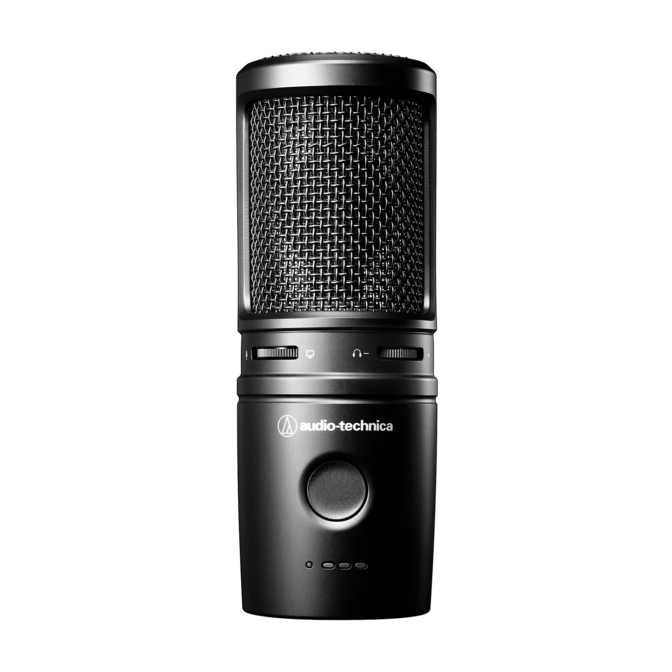
Audio-Technica AT2020USB-XP: Full USB Microphone Review
MicrophonesThe USB microphone market is saturated with products that promise broadcast quality and deliver regret. Most rely on marketing language to do the heavy lifting that engineering should. The Audio-Technica AT2020USB-XP takes a different approach — one grounded in technical specifications that sit well above the category average — and backs it up with a physical package that signals genuine recording intent: shock mount included, pop filter included, hardware controls on the body, and a clean cardioid design that prioritizes performance over a feature list inflated to look impressive in a comparison chart.
The core premise is disarmingly simple. Plug it in. Record. No audio interface to configure, no driver installation ceremony, no additional hardware budget required. What distinguishes this microphone is that its USB simplicity does not become a ceiling on what it can capture.
AT2020USB-XP at a Glance
192kHz Sample Rate
Audio resolution far beyond the USB category norm — the majority of competing microphones top out at 48kHz.
24-Bit Depth
Wide dynamic range that gives you more latitude to correct recording levels in post-production without degrading quality.
Cardioid Polar Pattern
Focused front pickup that naturally rejects ambient room noise, fans, and off-axis sound sources behind the microphone.
Hardware Mute + RGB
Physical mute button with RGB status indicator gives instant, reliable silence and visible live/muted confirmation at a glance.
Accessories Included
Dedicated shock mount and pop filter ship in the box — two accessories buyers of comparable microphones typically purchase separately.
USB Powered
Draws power directly from the USB connection — no audio interface, no batteries, no additional setup required to start recording.
Design, Build Quality, and Physical Experience
At 375 grams and standing 142mm tall with a compact 52mm square body profile, the AT2020USB-XP occupies desk space efficiently without feeling insubstantial. It carries the density you want from a recording tool — solid in hand, stable when mounted, with none of the hollow rattle that signals cost-cutting in manufacturing.
The control panel sits directly on the microphone body. In practice this matters considerably: every control you need is at your fingertips without hunting for a separate desktop module or tabbing through software windows mid-session. Audio-Technica has kept the physical footprint tight — 52mm wide and 52mm deep — so it fits cleanly on almost any desk configuration without consuming disproportionate space.
What Comes in the Box
Shock Mount
Every keystroke travels through your desk as a physical vibration. Without isolation, those vibrations reach the capsule and register as low-frequency interference in recordings. The included shock mount absorbs that mechanical energy before it becomes an audio problem — and it is designed specifically for this microphone, not a generic clip that requires adjusting to fit.
Pop Filter
Plosive consonants — the bursts of air that "p" and "b" sounds project directly at the capsule — produce a characteristic thud that requires corrective editing. The pop filter diffuses that air before it reaches the capsule, solving the problem at the source. Receiving this in the box, designed for this microphone, removes real friction and real cost from getting started properly.
RGB Lighting and Status Indication
The RGB lighting is integrated into the hardware and tied directly to the microphone's mute system, functioning as a visible operational status indicator. It gives instant confirmation — readable from across a desk — of whether the microphone is live or silent. For streamers, the RGB element also contributes to desk aesthetics, and Audio-Technica has implemented it purposefully enough that it does not feel added purely to capture a gaming audience.
Audio Performance: The Technical Foundation
Recording Resolution That Exceeds Category Norms
The AT2020USB-XP captures audio at 192kHz with 24-bit depth. To understand why this specification matters, it helps to know where the broader USB microphone market sits: the majority of USB microphones — including well-regarded and commercially successful ones — record at 48kHz with 16-bit depth. Those figures are capable of producing clean, usable audio for voice recording. The AT2020USB-XP's specification is substantially beyond that baseline.
Sample Rate
192 kHz
Determines how densely the audio signal is sampled per second. A higher rate preserves more of the signal's original character and provides more working material when processing in editing software.
Bit Depth
24-bit
Determines the dynamic range — the span between the quietest sound captured cleanly and the loudest before distortion. More depth means more forgiveness if your initial recording level was not perfect.
Full-Spectrum Voice and Instrument Capture
The microphone captures audio across the complete range of human hearing — from the deepest frequencies that give a voice its body and weight, through to the highest frequencies that carry consonant clarity, breath texture, and the subtle detail that separates a recording that sounds alive from one that sounds flat. Nothing is compressed or rolled off at either end of the frequency range.
In practical terms: preserved low frequencies mean a naturally deep voice retains its depth. Accurately captured high frequencies mean speech remains crisp and intelligible without sounding artificially boosted or harsh.
Cardioid Focus: One Pattern, Executed with Intention
The AT2020USB-XP uses a single cardioid polar pattern and does not offer alternative patterns. Cardioid means the microphone is most receptive directly in front of it, with sensitivity tapering toward the sides and reaching near-minimum directly behind the capsule.
A microphone designed to do one polar pattern very well often outperforms a microphone that implements four patterns with divided engineering attention. The absence of omnidirectional, figure-eight, or hypercardioid modes reflects a deliberate trade-off rather than an oversight — for solo recording, cardioid is the correct pattern nearly every time.
Features That Affect Daily Workflow
Who This Microphone Suits
The AT2020USB-XP is built for users who take audio quality seriously and want the operational simplicity of a USB connection. That profile is broader than it might initially appear.
-
Podcasters Who Edit Their Shows
High-resolution source material is an asset in post-production, and the cardioid pickup keeps the focus on a single voice in a home environment.
-
Streamers Seeking Professional Voice Audio
The shock mount, pop filter, and clean signal chain produce noticeably better results than consumer-grade alternatives without requiring an interface setup.
-
Voice-Over Artists
The capsule quality, cardioid isolation, and included accessories combine to produce recordings that require less corrective editing before delivery.
-
Remote Professionals
Educators, presenters, and consultants whose voice quality reflects professionally on them during calls and recorded sessions.
-
Home Recordists Without an Interface
The 192kHz/24-bit capture means this microphone belongs in recording chains that previously required dedicated interface hardware to achieve comparable resolution.
-
You Require Real-Time Headphone Monitoring
If hearing yourself as you record is part of your essential workflow, this microphone requires solving that separately through another audio path.
-
Multi-Person or Ambient Recording Setups
Capturing a roundtable conversation, a two-person in-room interview, or a room's ambient sound requires polar pattern flexibility that a fixed cardioid cannot provide.
-
You Want Instant Onboard Voice Effects
Applying a broadcast EQ preset or real-time noise reduction without opening software — that feature set lives elsewhere.
-
Cost is the Primary Constraint
The resolution capabilities of the AT2020USB-XP are only beneficial if the recording workflow can take advantage of them. More basic needs can be met at a lower price point.
How It Compares to the USB Microphone Field
The AT2020USB-XP's recording resolution is its clearest differentiator. The 192kHz sample rate is uncommon in USB microphone form at any price tier — most products in the mid-range top out at 96kHz, and a substantial portion remain at 48kHz. When comparing total value including accessories, the gap versus competitors that ship without shock mount or pop filter narrows considerably.
| Specification | AT2020USB-XP | Typical Mid-Range USB Mic | Entry-Level USB Mic |
|---|---|---|---|
| Sample Rate | 192kHz | 48–96kHz | 44.1–48kHz |
| Bit Depth | 24-bit | 16–24-bit | 16-bit |
| Polar Patterns | 1 (Cardioid) | 1–4 | 1 |
| Headphone Output | Often yes | Rarely | |
| Shock Mount Included | Sometimes | Rarely | |
| Pop Filter Included | Sometimes | Rarely | |
| Onboard DSP | Sometimes | Rarely | |
| Hardware Mute | Common at this tier | Occasionally |
Honest Strengths and Real Limitations
What It Does Well
The AT2020USB-XP earns its credibility through technical substance rather than feature count. The recording resolution is a genuine differentiator — not a marketing figure, but a specification that creates real capability in post-production for users who take advantage of it. Audio-Technica's background in professional microphone engineering informs the capsule here, and the single-pattern execution reflects a design philosophy that prioritizes doing one thing correctly over doing four things adequately.
The accessory inclusion deserves plain acknowledgment. Shock isolation and pop filtering are not optional for serious recording — they address real acoustic problems that affect every recording made without them. Getting both in the box, designed for this specific microphone, removes friction and cost that buyers of competing products frequently encounter after the initial purchase.
Where It Falls Short
The headphone monitoring absence is the honest limitation that warrants the most consideration. It is a meaningful gap versus microphones at comparable positions in the market that do include monitoring output. The AT2020USB-XP implicitly trades monitoring convenience for recording resolution — a trade that makes clear sense for some users and is a dealbreaker for others. Both responses are valid; which applies depends entirely on the individual workflow.
The absence of onboard DSP is a design philosophy, not a shortcoming — but it is worth naming clearly. For anyone who processes audio in software, clean unprocessed source material is preferable to a signal already shaped by onboard algorithms. For users who want real-time effects without software involvement, this microphone asks them to solve that elsewhere.
Questions Real Buyers Ask
The Verdict
The Audio-Technica AT2020USB-XP is a well-built, technically serious USB microphone for users who want to record at a level above what most USB microphones make possible, without the complexity of an audio interface setup.
The recording resolution is the headline capability and the primary reason to choose it over a capable but lower-specification alternative. The included accessories are practical, the hardware mute with visual indicator reflects real workflow consideration, and the cardioid implementation is clean and focused.
The absence of headphone monitoring is a real limitation for a specific subset of users. If real-time self-monitoring is essential to how you record, this microphone requires an external solution — and competing products that include monitoring output deserve serious consideration before committing.
For the user this microphone is designed for — a solo podcaster, streamer, voice-over artist, or remote professional who edits their audio and cares about what the capsule captures — the AT2020USB-XP is a confident, well-reasoned choice. It does one thing with precision and resolution that most USB microphones cannot match.