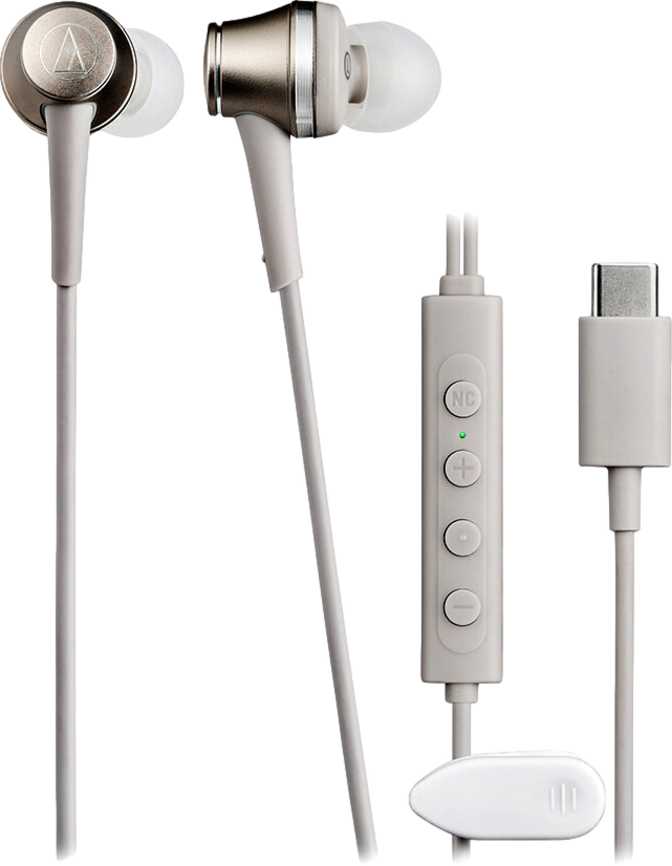
Audio-Technica ATH-CKD7NC: A Full Review of Wired ANC Done Right
HeadphonesQuick Verdict
The ATH-CKD7NC is one of the few wired earphones on the market that combines active noise cancellation with a direct analogue signal path. No Bluetooth compression, no battery anxiety — just ANC-powered focus for the listener who puts sound quality first.
Overall Rating
out of 5
Recommended for desk use & commuting
Design and Build Quality
Audio-Technica's approach here is intentional restraint. No aggressive styling, no oversized branding — just a compact housing built to stay out of your way while doing its job.
Fit and Form Factor
Silicone ear tips seal inside the ear canal, providing a secure fit without hooks or wings. This seal does double duty: it anchors the earphones during long wearing sessions and creates the first layer of passive noise blocking before the ANC circuit even activates. For multi-hour desk or travel use, the in-ear format is lighter and more discreet than any over-ear headphone.
Cable Design
The 1.2-metre tangle-resistant cable hits the practical sweet spot — long enough to reach comfortably from a bag pocket without pulling, and short enough not to coil into a nuisance. Tangle-resistant construction sounds like a minor spec until the moment you board a train without fumbling at your earphones. It earns its place every day.
Water Resistance
The ATH-CKD7NC carries no moisture rating whatsoever — not even a basic splash protection designation. This is a firm boundary: controlled environments only. Light rain under a jacket is manageable, but sweat from physical activity is entirely outside the intended operating conditions.
Sound Quality
This is where the ATH-CKD7NC justifies itself. Strip away the ANC and you still have a well-engineered in-ear driver — the noise cancellation is an addition to a solid audio foundation, not the foundation itself.
The 11mm Driver
An 11mm dynamic driver is at the larger end of what fits inside an in-ear housing. More physical surface area means the driver can move more air — which translates into fuller low-end response and better presence in the mid-range without the bass bloat that some smaller drivers compensate for through aggressive tuning.
The frequency coverage spans the full extent of human hearing: from the deepest kick drum resonance to the upper shimmer of cymbal overtones. Audio-Technica's house tuning tends toward accuracy rather than consumer-bass boosting, which positions these earphones well across genres. Classical, jazz, and vocal-forward music benefit especially from this approach.
Two-Stage Noise Isolation
Noise isolation here is a layered system that stacks passive and active attenuation on top of each other — each stage contributes meaningfully before the other begins.
Stage 1 — Passive Isolation
The physical ear tip seal blocks mid and high-frequency noise — conversation, keyboard clatter, HVAC hum — through simple physics. A tight in-ear seal achieves this more effectively than any over-ear headphone pad that merely rests against the skull.
Stage 2 — Active Noise Cancellation
A microphone samples ambient sound and generates an inverse signal to cancel it at the ear. The ANC works best against consistent, low-frequency sources: aircraft cabin drone, subway rumble, air conditioning, and open-plan office background noise. It is less effective against sudden or unpredictable sounds. Together, the two stages create genuine acoustic isolation for the environments these earphones are built for.
Connectivity: Wired by Design
The decision to go wired is not a cost-cutting move — it is the point. Understanding what the wired connection means in practice separates the right buyer from the wrong one.
The 3.5mm analogue connection delivers the audio signal from source to driver without any digital encoding or decoding step. Bluetooth audio — even with high-quality codecs — compresses audio data to transmit it wirelessly and introduces a processing delay of varying length. Neither issue exists with a direct wired connection.
For video editors, musicians monitoring recordings, podcast producers, or anyone where audio-visual sync matters, the wired connection is not a compromise — it is the technically correct choice.
The USB-C port on the ATH-CKD7NC serves exclusively as a power input for the ANC circuit. The audio signal itself travels through the 3.5mm jack. This means any device with a standard headphone output — laptop, desktop audio interface, in-flight entertainment system, or dedicated music player — works immediately without any setup process.
Compatibility Note
Devices without a 3.5mm headphone jack require an adapter. This includes current iPhones and several Android flagships. Managing both a 3.5mm adapter and the ANC USB-C cable adds complexity — consider this before purchasing for smartphone-primary use.
Best source devices for this earphone:
- Laptops with 3.5mm output
- Desktop audio interfaces and DACs
- In-flight entertainment systems
- Dedicated music players
- Android phones with 3.5mm jack
Controls and Microphone
The ATH-CKD7NC is a fully capable headset — not just an earphone. The inline module handles both playback control and voice pickup in a single compact unit.
In-Line Control Panel
The control module sits on the cable at a natural thumb position, handling playback functions — track navigation, volume adjustment, and call answer/end — without requiring you to reach for your source device. Placing the controls on the cable rather than on the earphone housing keeps the in-ear unit lightweight and the fit unobtrusive.
During commutes and meetings alike, this translates to a practical advantage: changing a track or answering a call takes a single thumb press rather than fishing a phone out of a pocket or bag.
Noise-Canceling Microphone
The single microphone integrated into the inline module uses noise-canceling processing to push your voice forward and suppress the environmental sound captured around it. On a crowded train or in a busy café, the person you are calling hears your voice clearly rather than the environment surrounding you.
For remote workers using these at a desk, the earphone functions effectively as a call headset: wired audio quality for music, hands-free mic capability for calls, and no wireless pairing process to manage between the two modes.
Power and the ANC Circuit
This is the single most important operational detail about the ATH-CKD7NC. The ANC system requires external USB-C power to function — there is no internal battery. Read this section before purchasing.
Unlike wireless ANC earphones that carry a built-in rechargeable battery, the ATH-CKD7NC powers its ANC circuit through an external USB-C connection. In use, the 3.5mm end connects to your audio source while the USB-C end draws power from a phone port, laptop socket, or portable power bank.
At a desk connected to a laptop, this setup is practically invisible — the USB-C cable sits alongside every other peripheral. For commuters, it adds a power bank to the equation, which most regular travellers carry regardless.
The upside of this architecture is significant: no internal battery means no degradation across years of ownership, no dead earphones before a long flight, and no charging ritual before you leave the house. If a USB power source is available — and in most indoor environments one is — the ANC works.
Without a power connection, the earphones remain fully functional as passive analogue earphones. You lose the active cancellation layer, but the driver quality and passive isolation from the ear tips remain entirely intact.
| Power State | ANC Status | Audio Output |
|---|---|---|
| USB-C connected to power | Active — full ANC | |
| USB-C disconnected | Inactive — passive only | |
| No power source available | No ANC | (passive) |
Who This Earphone Is Built For
The ATH-CKD7NC is a deliberately specific product. Knowing exactly who it serves — and who it does not — is the most direct path to a confident purchase decision.
-
You work at a desk or from homePlugged into a laptop — 3.5mm for audio, USB-C for ANC power — the setup is seamless and the benefit to focus is immediate in open-plan or busy home environments.
-
You fly regularlyAircraft cabin drone is the textbook ANC use case, and most frequent flyers carry a laptop or power bank already. The power dependency adds no friction in this context.
-
Audio fidelity matters more than wireless freedomThe direct analogue signal path delivers audio quality that Bluetooth compression at the same price cannot match. If you notice what you are hearing, this distinction is real and audible.
-
You already prefer wired earphonesListeners using desktop DACs, audio interfaces, or dedicated music players lose nothing by staying wired — and gain ANC as a genuine productivity benefit.
-
You exercise with earphonesNo water resistance, no sweat protection, and a cable during vigorous activity is impractical. This is a hard stop for gym use, running, and cycling — full stop.
-
Your phone has no headphone jackiPhones and several Android flagships require a dongle for the 3.5mm connection. Adding an adapter alongside the ANC USB-C cable introduces enough complexity that a wireless alternative makes more sense.
-
You need ambient sound modeThere is no transparency or pass-through mode. ANC cannot be switched to let environmental sound in — a real limitation for pedestrians and cyclists who need situational awareness outdoors.
-
You want complete wire-free simplicityIf the ideal experience is earphones in and nothing else to manage, the external power bank requirement adds setup steps that wireless ANC earphones simply do not have.
How It Compares
The wired ANC earphone category is sparse. Most ANC development investment has flowed into wireless earbuds, leaving wired ANC as a niche Audio-Technica has deliberately targeted. Here is how the ATH-CKD7NC stacks up against the logical alternatives at a similar price.
| Feature | ATH-CKD7NC This Product | Wireless ANC Earbuds | Passive Wired Earphones |
|---|---|---|---|
| Active Noise Cancellation | Yes | Yes | No |
| Bluetooth Audio Compression | None | Present | None |
| Built-in Battery | Not required | Required — degrades over time | Not applicable |
| Audio Latency | Zero (analogue) | Low to moderate | Zero (analogue) |
| Water Resistance | None | Usually IPX4 or better | Varies |
| Ambient / Transparency Mode | No | Often included | Not applicable |
| External Power for ANC | Yes — USB-C required | No (self-contained) | Not applicable |
| Price Positioning | Mid-range | Mid to premium | Budget to mid |
Honest Assessment
The ATH-CKD7NC is a product that knows exactly what it is — and that clarity is its defining strength.
The sound quality foundation is genuinely strong. An 11mm driver in an in-ear housing with a direct analogue signal path positions these earphones meaningfully above what wireless earbuds at the same price can deliver in raw audio fidelity. For listeners who care about what they are actually hearing — not just that something is playing — this difference is audible and real.
The external power model for ANC, counterintuitive as it first sounds, has a substantial upside. No internal battery means no degradation curve across years of ownership, no dead earphones at the start of a long flight, and no charging habit to maintain. The ANC simply works whenever USB power is available — indefinitely.
The tangle-resistant 1.2m cable, the cable-mounted control placement, and the noise-canceling microphone are all daily-use details that reflect considered design rather than ticked-off spec checkboxes.
The absent ambient sound mode is a genuine limitation, not a minor omission. ANC earphones used outdoors — walking city streets, crossing intersections — create full acoustic isolation from the environment. Without a transparency mode to switch on when situational awareness matters, users must physically remove the earphones. For primary outdoor use, that is a safety consideration worth taking seriously.
The lack of water resistance firmly anchors the ATH-CKD7NC to controlled environments. It is a single-context product — excellent in its context, entirely unsuitable outside it. That precision is a strength and a limitation at once.
The missing travel case is a notable omission at this price point. An earphone targeting commuters and travellers should ship with basic protection for the product in transit.
Frequently Asked Questions
The questions buyers search for before committing to a wired ANC earphone — answered directly.
A Focused Tool for the Right Listener
The ATH-CKD7NC earns its place by solving a specific problem exceptionally well.
Audio-Technica has not tried to make a wireless earphone with a cable. They have made an audio-first product with ANC built around the priorities of a specific type of listener — and the result reflects that clarity of purpose. The sound quality foundation is strong, the ANC performs effectively in its target environments, and the external power model eliminates battery degradation entirely, which is a genuine long-term ownership advantage no wireless earphone can offer.
What is missing — ambient mode, water resistance, a travel case — draws a clear line around the use case. Within that boundary, the ATH-CKD7NC performs with the quiet competence Audio-Technica is known for. Outside it, the product simply does not belong.
Buy These If:
You primarily use earphones at a desk, on flights, or in commuter settings where power access is available and sound quality matters more than wireless freedom.
Look Elsewhere If:
You exercise with earphones, your phone lacks a headphone jack, or you rely on ambient mode for safe outdoor use during your daily routine.
Recommended — with clear caveats