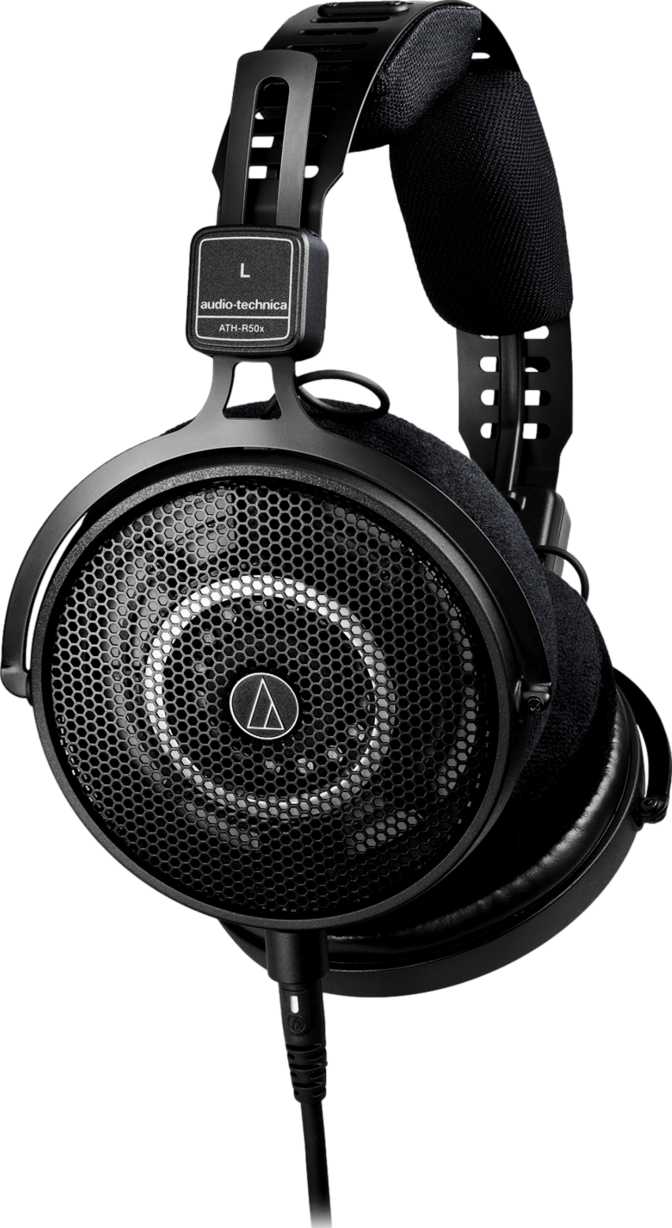
Audio-Technica ATH-R50x: An Honest Look at This Open-Back Headphone
HeadphonesMost headphone shopping today comes down to the same checklist: how good is the noise cancellation, how long does the battery last, does it pair with an app. The Audio-Technica ATH-R50x ignores that checklist entirely. It has no battery, no microphone, no wireless chip, and no noise cancellation of any kind. What it has instead is an open-back driver design, a wide frequency response, and a single, uncompromising purpose: letting you hear audio exactly as it was mixed, with nothing electronic standing between the signal and your ears.
That makes this a polarizing product by design. For anyone who has ever felt that their music sounds artificially processed through consumer headphones, or who needs a trustworthy reference while editing audio, the ATH-R50x is built to solve that exact frustration. For anyone shopping for a commute companion or a gym headphone, this is the wrong page entirely. Knowing which camp you're in before you read further will save you time, and the rest of this review will tell you exactly how to figure that out.
Design, Build Quality, and Physical Experience
The Open-Back Design Is the Whole Story
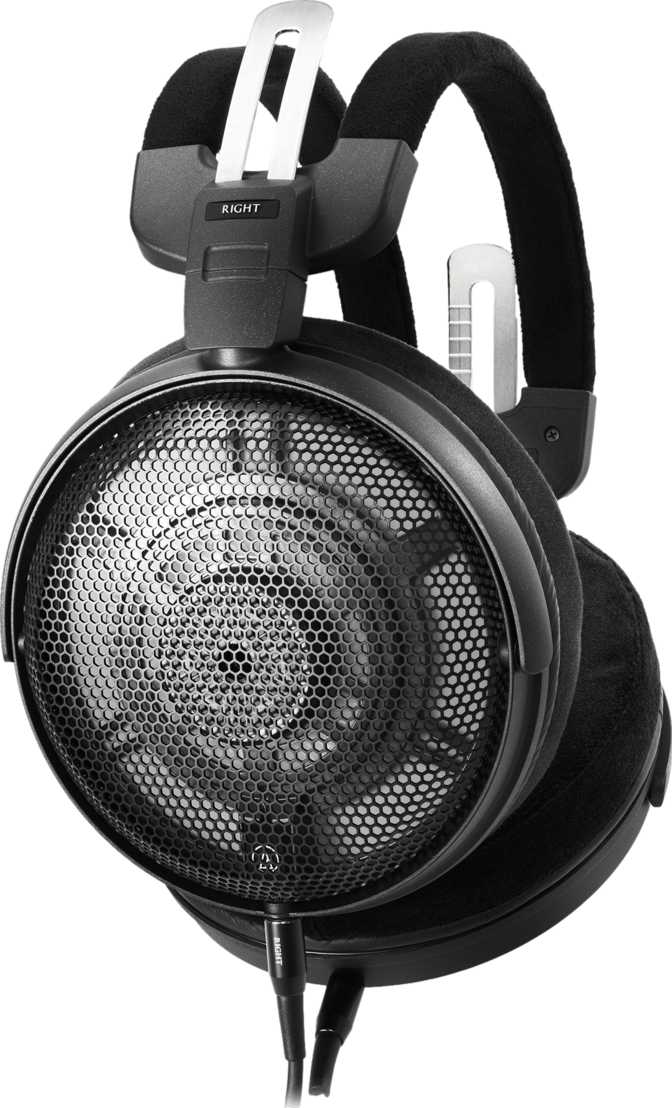
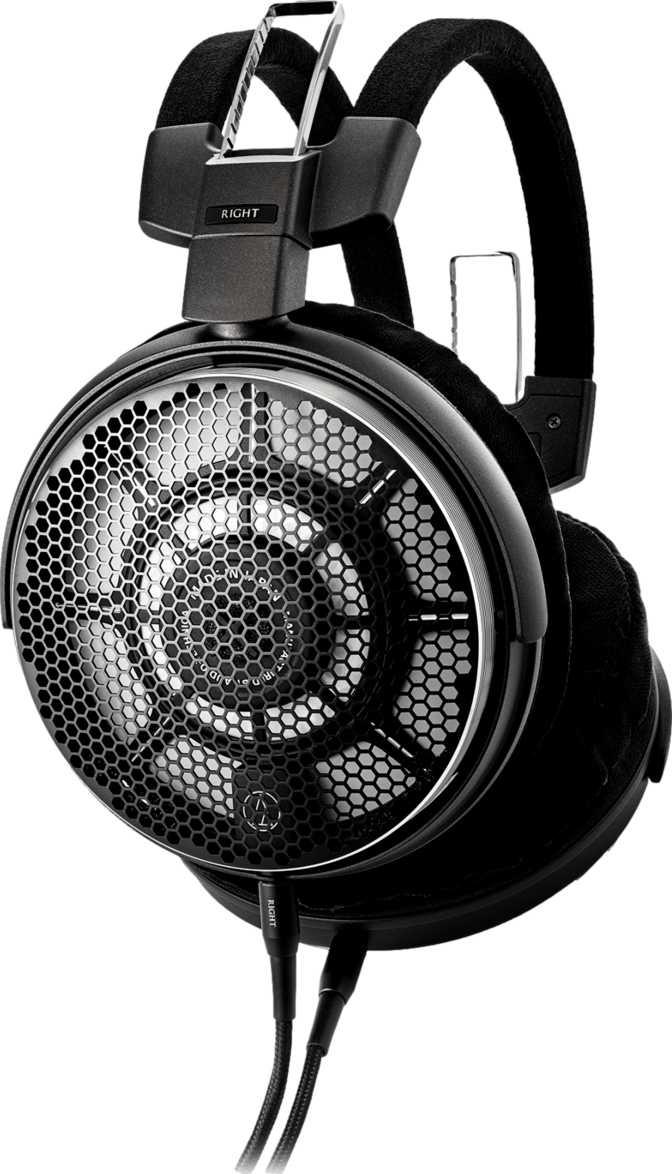
The single most important fact about the ATH-R50x is that it's open-backed. The earcups don't seal against the outside world; the back of each housing is left open, letting air and sound pass through freely rather than bouncing around inside a sealed chamber. This has two real-world consequences, and you need to be comfortable with both before buying.
The Sonic Upside
An open enclosure reduces internal pressure buildup and resonance, producing a sense of space and air that closed, sealed headphones struggle to replicate. Instruments feel like they exist around you rather than inside your skull. It's also a big reason open-back designs cause less ear fatigue over long listening sessions, since there's less pressure sealed against your eardrum.
The Isolation Trade-Off
Sound leaks out of an open-back headphone freely, so anyone sitting near you will hear a faint, or not-so-faint, version of whatever you're listening to. Ambient noise from your room leaks in unfiltered too, because there's no passive seal and no active noise cancellation working against it. This will not block out a noisy office, a crying baby, or an airplane cabin. It was never designed to.
Weight, Cable, and Everyday Handling
At 207 grams, the ATH-R50x sits in the lighter range for a full-size over-ear headphone, which matters more than it sounds. Anyone who has worn a heavy open-back headphone for a four-hour mixing session knows that clamping force and weight are what end the session early, not the sound quality. A lighter shell means less strain on the top of the head and ears over time, a meaningful factor for editors, musicians, and critical listeners who wear headphones for work, not just for a twenty-minute commute.
The cable is detachable and rated as tangle-free, running three meters in length. That's a deliberately generous length, far longer than you'd want for portable use, but exactly right for sitting at a desk connected to an audio interface, amplifier, or mixing console a few feet away without feeling tethered. The detachable design also means that if the cable ever frays or fails, historically the most common point of failure on any wired headphone, you can replace just the cable rather than retiring the whole unit.
Sound Performance: What an Open-Back Reference Headphone Delivers
Frequency Range and Driver Engineering
The ATH-R50x is rated across an unusually wide frequency window, down to 5 Hz on the low end and up to 40,000 Hz on the high end. Human hearing tops out at roughly 20,000 Hz for most people, and very few of us can perceive anything below 20 Hz as a distinct tone. So why build a driver that reaches so far past what we can consciously hear?
The honest answer is that extending well beyond the audible range gives the driver more headroom and linearity within the range you do hear. A driver engineered to reproduce ultra-low sub-bass rumble and high-frequency harmonic overtones cleanly tends to behave more accurately in the midrange too, because it isn't straining at the edges of its design limits during normal playback. For mixing, mastering, or any critical-listening use, that translates into a more honest, less colored representation of a recording, which is the entire point of a reference headphone.
Driving that range is a 45mm driver, which is large for an over-ear headphone. Bigger drivers generally move more air with less distortion at higher volumes, supporting fuller low-end response and better dynamic headroom, useful when you're trying to judge whether a bass line in a mix is actually too hot, rather than guessing.
Impedance, Sensitivity, and Why Your Source Matters
The ATH-R50x carries a 50-ohm impedance and a sensitivity of 93.3 dB per milliwatt. Neither number is extreme, but together they tell you something important: this isn't a headphone designed to be maxed out by a phone's headphone jack or a basic USB-C dongle.
Fifty ohms is moderate, low enough that it will technically play from almost any source, but high enough that a weak amplifier will leave real dynamic range and detail on the table. Combined with a sensitivity that isn't especially high, the practical advice is straightforward: this headphone will work plugged into a laptop or phone adapter, but it will sound noticeably flatter and quieter than its potential. Pair it with a dedicated headphone amplifier or a decent audio interface, and the dynamics, bass extension, and headroom open up considerably. If you already own an audio interface for recording or production, you have everything you need. If you don't, budget for one; it's not optional gear here, it's the difference between hearing what this headphone can actually do and hearing a muted version of it.
There's no active noise cancellation and no passive noise isolation, both consistent with the open-back design above. There's also no spatial audio processing; this is a stereo headphone in the purest sense, reproducing left and right channels exactly as recorded rather than applying any virtual surround or head-tracking effects. For mixing and critical listening, that's a feature, not an omission: processed spatial effects are exactly what you don't want when judging a stereo mix.
Power and Connectivity: Wired, and Proudly So
There is no battery in the ATH-R50x, not rechargeable, not removable, not solar-assisted, and no battery indicator, because there's nothing to indicate. The headphone draws its power passively from the analog signal sent down the cable, the same way headphones worked before batteries were involved at all. This cuts both ways, and you should understand both sides.
The Upside
This headphone is always ready. There's no charge cycle to manage, no battery that degrades over years of use, and no possibility of it dying mid-session. Plug it in and it works, every time, indefinitely.
The Downside
It can never go wireless. There's no Bluetooth, no companion app, and no way to use it untethered from a cable. For critical listening work that's the right trade-off, since wired connections avoid the compression wireless codecs introduce and add zero latency, but if you wanted a wireless option down the line, this isn't that product.
Features You Won't Find Here (And Why That's the Point)
It's worth listing what the ATH-R50x deliberately leaves out, because the absence is as informative as anything it includes.
- No built-in microphone of any kind, meaning zero microphones total
- No mute function, because there's no microphone to mute
- No in-line control panel or on-device controls
- No ambient sound mode or transparency mode
- No automatic pause when removed from your ears
- No headset functionality for calls
None of this is a flaw, it's a category decision. The ATH-R50x is not trying to be a communication device, a gaming headset, or a lifestyle accessory. It has no controls because it has nothing to control beyond volume, which lives on your source device. It has no microphone because it was never meant for calls. Every feature that was cut is a feature that exists on other headphones to serve use cases this product simply isn't chasing.
Who the ATH-R50x Is For (and Who Should Look Elsewhere)
- Mix, master, edit, or critically evaluate audio and need a trustworthy, uncolored reference
- Do most of your listening at a desk, connected to an interface, amp, or computer
- Value soundstage and a natural, spacious tonal presentation over isolation
- Don't need or want noise cancellation, a microphone, or wireless freedom
- Want a headphone with no battery to ever wear out
- Need isolation from a noisy commute, office, or shared living space
- Want to take calls or use voice chat through your headphones
- Need any form of portability, folding, a carry case, or wireless freedom
- Plan to use this primarily from a phone with no amplifier
- Want any kind of active noise cancellation or ambient awareness mode
ATH-R50x vs. the Alternatives: Open-Back vs Closed-Back vs Wireless ANC
Buyers usually cross-shop a headphone like this against two very different categories: sealed studio headphones and wireless ANC headphones. Here's how the categories actually differ in practice, regardless of brand.
| Dimension | Open-Back Reference (ATH-R50x type) | Typical Closed-Back Studio Headphone | Typical Wireless ANC Headphone |
|---|---|---|---|
| Soundstage | Spacious, out-of-head presentation | Tighter, more forward, in-head presentation | Varies, often processed for impact |
| Sound leakage | High, others nearby will hear it | Low to moderate | Low |
| Isolation from outside noise | None | Moderate, passive only | High, active cancellation |
| Best environment | Quiet room, desk, studio | Tracking sessions, louder environments | Commuting, travel, public spaces |
| Power requirement | None, fully passive | None on most wired models | Battery required, must be charged |
| Microphone / calls | None | Usually none | Usually included |
| Portability | Low, no folding, no case | Moderate | High |
| Ideal use case | Critical listening, mixing reference | Recording, monitoring while tracking | Daily commuting, travel, calls |
The takeaway: an open-back reference headphone and a wireless ANC headphone aren't really competing for the same job. One is a precision tool for a quiet room; the other is a convenience tool for a noisy world. If you find yourself needing both, that's normal; many critical listeners own a sealed or ANC pair for travel and an open-back pair like this one for serious listening at home.
Strengths and Weaknesses: An Honest Account
The Real Strengths
The ATH-R50x earns its keep through honesty rather than excitement. The open-back design genuinely delivers the spacious, low-fatigue listening experience that the format promises, and the wide frequency response combined with a large 45mm driver gives it real headroom for accurate bass and treble reproduction once it's paired with a proper amplifier. The detachable cable and relatively light 207-gram build are small details, but they're the kind that matter after the hundredth listening session, not the first.
The Honest Trade-Offs
There is zero isolation, so this is a poor choice for anyone sharing a space or commuting. The moderate impedance and sensitivity mean it genuinely needs amplification to perform at its best, an added cost and an added piece of gear for anyone who doesn't already own an interface. And the complete absence of a microphone, wireless connectivity, or any portability features means this headphone does exactly one job, nothing more, nothing less. Buyers expecting a do-everything headphone will be disappointed; buyers who understand they're purchasing a specialized tool will not be.
Common Questions Before You Buy
Final Verdict: Should You Buy the Audio-Technica ATH-R50x?
Buy the Audio-Technica ATH-R50x if you do serious listening at a desk, mixing, mastering, editing, or simply critical music appreciation, and you already have, or are willing to invest in, a basic headphone amplifier or audio interface to drive it properly. In that environment, its open-back design, wide frequency response, and large driver combine to deliver an honest, spacious sound that closed, sealed headphones in this category structurally cannot match.
Skip it if you need isolation, portability, calls, or wireless freedom in any combination, this headphone offers none of those, by design rather than oversight. It is not a travel companion, not a commuting headphone, and not a headset. It's a specialized listening tool that does one job with real conviction, and it deserves to be bought by people who specifically want that job done well, not by anyone hoping it will also handle everything else a modern headphone usually does.