Audio-Technica ATH-ADX7000: A Full Review for Dedicated Listeners
HeadphonesThere is a category of headphone that exists entirely outside the mainstream conversation — no Bluetooth, no noise cancellation, no voice assistant integration. The Audio-Technica ATH-ADX7000 lives there, and it makes no apologies for it. This is a statement headphone for the serious listener: someone who has already owned several pairs, who owns a dedicated headphone amplifier, and who has reached the point where they want to hear music the way it was mixed in the studio. If that description makes you lean forward in your chair, read on. If it makes you reach for your phone to check Bluetooth specs, this review will save you both time and money.
Design and Build: Engineered for Listening, Not Lifestyle
Physical Form and Materials
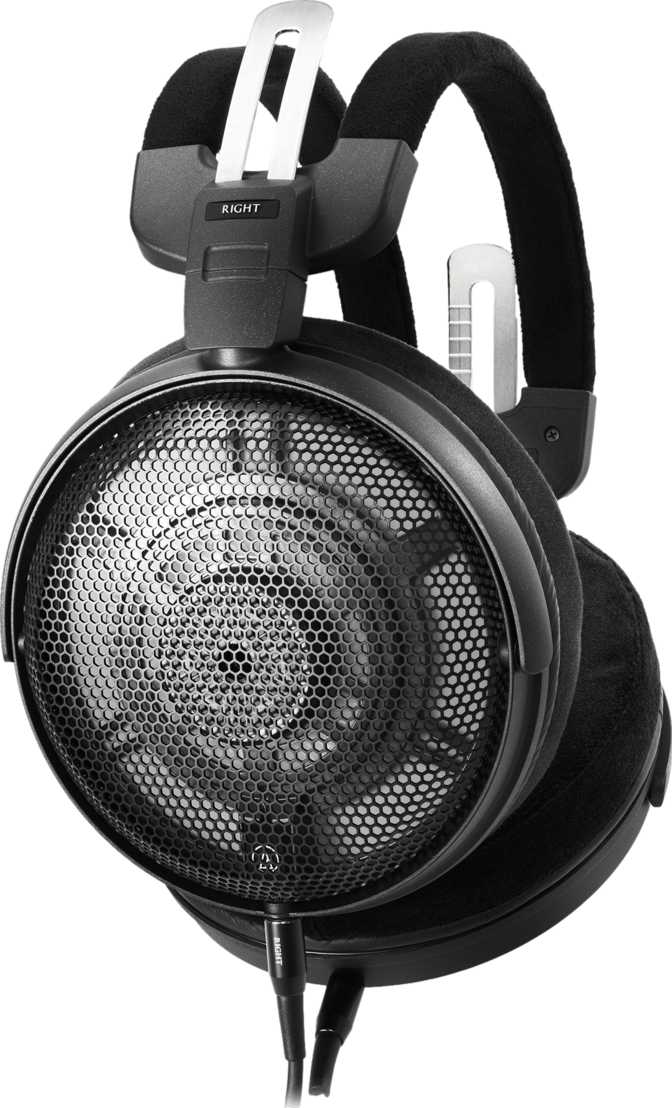
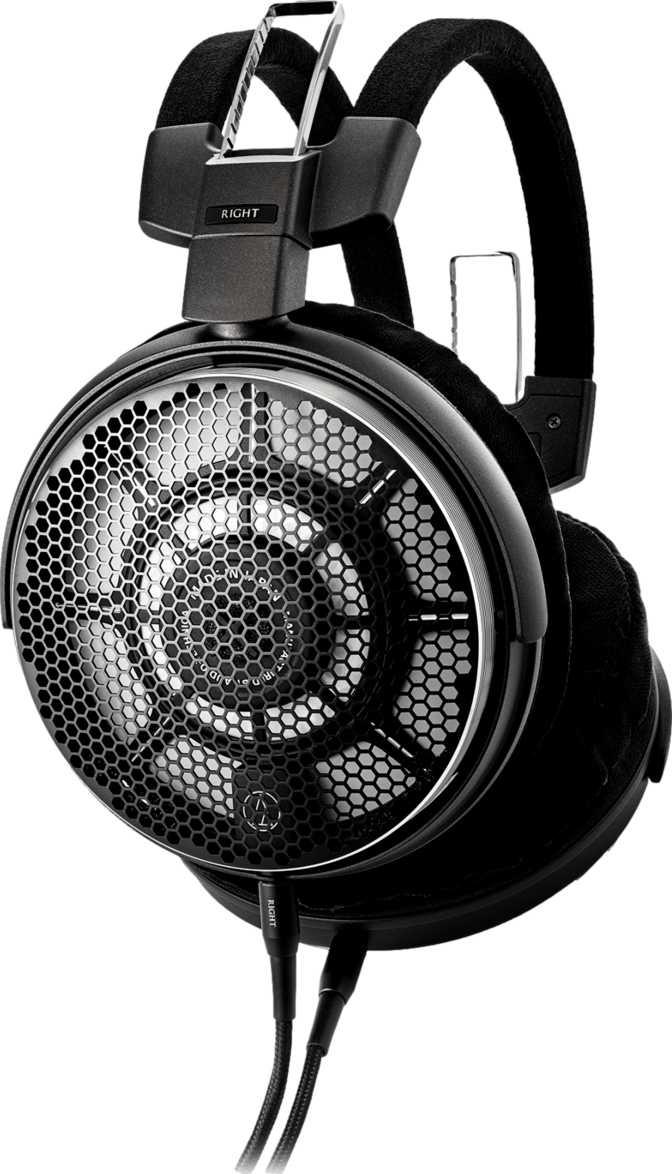
The ATH-ADX7000 is a full-size, over-ear headphone built around an open-back acoustic architecture — a design philosophy that defines everything about how it sounds and where it can be used. The earcups sit completely around the ear rather than on top of it, and the open grille at the back of each cup allows air and sound to pass freely in both directions. This is not a flaw; it is the fundamental engineering choice that unlocks this headphone's acoustic performance.
At 275 grams, the ATH-ADX7000 achieves something genuinely rare for a headphone with 58mm drivers: it feels light. Full-size audiophile headphones in this tier often weigh considerably more, and extended listening sessions can become physically tiring over time. The weight distribution across the headband matters as much as the total figure, and 275 grams positions this as a headphone you can wear for hours without your neck or scalp registering a complaint.
The headphone does not fold flat. There is no hinge mechanism, no pivot that reduces its footprint for a jacket pocket. This is unambiguously a desk-and-listening-chair product — designed to live on a stand, not inside a carry case.
The Cable System
The detachable cable carries real practical value at this price tier. A fixed cable on a flagship headphone is a long-term liability — cables fray, connectors oxidize, and accidents happen. Being able to replace just the cable rather than the entire headphone is a meaningful longevity consideration for something intended to last years.
The cable runs three meters — a deliberate choice for home listening. Three meters allows you to sit back from your amplifier, move between your listening chair and your desk without disconnecting, and listen without feeling tethered. This is explicitly not a portable cable length; it would be genuinely awkward coiled up in a bag. The tangle-resistant construction matters more than it might initially seem at this length.
There are no inline controls, no microphone, and no remote on the cable. It is purely signal-carrying — correct for the intended use case, and worth knowing in advance if you expected otherwise.
Sound Quality: The Technical Case for Something Different
Driver Architecture and What It Actually Means
The 58mm drivers at the heart of the ATH-ADX7000 are exceptionally large by any measure. Mainstream over-ear headphones typically use drivers in the 40mm range, and even many respected audiophile headphones operate between 45 and 50mm. A 58mm driver moves a significantly greater surface area of air with each oscillation — which has direct implications for how the headphone handles low-frequency content and large-scale dynamic events: orchestral swells, the physical weight of a bass guitar in a recording, or the decay of a struck drum in a treated room.
The driver system notably does not use a neodymium magnet — the standard choice across virtually the entire headphone market. This is a deliberate engineering departure. Alternative magnet systems can offer different linearity characteristics in the motor structure, reducing distortion in the mid and upper frequencies. The perceptible result is a quality that is difficult to articulate until you hear it: instruments with genuinely defined edges, voices with texture rather than polish.
Frequency Response: The Case for Reaching Beyond Human Hearing
The frequency range spans from 5 Hz at the low end to 50,000 Hz at the high end — far beyond the conventional limits of human hearing. The conventional lower limit sits around 20 Hz; at 5 Hz, pressure is felt rather than heard. At the top end, human hearing rarely extends past 20,000 Hz, placing the ATH-ADX7000's ceiling well into ultrasonic territory.
The practical benefit connects directly to high-resolution audio. Music recorded at 96kHz or 192kHz sample rates contains harmonic and spatial information above 20,000 Hz. There is a meaningful technical case that high-frequency driver extension reduces phase distortion within the audible range — a transducer that handles 50,000 Hz cleanly may reproduce 15,000 Hz with measurably lower distortion than one that tops out at 20,000 Hz. The benefit is indirect, but it is real and has grounding in acoustic engineering.
Impedance: The Amplifier Is Not Optional
Amplifier Required — This Is Non-Negotiable
The ATH-ADX7000 presents 490 ohms of impedance to its source. Standard consumer devices — smartphones, laptops, standard headphone outputs — are designed for headphones in the 16–32 ohm range. Connecting 490-ohm headphones to those sources produces sound, but it will be quiet, dynamically compressed, and tonally thin. The headphone will not misbehave; it simply will not perform anywhere close to its capability. A dedicated headphone amplifier with sufficient output voltage is a prerequisite, not an optional accessory.
The sensitivity of 100 dB per milliwatt is relatively efficient for a high-impedance design. With proper amplification, the ATH-ADX7000 reaches comfortable listening volumes without requiring extreme power output — the challenge is voltage delivery, not raw wattage. Buyers who do not already own a suitable amplifier should factor that cost into their overall budget before purchasing.
Open-Back Acoustics: The Defining Trade-Off
The open-back design is the single most consequential specification on this headphone, and it deserves a direct, unambiguous explanation. Because the rear of each earcup is acoustically open, sound passes in both directions simultaneously. Sound from the headphone leaks into the room. Sound from the room enters the headphone. This is not a deficiency — it is how the design achieves its core acoustic goal.
Why Open-Back Sounds the Way It Does
Closed-back headphones trap air inside the earcup. That trapped air creates pressure, resonance, and coloration. Open-back headphones eliminate the enclosed air volume, allowing the driver to behave more like a loudspeaker in a room — the acoustic load on the driver becomes more consistent, and certain forms of distortion are reduced. The result, at its best, is a sense of spatial openness and naturalness that closed-back headphones find genuinely difficult to replicate at any price.
Practical implications to understand before purchasing:
- The ATH-ADX7000 is not suitable for shared or public spaces. Everyone nearby will hear your music clearly.
- It provides no passive noise isolation. Background sound — conversation, traffic, air conditioning — will be clearly audible while you listen.
- This is a headphone for a quiet room, used alone, at a dedicated listening position.
There is no active noise cancellation, no ambient sound mode, and no electronic signal processing of any kind. The ATH-ADX7000 is a purely passive, purely analog transducer. Signal enters through the cable; sound exits through the driver. Everything in between is mechanical and acoustic.
Who This Headphone Is For — and Who It Is Not
The ATH-ADX7000 suits a very specific listener profile. Read both columns honestly before deciding.
- You listen to music at home, at a dedicated position, without background noise obligations or other people nearby.
- You own or plan to purchase a capable headphone amplifier — either already in use or bought specifically for this pairing.
- You listen to classical, jazz, acoustic music, or high-resolution audio files where transparency and spatial detail are the priority.
- You have owned multiple headphones and have a clear, informed sense of what you are looking for at this tier.
- Long, fatigue-free listening sessions are a priority — both physical comfort and sonic ease matter to you.
- You use headphones at a shared desk, in an open office, or in any space where others work or live nearby.
- You travel with headphones and want one pair to handle both home listening and commuting.
- You want wireless or Bluetooth capability — this headphone is wired-only, by deliberate design.
- Your source device is a phone, tablet, or laptop headphone output without an external amplifier.
- You prefer bass-heavy or V-shaped tuning — the open-back design here prioritizes accuracy and spatial realism over impact.
- You need a microphone for calls or voice communication — there is no mic and no headset functionality.
Competitive Positioning: Where the ATH-ADX7000 Sits
At its price tier, the ATH-ADX7000 competes in a small, serious category. The relevant alternatives are flagship open-back headphones from Sennheiser, Beyerdynamic, Hifiman, and Focal — all sharing the same core design philosophy but arriving at different solutions for driver technology, impedance, and tonal character.
| Characteristic | ATH-ADX7000 | Typical Competitor Range |
|---|---|---|
| Driver Size | 58mm — exceptionally large | 38–56mm |
| Impedance | 490 Ohms — amplifier-dependent | 150–600 Ohms |
| Frequency Extension | 5–50,000 Hz — among the widest in class | 10–40,000 Hz typical |
| Cable | Detachable, 3m, tangle-resistant | Varies; often fixed or proprietary |
| Wireless Option | None | Some offer wireless siblings |
| Noise Cancellation | None — open-back by design | None at this tier; open-back standard |
| Magnet Type | Non-neodymium — deliberate departure | Neodymium industry standard |
Buyers cross-shopping at this level should prioritize listening comparisons where possible. At this tier, differences between headphones often come down to tuning philosophy and tonal character as much as raw resolution — and those are deeply personal preferences.
Honest Assessment: What It Gets Right and Where It Asks More
- Technical purity as a design goal. The unusually large driver, the non-standard magnet architecture, the extreme frequency extension, and the open acoustic design all serve a coherent engineering vision: accurate, uncolored, spatially natural sound reproduction. These are not marketing points — they reflect deliberate choices with measurable purpose.
- Detachable, tangle-resistant cable. Cable replaceability is a genuine long-term feature at this price tier. Accidents happen, cables fray, and being able to swap the cable rather than return the headphone matters considerably over years of ownership.
- Impressive weight for its driver class. At 275 grams, this is a headphone that genuinely invites long sessions. Physical fatigue during extended listening is a real limitation with many competitors at this tier — the ATH-ADX7000 manages that trade-off better than its driver size suggests.
- The 490-ohm impedance locks out unprepared buyers. There is no workaround — connecting this headphone to a standard consumer device produces an underwhelming result. A dedicated amplifier is a hard requirement, not an upgrade.
- The open-back design limits your environments. Shared spaces are genuinely off-limits. If your listening life does not include a quiet room used alone, this headphone has nowhere appropriate to perform.
- The three-meter cable is stationary-use only. Purpose-built for a listening chair, it becomes awkward and impractical in any other context. Versatility is not in its vocabulary.
- No confirmed warranty period. The listed warranty duration is zero years. Confirm post-purchase support terms directly with Audio-Technica or your retailer before completing a purchase at this price point.
- No versatility features whatsoever. No wireless, no noise cancellation, no microphone, no controls. Each absence is correct for the design intent — but they are real limitations for anyone whose life requires more than one dedicated listening environment.
Answers to Questions Real Buyers Ask
Final Verdict: Who Should Buy the Audio-Technica ATH-ADX7000
The ATH-ADX7000 is a specialist instrument, and that framing is not a hedge — it is the most accurate thing you can say about it. The unusually large driver, the non-standard magnet architecture, the extreme frequency extension, and the open acoustic design all serve a coherent vision of what headphone listening at its best should feel like: present, natural, and entirely free from the closed-box character that limits so many headphones regardless of price.
For the listener who has a quiet room, a suitable amplifier, and a library of recordings worth hearing seriously, this headphone represents one of Audio-Technica's most ambitious engineering statements. It is the kind of purchase you make when you have already stopped looking and started arriving.
Buy It If
- Your listening life centers on a dedicated home setup
- You own or are ready to invest in a capable headphone amplifier
- You want the headphone to disappear and leave only the music
Skip It If
- You need versatility, wireless freedom, or isolation from your environment
- Your source is a phone, tablet, or laptop without a dedicated amplifier
- You want one headphone to handle every aspect of your listening life