Asus TUF Gaming RX 9070 XT COD BO7 Special Edition: A Full Review
Graphics CardsEditors' Rating
Quick Verdict
The Asus TUF Gaming Radeon RX 9070 XT COD BO7 Special Edition pairs AMD's most advanced current architecture with 16GB of high-bandwidth memory and TUF Gaming's proven build standards. For buyers targeting high-refresh 1440p or 4K gaming on an AMD platform, it stands as one of the most complete GPU options at this performance level — collector aesthetics included at no functional cost.
Strengths
- 16GB GDDR6 on a wide 256-bit bus
- RDNA 4.0 with meaningful ray tracing gains
- FSR 4 — open-standard, broad game support
- AMD SAM support for Ryzen platform gains
- ECC memory and double-precision compute
- Three-year TUF Gaming warranty
Limitations
- 330W TDP — 850W PSU strongly advised
- 330mm length — verify case clearance first
- No DLSS — ecosystem shift for Nvidia users
- Audible fan noise under sustained gaming
- No USB-C display output on this model
Performance Ratings
Editors' assessment across key performance dimensions based on specification analysis and category context.
Design and Build Quality
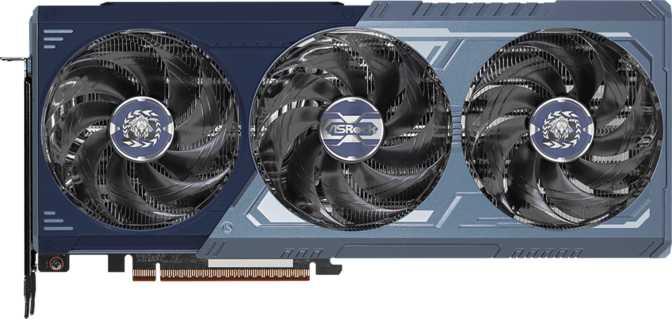
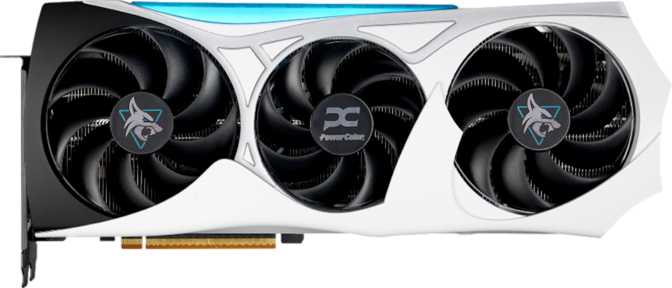
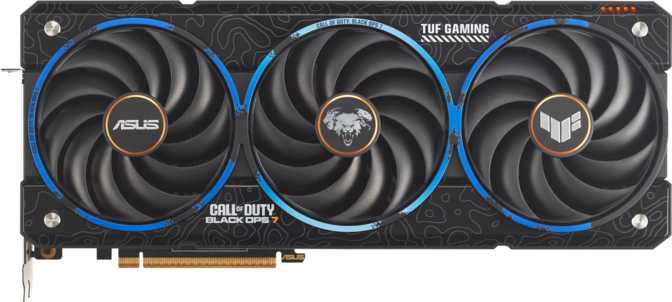
The TUF Gaming series has always prioritized durability over flash, and this Special Edition manages to balance that identity with the darker, military-influenced visual language of the Call of Duty: Black Ops franchise. The result is a card that looks purposeful rather than theatrical — a meaningful distinction in a market full of aggressively styled coolers.
At 330mm long and 140mm tall, this is a full-sized card that demands deliberate case planning. Measure your case's maximum GPU clearance before purchasing — this card does not fit compact or small mid-tower builds without prior verification.
The RGB lighting is present but measured — the default behavior leans understated, and it can be fully configured through Asus Aura Sync software. The Special Edition cosmetics are concentrated on the shroud and backplate, carrying COD BO7-themed design elements without overwhelming the card's inherent visual restraint. Physical construction is consistent with what TUF Gaming buyers expect: a reinforced PCIe connector, a solid metal backplate, and a cooler assembly that communicates longevity well before the three-year warranty even becomes relevant.
Architecture and Core Performance
The Foundation: RDNA 4.0 on a 4nm Node
This card is built on AMD's RDNA 4.0 architecture, manufactured on a 4-nanometer process. That fabrication node matters for two practical reasons: it allows AMD to pack nearly 54 billion transistors into the die while maintaining a power-efficient footprint, and it enables the high clock speeds that define this generation's performance character. More transistors generally translate to more headroom for complex rendering, AI-assisted upscaling, and the fine-grained workloads modern games increasingly rely on.
Clock Speeds and Raw Throughput
The card operates at a conservative base frequency and climbs to 3060 MHz under sustained gaming load. Combined with 4,096 shader processors, this clock ceiling translates to over 50 trillion floating-point operations per second. In practical terms, that compute headroom positions this card with real confidence at 1440p and makes 4K a legitimate target — not just a marketing footnote. The texture processing pipeline and pixel output capacity are both configured for high-resolution, high-refresh-rate gaming rather than merely capable 1080p.
Shader Configuration and Rendering Pipeline
The rendering pipeline includes 4,096 shader processors, 256 texture mapping units, and 128 render output units. The ROPs count is especially significant at high resolutions — these are the units responsible for writing finished pixels to the framebuffer. A high ROP count paired with a fast boost clock means the card sustains frame rate headroom even with anti-aliasing and post-processing stacked at 4K.
Memory System: 16GB GDDR6 With Serious Bandwidth
Why 16GB Matters Now
Sixteen gigabytes of video memory is increasingly relevant rather than merely impressive. Modern titles — particularly those with high-resolution texture packs, ray tracing enabled, or multiple displays active — regularly consume 10–12GB of VRAM in demanding scenarios. A card with less memory at this performance tier risks stuttering or forced texture quality reductions in exactly the games its compute power was built for. The 16GB allocation provides meaningful headroom over a multi-year ownership period as game assets continue to grow.
Bus Width, Bandwidth, and Real-World Impact
The memory subsystem runs on a 256-bit bus at an effective speed equivalent to just over 20 Gbps per data pin, producing close to 645 GB/s of total bandwidth. That figure represents the pipeline between the GPU's processing cores and their memory pool — higher bandwidth means cores spend less time waiting for data, which shows up directly as smoother frame delivery and reduced stutter in memory-intensive scenes. GDDR6 is the memory type here; at this bus width and speed configuration, the bandwidth outcome is competitive with GDDR6X implementations on narrower 192-bit buses common in competing cards at this tier.
Key Features Explained
What each major feature actually means for day-to-day gaming and compute workloads.
FSR 4 Upscaling
AMD's most capable upscaling technology uses machine learning to reconstruct higher-resolution output from a lower internal render resolution, delivering performance headroom for higher frame rates. Its critical advantage is an open-standard approach — it works across a wide range of supported titles without requiring GPU brand and game engine to be from the same vendor. DLSS (Nvidia-exclusive) is not supported; FSR 4 is the direct equivalent here, with a narrowing but still real quality gap.
Hardware Ray Tracing
Ray tracing calculates how light behaves physically in a scene — producing realistic reflections, contact shadows, and ambient illumination that reacts to its environment rather than relying on pre-baked approximations. RDNA 4.0 represents a meaningful step forward in ray tracing throughput over the previous generation. At this compute level, enabling RT in supported titles is a realistic choice that FSR 4 upscaling can support simultaneously.
DirectX 12 Ultimate
Full DirectX 12 Ultimate compliance confirms hardware support for the complete set of current graphics API features: ray tracing, mesh shaders, variable rate shading, and sampler feedback are all hardware-accessible. OpenGL 4.6 and OpenCL 3.0 coverage extends the card's usefulness to creative applications, scientific compute tools, and open-source software that relies on these standards alongside gaming.
AMD SAM / Resizable BAR
Smart Access Memory allows a compatible AMD Ryzen CPU to access the card's full VRAM pool at once rather than in smaller segments. The result is a measurable 5–15% frame rate improvement in certain titles, requiring only a BIOS toggle to activate — a free performance gain for AMD platform users. Intel platform users gain a similar benefit through standard Resizable BAR support.
Multi-Display Output
One HDMI 2.1 port and three DisplayPort outputs allow up to four simultaneous displays. HDMI 2.1 supports 4K at 120Hz, 8K output, and Variable Refresh Rate for high-end monitors and compatible TVs. The triple DisplayPort configuration covers multi-monitor gaming, ultrawide arrangements, and productivity setups. There is no USB-C display output on this model.
Double Precision Compute
Hardware double-precision floating-point support is invisible to most gamers — games use single-precision math. For users running scientific simulations, engineering software, or certain professional compute tools alongside gaming, DPFP capability is the difference between a GPU that assists those workloads and one that simply cannot. It makes this an uncommonly versatile dual-purpose purchase for technical users.
Power Consumption and Thermal Behavior
Power Supply Requirement
This card draws up to 330W under sustained gaming load. For a complete gaming system, a quality 850W power supply is the appropriate specification. A well-built 750W unit may be sufficient for lean builds with a power-efficient processor, but headroom matters here — running a high-TDP GPU on an undersized PSU is a reliability and stability risk, not merely a cautionary footnote.
The TUF Gaming cooler handles this thermal output through air cooling using Asus's triple-fan design. At idle and during lighter workloads, zero-RPM fan mode keeps the card completely silent. Under sustained gaming load, the fans spin and produce audible sound — this is not a card that disappears acoustically during long sessions. The TUF Gaming cooler has historically maintained GPU temperatures in ranges that protect long-term reliability, though exact thermal behavior depends on the airflow characteristics of the host case.
The PCIe 5.0 interface means this card uses the current-generation slot standard. In a PCIe 4.0 motherboard — still the majority of mid-range platforms — the bandwidth difference has no meaningful impact on gaming performance. PCIe 3.0 boards are technically compatible but are not recommended pairings for a GPU at this performance level.
Who This Card Is Built For
Ideal For
- 1440p high-refresh or 4K gamers — The compute headroom handles demanding titles at either resolution with FSR 4 available for the most taxing scenarios without sacrificing perceptible quality.
- AMD Ryzen platform builders — AMD SAM support delivers measurable free performance gains when paired with a compatible CPU and motherboard requiring only a BIOS toggle.
- Buyers prioritizing long-term reliability — The three-year TUF Gaming warranty and reinforced build quality reflect Asus's durability positioning and provide purchase confidence over a multi-year ownership period.
- Call of Duty enthusiasts — The COD BO7 Special Edition aesthetic provides genuine collector appeal for franchise fans at no functional premium over the standard TUF Gaming variant.
- Technical and creative dual-use buyers — ECC memory support and double-precision compute capability extend the card's usefulness to engineering tools and scientific software alongside gaming.
Not the Right Fit If
- You depend on DLSS — Users who have built gaming workflows around Nvidia's upscaling will need to re-establish preferences with FSR 4. The quality gap has narrowed significantly, but the ecosystem transition is real.
- Your case cannot fit a 330mm card — Measure before purchasing. This card does not squeeze into compact or small mid-tower builds without deliberate case selection.
- You game exclusively at 1080p — The compute headroom here significantly exceeds what 1080p gaming demands. A lower-tier card delivers equivalent experience at better value for that resolution.
- Your power supply is below 750W — Running this card on an underpowered PSU is a stability and reliability risk. The 330W sustained draw demands a quality supply with proper headroom, not a cheaply rated one.
Competitive Positioning
The RX 9070 XT competes directly with Nvidia's RTX 5070 class at this performance tier. The comparison below captures the structural differences relevant to buyers choosing between the two GPU ecosystems.
| Feature | RX 9070 XT (This Card) | RTX 5070-Class Competitor |
|---|---|---|
| VRAM | 16GB GDDR6 | 12–16GB GDDR7 (model-dependent) |
| Memory Bus Width | 256-bit | 192-bit (typical at this tier) |
| Memory Bandwidth | ~645 GB/s | ~672 GB/s (model-dependent) |
| Upscaling Technology | FSR 4 (open standard) | DLSS 4 (best-in-class) |
| Ray Tracing | RDNA 4.0 generation | Blackwell generation |
| PCIe Generation | PCIe 5.0 | PCIe 5.0 |
| Platform Optimization | AMD SAM (Ryzen) | Nvidia Resizable BAR |
| Double Precision | Supported | Limited / varies by model |
| Warranty (TUF Gaming) | 3 Years | Varies by AIB partner |
Honest Assessment
Where It Wins
The memory configuration is the headline: 16GB on a 256-bit bus is not a compromise at this performance level — it is a structural advantage that will remain relevant as game assets grow. This is the harder of the two constraints to engineer around, and the RX 9070 XT handles it decisively compared to competing 192-bit configurations at the same price tier.
RDNA 4.0's ray tracing improvements represent a genuine generation-over-generation step forward, and combined with FSR 4's upscaling headroom, enabling RT while maintaining playable frame rates is achievable in a way that was not realistic on prior AMD architectures at this price point. The TUF Gaming build quality and three-year warranty add purchase confidence that raw specification numbers alone cannot provide.
Where It Compromises
The 330W power draw is a genuine consideration, not a footnote. This card runs warm, produces audible fan noise under sustained load, and demands a capable PSU and a case with adequate airflow. Buyers upgrading from mid-range systems may face ancillary costs — PSU or case upgrades — that narrow the overall value calculation beyond the GPU's own price.
The FSR 4 versus DLSS comparison deserves honesty: FSR 4 is very good, but DLSS 4 in its current form remains the more refined upscaling implementation across the broadest range of supported titles. The gap is narrower than it was two generations ago, but buyers for whom upscaling quality is the primary decision factor should weigh this carefully before switching GPU ecosystems.
Frequently Asked Questions
Answers to the questions buyers search for most before committing to this card.
Final Verdict
The Asus TUF Gaming Radeon RX 9070 XT COD BO7 Special Edition is a serious GPU wrapped in collector-friendly clothing. The hardware credentials are genuine: RDNA 4.0 architecture, 50-plus TFLOPS of compute capacity, 16GB of high-bandwidth memory on a 256-bit bus, and build quality that reflects Asus's intent to make this card last. The Special Edition aesthetic is a bonus — not a distraction — and the three-year warranty provides purchase confidence that outlasts the unboxing experience.
This card earns a clear recommendation for buyers targeting 1440p high-refresh or 4K gaming on an AMD-compatible platform, who are not tied to the Nvidia ecosystem, and who have the case space and power supply infrastructure to support it. The COD BO7 branding is genuine collector appeal for franchise fans; for everyone else, it is cosmetic differentiation at no functional cost.
Buyers for whom DLSS is non-negotiable, or who are building in compact cases with limited power budgets, should look elsewhere. For everyone else building a capable, durable, high-performance gaming rig with AMD's best current-generation hardware — this card belongs at the top of the shortlist.