AMD Radeon RX 9060 XT LP 16GB Full Review: Compact Power Delivered
Graphics CardsMost GPU reviews lead with raw performance numbers. This one has to start somewhere different — the physical reality that the RX 9060 XT LP 16GB is engineered for computers where standard cards simply cannot go. That constraint changes how you evaluate it, and understanding it is the key to knowing whether this card belongs in your build.
At a Glance
Design, Build Quality, and Physical Experience
A low-profile card built to fit where standard GPUs cannot
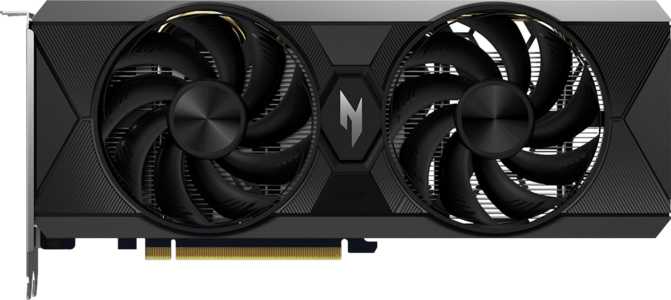
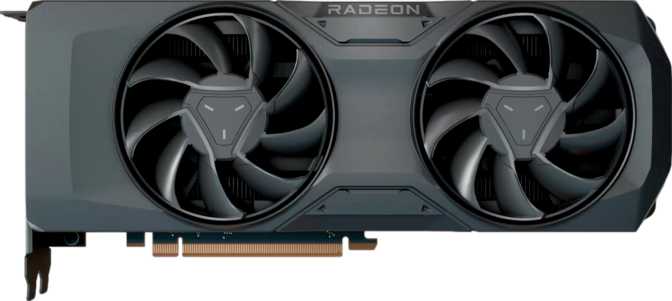
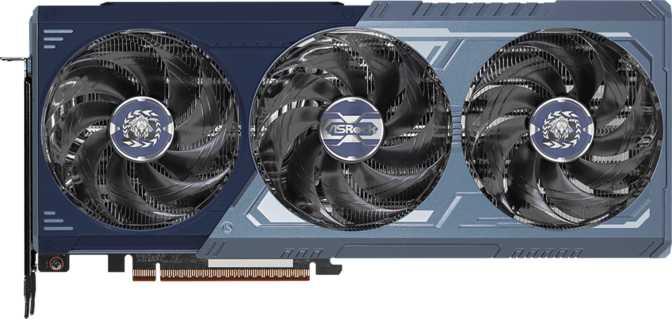
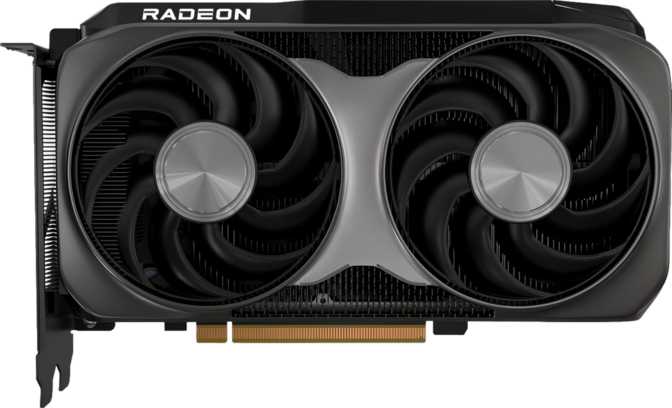
At 267mm long and 111mm tall, this card occupies a distinctly compact footprint compared to typical mid-range offerings, which commonly run 280–320mm in length and exceed 130mm in height with a dual-slot cooler. The low-profile height fits the LP bracket specification, enabling physical compatibility with slim desktop chassis, half-height bays, and small form factor systems that strictly require low-profile expansion cards.
The absence of RGB lighting is a deliberate and sensible call. Low-profile builds frequently live inside closed, compact cases where decorative lighting would have no visible audience — and any power it consumed would be power taken from the GPU itself.
Cooling is handled entirely through air, which is standard for the form factor. At this card's power draw, air cooling is more than sufficient in a properly ventilated chassis. The key variable here is case design: compact systems with restrictive airflow will see the GPU manage its clock speeds more conservatively than in a well-ventilated build. This is expected and normal behavior across all compact GPUs — and something to plan for during system assembly.
- Card Length
- 267 mm
- Card Height
- 111 mm
- Form Factor
- Low Profile (LP)
- Cooling Type
- Air Cooled
- RGB Lighting
- None
- PCIe Interface
- 5.0 (backward compat.)
Architecture and Core Performance Analysis
Built on RDNA 4.0 — a meaningful generational step forward
The RX 9060 XT LP is built on AMD's RDNA 4.0 architecture, fabricated on a 4-nanometer process node. Nearly 30 billion transistors are packed into this die — a figure that reflects how far AMD has pushed architectural efficiency at this scale. RDNA 4.0 delivers meaningful improvements in instructions-per-clock and ray tracing hardware versus its predecessor, allowing this generation to perform above what raw shader counts alone would suggest.
The core compute engine handling all shading, lighting, and parallel calculations across every rendered frame.
Solid mid-range compute throughput — capable of consistent frame rates at 1080p maximum and 1440p high settings.
RDNA 4.0's aggressive boost behavior ramps hard when thermal headroom allows, scaling back under sustained load.
Shader and Compute Configuration
The card deploys 2,048 shader processors paired with 128 texture mapping units and 64 render output units. Texture units determine how quickly the card processes surface detail across complex geometry; at peak boost, texture throughput exceeds 400 billion texels per second — sufficient to handle dense scene complexity in modern games without becoming a limiting factor. The 64 render output units drive over 200 billion pixels per second at peak, more than enough to sustain high frame rates at 1440p without becoming a bottleneck.
Clock Speeds and Real-World Behavior
The base operating frequency of 1,700 MHz and peak boost target of 3,130 MHz represent a wide spread — characteristic of RDNA 4.0's boost architecture. In a compact chassis with constrained airflow, sustained real-world clocks will settle between those two figures, scaled by ambient temperature and case ventilation quality. This is not a deficiency; it is how the GPU intelligently manages itself under thermal and power constraints. Builders using compact cases should prioritize chassis ventilation to keep sustained performance closer to the upper range.
Memory: The 16GB Advantage Explained
The specification that sets this card apart from everything else in its category
VRAM functions as the GPU's active working space — holding textures, geometry data, frame buffers, and increasingly, AI workload outputs. Modern titles at 1440p with high-resolution texture packs regularly consume 8–10GB without much effort. GPU-accelerated creative applications — video editing, 3D rendering, local AI image generation — can exceed 8GB readily. Running local language models with visual processing components demands even more.
Most cards at this performance tier ship with 8GB. That limitation is increasingly visible: a growing catalogue of recent titles with full texture detail approaches or exceeds 8GB, forcing users to dial back texture settings despite having sufficient processing power to render them. The RX 9060 XT LP eliminates that trade-off with double the allocation, keeping the card usable at full quality settings for significantly longer.
The memory operates on a 128-bit bus — narrow by top-tier standards, but expected at this price level. RDNA 4.0's large on-die cache significantly reduces how often the GPU must reach out to VRAM at all. In practice, this means the bandwidth limitation is less punishing than the bus width figure implies in isolation. The combination of fast GDDR6 and an efficient cache hierarchy produces real-world performance that exceeds what raw bus numbers alone would predict.
ECC memory support is present — relevant for workstation users requiring error-corrected memory for computational integrity in professional applications, though it is transparent and unused in standard gaming contexts.
Memory At a Glance
- 16GB GDDR6Double the allocation of most LP competitors
- 320 GB/s BandwidthFast GDDR6 paired with RDNA 4.0 cache design
- 128-bit BusCompensated by RDNA 4.0's on-die cache hierarchy
- ECC SupportProfessional error correction available
- ~20,100 MHz EffectiveHigh-speed memory keeps pace with GPU throughput
Feature Set: What RDNA 4.0 Brings to Real-World Use
Modern GPU capabilities, not specification checkboxes
Hardware Ray Tracing
Ray tracing is handled by dedicated RT accelerator hardware within the RDNA 4.0 compute units — not emulated through shader work. This enables physically accurate simulation of light reflection, refraction, and shadow behavior in supported titles. RDNA 4.0 significantly narrows the per-generation gap that existed in earlier AMD architectures. At 1080p and 1440p with medium ray tracing settings, the experience is strong; pushing all RT quality sliders to maximum will affect frame rates, as it does on every card in this performance tier.
FSR4 AI Upscaling
FidelityFX Super Resolution 4 takes a lower-resolution rendered frame and reconstructs it to a higher output resolution with image quality that improves meaningfully over older upscaling generations. For a card at this performance level, FSR4 is practically essential — it is the mechanism that unlocks higher output resolutions without a proportional performance penalty.
Display Output Capabilities
Three simultaneous displays are supported through one HDMI 2.1b port and two DisplayPort outputs. HDMI 2.1b handles 4K at 144Hz and 8K at 60Hz over a single cable, serving high-refresh gaming monitors and living room TV setups equally well. There is no USB-C output on this card.
API Support and Compatibility
- DirectX 12 UltimateFull support: variable rate shading, mesh shaders, DXR ray tracing, and sampler feedback
- OpenGL 4.6 & OpenCL 2.2Broad compatibility with professional tools and compute workloads outside gaming
- AMD SAM (Smart Access Memory)Paired with a compatible AMD Ryzen CPU, allows full VRAM access from the processor — measurable gains at zero cost in supported titles
- Stereoscopic 3D SupportCompatible with 3D display technologies for applicable use cases
Power, Efficiency, and System Requirements
140W — a meaningful engineering achievement at this performance level
The card's thermal design power of 140 watts places it in an efficient position relative to its performance class. Full-size cards delivering comparable gaming output in prior generations typically demanded 200W or more. That efficiency gain is a direct result of the 4nm fabrication process and RDNA 4.0's architecture — smaller transistors switching at lower voltage, delivering more performance per watt consumed.
For compact system builders, 140W is a practical ceiling that keeps total system power demand manageable. A compact PC with a current-generation processor and this card can typically run comfortably on a 450–500W power supply, depending on other installed components. This makes the card a realistic upgrade candidate for older compact systems with modest PSUs that would struggle to power a standard 200W+ GPU.
The card connects through PCIe 5.0, though it will operate in PCIe 4.0 and 3.0 slots without meaningful real-world performance impact. PCIe bandwidth has not been a practical limiting factor for GPU throughput at this performance tier, so backward compatibility is complete and transparent.
System Requirements
- GPU Power Draw140W TDP
- Recommended PSU450–500W
- PCIe InterfacePCIe 5.0
- Backward Compatible4.0 / 3.0
- Fabrication Node4 nm
Who Should Buy This Card — and Who Should Not
Honest guidance before you commit
- Are building in a compact, small form factor, or slim desktop chassis that only accepts low-profile expansion cards.
- Want a home theater PC GPU that runs efficiently in a slim, living-room-friendly enclosure.
- Need 16GB VRAM for creative or AI workloads — video editing, 3D rendering, or local AI inference — in a space-constrained system.
- Target 1080p or 1440p gaming and want high settings with consistent frame rates.
- Are upgrading a compact system with a modest power supply and need efficient performance without a PSU replacement.
- Prioritize 4K gaming at native resolution with maximum settings and have a standard full-size case available.
- Have a workflow or game library that relies on DLSS, CUDA-specific tools, or other NVIDIA-exclusive features.
- Need maximum sustained overclocked performance in compute-heavy workloads and want liquid cooling options.
- Have a full-size case with no space constraints — a standard-width card at the same price will offer better sustained thermals and potentially a wider memory bus.
Competitive Positioning
How the RX 9060 XT LP 16GB stacks up against logical alternatives
| Consideration | RX 9060 XT LP 16GB | Typical Full-Size Mid-Range |
|---|---|---|
| Form Factor | Low Profile — fits LP chassis | Standard — requires full-size slot |
| VRAM Allocation | 16GB GDDR6 | 8–12GB common at this price tier |
| Power Draw | 140W TDP | 160–200W+ typical |
| Ray Tracing | Yes — RDNA 4.0 hardware RT | Yes — varies by generation |
| AI Upscaling | FSR4 (no DLSS) | FSR4 or DLSS depending on brand |
| Display Outputs | 3 (HDMI 2.1b + 2x DP) | 3–4 displays typical |
| Target Resolution | 1080p–1440p optimal | 1080p–1440p typical |
| Memory Bus | 128-bit (RDNA cache mitigated) | 128–192-bit varies by model |
| Chassis Flexibility | Standard AND compact builds | Standard builds only |
The RX 9060 XT LP's differentiation is not raw performance leadership — it is the combination of capable performance, exceptional VRAM, and physical compatibility that full-size cards simply cannot offer.
Honest Assessment: Strengths and Compromises
Every card has trade-offs — here is where this one earns its praise and where it asks for patience
Where It Excels
The 16GB memory buffer is the standout advantage. It future-proofs the card against increasingly memory-hungry games and keeps creative workloads within comfortable operating range for considerably longer than any 8GB competitor would. This is not a marketing figure — it reflects genuine, observable utility as texture resolution requirements in modern titles continue to climb.
The RDNA 4.0 architecture delivers legitimate hardware ray tracing and FSR4 — features that define what a modern GPU should offer, present here without compromise. These are not specification checkboxes; they are actively usable capabilities that shape everyday gaming and creative work.
Power efficiency at 140W in a low-profile package is a genuine engineering achievement. It makes this card a viable upgrade path for compact systems that would reject a standard 200W+ card outright — opening opportunities that simply did not exist at this performance level in prior generations.
Where It Asks for Compromise
The 128-bit memory bus is narrow, and while RDNA 4.0's cache design mitigates this at typical gaming resolutions, edge cases reveal the ceiling. Extremely high-resolution texture packs, certain compute workloads, and sustained bandwidth-heavy scenarios will encounter a limit that a wider bus would not impose. It is a real constraint, not a theoretical one.
Air-only cooling in a compact package means thermal performance scales directly with chassis quality. Poor case airflow will produce more conservative sustained clock behavior. This is manageable with careful planning but requires attention during system assembly — particularly in older compact cases with limited ventilation.
The absence of DLSS is not trivial for buyers with established NVIDIA ecosystem dependencies. FSR4 is an excellent upscaler, but it does not replicate every scenario where DLSS is deeply integrated into software or game engines. This platform-level distinction should be evaluated honestly against your specific library and workflow.
Common Buyer Questions Answered
Straight answers to what real buyers search before purchasing
Final Verdict
The AMD Radeon RX 9060 XT LP 16GB earns a strong recommendation within the audience it is built for. It is the most capable low-profile GPU available, combining RDNA 4.0 architecture, genuine hardware ray tracing, FSR4 upscaling, and a 16GB VRAM allocation that virtually no competitor in the LP category can match.
For standard desktop builders with full-size GPU options and no space constraints, the evaluation becomes more nuanced — a full-size card at the same price will often offer a wider memory bus and better sustained thermals. But that misses the point of what this card exists to accomplish.
For compact system builders, HTPC users, and anyone working within low-profile chassis constraints, this is the correct tool for the job — and it does that job better than anything else in its footprint class.
Recommended For
Compact and small form factor PC builders, HTPC builders, 1080p–1440p gamers with LP chassis constraints, creative and AI workload users needing generous VRAM headroom in a small package.
Look Elsewhere If
4K native gaming is your primary goal, your workflow depends on DLSS or CUDA, or you have a full-size case with no space constraints and want better sustained thermal performance from a standard-width card.