Asus ROG Matrix Platinum RTX 5090 30th Anniversary: Full Review
Graphics CardsQuick Verdict Overview
The Pinnacle of Consumer Graphics
There is a category of product that exists not to be bought by everyone, but to define what is possible for everyone. The Asus ROG Matrix Platinum GeForce RTX 5090 30th Anniversary Edition sits firmly in that category. This is not a sensible upgrade. It is not a value proposition. It is the most extreme expression of what a consumer graphics card can be — a 30th-anniversary landmark built by one of gaming hardware's most storied brands, layered on top of NVIDIA's most powerful consumer GPU architecture to date.
If you are reading this review trying to justify the purchase, you probably already know you want it. The question is whether it truly delivers on its extraordinary ambitions. The answer, in almost every meaningful way, is yes.
Design and Build Quality
A Monument in Metal and Light
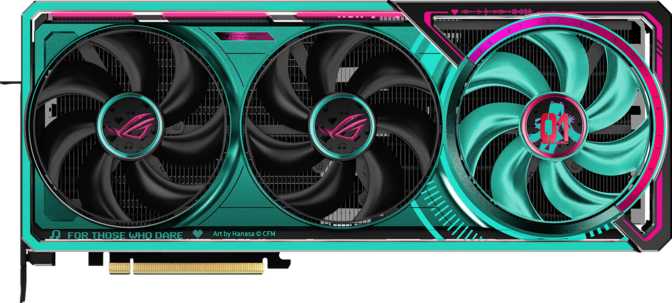
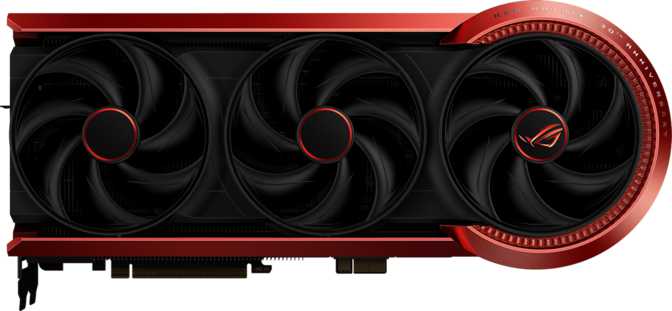
The ROG Matrix Platinum 30th Anniversary Edition does not look like other graphics cards. It does not look like other ROG cards, either. Asus has positioned this as a collector's piece as much as a performance component, and the physical design communicates that immediately.
The build quality is flagship-tier throughout. The shroud uses premium materials with a finish that distinguishes the 30th Anniversary Edition from standard ROG variants. ROG's Aura Sync RGB lighting is present and genuinely integrated into the aesthetic rather than bolted on as an afterthought — the lighting zones illuminate the cooler design rather than fighting with it.
The cooling solution is a purely air-based system, which is significant given the card's substantial thermal envelope. Asus has engineered an aggressive heatsink and fan array to manage that thermal load without requiring a water block or hybrid loop. For most users in well-ventilated mid-tower or full-tower builds, this means fewer maintenance concerns, no liquid handling, and no AIO installation headaches. For ultra-compact or thermally challenged builds, it demands honest assessment of airflow capability before purchase.
Physical Specifications
- Length357.6mm — verify case clearance before ordering
- Height149.3mm — occupies 3 or more expansion slots
- CoolingAir cooling — no liquid loop required
- RGB LightingAura Sync — integrated into cooler design
Architecture and Core Performance
The Blackwell Foundation
Understanding what makes this card perform the way it does requires understanding the Blackwell GPU architecture underneath it — NVIDIA's most advanced consumer silicon, built on a 5-nanometer fabrication process and housing over 92 billion transistors. That transistor count represents a level of on-die complexity that was firmly in data center territory not long ago.
Compute Power
The card operates at a base clock of approximately 2.0 GHz and boosts to around 2.58 GHz under load — figures representing meaningful headroom above reference NVIDIA specifications, courtesy of Asus's custom power delivery and cooling design.
What those clocks drive is a shader array of 21,760 unified processors — the execution units responsible for every pixel, lighting calculation, and AI operation the GPU performs. Paired with 680 texture mapping units and 176 render output units, the result is a rasterization engine capable of processing over 454 billion pixels per second and nearly 1,755 billion texture samples per second.
The floating-point compute throughput reaches 112.3 TFLOPS — territory workstation cards were only beginning to approach in recent generations. Double Precision Floating Point support is also present, a feature rarely found on consumer gaming cards, enabling scientific computation and simulation workloads that demand 64-bit accuracy.
Memory System: The Real Differentiator
32 gigabytes of GDDR7 memory sits on a 512-bit memory bus — the widest available on any consumer card. GDDR7 is the latest generation of graphics memory, delivering a total bandwidth of 1,790 gigabytes per second at an effective clock of 28,000 MHz.
That bandwidth figure is not an abstraction. It directly determines how quickly the GPU feeds data to its shader cores. At 4K and above — or in AI model inference scenarios — memory bandwidth is frequently the governing constraint on performance. This card removes that constraint entirely.
The 32GB capacity ensures that even the most demanding workloads — 8K texture packs, large-scale AI image generation, multi-layer video compositing — never exhaust the frame buffer. ECC memory support adds data-integrity assurance for scientific and machine learning workloads where accuracy matters as much as throughput.
Key Features Explained
What the spec sheet cannot convey
Ray Tracing
The RTX 5090's ray tracing hardware is scaled proportionally with its shader count, meaning dedicated RT cores are more numerous and faster than any consumer card that preceded it. Titles that previously demanded ray tracing compromises can now run at full fidelity with meaningful headroom to spare. Path tracing — historically a tool for offline rendering — becomes a real-time gaming option on this card.
DLSS AI Upscaling
DLSS uses on-card Tensor cores to generate high-resolution frames from lower-resolution inputs — the GPU renders at 50–70% of display resolution while AI reconstructs a near-native image. The result is dramatically higher frame rates with minimal visual trade-off.
Frame Generation mode, available in supported titles, inserts AI-generated intermediate frames between rendered frames, multiplying output further. Combined with this card's raw throughput, DLSS makes ultra-high refresh rate monitors genuinely worthwhile investments.
Display Configuration
The card drives up to four simultaneous displays through two HDMI 2.1b ports and three DisplayPort outputs. HDMI 2.1b handles 4K at up to 144Hz or 8K at 60Hz, covering high-end gaming monitors and modern televisions alike.
Notable absence: there are no USB-C display outputs. Users pairing this card with USB-C monitors or direct-connect VR headsets will need adapters planned before purchase.
PCIe 5.0 Interface
The card uses a PCIe 5.0 x16 interface, delivering twice the bandwidth of PCIe 4.0. In current gaming workloads, PCIe bandwidth is rarely a bottleneck, but PCIe 5.0 provides headroom for high-frequency asset streaming, real-time AI inference, and large data transfers between system memory and the 32GB frame buffer — use cases that are growing, not shrinking.
Resizable BAR
Intel Resizable BAR allows the CPU to access the full 32GB GPU frame buffer directly rather than in small chunks, yielding measurable performance improvements in certain workloads. AMD platforms achieve the same result through AMD SAM. Both accomplish identical architectural goals and are fully supported on their respective platforms with this card.
DPFP & ECC Memory
Double Precision Floating Point support makes this card capable of professional computational workloads, simulation tasks, and scientific applications requiring high-accuracy 64-bit math. Combined with ECC memory — which detects and corrects data errors in real time — the RTX 5090 Matrix Platinum meaningfully blurs the line between enthusiast gaming GPU and professional workstation card.
Power and Thermal Reality
575 Watts Is Not a Warning — It Is a Commitment
This card requires a power supply of at least 1,000W from a reputable manufacturer. For comfortable headroom in a full high-performance system, 1,200W or higher is the practical recommendation. Verify PSU cable compatibility before ordering.
The 575W Thermal Design Power figure demands serious infrastructure. Your PSU cables, PCIe power connections, and case ventilation all need to be matched to that reality — not just your power supply's rated wattage on paper.
The upside of that 575W envelope is the performance it funds. Asus has built a custom power delivery system specifically to manage sustained high-power operation without throttling, keeping boost clocks stable under extended workloads rather than letting them fluctuate under thermal or power constraints.
The air cooler is engineered to keep junction temperatures stable, but it depends on the buyer providing adequate airflow. Users in warm climates, running compact cases, or building in environments with limited ambient cooling need to plan thermal management before purchase, not after.
Energy-conscious buyers should understand that at 575W TDP, this GPU draws more power than many complete systems. Electricity costs over extended gaming sessions are a real consideration, and this card will measurably impact monthly power bills under heavy sustained use.
Is This Card Right for You?
The right buyer profile makes all the difference
The Right Buyer
- The 4K extreme gamer who wants every title at maximum settings — all effects enabled, at 4K or higher resolution, with frame rates that keep pace with a 144Hz or 240Hz monitor — without compromise for the foreseeable future.
- The creative professional who also games — those doing 3D rendering, AI image generation, large-scale video editing, or machine learning at home. The 32GB frame buffer and DPFP support make this card legitimately useful in professional workflows where a consumer card would fall short.
- The collector and enthusiast for whom owning the definitive 30th Anniversary Edition GPU is part of the appeal — not a rationalization, but a genuine motivation Asus has clearly designed for with purpose.
- The 8K pioneer — while 8K gaming remains at the absolute frontier even here, the memory bandwidth and compute throughput make it more tractable than on any previous consumer GPU.
The Wrong Buyer
- Mid-range upgraders for moderate gaming. If you game at 1080p or 1440p on a standard refresh rate monitor, this card will not improve your experience proportionally to its cost.
- Budget-constrained builders. The platform capable of feeding this card — a high-end CPU, 1,200W PSU, spacious case — carries compounding costs that substantially increase the total system investment.
- Small form factor builders. At 357.6mm long, this card physically will not fit in many compact cases. The thermal footprint compounds the fit problem significantly.
- Value-focused buyers. Price-per-frame comparisons with lower-cost cards will always favor the alternatives. This card is not purchased because it offers the best frames-per-dollar ratio.
Competitive Positioning
How the ROG Matrix Platinum RTX 5090 30th Anniversary stacks up
| Comparison Point | RTX 5090 Matrix Platinum This Card | Standard RTX 5090 AIBs | RTX 5080 Tier |
|---|---|---|---|
| Shader Count | 21,760 | 21,760 | Lower |
| VRAM Capacity | 32GB GDDR7 | 32GB GDDR7 | 16GB GDDR7 |
| Memory Bus Width | 512-bit | 512-bit | 256-bit |
| Memory Bandwidth | ~1,790 GB/s | ~1,790 GB/s | Approximately half |
| Boost Clock | 2,580 MHz | Lower | Lower |
| Thermal Design Power | 575W | Typically lower | Lower |
| Cooler Design | Flagship Custom | Standard AIB | Standard AIB |
| Edition Status | 30th Anniversary | Standard | Standard |
Against the RTX 5080, the gap is most stark in memory bandwidth and VRAM capacity. The 512-bit bus and 32GB frame buffer here versus the 256-bit bus and 16GB on the tier below creates a real performance divide in memory-intensive workloads — particularly at 4K and above, and in AI-heavy applications.
Honest Strengths and Trade-offs
A balanced look at what this card does brilliantly and where it asks the most of its buyer
Where It Excels
The RTX 5090 Matrix Platinum's strengths are not subtle. It delivers the highest consumer GPU performance available, full stop. The memory system is in a class by itself — 32GB of GDDR7 on a 512-bit bus with nearly 1.8 terabytes per second of bandwidth is not merely faster than alternatives; it represents a different category of capability.
Creative and AI workloads that exhaust the frame buffers of lesser cards run here without degradation. The Blackwell architecture's ray tracing and AI acceleration are the best available in consumer silicon.
The 30th Anniversary Edition's design is genuinely special — a physical expression of craftsmanship that sets it apart from standard board partner releases. For buyers who care about aesthetics and exclusivity, that distinction is real and substantive.
Where It Asks the Most
The 575W power demand is a serious commitment. The platform infrastructure required — PSU, cabling, adequate airflow — adds cost and complexity well beyond the card's price alone.
The absence of USB-C display output is an inconvenience for specific configurations. The air-cooling approach, while technically capable, depends on the buyer providing an adequate thermal environment — the card cannot manufacture airflow a case does not supply.
At this performance level, price-per-frame comparisons with lower-priced cards will always favor the alternatives. That is inherent to the extreme-tier segment, not a flaw — but buyers considering this card purely as a gaming investment should factor it honestly into their decision.
Common Buyer Questions
Answers to what buyers actually search for before purchasing
Buy It If You Need the Best
The Asus ROG Matrix Platinum GeForce RTX 5090 30th Anniversary Edition is the most capable consumer graphics card that exists. That statement is simple, verifiable, and the beginning and end of its performance argument.
What Asus adds to the underlying silicon — a refined custom cooler engineered to sustain 575W in an air-cooled configuration, a clock speed advantage over reference designs, build quality that reflects the card's premium positioning, and the distinction of the 30th Anniversary treatment — is not merely cosmetic. It is the difference between the best RTX 5090 and an exceptional one.
The right buyers are those chasing 4K maximum-fidelity gaming with no compromises, creative professionals who work and play on the same machine, and enthusiasts for whom owning the definitive edition of a landmark GPU is reason enough. For anyone outside those profiles, a less extreme card better matches their real demands.