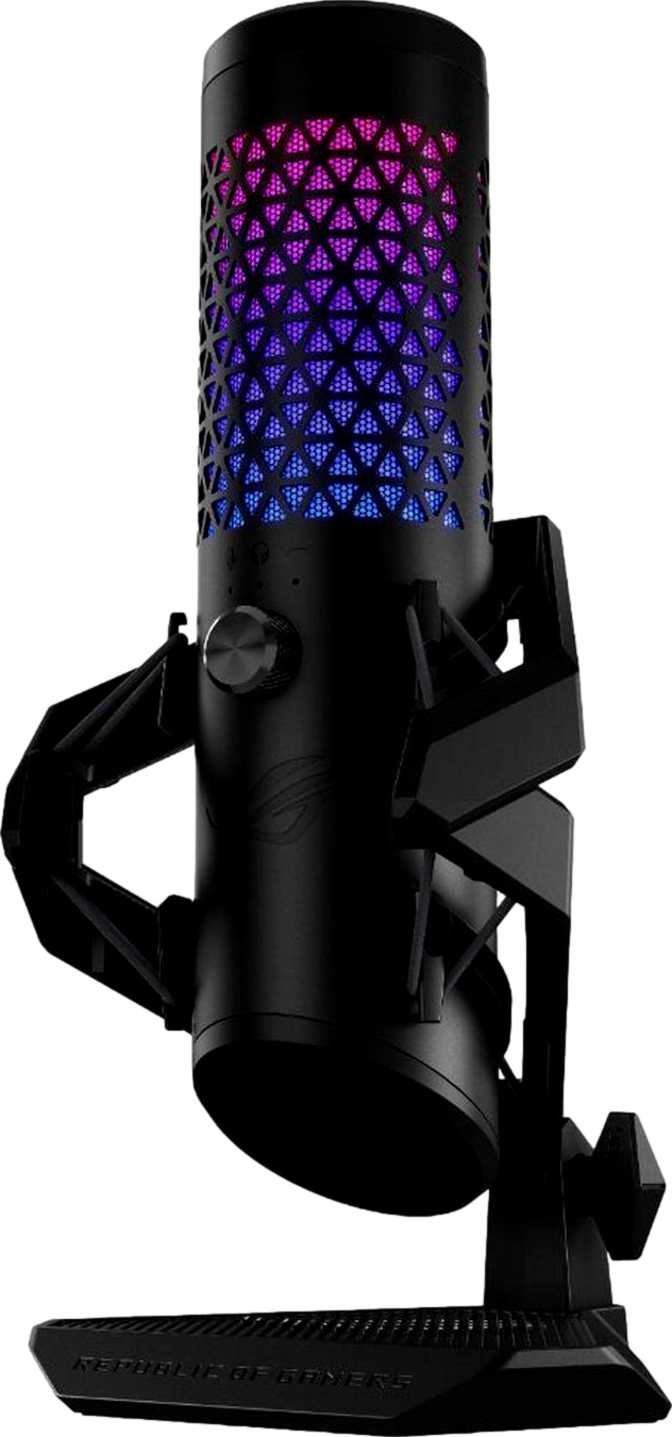
Asus ROG Carnyx Review: A Premium USB Mic Built for Serious Streamers
MicrophonesPremium gaming peripherals often make noise about specifications without much to show for it in practice. The Asus ROG Carnyx takes a different posture — it arrives with audio credentials that hold up to scrutiny, a complete accessories package that eliminates common first-setup headaches, and the kind of physical presence that communicates intent before you have plugged it in.
This is not a beginner's first microphone. It is a deliberate investment aimed at PC-based creators, streamers, and competitive gamers who have already decided that audio quality matters and are ready to match that conviction with hardware. What follows is a complete picture of what the Carnyx offers, where it draws the line, and exactly who should be reaching for it.
Connection
USB-C
Sample Rate
192kHz
Bit Depth
24-bit
Pattern
Cardioid
Weight
634 g
Cable
3 m
Build Quality and Physical Design
Presence and Construction
The Carnyx is a large, heavy desktop microphone. Standing close to eleven inches tall with a footprint roughly six inches square, it occupies meaningful real estate on a desk — this is not a microphone you tuck to the side and forget about. It sits at attention. The substantial chassis resists tipping, sliding, and the vibrations that plague lighter stands during desk activity.
This is desk-furniture-grade hardware. If your setup already features a high-end monitor, mechanical keyboard, and a high-refresh display, the Carnyx physically belongs in that environment in a way that smaller, lighter alternatives do not.
RGB and Visual Identity
The Carnyx carries RGB lighting — fully in keeping with its ROG (Republic of Gamers) identity. If you are building a cohesive, illuminated gaming environment, this integrates naturally. If your preference runs toward understated or minimal aesthetics, the lighting will be a persistent visual presence you will either adapt to or resent.
The RGB lighting on the Carnyx is purely aesthetic — it does not function as a level meter or indicate microphone status. For visual feedback on your input levels, look to your recording or streaming software, not the microphone itself.
What Ships in the Box
Two accessories that often cost extra elsewhere ship with the Carnyx: a shock mount and a pop filter.
Shock Mount
Physically decouples the microphone capsule from the surface it rests on. Keyboard strikes, mouse movements, and surface impact create low-frequency rumble in recordings — the shock mount intercepts those vibrations before they reach the capsule.
Pop Filter
Intercepts the fast-moving bursts of air that "p," "b," and "t" sounds produce at close range. Without one, those consonants create loud, disruptive pops that can ruin a recording or a live stream moment.
Cable and Connectivity
The Carnyx uses a USB-C connector — current-generation, no adapters required for modern computers — with a cable that gives you close to ten feet of reach. This is a more generous run than most competing microphones include, and it accommodates setups where the computer lives under the desk or where the microphone and computer tower are not immediately adjacent.
Audio Performance: What the Specifications Actually Mean
Full-Spectrum Voice Capture
The Carnyx captures audio across the complete range of human hearing — from the deepest warmth a bass voice produces to the highest frequency any person can perceive. The microphone is not artificially shaping your sound by trimming the extremes; what you sound like in the room is what the microphone hears. For streaming and broadcast speech, this translates to natural vocal reproduction — without the thin, boxy quality that comes from microphones with narrower frequency handling.
Resolution Far Beyond Streaming Standards — On Purpose
The Carnyx records at a technical resolution that significantly exceeds what streaming platforms, video hosts, or podcast distribution services actually deliver to listeners. This may initially seem like over-engineering. It is not.
The audio chain from your capsule to your audience involves multiple processing stages: the microphone converts sound to a signal, your computer handles it through streaming software, the platform compresses it for delivery, and the listener's playback device renders it. Each stage introduces subtle degradation.
Why Higher Resolution Matters
Starting with a much higher-resolution signal provides headroom throughout the processing chain. Think of it as editing a video shot at the highest possible resolution even though the final output will be compressed — the output benefits from having had more to work with. The final delivered audio is cleaner because it began with more data than the processing steps could erode.
Handling Volume Without Distorting
The Carnyx can handle extremely high sound pressure levels before the signal distorts. In practice, no vocal performance — including shouting, sudden laughter, or an explosive gaming reaction — is likely to clip the input and produce the harsh, crackling distortion that ruins a stream or recording. The microphone's ceiling is high enough that the speaker, not the hardware, is the practical limiting factor.
The Cardioid Pattern: Focused, Intentional, and Final
The Carnyx records in a cardioid pattern exclusively. Cardioid means the microphone is highly sensitive to sound coming directly in front of it and progressively less sensitive to what arrives from the sides and behind — picture the effective listening zone as a heart-shaped area with the narrow end pointing forward toward your mouth.
Rejects Rear Noise
Room echo and background activity behind the mic are significantly attenuated
Reduces Side Noise
Keyboard clicks, mouse drags, and peripheral sounds are reduced
Single Pattern Only
No omni, bidirectional, or hyper-cardioid modes — one pattern, expertly executed
What cardioid-only does not offer is versatility. There is no omnidirectional mode to capture a room or a group of speakers, no bidirectional mode for face-to-face interviews, and no hyper-cardioid option for tighter focus in reverberant spaces. The Carnyx commits to one pattern and executes it well. If you need a multi-role microphone, the Carnyx asks you to look elsewhere.
Features and On-Device Controls
Physical Controls Within Reach
Adjustments happen directly on the microphone body, not buried in software menus. During a live stream or gaming session, this matters more than it might initially seem: reaching down and making a change immediately is meaningfully different from alt-tabbing out of an active moment to navigate a settings panel. The Carnyx keeps operational control physical and direct.
Platform Compatibility
Windows
CompatibleMac
CompatibleAndroid
Not SupportediOS
Not SupportedWho the ROG Carnyx Is For — and Who Should Look Elsewhere
- Dedicated PC streamers and content creators who want audio that matches the production quality of their visual output
- Gamers already invested in the ROG ecosystem — the RGB and visual design fit naturally alongside other Asus ROG peripherals
- Buyers who want a complete professional starting point — shock mount and pop filter ship in the box
- Creators who work exclusively on PC in a quiet, controlled space where cardioid does exactly what it was designed to do
- Mobile content creators — no path to compatibility with phones or tablets, and no workaround exists
- Multi-role creators who need flexible pickup patterns for podcasts, instrument recording, or in-person interviews
- Users in acoustically difficult environments — no microphone solves a reverberant or loud room on its own
- Anyone needing portability — the Carnyx's size and weight make it a permanent desk fixture, not a travel companion
How It Sits Against the Competition
On pure audio resolution, the Carnyx sits above most of its direct competition. The sample rate it operates at is uncommon even among premium gaming microphones. The trade-off is pattern flexibility — many mid-range competitors offer multiple pickup modes. The Carnyx bets on technical audio quality over feature breadth, which is coherent for its intended buyer but a genuine limitation for anyone outside that profile.
| Feature | Entry-Level USB | Mid-Range Gaming | ROG Carnyx |
|---|---|---|---|
| Sample Rate | 44.1–48kHz | 48–96kHz | 192kHz |
| Bit Depth | 16-bit | 16 or 24-bit | 24-bit |
| Pickup Patterns | Cardioid only | Multiple (1–4) | Cardioid only |
| Included Accessories | None typically | Varies | Shock mount + pop filter |
| Headphone Monitoring | Uncommon | Sometimes | Yes (3.5mm) |
| USB Connector | USB-A (older) | USB-A or USB-C | USB-C |
| RGB Lighting | No | Often yes | Yes |
The included accessories add real value that competitors often exclude or sell separately. When calculating the total cost of a complete, properly functioning setup, the Carnyx's effective price is lower than its sticker price suggests.
An Honest Assessment
The Carnyx's strongest argument is its audio ceiling. The technical specifications are legitimate — not inflated marketing language — and they translate into recordings with more dynamic range, more headroom, and cleaner signals than most gaming USB microphones can produce. That advantage is real and compounds across a processing chain.
What It Gets Right
- Audio specifications that genuinely exceed the gaming peripheral category standard
- Ships complete — shock mount and pop filter mean no secondary purchases before your first session
- Physical construction communicates longevity — built to last years of daily use
- Generous cable length and USB-C connector are current-generation in every sense
Where It Asks for Tolerance
- RGB aesthetic is inescapable — buyers who want visual restraint will find the ROG identity persistent
- Size requires a proper boom arm rated for heavier hardware and dedicated desk space
- Cardioid-only pattern is a genuine limitation the moment needs shift beyond solo voice capture
- No flat signal pass-through means it is not the right tool for workflows demanding a fully neutral starting point
Questions Real Buyers Ask
Final Verdict
The Verdict
The Asus ROG Carnyx is a premium USB microphone that earns its positioning. It delivers audio specifications that exceed the gaming peripheral category standard, ships with a complete professional setup package, and is built with the durability that a long-term investment warrants.
It is also a highly focused product — built for one type of user in one type of environment. PC-based, stationary, primarily solo, and serious about audio quality: if those four descriptors fit your setup, the Carnyx is a confident and well-reasoned purchase that will not require replacement when your standards rise.
If your situation does not match that profile — if you need mobile flexibility, pattern versatility, understated aesthetics, or a more compact footprint — the Carnyx is not compromising to meet you there. That clarity of purpose is, ultimately, part of what makes it the right choice for the buyer it was built for.
Audio Quality
Build Quality
Value
Versatility