The GDDR7 Advantage Explained
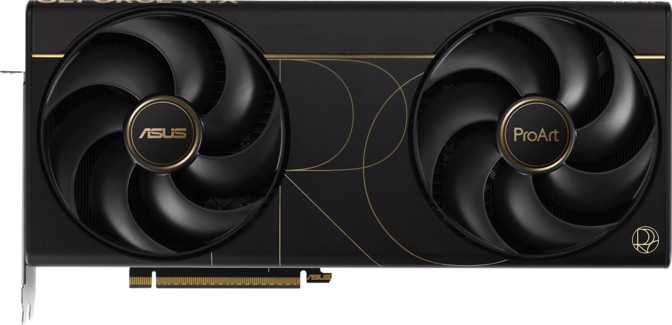
The ROG Astral RTX 5080 OC carries 16 gigabytes of GDDR7 memory — the latest generation of graphics DRAM, succeeding GDDR6X with fundamental improvements in data transfer speed. Individual memory chips operate at an effective rate of 30 gigabits per second per pin. Across the 256-bit memory interface, this delivers a total bandwidth of 960 gigabytes per second.
A competitive mid-range gaming GPU might deliver 300–400 GB/s of memory bandwidth. Previous flagship consumer cards reached roughly 1 TB/s — but only by using a physically wider 384-bit bus. The RTX 5080 approaches that same threshold using a significantly narrower 256-bit bus, a direct consequence of GDDR7's per-pin speed advantage. A narrower bus means a smaller, more power-efficient memory subsystem without sacrificing throughput.
Is 16 GB Enough for Modern Games?
The 16 GB figure draws reasonable scrutiny given the RTX 5090, the only GPU above this in NVIDIA's current lineup, ships with twice the VRAM. For gaming at 4K, 16 GB is sufficient for the overwhelming majority of current titles, including heavily modded versions of popular games. High-resolution texture packs for demanding 4K titles rarely approach that ceiling, and the extreme bandwidth of GDDR7 means the GPU works near capacity more efficiently than slower memory types.
Where 16 GB becomes a genuine constraint is in specific professional contexts: training large AI models locally, working with high-polygon-count 3D scenes in professional modeling software, or batch-processing extremely large image datasets on the GPU. For those workloads, the RTX 5090's 32 GB changes the calculus. For gaming — the primary purpose of this card — 16 GB GDDR7 is the right amount of the right memory.
ECC Memory Support
The presence of Error-Correcting Code memory support elevates this card for hybrid gaming-and-compute users. ECC detects and corrects single-bit memory errors in real time, preventing data corruption during calculation-intensive tasks. For gaming, ECC has no meaningful impact. For GPU-accelerated simulation, machine learning training, or any workflow where a silent bit-flip could corrupt results, this feature makes the RTX 5080 a more credible professional dual-purpose tool.