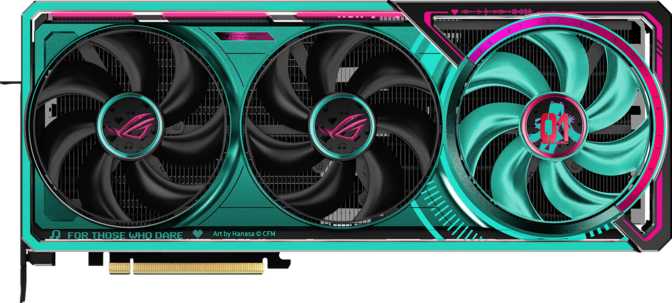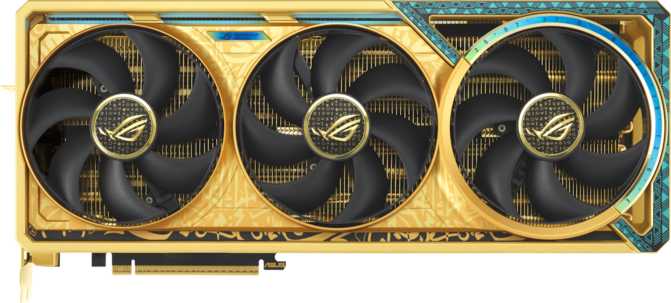
Asus ROG Astral RTX 5080 Dhahab Core OC Edition: Full Review
Graphics CardsAt a Glance
Architecture
Blackwell
5nm Process
Boost Clock
2,760 MHz
OC Edition
VRAM
16GB GDDR7
ECC Supported
Bandwidth
960 GB/s
GDDR7 Memory
Power Draw
360W TDP
PCIe 5.0 Slot
Max Displays
4 Simultaneous
5 Output Ports
There is a particular kind of confidence required to release a product positioned one step below your own flagship. The pressure is real: too close to the top and you cannibalize your best card; too far below and you lose buyers willing to spend serious money. The Asus ROG Astral GeForce RTX 5080 Dhahab Core OC Edition threads that needle with unusual precision.
"Dhahab" — Arabic for gold — is not marketing decoration. It marks this as Asus's premium interpretation of NVIDIA's second-tier Blackwell GPU, factory overclocked, dressed in ROG's most elaborate cooling hardware, and aimed squarely at enthusiasts who want flagship-caliber performance without the stratospheric price of a tier-one card. Whether that trade-off makes sense depends entirely on what you are asking this GPU to do — and that is exactly what this review will tell you.
Design and Build Quality
Physical Presence
At 357.6mm long and 149.3mm tall, this is not a card you fit into a case without measuring first. That length — just over 14 inches — exceeds what many mid-tower cases accommodate without modification or removed drive bays.
Physical Footprint
357.6 × 149.3 mm
Verify case clearance before ordering
The height means it consumes 2.5 to 3 expansion slots in most ATX cases. For anyone upgrading an existing system, physically measuring chassis clearance is a required first step, not an afterthought.
Cooling Architecture
The Astral designation in Asus ROG's lineup denotes their highest-tier cooler design. This card runs entirely on air cooling — a deliberate engineering decision, not a cost constraint.
Three large fans and a dense array of heat pipes span the card's full 357mm length to manage its thermal envelope. The absence of a liquid hybrid element reflects a specific engineering confidence: Asus concluded their air solution is fully sufficient to sustain the factory overclock without throttling under sustained load.
RGB and Aesthetics
RGB lighting is present and, within ROG's Aura ecosystem, deeply configurable. The Dhahab Core edition leans into premium visual identity — expect illuminated accents that synchronize with other Aura-compatible components in your build.
Whether you plan to display this card through a glass side panel or install it in a closed workstation box, full software control over lighting behavior is available. Static or off states are a single click away.
The Blackwell Architecture Explained
What the platform shift actually means for your workloads
NVIDIA's Blackwell generation represents a full architectural redesign rather than a derivative increment. Built on a 5-nanometer production process, the chip underneath this card packs a staggering number of transistors into its die — a figure that shapes everything from raw computational throughput to feature capability and power efficiency.
For non-technical readers: transistors are the fundamental switching components that perform every calculation a GPU makes. More transistors, built at a smaller scale, means more work done per clock cycle at lower electrical cost per operation. The 5nm process allows Blackwell to be both computationally denser and more thermally efficient per unit of work than its predecessor generation — even though total peak power consumption at load remains substantial.
Shader and Compute Configuration
The Blackwell GPU in this card contains 10,752 shader processors — the parallel computing cores handling everything from drawing pixels to running AI workloads. Alongside those sit 336 texture mapping units, governing how quickly the GPU applies surface detail to 3D geometry, and 112 render output units, which determine how quickly final pixel values are written to the frame buffer. Together, these numbers produce a pixel output rate and texture fill rate that place this card among the fastest available at this tier.
The card also carries Double Precision Floating Point (DPFP) capability — a feature that separates compute-grade and enthusiast GPUs from cost-optimized counterparts. For gamers, this is largely irrelevant. For those running scientific simulations, financial modeling, or professional 3D rendering, DPFP support means the card handles workloads that would fail or produce incorrect results on hardware lacking it.
Transistor Count
45.6B
On a 5nm production node — the density that enables Blackwell's efficiency gains
PCIe Interface
PCIe 5.0
Doubles available bandwidth vs PCIe 4.0 — CPU-to-GPU data transfer will not be the bottleneck.
Performance: The Numbers in Context
Translating raw specifications into real-world experience
Floating-Point Throughput
59.35 TFLOPS
Substantial generational jump over previous upper-mid-tier cards
Pixel Output Rate
309.1 GPixel/s
Engineered for 4K high-refresh-rate gaming without image quality compromise
Texture Fill Rate
927.4 GTexels/s
Handles dense next-gen texture complexity without becoming the bottleneck
Computational Headroom
At its floating-point throughput level, this card processes game scenes, ray-traced lighting, and AI inference workloads simultaneously without meaningful sacrifice to any one task. Previous-generation owners considering an upgrade will find this figure substantially higher than what mid-range or upper-mid-range Ada Lovelace cards delivered.
The factory overclock pushes the boost clock to 2,760 MHz — a meaningful step above the standard Blackwell 5080 boost target. In practice this means shorter frame times, more consistent performance under the varied GPU loads that games produce, and more headroom before thermal management intervenes.
Texture and Pixel Throughput
Nearly 927 billion texture operations per second means the GPU handles the dense texture complexity found in modern open-world games, high-resolution asset packs, and multi-layer material systems without complaint. Paired with a pixel output rate exceeding 309 billion pixels per second, the card is built for high-refresh-rate gaming at 4K.
For readers less familiar with these metrics: higher texture and pixel rates translate directly to smoother, more detailed images at high resolutions and frame rates. When games struggle at 4K ultra settings, it is often because the GPU cannot process texture and pixel data fast enough. These numbers suggest that will rarely be the constraint here.
Memory: The GDDR7 Story and the 16GB Question
Understanding the memory subsystem — and its one significant caveat
What GDDR7 Changes
The RTX 5080 Dhahab Core runs GDDR7 memory — the first adoption of this generation standard on a consumer card at this tier. GDDR7 operates at a dramatically higher data rate than the GDDR6X used in previous top-tier cards, and the result shows up directly as approximately 960 GB/s of memory bandwidth — the rate at which data moves between the GPU's compute cores and its local memory pool.
To make that number tangible: a typical 4K game with high-resolution textures and complex geometry might push 20–30 GB/s of sustained memory bandwidth during the most demanding scenes. This card has roughly 40 times that amount available. Bandwidth saturation is not a concern in any current gaming scenario — or even in professional workloads involving large 3D scenes and high-resolution compositing.
Memory Bus and ECC Support
The 256-bit memory bus governs how much data can be moved in parallel between the GPU's cores and its local memory. At GDDR7 speeds, this bus width delivers the bandwidth figures discussed above — the architecture is balanced rather than artificially constrained at the memory interface level.
ECC (Error-Correcting Code) memory mode is supported, automatically detecting and correcting memory errors during operation. Gamers will never notice this feature. Professional users running long-duration compute jobs care deeply — silent memory errors in those workflows can corrupt outputs without warning, making ECC not a luxury but a reliability baseline.
Memory Subsystem Specs
| Memory Type | GDDR7 |
| Capacity | 16 GB |
| Bus Width | 256-bit |
| Effective Speed | 30,000 MHz |
| Peak Bandwidth | 960 GB/s |
| ECC Support | Yes |
The 16GB Conversation
At 4K with current-generation titles and high texture settings, 16GB is generally sufficient. However, consider:
- A growing number of titles with ultra-high-resolution texture packs approach or exceed 16GB
- Local AI workloads — LLM inference, image synthesis at batch scale — fill 16GB quickly
- Future AAA titles may increase demands as new-generation console architectures mature
For pure 4K gaming today: not a dealbreaker. For serious AI workloads: a real constraint.
Features That Change How You Use the Card
Software and hardware capabilities explained in real-world terms
DLSS on Blackwell
DLSS (Deep Learning Super Sampling) is NVIDIA's AI-based frame reconstruction and upscaling technology. On Blackwell hardware, the dedicated tensor cores powering DLSS run inference at a scale prior generations could not match.
In practical terms: a game that runs at 90 fps native at 4K can run at 140+ fps with DLSS Quality mode enabled, with minimal perceptible visual trade-off in most scenes. For users targeting 4K at high refresh rates — 120Hz, 144Hz, or higher — DLSS is often the feature that makes that goal achievable without compromising visual settings elsewhere.
Hardware Ray Tracing
Full hardware-accelerated ray tracing is present through dedicated RT cores in the Blackwell die. Ray tracing simulates how light physically bounces between surfaces — producing soft accurate shadows, realistic reflections, and natural ambient occlusion that rasterized rendering can only approximate with shortcuts.
On Blackwell, the generational improvement means titles that were playable only at reduced settings on prior hardware can now run at full RT fidelity at 4K. Combined with DLSS, this pairing is the primary driver of the visual quality leap this generation delivers.
DirectX 12 Ultimate
Full DirectX 12 Ultimate support confirms hardware compatibility with all current-generation graphics features in the Windows ecosystem: mesh shaders, variable-rate shading, sampler feedback, and the full ray tracing pipeline.
This is not a feature you configure — it is a forward-compatibility baseline ensuring the card handles everything DX12 titles will demand in the foreseeable future.
Display Connectivity: Five Ports, Four Screens
What you get, what is missing, and what it means for your setup
3
DisplayPort Outputs
2
HDMI 2.1b Outputs
HDMI 2.1b is the current highest revision of HDMI, supporting 4K at up to 144Hz, 8K displays, and variable refresh rate over HDMI — directly relevant for those connecting to large-screen TVs rather than traditional gaming monitors. The three DisplayPort outputs serve monitor-focused configurations, including multi-monitor productivity setups and high-refresh-rate gaming displays.
Up to four of these five physical outputs can operate simultaneously, making native quad-monitor configurations possible without additional hardware. For those building a hybrid gaming and productivity workstation, the connectivity is sufficient out of the box.
Full Port Summary
| DisplayPort | 3 outputs |
| HDMI 2.1b | 2 outputs |
| USB-C | None |
| DVI | None |
| Mini DisplayPort | None |
| Max Simultaneous | 4 displays |
No USB-C Output
As monitors with USB-C connectivity become more common, the absence of a native USB-C display output is a meaningful gap. Users with USB-C-primary monitors will need an active adapter, and signal quality through adapters for high-bandwidth connections is variable.
Power Requirements: What This Card Actually Demands
The Dhahab Core OC Edition carries a thermal design power of 360 watts. This figure represents the card's sustained load consumption, and with a factory overclock active, peak transient loads can briefly exceed this during the most demanding workloads.
For system builders, the practical implication is clear: this card requires a quality power supply of at least 850 watts, with 1,000 watts providing comfortable headroom for a high-end CPU running alongside peak GPU loads. PSU quality matters here as much as rated wattage. A budget unit rated for 850W that delivers that figure only under controlled test conditions is a liability when paired with sustained high-end GPU loads.
Reputable PSU brands with 80 Plus Gold certification or better are the correct pairing for this card. This is not optional advice — an inadequate power supply puts every other component in the system at risk. Build the foundation before building the showcase.
Thermal Design Power
360W
Recommended PSU: 850W minimum
1,000W for comfortable headroom
Interface
PCIe 5.0
Doubles available bandwidth versus PCIe 4.0, future-proofing the platform connection for next-generation workloads.
Who Should Buy This Card — And Who Should Not
Matching the GPU to the right use case before committing
The Right Buyer
-
The 4K gaming enthusiast targeting 3840×2160 at high refresh rates across current titles. This card delivers reliable, headroom-rich performance for that goal — including demanding ray-traced titles with DLSS engaged.
-
The professional who also games. Architects, 3D artists, and video editors benefit from DPFP support, ECC memory mode, and raw compute throughput during working hours — and strong gaming performance afterward.
-
GPU-accelerated creative workflows — Blender renders, DaVinci Resolve GPU offloading, and similar tasks benefit meaningfully from this card's compute profile and memory bandwidth.
-
Multi-monitor users needing up to four displays simultaneously, with HDMI 2.1b for TV-connected setups and DisplayPort for high-refresh-rate monitor configurations.
Reconsider If You Are...
-
Primarily a 1440p gamer. This card's capabilities exceed what that resolution demands. The price-to-performance ratio at 1440p favors a tier lower in the stack where the same resolution is achieved at lower cost.
-
Running serious AI workloads locally — large language model inference at scale, high-batch image generation, or video synthesis. The 16GB VRAM ceiling will frustrate you. The tier above directly addresses this.
-
Building in a compact case. At over 14 inches in length, many enthusiast mid-towers cannot accommodate this card without modification. Case research is not optional at this physical size.
-
Heavily invested in USB-C displays. Without a native USB-C output, adapter dependency introduces potential signal quality uncertainty at the high bandwidths modern monitors demand.
How It Stacks Up Against the Competition
Competitive positioning across tier, technology, and intended use case
| Category |
RTX 5080 Dhahab Core OC This Card |
Tier Above (RTX 5090 Class) |
Prev-Gen Flagship (RTX 4090 Class) |
AMD High-End Alternative |
|---|---|---|---|---|
| Performance Tier | High-end enthusiast | Absolute flagship | Previous flagship | High-end enthusiast |
| VRAM | 16GB GDDR7 | 32GB GDDR7 | 24GB GDDR6X | 16–24GB GDDR6 |
| Memory Bandwidth | ~960 GB/s | Significantly higher | ~1 TB/s | Lower |
| Power Draw | 360W | Higher | Higher | Generally lower |
| DLSS / AI Upscaling | Full Blackwell Gen | Full Blackwell Gen | DLSS 3.5 | FSR equivalent |
| Ray Tracing | Full HW RT | Full HW RT | Full HW RT | Full HW RT |
| Best Suited For | 4K gaming, prosumer | 4K/8K, AI-heavy | 4K gaming | 4K gaming |
Comparative data is based on published specifications and general tier positioning. Individual performance varies by title, driver, and system configuration.
Honest Assessment: Where It Excels and Where It Falls Short
Clear Strengths
-
Best-in-class GDDR7 memory bandwidth
960 GB/s eliminates memory bandwidth as a system bottleneck across gaming, 3D, and prosumer workloads without exception.
-
Factory overclock that holds under sustained load
The 2,760 MHz boost is a manufacturer-validated specification backed by warranty — not a user-applied gamble.
-
Blackwell-generation DLSS is a real differentiator
The quality of upscaling and frame generation this generation is substantively better — DLSS Quality at 4K is visually indistinguishable from native rendering in motion.
-
Professional workload capability
DPFP support, ECC memory, and the raw compute profile make this viable as a prosumer workstation GPU, not just a gaming card.
-
PCIe 5.0 interface
Future-proofing the platform connection ensures this card remains fully utilized as the broader ecosystem matures.
Real Weaknesses
-
16GB VRAM ceiling at a premium price point
An acceptable trade-off for gaming today, but an uncertainty over a multi-year ownership horizon — particularly for AI-adjacent workflows that are scaling rapidly.
-
360W demands premium infrastructure throughout
This card does not forgive a budget power supply. The total system investment extends meaningfully beyond the GPU purchase price.
-
14-inch length restricts case compatibility
Many enthusiast mid-towers cannot accommodate this card without modification. Pre-purchase case research is not optional at this size.
-
No USB-C display output
As monitor connectivity trends shift toward USB-C, the absence of a native output creates adapter dependency for a growing class of display hardware.
-
Price-to-performance mismatch at 1440p
Buyers whose primary target is 1440p are paying for substantial headroom they will rarely exploit. A tier lower offers meaningfully better value at that resolution.
Questions Buyers Ask Before Purchasing
Straightforward answers to the searches that brought you here
Final Verdict
Asus ROG Astral GeForce RTX 5080 Dhahab Core OC Edition
Overall Rating: 4.5 out of 5
Raw Performance
5 / 5
Memory Bandwidth
5 / 5
VRAM Capacity
3 / 5
Build & Cooling
4.5 / 5
Connectivity
4 / 5
Value
4 / 5
The Asus ROG Astral GeForce RTX 5080 Dhahab Core OC Edition is an exceptionally capable GPU executed with a level of polish that justifies the premium it commands over standard RTX 5080 implementations. The factory overclock is real and manufacturer-validated, the GDDR7 memory bandwidth is unrivaled at this tier, and ROG's air cooling hardware backs up the performance claims with engineering confidence rather than just marketing language.
For 4K gaming enthusiasts with an appropriate system foundation — a quality PSU, a case with verified clearance, and a monitor that can take full advantage of what this card delivers — it stands among the most compelling options available at this tier. The Blackwell architecture's DLSS implementation amplifies real-world impact well beyond what raw frame-rate numbers alone convey.
The 16GB VRAM ceiling deserves acknowledgment rather than dismissal. For pure 4K gaming today it is not a limitation. For those running AI workloads alongside gaming, or planning to hold this card through several years of software evolution, it is a known constraint that should factor into the decision — particularly given that stepping up in NVIDIA's lineup addresses it directly at a price differential many buyers will judge as disproportionate to their specific use case.
Buy for 4K Gaming
Clear recommendation
Buy for Prosumer Work
DPFP and ECC add real value
Reconsider for AI Work
16GB limits at scale