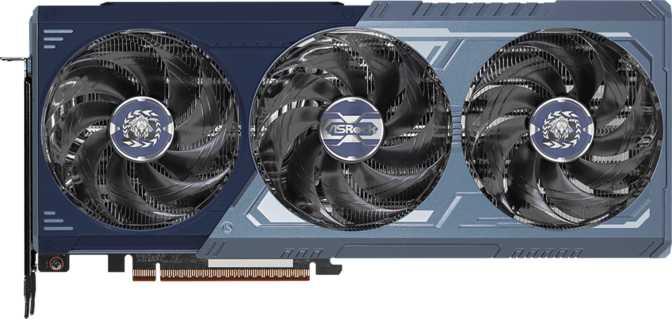
ASRock Radeon RX 9070 XT Monster Hunter Wilds Edition: Full Review
Graphics CardsASRock's Radeon RX 9070 XT Monster Hunter Wilds Edition arrives at a moment when the GPU market is finally delivering meaningful generational leaps again. This is not just a cosmetic collaboration — it is a purpose-built variant of one of AMD's most capable RDNA 4 cards, dressed in themed aesthetics but carrying the full performance pedigree of its architecture beneath. For buyers targeting serious 1440p and capable 4K performance from the AMD ecosystem, this card demands a close look. For fans of the franchise it celebrates, it doubles as a collector's piece that actually earns its keep under load.
Design and Build: More Than Skin-Deep
Physical construction, aesthetics, and thermal approach
At 298 mm long and 131 mm tall, this is a substantial card. Plan for it in any mid-tower or ATX build, and verify clearance in compact enclosures before ordering. It is not unusually large for its performance tier, but it will not fit in smaller cases without careful measurement first.
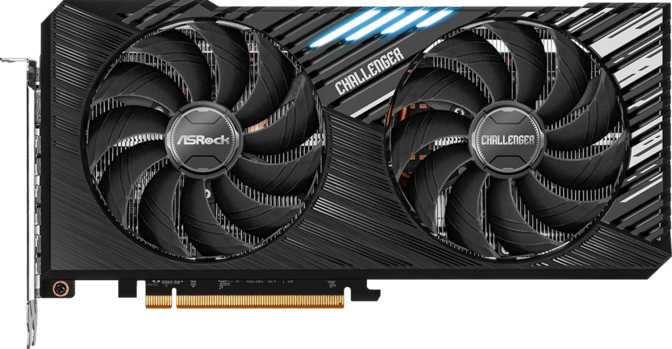
The Monster Hunter Wilds theming is applied with genuine intent rather than the lazy sticker treatment that plagues many licensed editions. ASRock has incorporated controllable RGB lighting into the shroud, giving the aesthetic real flexibility — dial it to match the vibrant, creature-feature energy of the game's branding, or tone it down to a single static color if you prefer something understated. The lighting zones respond to software control, adapting to your taste rather than locking you into one look.
Build quality follows ASRock's established Phantom Gaming lineage — solid, dense, and confidence-inspiring in hand. The cooler assembly feels premium without tipping into the absurd multi-slot bulk some enthusiast cards have adopted as a badge of honor. Air cooling handles all thermal duties here, which is standard practice for this performance class. There is no liquid-assist hybrid option, and none is needed — the cooler is engineered to manage this card's thermal envelope without it.
Physical Specifications
- Card Length
- 298 mm
- Card Height
- 131 mm
- Cooling Type
- Air / Fan
- RGB Lighting
- Yes
- HDMI
- 1x HDMI 2.1b
- DisplayPort
- 3x DisplayPort
- Max Displays
- 4 Simultaneous
Architecture and Processing Power
RDNA 4 at full strength — understanding the numbers that matter
The Foundation: 4 nm and 53.9 Billion Transistors
The RX 9070 XT sits on AMD's RDNA 4 architecture, built on a 4-nanometer process node. That manufacturing advancement allows AMD to pack roughly 53.9 billion transistors — an enormous quantity of logic — into a die that runs at manageable temperatures. Smaller process nodes deliver better performance per watt, and 4 nm is among the most advanced production processes currently in wide commercial use. The direct benefit to you: more computing headroom per degree of heat generated, without the power bill of a previous-generation equivalent.
Shaders, Texture Units, and Output
The card runs 4,096 shading units — the individual processors crunching your game's visuals — alongside 256 Texture Mapping Units and 128 Render Output Units. The TMU count means this card can apply over 760 billion texture samples per second. The ROPs control final pixel output, directly influencing performance at high resolutions with anti-aliasing active. At over 380 billion pixels per second of fill rate, this card does not flinch at 4K with demanding settings enabled.
Memory: 16 GB That Actually Earns Its Place
Capacity, bandwidth, and why this specification matters for longevity
Capacity and Future Relevance
Sixteen gigabytes of video memory is not a marketing talking point on this card — it is a genuinely future-relevant specification. Recent AAA titles, particularly those shipping with high-resolution texture packs, have begun pushing past the ceiling that was considered comfortable just two hardware generations ago. At 16 GB, this card has headroom for current demanding titles and a reasonable buffer for whatever arrives over the next generation cycle.
Speed, Bandwidth, and the 256-Bit Bus
The memory runs on a 256-bit wide bus — broad enough to avoid the bandwidth bottlenecks that narrower configurations create at high resolutions. The complete memory configuration delivers over 644 gigabytes of data transfer per second. That bandwidth figure is the underlying reason high-resolution gaming feels fluid during fast scene transitions: the GPU can feed its 4,096 shaders without stalling while memory catches up.
The memory type is GDDR6. While some competing cards at this tier have adopted GDDR7, real-world throughput is the figure that determines the GPU's actual experience. The combination of bus width, effective clock speed, and sheer capacity here produces competitive results regardless of the underlying memory standard.
Feature Set: What the Software Stack Delivers
APIs, ray tracing, display connectivity, and notable omissions
Supported Features
Not Included
API & Ray Tracing Context
DirectX 12 Ultimate is the current gold standard for game API support on Windows. Every modern AAA title leveraging advanced rendering — variable rate shading, mesh shaders, hardware ray tracing — does so through this API. Full support here means no titles will be artificially limited by an API ceiling in the foreseeable future.
Hardware-accelerated ray tracing is present and fully functional. RDNA 4 brings improved ray tracing hardware over prior AMD generations, addressing one of the architecture's historically weaker areas. This is not a card where ray tracing is technically present but practically unusable.
DLSS Note
DLSS is exclusive to NVIDIA GeForce hardware by design. Buyers deeply invested in DLSS 3 Frame Generation workflows should weigh this carefully. AMD's own upscaling technology applies here as a native RDNA 4 platform feature.
Power and Platform Requirements
PSU requirements, PCIe compatibility, and platform considerations
The card's rated thermal draw sits at 304 watts. This is meaningful — not extreme for the performance class, but enough that power supply selection requires honesty. A quality 750-watt PSU is the practical minimum for a build centered on this card; 850 watts provides comfortable headroom when paired with a high-end processor or when overclocking.
The connection to the motherboard uses PCIe 5.0. Current PCIe 4.0 platforms will still run this card — the interface is backward compatible, and PCIe 4.0 x16 bandwidth is not a real-world bottleneck for graphics workloads at this performance tier. PCIe 5.0 support simply future-proofs the installation for platforms that support it.
PSU Planning Guide
- Card TDP
- 304 W
- Minimum PSU
- 750 W
- Recommended PSU
- 850 W
- PCIe Interface
- Gen 5 (4.0 compat.)
Real-World Performance Expectations
What to expect across gaming resolutions and creative workloads
1440p Gaming
This is where the card operates in its most natural habitat. At 2560 x 1440 with maximum or near-maximum settings in current titles, the configuration of shaders, memory bandwidth, and peak clock speeds aligns to deliver consistently high frame rates. Demanding open-world titles, competitive shooters at high refresh rates, and visually complex RPGs all fall well within this card's capability range. Buyers targeting a high-refresh-rate 1440p monitor will not feel constrained.
4K Gaming
Four-K gaming is achievable and genuinely good on this card — the pixel fill rate and memory bandwidth support it without the compromises you'd make on a mid-range card pushed beyond its limits. In the most graphically demanding titles, particularly with ray tracing active, frame rates require either settings adjustments or upscaling to stay consistently above 60fps. For 4K at 60–120Hz, this card performs the role well. For 4K at 144Hz with every setting maxed, the gap to the very top tier of current GPUs becomes relevant.
Creative Workloads
The double-precision floating point capability, ECC memory support, and OpenCL 2.2 compliance make this card meaningfully useful for GPU-accelerated creative work. Video editors, 3D artists, and machine learning practitioners running smaller models or inference tasks will find more utility here than in a pure gaming card with identical raster specs but trimmed compute features.
Who This Card Is For — and Who Should Look Elsewhere
Matching the hardware to the right buyer
Buy This Card If You...
- Are building or upgrading primarily for 1440p high-refresh gaming with eyes on 4K potential
- Prefer AMD's driver ecosystem and want to leverage AMD SAM on a Ryzen platform
- Value a large VRAM allocation for long-term relevance as texture budgets grow
- Want themed hardware that carries its weight on performance, not just aesthetics
- Run creative software that benefits from compute capability and high memory capacity
Consider Alternatives If You...
- Are deeply invested in DLSS, particularly Frame Generation, which remains NVIDIA-exclusive
- Need native USB-C video output without using an adapter
- Are building in a compact form factor where 298 mm of card length won't clear
- Primarily target extreme 4K gaming above 120Hz and want no performance headroom concerns
- Have a strict total system power budget under 750W
Competitive Positioning
How the RX 9070 XT MHW Edition stacks up against its logical alternatives
| Feature | RX 9070 XT Monster Hunter Wilds Ed. | RTX 5070-Class NVIDIA Competitor | RX 9070 Step-Down AMD |
|---|---|---|---|
| VRAM Capacity | 16 GB | Lower at this tier | 16 GB |
| Upscaling Tech | AMD Stack | DLSS 3 + Frame Gen | AMD Stack |
| Ray Tracing | Capable (RDNA 4) | Stronger at tier | Capable |
| PCIe Version | Gen 5 | Gen 5 | Gen 5 |
| 4K Target | Yes | Yes | Limited |
| VRAM Longevity | Strong | Tighter headroom | Strong |
| Themed Design | MHW Edition | No | No |
Competitor comparisons are qualitative, based on publicly established product positioning. Specific third-party benchmark numbers are not cited to avoid presenting unverified figures.
Honest Assessment
Strengths and weaknesses stated plainly, with context
Where It Excels
The story this card tells well is straightforward: excellent memory capacity, competitive raw compute throughput, a mature architecture with real ray tracing capability, and display output that covers virtually every current monitor on the market. The 16 GB VRAM figure is genuinely differentiating at this tier — it is not padding. As texture budgets in AAA titles continue expanding, having that ceiling provides confidence this card won't become memory-constrained before it becomes compute-constrained.
Where It Falls Short
The weaknesses are real and worth stating plainly. The absence of DLSS is a legitimate consideration in a landscape where Frame Generation has changed the experience in supported titles. Additionally, while ray tracing capability has improved meaningfully in RDNA 4, NVIDIA retains a lead in RT performance at equivalent raster tiers — buyers who want ray tracing as a primary, always-on feature in every title should weigh that honestly.
Questions Buyers Ask Before Purchasing
Honest answers to the most common pre-purchase concerns
Final Verdict
The bottom line on the ASRock Radeon RX 9070 XT Monster Hunter Wilds Edition
The ASRock Radeon RX 9070 XT Monster Hunter Wilds Edition is a well-specified, genuinely high-performing card wrapped in an aesthetic that rewards fans of the franchise it celebrates. Its 16 GB of high-bandwidth memory, RDNA 4 compute throughput, and comprehensive display output make it a strong platform for 1440p enthusiasts and a credible entry point into 4K gaming.
Buy this card if you want AMD's best RDNA 4 has to offer at this tier, value future-proof memory capacity, and can either appreciate the themed design or overlook it entirely. The performance justifies the investment independent of the branding.
Pass on it if DLSS and NVIDIA's upscaling ecosystem are central to your gaming experience, or if your build has physical or power constraints this card's specifications exceed. Those are real limitations — not dealbreakers for everyone, but dealbreakers for some.