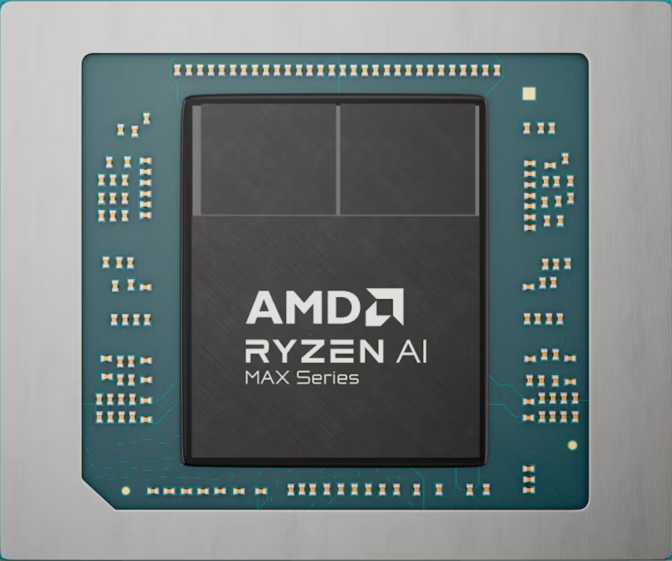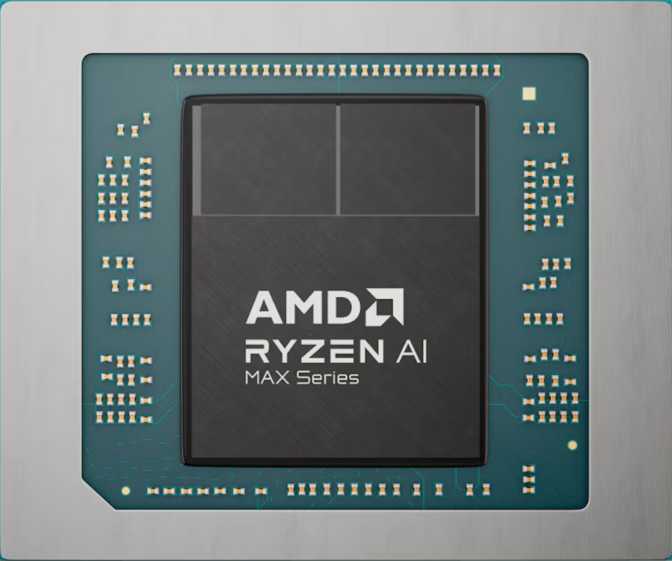
AMD Ryzen AI Max Plus 392 – Full Review and Real-World Verdict
CPUsWhat the Ryzen AI Max Plus 392 Actually Is
There is a category of processor most buyers overlook because it sits awkwardly between two familiar worlds: the CPU-focused chips powering traditional laptops and desktops, and the dedicated GPU-equipped systems that handle serious graphics workloads. The AMD Ryzen AI Max Plus 392 occupies that space with unusual confidence.
It is a single-chip platform combining a high-thread-count processor with integrated graphics powerful enough to handle tasks that previously demanded a discrete graphics card — all within a power envelope that fits inside thin laptops and compact desktop systems. This is not a chip for someone who simply wants to browse the web faster. It is built for professionals and power users who want maximum capability without carrying a bulky workstation or paying the premium a dedicated GPU system demands. Understanding what makes it distinctive requires looking past the headline numbers and into what those numbers actually deliver day-to-day.
Design Philosophy: One Chip, Fewer Compromises
The Ryzen AI Max Plus 392 is manufactured on a 4-nanometer process. The manufacturing node directly affects how efficiently a chip uses power and how much performance can be packed into a given physical space. A 4nm chip does significantly more per watt than chips built on older, larger nodes — which is why this processor can sustain high-performance workloads inside slim laptop chassis or compact desktop designs without constantly throttling back.
A practical power target — enough headroom for demanding workloads while remaining manageable for quality cooling solutions. Sustained performance without aggressive fan noise is achievable in well-engineered device designs.
Enables a level of compute density impossible on older nodes. The efficiency gain translates to more performance per watt and compatibility with thin, portable form factors that previous-generation chips could not support.
A design parameter, not a warning sign. Operating reliably at this ceiling gives manufacturers flexibility to tune for peak performance or quieter acoustic profiles depending on the intended use case.
Processor Performance: Threads, Cache, and Real-World Speed
Core and Thread Configuration
The Ryzen AI Max Plus 392 features twelve physical cores, each capable of handling two simultaneous instruction streams — yielding twenty-four total threads. Video editing, 3D rendering, software compilation, and AI inference workloads all scale with available threads rather than raw single-core speed. Twenty-four threads puts this chip well ahead of mid-range laptop processors, which typically offer eight to sixteen threads.
Unlike architectures that mix high-performance and high-efficiency cores of different physical sizes, all twelve cores here are architecturally uniform. Workload scheduling is more predictable, and latency-sensitive tasks that jump between cores experience more consistent behavior — a genuine advantage for developers, audio engineers, and anyone running applications sensitive to per-core performance variation.
Clock Speeds and Responsiveness
The 5GHz ceiling is competitive with high-end desktop processors from just a few years ago, now delivered in a platform that travels in a laptop bag. The gap between base and peak speed represents how the processor adapts to actual workloads — cool and quiet during light tasks, spiking upward for video exports, large compilations, or application launches. The processor does not feature an unlocked multiplier, so overclocking is not possible. For the vast majority of buyers, this is entirely irrelevant.
Cache Architecture and Memory Throughput
Sixty-four megabytes of L3 cache is a substantial on-chip buffer — enough to hold large datasets, game assets, and working memory close to the processor cores without repeatedly reaching out to slower system RAM. Architects modeling large BIM projects, data analysts running queries against sizeable datasets, and developers testing complex environments all benefit from this depth of immediately accessible on-chip storage.
DDR5 support running at up to 8000MHz is well above the 4800–6000MHz typical of most DDR5 deployments. For the integrated GPU especially, faster memory is a direct performance multiplier since the GPU shares the same memory pool rather than having dedicated video RAM. The 128 gigabyte maximum removes a constraint that has historically pushed professionals onto more expensive dedicated workstation hardware.
Integrated Graphics: The Radeon 8060S Examined
The integrated Radeon 8060S is the component that makes this processor unusual. Most integrated graphics are designed for light tasks — web content, video playback, basic photo editing, and occasional casual gaming. The 8060S is built to a different specification entirely.
Shader Count and Rendering Capacity
The GPU contains 2,560 shader processors — the individual computational units handling graphics rendering, parallel math operations, and AI inference tasks. Entry-level discrete graphics cards often ship with 1,024 to 2,048 such units. The Radeon 8060S carries more raw shader capacity than many add-in cards sold as dedicated gaming hardware. This is not a minor distinction; it fundamentally changes what this platform can accomplish without a separate GPU.
Clock Speeds and Sustained Output
The GPU base clock sits at 1,295MHz, with a boost ceiling of 2,900MHz under favorable thermal conditions. That boost ceiling is notably high for integrated graphics and suggests AMD prioritized burst performance for gaming, GPU-accelerated video encoding, and AI model inference. Whether specific devices sustain those boost clocks depends on the cooling system the manufacturer implements — thin laptops may throttle back sooner than desktop mini-PCs with more thermal headroom.
API Support, PCIe 4.0, and Display Connectivity
- DirectX 12 — required by all modern games and current creative software pipelines
- OpenGL 4.6 — broad compatibility with professional engineering, CAD, and design tools
- OpenCL 2.1 — GPU-accelerated parallel computing for scientific tools and AI frameworks
- 4 simultaneous displays — full multi-monitor workstation setups without a discrete GPU
PCIe 4.0 Storage
The PCIe 4.0 interface enables NVMe SSDs capable of sustaining read speeds above 7,000 MB/s — dramatically faster large file loading, shorter application launch times, and noticeably snappier responsiveness compared to older PCIe 3.0 platforms.
Key Feature Set: What Powers This Platform
The instruction set support describes the categories of computational work this processor handles natively in hardware. Understanding each one in plain terms reveals exactly which professional workflows the chip is built to accelerate.
-
AVX and AVX2 — Wide Parallel Math
Enables the processor to execute wide parallel mathematical operations natively in hardware. Critical for scientific computing, signal processing, and AI model inference running on the CPU side of the chip. -
FMA3 — Accelerated Floating-Point Arithmetic
Fused Multiply-Add accelerates the type of floating-point math used in 3D graphics calculations, physics simulation, and machine learning workloads. Relevant to both gaming performance and creative professional tools. -
AES — Hardware-Level Encryption
Handles encryption and decryption entirely in silicon rather than software. Secure storage, HTTPS connections, and encrypted drives all run at full speed with minimal CPU overhead on this platform. -
F16C — Efficient 16-bit Floating-Point Processing
Enables efficient processing of 16-bit floating-point numbers commonly used in neural network inference. Directly relevant for developers running AI models locally on the device without cloud infrastructure. -
Simultaneous Multithreading (SMT)
Each physical core presents as two logical processors to the operating system. This improves utilization under mixed workloads where some threads are waiting on memory or I/O while others are actively computing. -
NX Bit — Hardware Memory Security
Allows the operating system to mark memory regions as non-executable — a fundamental hardware security mechanism against certain classes of malware. Present and active on this platform.
Who Should Buy the Ryzen AI Max Plus 392
This Processor Is Right For You If…
- You do professional creative work — video editing, 3D rendering, architectural visualization, or motion graphics — and want a mobile or compact platform that handles it without a discrete GPU.
- You are a developer who wants to run large language models or AI inference locally, test machine learning pipelines, or work with GPU-accelerated frameworks without a dedicated workstation.
- You want a powerful mini-PC or thin-and-light laptop that handles everything — including occasional gaming — without needing two separate systems for different workloads.
- You work with large datasets, virtual machines, or memory-intensive applications and have found 32–64 GB of RAM insufficient. The 128 GB ceiling removes a constraint most laptop platforms impose.
Look Elsewhere If…
- You are a competitive PC gamer who prioritizes maximum frame rates in demanding titles. The Radeon 8060S does not match a mid-to-high-end discrete card in ray-traced or ultra-settings gameplay.
- You want overclocking capability. The locked multiplier fixes clock speeds at AMD's configured values — pushing past factory limits is not supported on this platform in any configuration.
- You need the absolute lowest power consumption for a fanless, passively cooled build running 24/7. At 55W TDP, this chip produces meaningful heat under load and requires active cooling.
- You are a budget buyer. The capabilities packed into this chip carry a premium, and the value proposition is strongest for users who will genuinely push the platform to its limits.
Competitive Positioning: How It Compares
The Ryzen AI Max Plus 392 occupies a specific position in the market. Comparing it against the two most logical alternatives clarifies exactly who this chip is built for and where it wins or falls short.
| Feature | Ryzen AI Max Plus 392 | High-End Mobile CPU (No Discrete GPU) |
Entry Discrete GPU System |
|---|---|---|---|
| CPU Threads | 24 | 16–20 | 16–20 |
| Integrated GPU Shaders | ~2,560 | 768–1,536 | N/A (separate card) |
| Max RAM Support | 128 GB | 32–64 GB | 64 GB typical |
| Form Factor | Thin laptop / Mini-PC | Thin laptop / Mini-PC | Requires thicker chassis |
| Memory Specification | DDR5 up to 8000 MHz | DDR5 up to 6400 MHz | DDR5 varies |
| Display Outputs | 4 (integrated) | 2 (integrated) | Depends on GPU card |
The defining differentiator is GPU shader count. Competing high-end mobile processors with integrated graphics fall well short of 2,560 shaders. Against systems with a separate mid-range GPU, the trade-off is thermal efficiency, portability, and simplicity versus raw sustained GPU peak performance.
Honest Assessment: Strengths and Limitations
What It Does Well
- Workstation-class thread count in a mobile or compact-desktop form factor — 24 threads with architecturally uniform cores for predictable performance under mixed workloads.
- Integrated GPU with over 2,500 shader processors that genuinely competes with entry discrete cards — a generational step beyond what integrated graphics previously delivered in this thermal class.
- 128 GB memory ceiling removes a fundamental constraint for professionals using virtual machines, working with large video projects, or maintaining AI models in active memory.
- 64 MB L3 cache and DDR5-8000 support create a memory subsystem tuned for large, complex workloads rather than just raw benchmark performance figures.
- Four simultaneous display outputs from integrated graphics alone — enabling professional multi-monitor setups without requiring a discrete GPU card.
Limitations to Know Before Buying
- The 55W TDP demands active cooling. Completely silent, passively cooled operation under sustained workloads is not achievable — this chip is a non-starter for fanless, always-on silent builds.
- No overclocking. The locked multiplier fixes speeds at AMD's configured values. Enthusiasts who push hardware past factory limits will find this a hard constraint with no workaround.
- GPU performance scales directly with memory speed. A device configured with slower DDR5 delivers noticeably less graphics performance — confirming memory specs before purchasing a specific device matters.
- A discrete GPU setup outperforms this chip in sustained, heavily GPU-bound workloads. For that specific use case, the trade-off may still favor a dedicated card at the cost of size and efficiency.
Questions Buyers Ask Before Purchasing
A Serious Tool for Serious Work
The Ryzen AI Max Plus 392 makes a compelling case in every area that matters for professional mobile and compact desktop computing. The thread count puts it in workstation territory. The cache and memory subsystem are tuned for large, complex workloads. The integrated GPU is genuinely competitive in a way previous generations were not. And the 128 GB memory ceiling means professionals who have been constrained by RAM limits in laptop platforms finally have room to breathe.
The limitations are real but specific — active cooling is non-negotiable, overclocking is off the table, and sustained GPU-bound workloads will still favor a discrete card in that narrow scenario. These are trade-offs that matter for a small segment of buyers. For everyone else in this chip's target audience, they are acceptable constraints against an otherwise exceptional platform.