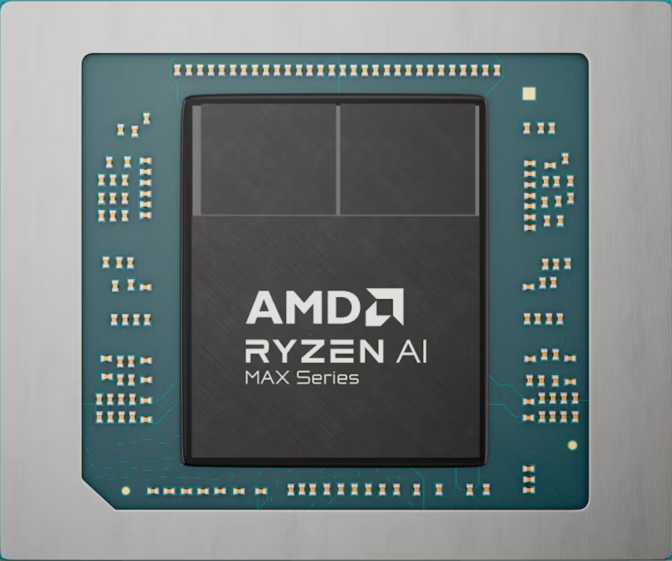
AMD Ryzen AI Max Plus 388 Review: Full Specs, Performance & Real-World Analysis
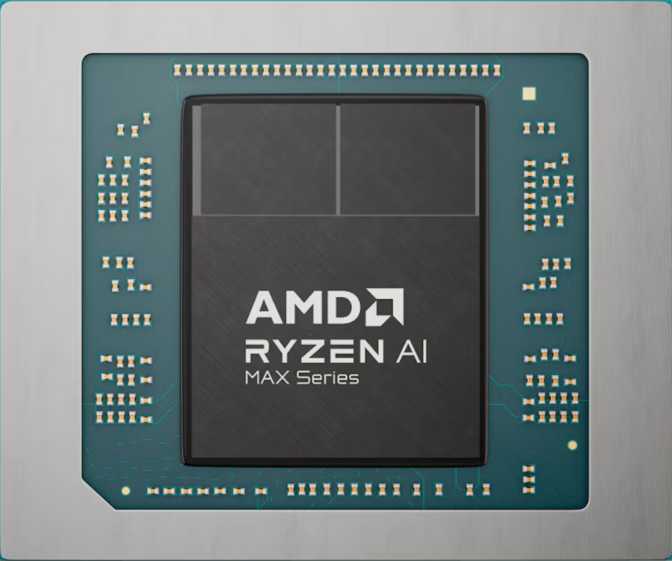
CPUsThere's a specific kind of buyer who has spent years accepting trade-offs: either you get a thin, portable laptop with graphics that struggle on anything demanding, or you lug around a thick gaming machine that drains its battery in two hours. The AMD Ryzen AI Max Plus 388 is AMD's argument that this compromise no longer has to exist. Built around a powerful integrated graphics architecture that blurs the line between traditional CPU and discrete GPU territory, this processor targets professionals, creators, and power users who want a single machine that genuinely handles everything — without a dedicated GPU bolted on.
Whether it actually delivers on that promise is what this review is here to answer.
At a Glance
- Architecture: 4nm process node
- Cores / Threads: 8 cores, 16 threads
- Boost Clock: up to 5 GHz
- Integrated GPU: Radeon 8060S
- Max Memory: 128GB DDR5
- TDP: 55W
Full Specification Breakdown
Every key specification explained — not just listed.
| Category | Specification | Value |
|---|---|---|
| Platform | Device Type | Laptop & Desktop |
| Platform | Process Node | 4nm |
| Platform | Thermal Design Power | 55W |
| Platform | PCIe Version | PCIe 4.0 |
| CPU | Cores / Threads | 8 Cores / 16 Threads |
| CPU | Base Clock Speed | 3.6 GHz (all cores) |
| CPU | Boost Clock Speed | Up to 5.0 GHz |
| CPU | L2 Cache (Total / Per Core) | 8MB / 1MB per core |
| CPU | L3 Cache (Total / Per Core) | 32MB / 4MB per core |
| CPU | Max Operating Temperature | 100°C |
| iGPU | GPU Model | Radeon 8060S |
| iGPU | Shader Processors | 2,560 |
| iGPU | Base / Boost GPU Clock | 1,295 MHz / 2,900 MHz |
| iGPU | Texture Mapping Units | 160 TMUs |
| iGPU | Render Output Units | 64 ROPs |
| iGPU | API Support | DirectX 12, OpenGL 4.6, OpenCL 2.1 |
| iGPU | Display Output Support | Up to 4 simultaneous displays |
| Memory | DDR Standard | DDR5 |
| Memory | Max Memory Speed | 8,000 MHz |
| Memory | Max Memory Capacity | 128GB |
| Features | Instruction Sets | MMX, F16C, FMA3, AES, AVX, AVX2, SSE 4.1, SSE 4.2 |
| Features | Multithreading | Supported |
| Features | 64-bit Support | Yes |
| Features | Overclocking (Unlocked Multiplier) | No |
Design Context: Where This Chip Lives
Platform, form factor, and thermal positioning
Laptop Applications
In laptop form, the Ryzen AI Max Plus 388 powers slim-to-mid-profile machines that credibly handle workstation-class tasks without requiring an external GPU. The result is a category of laptop that previously did not exist at this performance tier: genuinely portable without genuinely compromising on capability.
Compact Desktop Applications
In compact desktop configurations — mini-PCs and small form factor builds — this chip eliminates the need for a discrete graphics card while delivering performance that mainstream desktop parts with weak integrated graphics cannot match. It prioritizes quiet, space-efficient builds for professional environments.
Important framing: This is not a chip competing with desktop tower processors drawing 125W or more. Its 55-watt design is a deliberate trade-off — one that enables portability and compact form factors while maintaining serious performance credentials.
The Silicon Foundation: What 4nm Means in Practice
Process node, power envelope, and thermal design
The Ryzen AI Max Plus 388 is manufactured on a 4-nanometer process node — the same generation of fabrication technology used in some of the most competitive processors currently available. For buyers who don't track semiconductor manufacturing cycles, here's why this matters practically: smaller process nodes allow more transistors in the same space, which translates to better performance per watt, cooler operation, and longer battery life in laptops.
55W TDP
The sustained power ceiling — high enough for serious workloads, manageable enough for laptop cooling systems and compact desktop cases without industrial-grade thermal solutions.
100°C Max Temp
Standard for modern high-performance processors. A well-designed system stays well below this under sustained loads. Occasional peaks during burst workloads are normal and expected.
4nm Process
The current-generation fabrication node enables superior performance-per-watt ratios versus older 5nm and 7nm designs — meaningful for both battery life in laptops and thermal efficiency in compact desktops.
CPU Performance: Eight Cores That Know How to Work
Core configuration, threading architecture, clock behavior, and cache
Core Configuration and Threading
The processor runs eight physical cores, each capable of handling two threads simultaneously — giving the system sixteen logical processors to distribute work across. For the majority of tasks people actually perform, eight cores at this clock speed is a generous allocation. Video editing timelines, software compilation, browser-intensive workflows with dozens of tabs, running virtual machines alongside productivity apps — all of this operates without the processor becoming the bottleneck.
What the Ryzen AI Max Plus 388 does not use is ARM's big.LITTLE-style hybrid architecture, where different core types handle different workload intensities. Every core here is the same type. This is a deliberate choice with real consequences: workload scheduling is simpler and more predictable, which benefits professional applications that expect consistent, symmetric performance across threads. Low-latency audio production, financial modeling, and real-time simulation all benefit from this uniform architecture.
Clock Speeds and Real-World Responsiveness
All-core baseline frequency. Sets the floor for sustained multi-threaded workloads when the chip is managing its power budget across all eight cores simultaneously.
Peak frequency reached when thermal headroom permits. Lightly threaded tasks — gaming physics, script execution, snappy everyday interactions — disproportionately benefit from this ceiling.
Cache Architecture
The processor carries 32MB of L3 cache alongside 8MB of L2 cache, with each core allocated 4MB and 1MB respectively. Cache is the processor's scratchpad memory — data stored here is accessed orders of magnitude faster than data fetched from system RAM.
Primary working memory for large datasets — ML inference, game streaming, audio samples, database queries.
Second-tier fast buffer between cores and L3. Allocated generously at 1MB per core — upper end of what's typical for this processor class.
Integrated Graphics: The Radeon 8060S Is the Real Story
This is where the Ryzen AI Max Plus 388 separates itself from conventional processor comparisons.
The Radeon 8060S integrated GPU is not the afterthought iGPU found in mainstream laptops. It is a serious graphics engine operating at a different performance tier — closer to what some entry-level discrete graphics cards offer, without the added cost, power draw, or physical space of a separate chip.
The computational cores responsible for rendering graphics, compute workloads, and AI acceleration. Mainstream integrated GPUs carry a fraction of this count.
Peak frequency reached under demand. High for integrated graphics — a direct benefit of the 4nm process enabling sustained higher clocks without excess heat.
Texture mapping units handle surface detail rendering. 160 units at this tier gives the 8060S serious credibility for visual creative and 3D work.
Supports up to four displays connected at once — important for compact desktop productivity setups and multi-monitor creative workflows.
API and Software Compatibility
Full support for modern game rendering pipelines and advanced visual effects available in current-generation titles.
Industry-standard for professional 3D applications, CAD tools, and cross-platform visual creative software.
GPU compute offloading for DaVinci Resolve, Blender, GPU-accelerated Python libraries, and local AI inference workloads.
What This Means for Gaming
The 8060S can handle modern PC gaming at 1080p with medium-to-high settings across a wide range of titles. Esports games and less demanding titles will run smoothly at high refresh rates. Graphically intensive open-world games and recent AAA releases require more careful settings choices but remain playable — something that genuinely wasn't achievable with integrated graphics until recently.
This is not a substitute for a high-end discrete GPU. Buyers expecting to run demanding titles at 4K ultra settings will be disappointed. But for someone who wants to game casually, or who travels and wants a single device that handles work and occasional gaming, the 8060S is a legitimate solution rather than a placeholder.
Memory: Where the Ryzen AI Max Plus 388 Gains a Critical Edge
DDR5 speed, bandwidth, and capacity — why these numbers matter more than usual here
Modern integrated graphics solutions share memory with the CPU rather than having their own dedicated pool. This arrangement historically penalized iGPU performance because system memory was slower and less bandwidth-efficient than dedicated VRAM. The Ryzen AI Max Plus 388 addresses this directly.
DDR5 at 8,000 MHz
This is exceptional. DDR5 at high transfer rates dramatically increases the bandwidth available to both the CPU and the integrated GPU, partially closing the gap between shared memory architectures and discrete GPUs with their own VRAM.
Buyer tip: Systems configured with high-speed DDR5 will perform meaningfully better in graphics and compute tasks than systems with slower memory. Prioritizing memory speed is a worthwhile investment when choosing between configurations.
Up to 128GB Capacity
The platform supports up to 128 gigabytes of total system memory. This is relevant to a specific but important audience:
- Video professionals working with high-resolution footage
- Engineers running large simulations
- Developers maintaining multiple virtual machines
- AI researchers working with large model weights locally
Connectivity and Platform Capabilities
PCIe 4.0, instruction sets, and hardware acceleration features
PCIe 4.0 Storage
The chip implements PCIe 4.0 — the second-most-current interconnect standard used to attach NVMe SSDs and expansion devices. SSDs connecting over PCIe 4 offer read speeds that make storage effectively invisible as a bottleneck in most workflows. For laptop use cases, this means fast application loading, near-instant file operations, and smooth handling of large project files.
Hardware Security
AES hardware acceleration means encryption and decryption operations are handled in silicon rather than software — benefiting secure file operations, VPN performance, and encrypted storage without taxing the main compute cores. NX bit support provides an additional layer of hardware-enforced security against certain classes of malicious code execution.
Instruction Set Support
The supported instruction sets determine which specialized workloads the chip handles natively and efficiently:
Wide data operations for scientific computing, media encoding, and AI inference
Fused multiply-add operations — critical for floating-point intensive workloads
16-bit float support increasingly relevant for AI model inference pipelines
Multimedia acceleration and string processing optimizations
Real-World Usage: Who This Is For and Who It Is Not
Honest audience targeting based on what this chip actually delivers
Well Suited For
- Creative professionals — video editors, 3D artists, photographers working with large files who need a portable workstation
- Software developers who benefit from strong multi-threaded performance for compilation and virtualization
- Data scientists and ML practitioners running inference workloads locally with the need for large memory headroom
- Power users who want one machine for demanding work and casual gaming without carrying separate devices
- Compact desktop builders who want capable graphics without installing a discrete GPU card
Not the Right Fit For
- Competitive gamers who need maximum frame rates in demanding titles and will accept a larger, heavier machine with a discrete GPU
- Budget-conscious buyers — systems built around this chip occupy the premium tier, and the pricing reflects that
- Light workload users — browsing, documents, and video calls don't justify the premium; a capable mid-range chip serves those needs for less
- Overclockers and hardware tinkerers — the multiplier is locked; this chip is not designed for frequency experimentation
Competitive Positioning: How It Compares
The Ryzen AI Max Plus 388 against logical alternatives in the same market space
| Criterion | Ryzen AI Max Plus 388 | Competing Integrated Graphics Chips | Laptop with Entry Discrete GPU |
|---|---|---|---|
| Graphics Performance | Significantly above iGPU class | Mainstream iGPU performance | Comparable or moderately higher |
| System Footprint | Compact — no GPU card needed | Compact | Larger chassis required |
| Memory Bandwidth | Very high via fast DDR5 | Lower DDR5 speeds typical | Separate GDDR VRAM (dedicated) |
| Total System Power Draw | Single 55W processor | Lower overall, less performance | Combined CPU + GPU TDP higher |
| Overclocking | Not supported | Varies by model | Typically locked on laptops |
| Max Memory | 128GB | Often 64GB cap | Often 32–64GB on laptops |
| Multi-Display Output | Up to 4 displays | Typically 2–3 displays | Depends on discrete GPU |
The most direct competitive pressure comes from Intel's integrated graphics offerings and from laptop configurations pairing a mid-tier CPU with an entry-level discrete GPU. Against the former, the 8060S leads convincingly in graphics-heavy scenarios. Against the latter, the comparison depends on the specific discrete GPU and what the buyer values most.
Honest Assessment: Strengths and Where It Falls Short
A balanced evaluation — the good, the trade-offs, and what to watch for
What It Does Well
The Ryzen AI Max Plus 388's most compelling quality is that it genuinely delivers on the promise of capable integrated graphics — not as a marketing talking point, but as something you'd notice in everyday use. The graphics engine is good enough to change how people think about what a laptop can do without a dedicated GPU.
The memory bandwidth advantage deserves emphasis because it's easy to underestimate. The ability to run DDR5 at 8,000 MHz is not a paper specification — it has direct performance consequences for integrated graphics tasks that are meaningful and measurable. Configured correctly, this becomes a platform that handles workloads previously requiring more expensive, heavier hardware.
The cache architecture, at 32MB of L3 with generous per-core allocation, sits at the upper end of what's typical for the class. Combined with the 4nm process efficiency, the result is a chip that punches above what clock speed numbers alone suggest.
Where to Manage Expectations
Enthusiasts who want to push hardware beyond factory configuration won't find that freedom here. AMD prioritized efficiency and reliability over user-configurable tuning — the right call for the target audience, but a real limitation for hardware hobbyists.
The 55W TDP means under sustained maximum load across both CPU and GPU simultaneously, a laptop may need to manage its thermal budget carefully. Well-engineered systems handle this gracefully; poorly cooled implementations may throttle. The chip's quality is only as good as the system built around it.
Systems built around this processor are not budget purchases. The performance justifies the cost for the right buyer, but users with light workloads are paying for capability they won't use.
Questions Real Buyers Ask
Straight answers to the most common searches before purchase
Final Verdict
The AMD Ryzen AI Max Plus 388 is one of the most technically interesting processors available for users who have been waiting for integrated graphics to become genuinely viable for demanding work and light gaming. It's not a compromise chip. It's a deliberate architectural choice — a high-performance CPU paired with an unusually capable integrated GPU, unified memory architecture with class-leading bandwidth support, and a 4nm manufacturing process that enables this performance within a 55-watt power envelope.
If you're a professional who wants a single powerful machine that travels well, handles creative workloads, supports AI tasks, and games adequately — all without the weight and complexity of a discrete GPU — systems built around this processor deserve serious consideration. If you need maximum discrete graphics performance, plan to overclock, or are working within a tight budget, your money is better directed elsewhere.