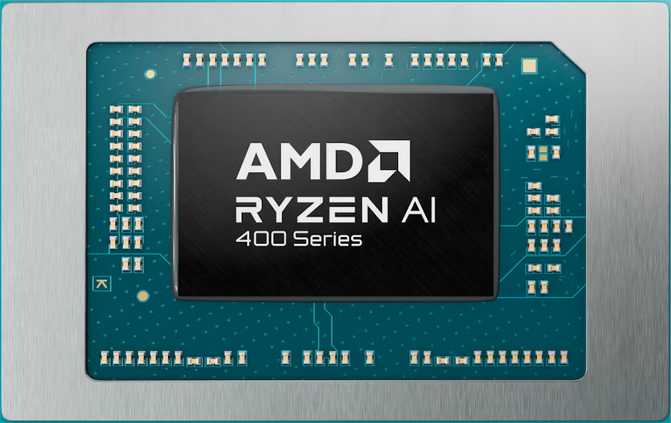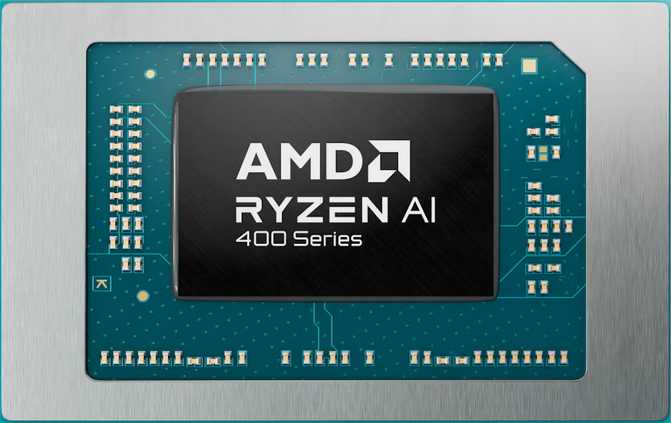
AMD Ryzen AI 9 HX 475 Full Review: An Honest Performance Assessment
CPUsWhat the AMD Ryzen AI 9 HX 475 Actually Is — And Why It Matters
There is a particular kind of processor that makes buying a laptop feel decisive rather than compromised. The AMD Ryzen AI 9 HX 475 is that kind of chip — and it does something increasingly rare: it makes integrated graphics feel like a real option rather than a fallback.
This chip is designed for people who want a thin-and-light or mid-weight laptop that handles creative workloads without breaking a sweat and, when the moment calls for it, can run games without a discrete GPU. Whether you are a developer, a content creator, a power user who lives in browser tabs and productivity tools, or someone who refuses to overpay for hardware they don't fully use — this processor deserves your attention.
Built on the architectural thinking that has pushed AMD to genuine performance leadership, the Ryzen AI 9 HX 475 combines a 12-core hybrid design, a 5.2 GHz boost ceiling, and the Radeon 890M integrated GPU — a combination that earns serious consideration at the top of the mobile processor market.
Core Specifications at a Glance
The key numbers behind the AMD Ryzen AI 9 HX 475 — translated into plain terms
Architecture and Core Design: Built Different
The Ryzen AI 9 HX 475 uses a hybrid core architecture, meaning not all twelve of its cores are identical. A dedicated cluster of higher-performance cores handles the heaviest workloads — demanding single-threaded applications, complex rendering operations, and anything requiring maximum throughput on a single task.
A second, larger cluster of efficiency-focused cores manages lighter, more parallelizable work at lower power draw, keeping the system responsive while conserving energy. These cores are not second-class citizens — they handle everything from background processes to multitasking workloads effectively, freeing the performance cores for when raw speed matters.
With 24 threads across 12 cores, this processor can handle a significant number of simultaneous tasks without stalling. This thread count matches or exceeds what many desktop workstation chips offered just a few years ago — making workloads like video encoding, code compilation, and virtual machine management feel noticeably smoother than on lower-tier mobile chips with half the count.
The Significance of a 4nm Manufacturing Process
A smaller manufacturing node means transistors are physically smaller, allowing more to fit on the same chip area while switching more efficiently — yielding more performance per watt. At 4nm, this processor sits at the current frontier of commercial laptop production. The practical result is performance that would have required a much larger, hotter chip just two generations ago, achieved within a 28-watt thermal envelope that laptop manufacturers can work with in a relatively slim chassis.
Hybrid Core Architecture
Handle single-threaded peak loads and compute-intensive work at up to 5.2 GHz. These dominate applications that cannot be split across threads.
Manage background tasks, multitasking, and parallelizable workloads at lower power — keeping the system responsive without draining battery unnecessarily.
Performance Analysis: What 12 Cores and a 5.2 GHz Ceiling Really Means
Clock Speed in Context
The processor's base frequencies start conservatively — intentional for mobile chips managing heat and battery life during idle or lightly loaded conditions. When you need performance, the chip boosts aggressively to a 5.2 GHz ceiling on its fastest cores.
To put that in perspective: 5.2 GHz represents the peak speed that enthusiast desktop processors were reaching just a couple of years ago. Achieving that inside a laptop likely weighing under two kilograms is a meaningful accomplishment. Single-core performance — which still governs the speed of browsers, office tools, and most everyday software — is excellent at this clock ceiling.
Cache Hierarchy and Real-World Responsiveness
Carrying 12MB of L2 cache and 24MB of L3 cache — 36MB total — this chip stores far more frequently accessed data close to the cores. The result is fewer waits on slower system RAM, which directly improves responsiveness in data-intensive work.
Software compilation, large dataset processing, gaming, and simulation workloads all benefit measurably from this generous cache hierarchy. The 24MB L3 is particularly large for a mobile chip and contributes to snappy application switching even under load.
The Radeon 890M: Integrated Graphics Worth Taking Seriously
The built-in Radeon 890M is the element that most clearly separates the Ryzen AI 9 HX 475 from its competition. Integrated graphics have historically been the weakest link in any laptop build — tolerable for video playback, marginal for real work. The 890M rewrites that assumption.
What the GPU Numbers Actually Represent
The graphics unit contains 1,024 shader processors — the individual computational units that handle rendering, visual effects, and GPU-accelerated tasks. This count exceeds the shader count of some entry-level discrete GPUs sold as standalone cards. This is not a rounding-error difference; it is a meaningful hardware gap in AMD's favor.
The GPU boosts to 3,100 MHz under load. That combination of shader count and clock speed produces integrated graphics performance that sits in genuine gaming territory. Titles at 1080p on moderate settings are within reach. Casual games at high settings are playable. This is not a marketing feature — it is a real, usable capability.
For creative applications, OpenCL 2.1 support enables GPU-accelerated processing in tools like DaVinci Resolve and Adobe Lightroom — fully available without requiring a discrete card alongside this chip.
Display Flexibility
The 890M can drive up to four simultaneous displays — a practical advantage for professionals docking to multiple external monitors. DirectX 12 ensures compatibility with modern game titles and GPU-accelerated software, while OpenGL 4.6 covers the vast ecosystem of professional and creative tools still relying on OpenGL rendering paths.
| Specification | Value |
|---|---|
| Shader Processors | 1,024 |
| GPU Boost Clock | 3,100 MHz |
| GPU Base Clock | 400 MHz |
| Texture Mapping Units | 64 TMUs |
| Render Output Units | 32 ROPs |
| Simultaneous Displays | 4 |
| DirectX Version | DirectX 12 |
| OpenGL Version | OpenGL 4.6 |
| OpenCL Version | OpenCL 2.1 |
Memory: DDR5 at Speeds That Actually Matter
The processor supports DDR5 — the current generation standard — running at speeds up to 8,533 MHz. This is an unusually high ceiling even by DDR5 standards, and it matters most for integrated graphics performance.
Unlike discrete GPUs that carry their own dedicated high-bandwidth memory, the Radeon 890M shares system RAM. Faster system memory directly translates to better graphics performance. The difference between minimum-spec DDR5 and near-maximum speeds is measurable and visible — particularly in gaming and GPU-compute workloads.
The processor uses a dual-channel memory controller, meaning maximum bandwidth requires RAM installed in both memory slots. A single-channel setup cuts effective memory bandwidth roughly in half — noticeably hampering the integrated graphics. This is a configuration detail that matters more on this chip than on systems with a discrete GPU.
Maximum supported capacity is 256GB — relevant primarily to virtualization, large in-memory database work, or professional simulation. For most users, 32GB to 64GB represents the practical sweet spot based on cost and available slots.
Memory Configuration Guide
Power Efficiency and Thermal Envelope
A 28-watt TDP is the processor's baseline power budget — and this figure tells you exactly what kind of laptop this chip belongs in. Not an ultrabook running fanless with passive cooling, and not a massive desktop-replacement churning through a heavy battery. It sits in the sweet spot: a capable chip for 14 to 16-inch laptops with active cooling that still offer responsive all-day use when the load is light.
The chip's maximum rated operating temperature is 100°C. Modern AMD processors are designed to sustain performance up to this ceiling before throttling begins. Well-cooled laptops will rarely approach that figure under sustained load. Momentary peaks during burst workloads are normal and expected — the chip is operating within its design parameters, not overheating.
In efficiency-focused workloads — document editing, video calls, email, light browsing — the hybrid core design keeps power consumption well below the TDP ceiling. This translates directly into longer battery life without sacrificing responsiveness when the workload suddenly shifts to something heavier.
Thermal Profile
Instruction Set Support and Compute Versatility
For technically inclined buyers, the supported instruction sets reveal the chip's full compute range. Each extension adds specific hardware-level capability that software leverages for speed, security, or specialized computation.
Wide-register vectorized computation for scientific computing, signal processing, and machine learning frameworks. Doubles or quadruples throughput on compatible workloads versus scalar operations.
Fused Multiply-Add improves floating-point throughput for physics simulations, audio processing, and video pipeline operations that rely on rapid multiply-accumulate math.
Hardware-accelerated encryption makes full-disk encryption, VPN tunneling, and secure storage operations virtually free in CPU overhead. Security costs near zero performance.
Hardware 16-bit floating-point conversion — directly beneficial for machine learning inference workloads and any pipeline processing half-precision data natively.
Mature, widely supported extensions that virtually all modern software relies on for multimedia processing, string operations, and general-purpose acceleration.
Prevents code from executing in memory regions designated as data-only — a foundational hardware-level defense against memory exploit attacks.
Compatible with current-generation NVMe SSDs and PCIe 4.0 discrete GPUs at full rated bandwidth — no storage bottlenecking at the platform level.
Who This Processor Is For — And Who It Is Not
Excellent Fit For
-
Software Developers
The 12-core, 24-thread design handles parallelized build processes, Docker containers, and local development environments without stalling. Code compile times are substantially faster than on lower-tier mobile chips.
-
Content Creators on the Go
Photo editing, 4K video work, and 3D rendering in a portable form factor. The CPU and Radeon 890M together create a credible portable workstation without requiring a dedicated GPU.
-
Casual and Mid-Level Gamers
Light-to-moderate gaming at 1080p without carrying a discrete GPU. The Radeon 890M opens gaming possibilities that previous integrated graphics simply could not reach.
-
IT Professionals Running VMs
High thread count and 256GB memory ceiling support multiple simultaneous virtual machines — a genuine portable virtualization workstation.
-
Data Scientists and ML Practitioners
F16C hardware support and OpenCL 2.1 GPU acceleration enable CPU-side inference and preprocessing in a portable form factor, without discrete GPU overhead.
Not the Right Choice For
-
Fanless Ultrabook Buyers
The 28W thermal design requires active cooling. This chip is not suited for thin, passively cooled laptop designs — it needs airflow to sustain full performance.
-
Serious PC Gamers
AAA titles at high settings and high refresh rates still require a dedicated GPU. The Radeon 890M is impressive for integrated graphics but cannot match a mid-range discrete card in sustained demanding gaming scenarios.
-
Budget-Conscious Buyers
The Ryzen AI 9 HX 475 sits at the top of AMD's mobile lineup. Expect laptop manufacturers to price accordingly — this chip appears in premium-tier systems.
How It Compares to the Alternatives
Where the Ryzen AI 9 HX 475 stands relative to its closest mobile processor competitors across the metrics that matter most to buyers.
| Feature | AMD Ryzen AI 9 HX 475 | Intel Upper Mid-Range Mobile | Lower-Tier Ryzen AI |
|---|---|---|---|
| Cores / Threads | 12 / 24 | 14–16 / 16–22 | 6–8 / 12–16 |
| iGPU Shader Count | 1,024 | 64–96 (Intel Arc) | 512 |
| Max Supported RAM Speed | DDR5-8533 | DDR5-6400 | DDR5-6400 |
| Manufacturing Node | 4nm (TSMC) | Intel 4 | 4nm (TSMC) |
| Base TDP | 28W | 28–45W | 15–28W |
| Unlocked Multiplier | Yes | No | No |
Honest Assessment: Strengths and Limitations
Genuine Strengths
The Ryzen AI 9 HX 475 earns its position at the top of AMD's mobile stack through genuine capability. The integrated graphics are the chip's most distinctive characteristic — they close a gap that has existed for years between laptops without discrete GPUs and those worth using for demanding creative work. The 890M's 1,024 shaders and 3,100 MHz boost clock create a profile that is genuinely difficult to match in the mobile space.
Multi-core performance is equally hard to fault. Twenty-four threads, a 5.2 GHz boost ceiling, and 36MB of total cache handle demanding workloads without concession. This chip does what would have required a dedicated workstation machine just a few years ago.
DDR5-8533 memory support is a forward-looking inclusion that feeds the integrated GPU effectively, ensuring the chip's GPU headroom is not artificially constrained by memory bandwidth. The unlocked multiplier adds advanced tuning options that are rare at any tier in mobile computing.
Real Limitations
The limitations are genuine but contextual. This is not a chip for the most demanding sustained GPU workloads — a laptop with a dedicated mid-range GPU will outperform it in extended 3D rendering or AAA gaming at high settings. Buyers who benchmark GPU performance at maximum settings in demanding titles will find the integrated graphics ceiling lower than a comparable discrete card.
The 28W thermal design means it is unsuited for truly fanless, ultra-thin laptop designs. Some thermal headroom and active cooling are prerequisites for extracting full sustained performance. Passively cooled chassis designs will hit throttling before the chip reaches its potential.
The unlocked multiplier is valuable in principle, but its practical impact depends entirely on what the laptop manufacturer does with their power limits and cooling design. Users inside thin-and-light laptops may see limited real-world benefit from the unlocked headroom compared to those in thicker, better-cooled machines.
Common Questions Buyers Ask
Answers to the questions real buyers search for before committing to a purchase decision.
Final Recommendation
Our considered verdict on the AMD Ryzen AI 9 HX 475
The AMD Ryzen AI 9 HX 475 is the right processor for buyers who want a single laptop that handles demanding work without compromise and plays games without a discrete GPU. Its combination of high core count, generous cache, top-tier boost clocks, and the Radeon 890M integrated graphics creates a profile that is genuinely difficult to match in the mobile processor market.
If your priorities are lightweight gaming, content creation on the go, software development with local compute demands, or professional productivity that occasionally extends into GPU-accelerated territory, this chip should be at the top of your shortlist. It delivers the kind of capability that used to demand larger, heavier, louder machines.
It is not the right answer for committed PC gamers who benchmark at maximum settings, or for anyone seeking a featherweight fanless ultrabook. For the buyer who wants one machine that does nearly everything well — and does several things exceptionally — this processor makes a compelling, well-substantiated case.