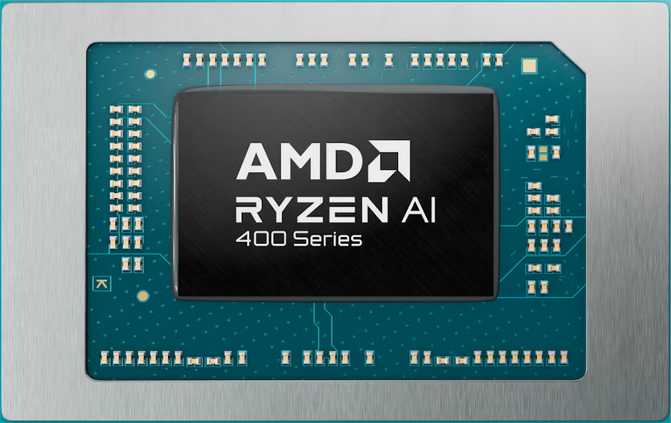
AMD Ryzen AI 9 465 Review: Real-World Performance & iGPU Tested
CPUsThe laptop processor market has quietly become one of the most competitive spaces in consumer technology. Thin-and-light machines are expected to handle creative workloads, gaming sessions, and all-day productivity without a power brick permanently attached to the desk. The AMD Ryzen AI 9 465 positions itself squarely in that tension — a processor built for premium ultrabooks and mid-to-high-end laptops that need to punch well above their weight class without melting through the chassis. What makes this chip worth examining carefully is not any single specification but the combination of architectural decisions AMD made to balance raw processing power, integrated graphics capability, and energy efficiency within a strict power envelope.
Architecture and Core Configuration
Understanding how this chip is built
A Hybrid Design That Mirrors Desktop Innovation
The Ryzen AI 9 465 uses a hybrid core architecture — AMD's take on the big.LITTLE design philosophy that Intel popularized in its Alder Lake generation. The chip combines two types of processing cores under one roof: four performance-class cores optimized for demanding, single-threaded tasks, and six efficiency-oriented cores designed to handle lighter background work without wasting energy. Across all ten cores, the processor exposes twenty simultaneous processing threads, meaning the operating system sees twenty logical processors and can distribute work accordingly. For multitasking-heavy workflows, video encoding, or running compilation jobs in the background while browsing, that thread count matters more than raw clock speed alone.
Built on 4nm: What the Process Node Means for You
Built on a 4-nanometer manufacturing process, the Ryzen AI 9 465 benefits from one of the more refined fabrication nodes currently in laptop-class silicon. Smaller transistors pack more computing logic into less physical space, which translates directly into lower heat generation per unit of work performed. This is why a chip at this performance level can live inside a slim laptop chassis — the thermal physics are simply more favorable than they were on older, larger nodes. The processor is rated to operate safely up to 100°C at the die, a ceiling standard for modern mobile processors that routinely run warm under burst loads before thermal management systems step in.
The 28-Watt TDP: What It Constrains and What It Enables
TDP is not a performance rating — it is a thermal budget. At 28 watts, the Ryzen AI 9 465 sits in AMD's mainstream mobile tier: above the ultra-low-power chips found in fanless tablets and below the 45W+ configurations destined for gaming laptops with bulkier coolers. This envelope allows OEM manufacturers to put this chip into laptops that are genuinely portable — slim and light enough for daily commuting while still running active cooling.
What it constrains is equally important: sustained all-core workloads will be thermally managed, and peak burst performance will not hold indefinitely. This is a processor optimized for intelligent task scheduling, not prolonged brute-force computation.
- Fanless tablets: 7–15W
- Ryzen AI 9 465: 28W
- Gaming laptops: 45W+
Processing Performance
Clock speeds, cache, and real-world responsiveness
Clock Speeds in Context
Both performance and efficiency cores begin at 2 GHz under light or idle conditions — a conservative baseline where the chip draws minimal power for tasks like document editing, web browsing, or media playback. When the workload demands more, the processor boosts aggressively, reaching up to 5 GHz on its fastest cores. That 5 GHz peak governs single-threaded responsiveness — the speed at which applications that cannot be parallelized will feel. Tasks like launching software, compiling single-file scripts, applying photo filters, or processing real-time audio all depend heavily on this figure. At 5 GHz, the Ryzen AI 9 465 competes credibly with the fastest mobile chips in its thermal class.
Cache Memory: The Often-Overlooked Multiplier
Cache is processor-local memory that operates orders of magnitude faster than system RAM. When the data a CPU needs is already in cache, the processor does not stall waiting for it — it processes immediately. The Ryzen AI 9 465 carries 10MB of L2 cache and 24MB of L3 cache, totaling 34MB of fast on-chip storage.
The 24MB L3 figure is generously sized for a mobile processor. A well-provisioned L3 cache benefits workloads with irregular data access patterns — game engines pulling assets, database queries, machine learning inference, or professional applications processing large project files. In workloads designed to stress cache capacity, a chip with ample L3 can close performance gaps that clock speed differences alone don't explain.
Multithreading and the Unlocked Multiplier
Every core supports simultaneous multithreading, allowing each physical core to handle two instruction streams concurrently. For CPU-bound tasks that scale across threads — video transcoding, 3D rendering, code compilation, and scientific simulations — the twenty-thread configuration meaningfully increases throughput compared to simpler processors with equivalent clock speeds.
The unlocked multiplier is a notable inclusion for a mobile processor. Clock speed ratios are not locked, giving system manufacturers and, in some configurations, end users the ability to adjust performance and power parameters through BIOS utilities. Whether a specific laptop exposes this capability depends on the OEM's firmware decisions, but the hardware-level support is present.
Integrated Graphics: The Radeon 880M
AMD's strongest integrated GPU in this thermal class
Laptops built around the Ryzen AI 9 465 frequently ship without a discrete graphics card — the integrated Radeon 880M is often the only GPU in the system. Even when a dedicated GPU is present, the integrated graphics handles display output, low-power media playback, and certain compute tasks more efficiently than waking the discrete chip would allow. The Radeon 880M deserves genuine respect rather than the dismissal that "integrated graphics" typically receives.
GPU Architecture at a Glance
The Radeon 880M contains 768 shading units — the parallel processing elements that execute graphics workloads. Paired with 48 texture mapping units and 16 render output units, this is a substantially equipped integrated GPU. Shading unit counts of this magnitude on integrated silicon were uncommon outside professional workstations just a few generations ago. The GPU runs at a conservative 400 MHz base for idle efficiency and boosts to 2,900 MHz under load. Memory bandwidth available to this GPU ties directly to the system's RAM speed and configuration, making the memory subsystem particularly relevant for graphics performance.
Graphics API Support and Software Compatibility
The Radeon 880M covers all the major graphics and compute APIs that modern professional and consumer software relies on:
DirectX 12 support means modern games run without API-level compatibility issues. OpenGL 4.6 ensures compatibility with professional engineering and scientific visualization applications. OpenCL 2.1 opens GPU-accelerated compute paths for photo editors, video processors, and AI inference tools that can offload work to the GPU rather than burdening the CPU. Four simultaneous display outputs support full docking-station productivity setups — useful for any user running multiple external monitors.
Gaming Reality: What to Expect and What to Accept
The Radeon 880M is a strong integrated GPU — but it has physical limits. Esports titles, competitive shooters, strategy games, and indie releases run comfortably at 1080p with adjusted settings. Demanding modern AAA titles pushing ray tracing or high-resolution textures will require settings reductions or resolution scaling to maintain playable frame rates. This is a capable integrated GPU, not a discrete GPU substitute. Setting accurate expectations before purchase is what separates satisfied owners from disappointed ones.
Memory Subsystem
DDR5, speed headroom, and why configuration matters
DDR5 as the Foundation
The Ryzen AI 9 465 runs exclusively on DDR5 — the current-generation standard offering significantly higher bandwidth and lower power consumption per bit compared to DDR4. This matters not just for general application performance but specifically for the integrated Radeon 880M, which draws its video memory from the same system pool as everything else. Unlike discrete GPUs with dedicated VRAM, integrated graphics performance is directly tied to how fast and wide the system memory pipeline is.
The 8,533 MHz Speed Ceiling
The processor supports DDR5 running up to 8,533 MHz — an unusually high ceiling that leaves substantial headroom for performance-tuned configurations. Most laptops ship with memory at considerably lower speeds to balance cost and compatibility. However, faster DDR5 acts as a wider data pipeline between the Radeon 880M and the data it needs to render frames. A system with fast DDR5 will meaningfully outperform the same hardware with slower RAM in GPU-dependent tasks — a margin worth specifying when configuring a purchase.
Dual-Channel: The Configuration That Matters Most
The memory controller supports two channels operating simultaneously. Single-channel configurations — common in entry-level laptops to reduce cost — cut available memory bandwidth approximately in half. Buyers evaluating laptops on this processor should prioritize dual-channel memory: two sticks of RAM, or a single high-density module filling both channels. The integrated graphics performance difference between single- and dual-channel is large enough to meaningfully change what the Radeon 880M can actually do.
Capacity Ceiling and ECC Support
Maximum supported memory reaches 256GB — a ceiling relevant primarily for workstation deployments, content creation machines running large project files, or serious future-proofing. The chip does not support error-correcting code (ECC) memory, which disqualifies it from certain server and mission-critical applications. For consumer and professional creative use cases, this limitation has no practical bearing on day-to-day operation.
Platform Features
PCIe 4.0, instruction sets, and hardware security
PCIe 4.0 Storage
The processor connects to NVMe solid-state storage through PCIe 4.0, which doubles available bandwidth per lane compared to the previous generation. For users moving large files regularly — video editors working with raw footage, photographers managing large libraries, developers working with big datasets — PCIe 4.0 storage delivers a perceptible difference in sustained transfer speeds that shows up during actual working sessions.
Instruction Set Coverage
Any modern professional application will find the extensions it needs and execute optimized code paths rather than falling back to slower generic routines:
- AVX / AVX2 — wide vector operations
- FMA3 — fused multiply-add for scientific compute
- AES — hardware-accelerated encryption
- F16C — half-precision floating-point ops
- SSE 4.1 / 4.2 — broad software compatibility
- MMX — legacy compatibility layer
Hardware Security
The NX bit (No-Execute bit) marks certain memory regions as non-executable at the hardware level, preventing a category of attacks where malicious code attempts to execute from data memory. Its presence is expected on modern processors but worth confirming for enterprise environments with specific security baselines. Full 64-bit support enables the chip to address the large memory configurations it officially supports.
Who Should Buy the Ryzen AI 9 465
Matching the right processor to the right buyer
Well Matched For
- Remote and hybrid professionals who need a single machine for video calls, document work, light creative tasks, and occasional content creation without needing a power brick all day
- Students in creative or technical programs running DaVinci Resolve, Blender, Adobe Premiere, or development environments — core count and cache handle these reasonably well
- Casual gamers content with older titles, esports games, or indie releases who don't need the weight or cost premium of a discrete GPU laptop
- Portability-focused power users who want the strongest integrated graphics in a slim chassis and will pair it with fast dual-channel DDR5 to maximize performance
- Developers running multiple local services, containers, or virtual machines simultaneously — twenty threads across ten cores handles parallelism effectively
A Poor Match For
- Hardcore gamers expecting to run new AAA titles at high settings — a laptop with a discrete GPU is the correct choice and a meaningfully different machine
- 3D animators and VFX professionals with render deadlines — 45W+ workstation laptops with dedicated GPUs complete heavy render jobs significantly faster
- ECC-dependent deployments — financial institutions, medical data processing, or any environment requiring memory error correction needs a different platform entirely
- Buyers expecting desktop-level sustained throughput — the 28W envelope means extended all-core performance is thermally managed; a 65W desktop part holds its peak considerably longer
- Bargain hunters — this chip lives in premium laptop tiers; for purely office-and-browsing workloads, a lower-tier mobile processor is the more economical choice
Competitive Positioning
How the Ryzen AI 9 465 sits in the premium mobile market
The landscape for premium mobile processors in this thermal tier involves direct competition from both AMD's own lineup and Intel's Core Ultra family. The comparison below reflects general category positioning based on specification architecture — individual laptop configurations may vary by OEM decisions on cooling, memory, and firmware.
| Attribute | Ryzen AI 9 465 | Intel Core Ultra H-Series | AMD Lower Tier |
|---|---|---|---|
| Core Configuration | 10 cores, hybrid (4P+6E) | 14–16 cores, hybrid | 8 cores |
| Thread Count | 20 | 20–22 | 16 |
| iGPU Shading Units | 768 (Radeon 880M) | ~128 (Xe-LP/Xe-LPG) | 384–512 |
| TDP Class | 28W | 28–45W variable | 15–28W |
| Memory Standard | DDR5 (up to 8,533 MHz) | DDR5 | DDR5 |
| PCIe Version | 4.0 | 4.0–5.0 | 4.0 |
| iGPU Advantage | Clear lead | Significant gap | Moderate gap |
Comparison reflects architectural specification positioning. Actual performance varies by laptop configuration, cooling solution, and OEM firmware.
Honest Assessment
Strengths and trade-offs — written straight
Where This Chip Earns Its Place
The Ryzen AI 9 465's most compelling quality is integration depth. AMD has packed substantial computing capability into a 28W envelope: ten cores, twenty threads, a graphics unit that handles gaming scenarios many integrated GPUs cannot, and memory support reaching speeds many desktop platforms don't offer. For users who live in their laptops — who don't want a desktop at home and a thin machine for travel — this chip is a serious, well-rounded option that doesn't ask for painful compromises.
The Radeon 880M integrated graphics is the standout feature and AMD's clearest competitive advantage over Intel alternatives in this class. Paired with fast dual-channel DDR5, this processor delivers the best integrated graphics experience available at this thermal tier across all manufacturers. That is not a marginal edge — it is a meaningful capability gap when competing chips measure their shading units in the dozens versus the 768 found here.
Where the Trade-offs Land
The weaknesses here are structural, not defects. The 28W TDP ceiling limits how long the chip sustains maximum all-core performance. Heavy creative workloads — rendering complex 3D scenes, encoding long video projects, training machine learning models locally — will be throttled more aggressively than on a higher-wattage mobile platform. The unlocked multiplier and flexible memory ceiling give some tuning room, but the laws of thermal physics still apply regardless of firmware adjustments.
The absence of ECC memory support is a real constraint for specific professional deployments. And buyers who prioritize gaming over portability would be better served by a laptop with a discrete GPU, where the investment in dedicated GPU silicon pays dividends that integrated graphics cannot match at this power level. Both points deserve to be stated clearly before any money changes hands.
Frequently Asked Questions
Answers to the questions real buyers search for
Final Verdict
Our purchase recommendation
The AMD Ryzen AI 9 465 is a well-engineered mobile processor for people who want one laptop to do everything reasonably well, carry comfortably, and last through a full day unplugged. Its hybrid core architecture handles the varied rhythms of real work — quiet background tasks one moment, burst processing the next — without the thermal or battery penalties that come from always running at maximum power.
The Radeon 880M integrated graphics is the chip's standout feature and AMD's clearest competitive advantage over Intel alternatives in this class. Pair this processor with fast dual-channel DDR5 and the result is a laptop that handles light gaming, creative software, and productivity workloads without ever reaching for an external GPU. That combination of capability in a portable package is genuinely rare at this thermal tier.
Not the right choice for:
Users who prioritize maximum sustained throughput, dedicated gaming performance, or ECC memory integrity. Those needs point toward different platforms — and no amount of enthusiasm for this chip's real strengths changes that honest reality.
For professionals, students, creators, and versatile users who want performance, portability, and real graphics capability in a single machine — the Ryzen AI 9 465 is a strong, thoughtfully built choice that deserves to be at the top of any shortlist in its class.