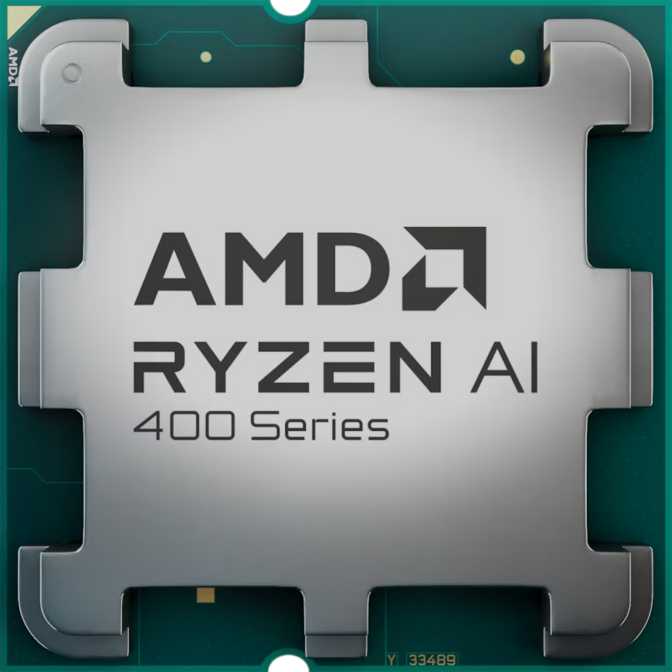
AMD Ryzen AI 5 435G Review: A GPU-Free Desktop Build Done Right
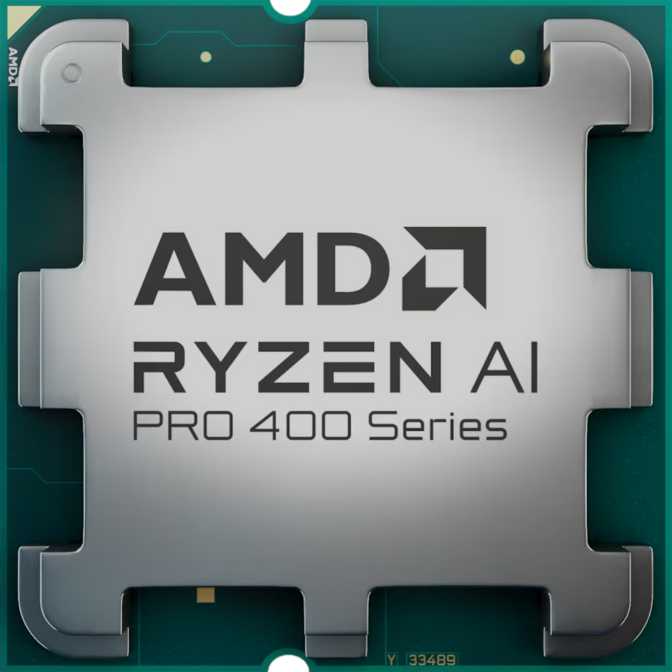
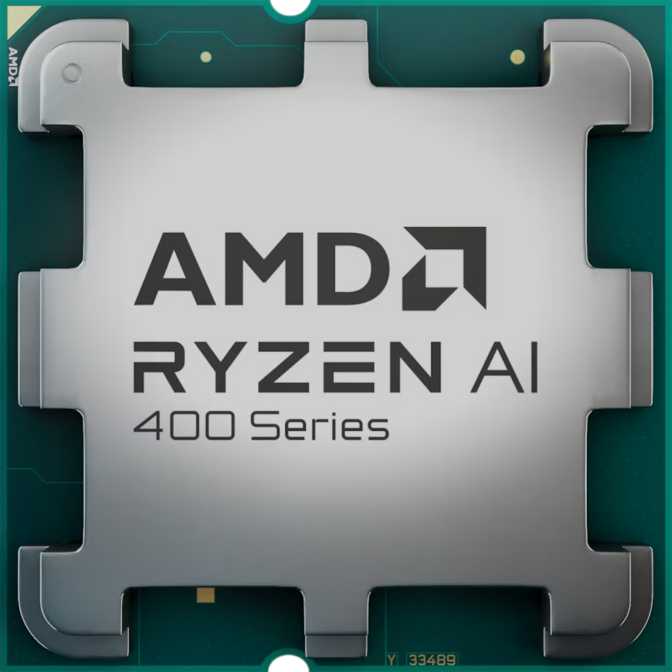
CPUsThe desktop processor market has quietly shifted. For years, builders choosing compact or budget-conscious systems faced a stark choice: pay extra for a discrete graphics card, or settle for weak integrated graphics that struggled beyond spreadsheets. The AMD Ryzen AI 5 435G challenges that premise directly — combining a capable six-core CPU with genuinely usable integrated graphics on AMD's modern AM5 platform, all within a 65W thermal envelope that demands neither exotic cooling nor an overbuilt power supply. This isn't AMD's flagship, and it doesn't pretend to be — but for a specific type of builder, it may be exactly the right chip.
| AMD Ryzen AI 5 435G — Full Specifications | |
|---|---|
| Socket | AM5 |
| Process Node | 4 nm |
| Cores / Threads | 6 Cores / 12 Threads |
| Base Clock | 2.0 GHz |
| Boost Clock | 4.5 GHz |
| L1 / L2 / L3 Cache | 480 KB / 6 MB / 8 MB |
| Integrated Graphics | Radeon 840M (up to 2,800 MHz) |
| Memory Type | DDR5, Dual-Channel, up to 5,600 MHz |
| Max Memory | 256 GB |
| ECC Support | Yes |
| TDP | 65 W |
| Max CPU Temperature | 95 °C |
| PCIe Version | PCIe 4.0 |
| Overclocking | Yes (Unlocked Multiplier) |
| Compatible Chipsets | B840, B850, B650, X670, X870 |
Design and Platform: What the AM5 Socket Means for Your Build
A Modern Foundation
The Ryzen AI 5 435G is built on AMD's AM5 socket — the same platform that hosts AMD's most powerful desktop processors. AM5 is positioned as a long-term platform, meaning the motherboard you buy today carries a credible upgrade path to more powerful processors in the future.
Compatibility extends across five chipsets from entry-level to enthusiast. A mid-range B650 or B850 board unlocks everything this processor offers without unnecessary cost overhead. Enthusiasts already on X670 or X870 will slot the chip in without compromise.
All supported AM5 chipsets
Process Node and Efficiency
Fabricated on a 4-nanometer process, the 435G benefits from one of AMD's most refined manufacturing nodes. A smaller process node means more transistors in less physical space — which translates directly to more performance per watt and lower heat for a given workload.
The 65W Thermal Design Power reflects this efficiency fully. A quality 120mm air cooler running at modest fan speeds will handle all typical workloads. The 95°C maximum temperature ceiling is AMD's standard for modern Ryzen chips — you'll never approach it under appropriate cooling.
Core Performance: Six Cores in the Real World
Speed Where It Counts
The Ryzen AI 5 435G runs six physical cores, each capable of handling two tasks simultaneously through AMD's multithreading technology — giving the operating system twelve logical processors to schedule work across. For everyday computing, moderately complex content creation, and productivity workloads, twelve threads is genuinely comfortable: enough to keep a browser with dozens of tabs, background system processes, and a foreground application all moving without perceptible slowdown.
The base clock is conservative by design, optimized for efficiency at light loads. Under real demand the processor accelerates dramatically through its boost mechanism, reaching 4.5 GHz on its fastest cores. The unlocked clock multiplier is a notable inclusion at this tier — users willing to explore their motherboard firmware can push frequencies beyond AMD's factory defaults, a feature typically reserved for higher-priced, performance-oriented chips.
Cache Architecture
The processor carries three levels of embedded cache — fast memory banks built directly into the chip that serve frequently needed data without the latency of reaching out to system RAM. The second cache tier contributes 1 megabyte per core across all six cores, totaling 6 MB of fast L2 storage. The third tier provides 8 MB of shared space accessible to all cores collectively. Applications that repeatedly access the same data — compilers, code editors, and media encoders working on a single project — benefit most visibly from this architecture. The hierarchy here is appropriately sized for the chip's target workload range.
What It Handles Well — and Where It Has Limits
- Office productivity, complex spreadsheets, and document processing
- Web browsing, video conferencing, and simultaneous streaming
- Light photo editing and RAW processing in mainstream applications
- Software development and compiling moderate-sized codebases
- Home server tasks and 1080p media transcoding
- 3D rendering with high scene complexity
- Video encoding of 4K footage at fast presets
- Running multiple virtual machines simultaneously
- Professional audio production with very high plugin counts
Integrated Graphics: The Radeon 840M Explained
The built-in graphics on this chip are the primary reason many builders will select it over a non-G variant. The Radeon 840M runs at up to 2,800 MHz at peak — a high clock speed for an integrated GPU that reflects AMD's RDNA architecture powering the graphics block. To set expectations clearly: this is not a discrete GPU replacement. It is, however, the most capable category of integrated graphics available in desktop processors at this tier, and it shows.
What the 840M Handles Comfortably
- 4K video playback without frame drops or tearing
- Casual gaming at 1080p medium settings in less demanding titles
- Hardware-accelerated video export in AMD-supported applications
- Multiple display output without productivity performance loss
Where a Discrete GPU Still Wins
- Competitive or graphically intensive gaming at high settings
- GPU-accelerated creative workloads — 3D, compositing, ML inference
- High frame-rate gaming above 60fps in modern titles
Memory: DDR5 Performance and a Generous Ceiling
The Ryzen AI 5 435G is a DDR5-only processor — both a platform requirement and a performance advantage. DDR5 running at up to 5,600 MHz in dual-channel configuration is what this chip is tuned to work with. The higher bandwidth also has a direct, measurable benefit for integrated graphics performance: the GPU shares the same memory pool as the CPU, so faster RAM translates into noticeably more responsive graphics output. Always install memory in a matched pair across two slots rather than a single stick — this doubles available bandwidth and is essential for performance-sensitive use.
Error-correcting memory modules can be used with the 435G, a feature that matters most for home servers, NAS systems, and any workload where data integrity takes precedence over raw speed. ECC memory detects and corrects single-bit memory errors before they can corrupt data — it's an uncommon inclusion at this price tier and a genuine differentiator for builders with always-on workloads.
Security, Instruction Sets, and Software Compatibility
The 435G supports a comprehensive set of modern processor instruction sets. These determine how well the chip cooperates with specialized software — from encrypted communications to machine learning frameworks and scientific computing tools.
Encrypted communications, secure file storage, and VPN connections run through dedicated hardware rather than general compute cycles — making encryption fast and effectively free in terms of performance overhead.
Full compatibility with modern scientific computing software, machine learning frameworks, and media applications optimized for current-generation processors. No software workarounds or compatibility compromises.
Prevents certain malware categories from executing code in memory regions designated for data. A baseline requirement for modern operating systems — a platform hygiene standard rather than a differentiating feature.
Thermal Reality and Power Draw
At 65W TDP, the Ryzen AI 5 435G is accessible to a wide range of build configurations. It runs cool enough for compact cases with limited airflow, efficient enough for smaller power supplies, and quiet enough under modest coolers to suit a living room or bedroom environment — making it a natural candidate for home theater PCs and near-silent workstations alike.
Cooling Guidance
- A quality 120mm air cooler with a low-RPM fan profile handles all typical workloads
- Compact cases with moderate airflow are entirely sufficient for most users
- Near-silent builds are achievable with a quiet fan profile and appropriate thermal paste
- 240mm liquid cooling is unnecessary and adds cost without meaningful benefit here
Power Limit Note for Enthusiasts
Some high-end B650 and X670 boards allow power limits to be relaxed beyond 65W in firmware, which can extract more sustained all-core performance under heavy loads. Whether this is worthwhile depends on your cooling setup and primary workload.
For most users, running within the default 65W specification is the correct starting point — it yields a quiet, cool system that uses electricity efficiently, particularly relevant for builds running around the clock.
Who Should Buy the Ryzen AI 5 435G
Well-Matched For
-
Home Theater PC BuildersSmooth 4K playback, streaming, and light gaming from a compact, quiet, efficient system — no discrete GPU required.
-
Office and Productivity WorkstationsOffice applications, video conferencing, and document processing handled without effort or thermal drama.
-
Home Server and NAS BuildersECC memory support and efficient 65W continuous operation make this an excellent always-on chip for data integrity workloads.
-
Budget and Mid-Range Desktop BuildersSkip the immediate GPU cost without sacrificing graphics capability — the 840M delivers genuine usability.
-
First-Time PC BuildersAM5 platform, real upgrade flexibility, and no GPU purchase required on day one.
Not the Right Fit For
-
Serious PC GamersA dedicated GPU paired with a non-G Ryzen processor will significantly outperform this in graphically demanding titles. The 840M is not a gaming GPU substitute.
-
Creative ProfessionalsHeavy 3D rendering, 4K video production, and large-scale compositing demand more cores and dedicated GPU compute capability than this chip provides.
-
Maximum Performance SeekersIf raw per-core speed or sustained all-core throughput is the top priority, AMD's higher-tier Ryzen offerings deliver meaningfully more.
How It Compares to the Alternatives
The 435G doesn't exist in a vacuum. Understanding how it stacks up against logical alternatives helps clarify whether its specific balance of trade-offs serves your intended build.
| Consideration | Ryzen AI 5 435G (This Review) |
Non-G Ryzen 5 (AM5) |
Intel Core i5 (LGA1851) |
|---|---|---|---|
| Integrated GPU | Radeon 840M (capable) | Minimal or none | UHD / Arc (varies) |
| Core / Thread Count | 6C / 12T | 6C–8C / 12T–16T | 6C–10C / 12T–20T |
| DDR5 Support | |||
| ECC Memory | Yes | Typically No | Typically No |
| Platform Longevity | AM5 — Long-term | AM5 — Long-term | LGA1851 (newer) |
| Overclocking | Unlocked | Depends on SKU | Depends on SKU |
| GPU Add-In Needed? | No — iGPU is viable | Almost certainly yes | Depends on workload |
Non-G Ryzen 5 variants often offer more CPU cores for the same or lower price, but leave you dependent on a discrete GPU. Against Intel's equivalent desktop lineup, AMD's AM5 upgrade path and RDNA-based integrated graphics give the 435G clear advantages in GPU-free builds.
Honest Assessment: Strengths and Weaknesses
The Ryzen AI 5 435G's strongest asset is coherence. Every specification on the sheet works together toward a clear purpose: a power-efficient, platform-flexible desktop chip that makes GPU-free builds genuinely viable. Nothing feels bolted on or mismatched.
The 4nm process keeps heat manageable and efficiency high. The AM5 socket provides a real upgrade path. The Radeon 840M handles display output and light graphics work without embarrassment — which is more than can be said for most competing integrated solutions at this tier.
ECC memory support is an unusual gift at this price tier — small business users and home server builders will genuinely value it. The unlocked multiplier gives technically inclined users something to work with when they want more out of the chip.
The core count is modest. Buyers who multitask aggressively across compute-heavy applications, or who plan to use this chip as the engine of a workstation rather than a general desktop, will find six cores filling up sooner than they'd like.
The base clock frequency is conservative — the chip relies heavily on its boost behavior to perform at peak. This means sustained all-core workloads may see average frequencies noticeably lower than the headline turbo figure suggests over extended periods.
Overclocking can partially address this, but it requires compatible motherboard settings, appropriate cooling, and technical comfort. It's not a path for every buyer, and it shouldn't be treated as a guaranteed performance floor.
Questions Buyers Ask Before Purchasing
Final Verdict
The AMD Ryzen AI 5 435G is a processor with a clear, honest identity. It exists for builders who want a complete, capable desktop system without the complexity and cost of a discrete graphics card — and who are doing so on a platform with genuine upgrade longevity built in from the start.
It is not trying to compete with AMD's Ryzen 7 or 9 lineup on core count or raw throughput, and evaluating it on those terms misses the point entirely. Evaluated on its own terms — a 65W, GPU-integrated, ECC-capable, overclockable AM5 desktop chip — it covers its intended ground well and leaves very little room for complaint from its target audience.
- You're building a compact desktop, HTPC, or budget productivity workstation
- Avoiding a day-one GPU purchase is a financial or practical priority
- You want a home server with ECC memory support and low continuous running costs
- Platform longevity and future CPU upgrade flexibility matter to your build plan
- Gaming performance is your primary goal — a dGPU pairing consistently wins here
- Your workload consistently demands more than six cores of sustained compute capacity
- Maximum single-threaded or all-core throughput is your absolute top priority