Zebronics Zeb-Juke Bar 1600 Review: Premium Codecs, Budget Price
SoundbarsMost entry-level soundbars make the same promise: spend a little, get a lot more than your TV's built-in speakers. The Zebronics Zeb-Juke Bar 1600 makes that same promise — then surprises you by including Bluetooth audio codec support that belongs, by rights, in a product category above this one. That single technical strength shapes everything interesting about this soundbar, but it sits alongside a list of deliberate omissions that will make or break the purchase for most buyers. Read this before you decide.
At a Glance
Key facts before diving into the detail
Build, Dimensions, and Physical Character
What it looks and feels like before you press play
A Slim, Lightweight Form Factor
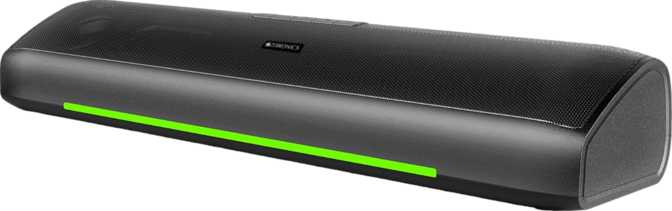
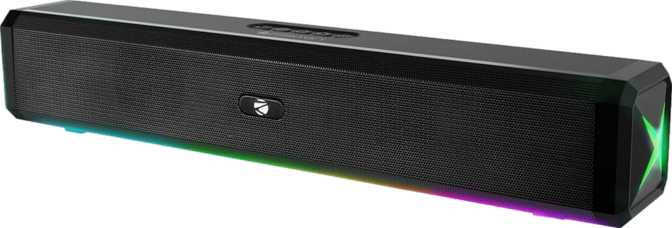
The Juke Bar 1600 is compact in every dimension. At exactly 50 centimeters wide — roughly the width of an adult's armspan — it fits comfortably beneath a 40- to 55-inch television without protruding awkwardly past the screen's edges. The height barely clears 7.7 centimeters, which means it will not block the lower portion of most TV screens when placed in front of the set. The depth comes in at just under 7 centimeters, making wall-mount installation or shelf placement clean and unobtrusive.
At 815 grams — close to the weight of a large hardcover book — this is a genuinely light unit. That makes repositioning effortless and keeps wall-mount hardware requirements minimal. The enclosure volume, derived from those tight dimensions, sits in a range where the internal drivers have adequate breathing room for their size. This matters more than most spec sheets acknowledge: a physically cramped enclosure compresses the air the drivers need to work against, which restricts bass output regardless of driver quality. The Juke Bar 1600's dimensions suggest Zebronics made reasonable acoustic decisions here rather than packaging the internals into the smallest possible box.
Controls and the Remote Question
There are physical control buttons on the unit itself and nothing else. No remote control is included. No companion smartphone app exists to compensate. This is worth stating plainly because it is a defining daily reality of owning this soundbar, not a minor footnote.
Living Room Setup? Think Carefully.
In a desktop or bedroom context where the soundbar sits within arm's reach, physical-only controls are entirely unremarkable. In a living room setup where the soundbar lives three meters away beneath a wall-mounted screen, walking over to adjust volume every time becomes an entrenched inconvenience. There is no workaround.
The decision to omit a remote is deliberate — it is one of the costs of the low price point — and prospective buyers should picture their exact setup before accepting it.
Audio Performance: What Stereo at This Power Output Means
Thirty watts, two channels, and what that translates to in a real room
Output Power and Room Suitability
Thirty watts of total power, divided equally between two channels, sits in a range that is appropriate for small to medium room environments. A compact living room, a dedicated bedroom, or a home office setup will be comfortably filled at moderate to high listening levels. The Juke Bar 1600 is not designed to compete at high volumes in large open-plan spaces, and expecting it to cover a sprawling room will leave you disappointed.
For rooms up to roughly 15 square meters, the output is well-matched to realistic usage. The equal power split between channels is a meaningful detail — each channel gets its full 15 watts, so neither the left nor the right side is compromised for the benefit of a center channel or a subwoofer that does not exist. The energy is channeled entirely into stereo playback.
The Case for Stereo — and Its Limits
Two-channel stereo output means your ears receive distinct left and right audio information. When you watch a film with an active sound mix — a car passing from left to right across the screen, a character speaking from the far side of the frame — the Juke Bar 1600 renders those positional cues. The same applies to music, where the stereo field that a mixing engineer carefully constructed is preserved rather than collapsed into mono or a fake-sounding simulation.
Important for Home Cinema Buyers
The Juke Bar 1600 does not support Dolby Digital, Dolby Atmos, DTS, or any multi-channel audio processing. There is no surround mode and no virtual 3D processing. It represents a step forward from TV speakers — but not an arrival at cinematic audio. Set expectations accordingly.
Wireless Audio Quality: The Specification That Sets This Soundbar Apart
Three codecs, one significant advantage over the competition at this price point
Bluetooth audio quality is not a fixed quantity. The codec — the method used to compress and transmit audio wirelessly — determines how much audio information survives the journey from your phone to the speaker. The Juke Bar 1600 supports three codecs: standard aptX, aptX Adaptive, and AAC. For most budget soundbars, the default is SBC — the lowest-quality option. Not here.
aptX
Baseline High-QualityThe foundational improvement over the default SBC compression that most budget devices use. aptX compresses audio at a fixed high bitrate designed for faithful listening quality. Most current Android smartphones and many laptops transmit aptX natively, so simply owning this soundbar automatically produces cleaner, more detailed wireless audio than most of its direct competitors offer.
aptX Adaptive
Headline FeatureA next-generation codec that operates with a variable bitrate — scaling up when the wireless environment is clean, stepping down gracefully when interference appears. The audio resolution it supports exceeds what standard aptX can carry, making it particularly relevant for listeners streaming high-quality music sources. If your phone or laptop supports aptX Adaptive, the perceptible difference in wireless audio quality is real and worth having.
AAC
Apple Device SupportThe codec Apple devices prefer. iPhones, iPads, and Macs default to AAC for Bluetooth audio, and standard SBC fallback noticeably degrades the listening experience on these devices. The Juke Bar 1600's native AAC support means Apple users get proper high-quality wireless audio without that compromise.
Bluetooth 5 Connection Reliability
Bluetooth 5 provides a stable connection across typical indoor distances — through a wall, across a large room, or in a space with multiple competing wireless devices. Once the initial pairing is completed via the device controls, the soundbar will reconnect to a previously paired device without manual intervention.
There is no NFC one-tap pairing shortcut, so the first connection requires navigating the Bluetooth settings menu on your phone or laptop in the standard way — a 30-second process rather than an instant tap, but not an ongoing friction point.
Connectivity: The Hard Limits
What you can and cannot connect — and why it matters
Bluetooth-Only — No Wired Fallback
This is the specification that requires the clearest communication of any feature in this review. The Zeb-Juke Bar 1600 connects to source devices exclusively via Bluetooth. There is no AUX input, no HDMI port, no HDMI ARC capability, no optical digital input, and no Wi-Fi. Every device you want to use with this soundbar must pair with it wirelessly.
The key check before buying: Does your TV transmit audio output via Bluetooth? Current smart TVs generally do. Older televisions frequently do not. If your TV lacks Bluetooth audio output, this soundbar offers no alternative connection path and cannot serve that use case at all.
No Smart Ecosystem Participation
The Juke Bar 1600 operates entirely outside smart home ecosystems. It does not support Google Assistant, Amazon Alexa, or Apple Siri. It has no Chromecast, AirPlay, or Spotify Connect integration. There is no Wi-Fi radio of any kind. It cannot be addressed by voice, added to a multi-room audio group, or controlled from a smart home hub.
For buyers who want a soundbar that integrates into an evolving connected home setup, this is a complete stopping point. For buyers who prefer a discrete, self-contained audio device with no app dependencies and no network footprint, it reads differently — as simplicity rather than limitation.
Not Supported
- AUX / 3.5mm input
- HDMI / HDMI ARC
- Optical (S/PDIF) input
- Wi-Fi connectivity
- Google Assistant / Alexa / Siri
- Chromecast / AirPlay
- Spotify Connect
What Is Supported
- Bluetooth 5.0 wireless connection
- aptX Adaptive codec
- aptX codec
- AAC codec (Apple devices)
- On-device physical controls
Power and Daily Operation
The Juke Bar 1600 requires a continuous mains power connection to operate. It is not a portable device and has no internal battery. This means it belongs in a fixed location with reliable access to a wall socket — the standard assumption for a home soundbar.
The benefit of mains power is consistent amplifier performance. There is no gradual audio quality degradation as a battery depletes during long listening sessions, and no need to think about charging cycles. Plug it in once, and the power supply is one less variable to manage.
Who This Soundbar Is For — and Who It Is Not
Matching the product to the right buyer is the most important part of any purchase decision
The Right Buyer
-
Music streamers with compatible devices
If you stream music from a phone or laptop that supports aptX or aptX Adaptive, the wireless audio quality here is above what most products at this price point offer.
-
Desk and bedroom setups
In a context where the soundbar sits close enough for on-device controls to be convenient, the absence of a remote is unremarkable.
-
Buyers who value simplicity
No apps, no accounts, no network configuration. Pair a device and press play.
-
Small to medium room audio
The output power is well-matched to compact living rooms, dedicated bedrooms, and home offices.
The Wrong Buyer
-
TV-primary users without Bluetooth audio output
If your television cannot transmit audio wirelessly, this soundbar has no way to connect to it. Verify before purchasing.
-
Remote control expectations
There is no remote and no app workaround. If this is a living room soundbar placed several meters from where you sit, the inconvenience will compound daily.
-
Smart home or voice assistant integration
This soundbar does not participate in those ecosystems in any form.
-
Surround sound or home cinema audio
Two-channel stereo output without any spatial processing will not satisfy this need.
Competitive Positioning
How the Juke Bar 1600 stands in its category
The budget soundbar category typically offers an AUX input and a basic remote as standard, while defaulting to low-quality SBC Bluetooth. The Juke Bar 1600 inverts this pattern: it sacrifices the AUX input and the remote to deliver Bluetooth audio quality that competitors at this price level simply do not match. Competitors often include "Dolby" or "DTS" branding as a marketing point at this price tier. The Juke Bar 1600 makes no such claims — an honest restraint that reflects what the hardware can genuinely deliver.
| Feature | Zeb-Juke Bar 1600 | Typical Budget Soundbar |
|---|---|---|
| Bluetooth Audio Codecs | aptX, aptX Adaptive, AAC | SBC only or SBC + basic aptX |
| Wired Input | None | AUX (3.5mm) standard |
| Remote Control | Not included | Usually included |
| Smart Integration | None | Occasionally Alexa / Google |
| Total Output | 30W stereo | 20–40W (varies by model) |
| Wi-Fi | Not supported | Rarely at this price tier |
| Surround Processing | None (honest stereo only) | Often marketed as "virtual surround" |
Honest Assessment: Strengths and Real Weaknesses
A balanced look at what the Juke Bar 1600 actually delivers
The Juke Bar 1600's strongest argument is the Bluetooth audio codec stack. aptX Adaptive in particular is a specification that belongs in a higher price tier, and its presence here meaningfully elevates the wireless listening experience for compatible devices. Music listeners with current mid-range or flagship Android phones will hear the difference compared to a soundbar running basic SBC. This is the product's genuine, justified selling point.
The compact form factor and low weight are practical strengths. The slim profile accommodates placement in constrained spaces, the light weight simplifies mounting, and the clean footprint avoids dominating a shelf or desk surface.
The weaknesses require the same directness. The complete absence of any wired input is a hard constraint. Buyers who need an AUX connection as a fallback for a TV without Bluetooth output, or who own a laptop with no Bluetooth, will find themselves with a soundbar they cannot connect to their primary device. This is not a minor inconvenience — it is a fundamental incompatibility that cannot be worked around.
The missing remote control is a design choice, not an oversight, and in a living room context it creates daily friction. No smartphone app compensates for it. There is no EQ tuning, no bass or treble control, no sound mode selection available from a distance.
The stereo-only audio output is appropriate and honest given the hardware, but buyers conditioned to expect at least simulated surround from any soundbar should calibrate expectations accordingly.
Answers to the Questions Buyers Actually Ask
The questions people search for before making this purchase
Final Verdict
Our clear, direct purchase recommendation
The Zebronics Zeb-Juke Bar 1600 is a focused, unambiguous product. It does one thing better than most of its competition: wireless audio quality via advanced Bluetooth codecs. For music listeners who stream from aptX or aptX Adaptive-compatible devices, that advantage is audible, real, and meaningfully above what most soundbars at this price point can claim.
Everything else about this soundbar reflects deliberate simplification. No wired inputs, no remote, no smart features, no surround processing. These are not flaws in the design — they are the design. The question is whether that specific combination of one genuine strength and several significant omissions maps onto your actual use case.
Buy It If...
- You stream music wirelessly from a compatible device
- Your setup keeps the soundbar within comfortable reach
- You have no requirement for wired connectivity or a remote
Pass On It If...
- Your television lacks Bluetooth audio output
- You expect a remote as part of the package
- You need the soundbar for anything beyond direct Bluetooth playback
For the buyer who fits its exact profile, the Juke Bar 1600 delivers wireless audio quality that earns it a genuine recommendation. For everyone else, the missing features will surface as frustrations quickly enough to make a more versatile alternative the smarter long-term purchase.