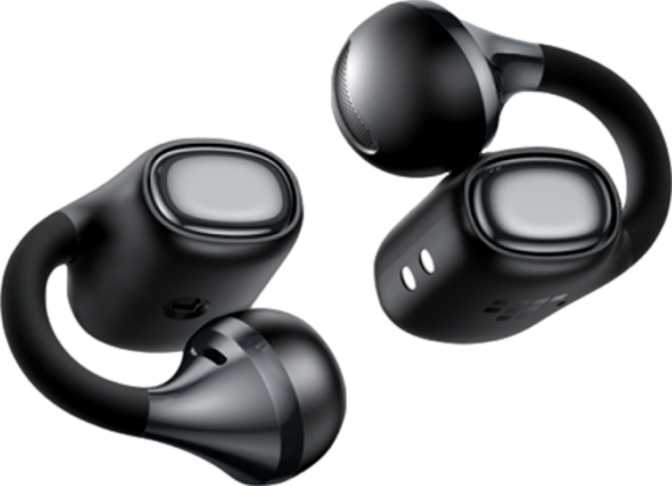
Tronsmart OpenFly Clip 2: Full Review of the Open-Ear Clip Earbuds
Wireless EarbudsEditorial Rating
out of 5 — Open-Ear Earbuds
Why the Open-Ear Format Changes Everything
Open-ear audio has become one of the most requested categories in personal audio because it solves a problem sealed earbuds fundamentally cannot: letting you stay connected to the world while you listen. Commuters who need to hear traffic, remote workers on back-to-back calls, runners who refuse to sacrifice situational awareness — all of them want music and calls without cutting themselves off from the environment around them.
Traditional answers included bone conduction earbuds, but that technology routes audio through vibrations in the cheekbone rather than through a conventional acoustic driver — a fundamentally different process that most listeners find inferior for music. Clip-on open-ear designs like the Tronsmart OpenFly Clip 2 represent a more capable middle ground: they sit entirely outside the ear canal, deliver real stereo audio from actual dynamic drivers, and let ambient sound flow through naturally.
What Sets This Model Apart at This Price
The OpenFly Clip 2 enters this space with a specification list that punches above what its price tier typically offers: Bluetooth 6.0, LDAC hi-res audio codec support, a four-microphone call system, and a total battery system that covers most people's entire work week. Whether those features translate into genuine real-world advantage is exactly what this review examines.
Design and Build: Clip-On Comfort, Day After Day
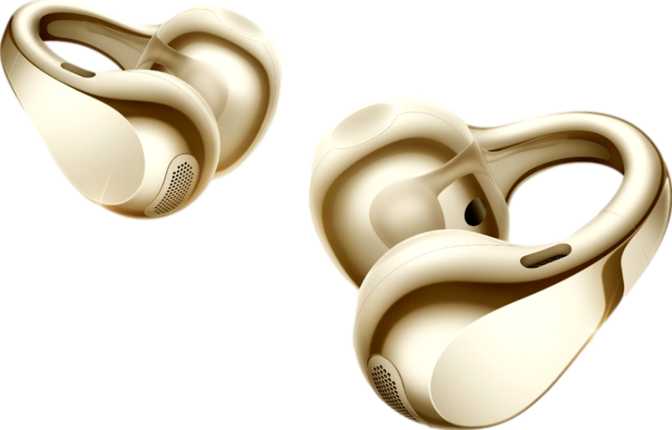
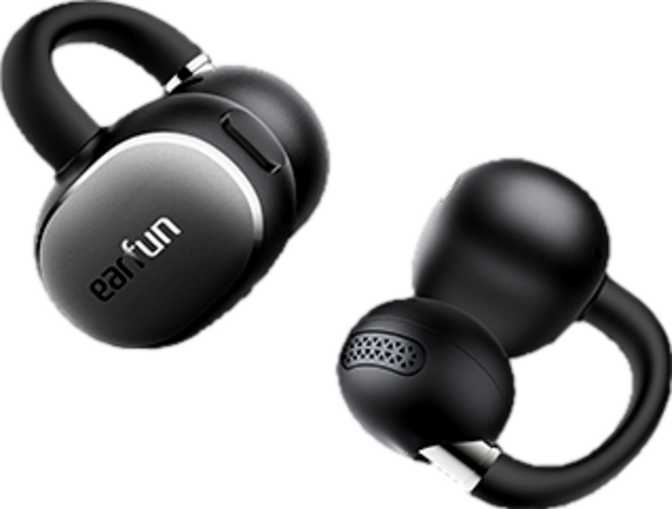
The defining characteristic of the OpenFly Clip 2 is how it attaches to the ear. Instead of sitting inside the ear canal like conventional earbuds, or resting on top of the ear with foam pads, the clip mechanism hooks around the outer ear and positions the acoustic driver just outside the canal opening. No ear tips to select, no silicone wings to fidget with, and no foam pressing against your ears throughout the day.
Three Comfort Advantages of the Clip Design
-
Long-Session EnduranceWithout canal pressure or head clamping force, there is no earphone fatigue after a few hours. People who find conventional earbuds painful after 90 minutes typically wear clip-on designs for four to five hours without registering any discomfort.
-
Ear Canal HygieneBecause nothing enters the ear canal, wax buildup and pressure sensitivity are non-issues. Particularly relevant for anyone with narrow canals, sensitivity to in-ear pressure, or who wears earbuds through a full workday.
-
Awareness Is the Feature, Not a Trade-OffYou hear everything around you at full volume because the audio path to your ear is not blocked. This is an intentional design choice, not a shortcoming — situational awareness is the entire point of the format.
IPX5 Water Resistance Explained
IPX5 means these earbuds handle water jets from any direction — more than sufficient for rain, workout sweat, and the occasional splash. Submersion is not covered, so swimming or showering while wearing them is off the table. For outdoor exercise and daily commuting, this rating is exactly appropriate.
No Noise Isolation — by Design
The OpenFly Clip 2 has no active noise cancellation and no passive noise reduction — both would be architecturally pointless in an open-ear form factor. In a loud gym, on a plane, or in a busy café, these earbuds compete with ambient sound rather than suppressing it. If private listening in loud environments is a priority, this is the wrong product category.
The absence of RGB lighting keeps the design clean and conserves battery life. A travel bag ships in the box — a detail that meaningfully extends the surface finish of the case over months of daily transport.
Sound Quality: Performance and Honest Limitations
The 11mm Driver and What It Delivers
Each earbud houses an 11-millimeter acoustic driver — a generously sized unit for the open-ear format. Larger drivers physically move more air, which matters in a design where low frequencies naturally dissipate rather than being directed into a sealed ear canal. The result is more bass presence than smaller alternatives would provide, though open-ear physics still impose limits on how much impact is achievable. The driver covers the complete spectrum of human hearing, from the lowest audible bass frequency through the upper limit of human perception — confirming the hardware is not artificially range-limited.
LDAC Support: A Standout Specification at This Price
LDAC is Sony's high-resolution audio codec, capable of transmitting audio at up to three times the data rate of standard Bluetooth. When streaming from a compatible source — most modern Android phones, or a streaming app in its highest quality setting — the audio reaching the earbuds is significantly closer to the original recording: less compressed, more detailed. For an open-ear earbud to include LDAC at this price tier is genuinely uncommon. The codec lineup is focused but purposeful:
| Codec | Supported | Quality Tier | Best Device Match |
|---|---|---|---|
| LDAC | Hi-Res (highest Bluetooth audio) | Android phones, hi-res streaming apps | |
| AAC | Good (above baseline) | iPhones, iPads, Apple ecosystem | |
| SBC | Basic (universal fallback) | All Bluetooth devices |
Managing Sound Expectations with Open-Ear
Bass Reality Check
With any open-ear design, bass is the first limitation. Without a sealed acoustic chamber around your ear, low frequencies dissipate into the room before fully reaching your eardrum. The 11mm driver reduces this effect compared to smaller alternatives, but physics cannot be overridden. If bass-forward music — EDM, trap, heavy hip-hop — is your primary listening and physical bass impact matters to you, these earbuds will disappoint compared to any sealed alternative.
Where open-ear earbuds genuinely shine is midrange clarity. Vocals, guitars, podcasts, and spoken word come through with a natural, airy quality that sealed earbuds can make sound slightly compressed or confined. Spatial imaging also tends to feel wider and more natural, because your ears still receive ambient room cues alongside the audio signal — an unexpected advantage of the open format for certain listening genres.
Battery Life: Enough for the Full Work Week
Earbud Playback
Case Capacity
Total System
Full Recharge
What Those Hours Mean Day-to-Day
The earbuds deliver eight hours of continuous playback — matching the full length of a typical office workday of background listening. The case stores enough additional power to refill the earbuds three times over, pushing the total system endurance to 32 hours before you need a wall socket.
- Office listeners using eight hours of background audio per day use exactly one full earbud charge.
- Commuters averaging two hours of listening daily get four days from a single earbud charge before the case is needed.
- Most users can complete a full work week on the total system without plugging in at a desk at all.
Charging Hardware
USB-C is the charging interface — the current standard, and worth confirming given some earbuds still ship with older connectors. Fast charging is supported, meaning a short top-up delivers meaningful playback time without waiting through a full cycle. A battery level indicator on the case lets you check remaining charge without pairing to a phone or opening an app.
Bluetooth 6.0 and Multipoint: Better Than Expected
Bluetooth 6.0
Bluetooth 6.0 is the most recent major specification update to the standard. The practical upshot is improved connection stability, reduced audio latency, and better performance in environments where many wireless devices compete on overlapping frequencies simultaneously. Crowded offices, commuter trains, airports, and convention halls are exactly where older Bluetooth versions introduce dropouts or lag. The standard wireless range of 10 meters — roughly 33 feet — covers the typical pattern of leaving your phone on a desk while you move freely around a room.
Dual-Device Multipoint
Multipoint keeps the OpenFly Clip 2 actively paired to two devices at once. The most common scenario: music plays from a work laptop, an incoming call on your phone triggers an automatic switch to the phone, and when the call ends, audio returns to the laptop without manual intervention. This removes a daily friction point for anyone who moves between a work computer and a personal phone throughout the day — and that describes most remote workers today.
Call Performance: Four Microphones Do the Heavy Lifting
Open-ear earbuds carry a built-in microphone challenge: the ambient sound you hear unobstructed also reaches your microphone array. The OpenFly Clip 2 addresses this with a four-microphone system that exceeds what most competitors in this category deploy. By using dedicated microphones as ambient noise reference signals, the array separates your voice from the surrounding environment before it reaches the person on the other end of your call.
Physical Controls and Day-to-Day Interaction
Controls are located on the earbuds' body with no inline remote cable in this fully wireless design. One gap worth noting clearly: the OpenFly Clip 2 has no in-ear detection sensors. Remove one earbud and music continues playing — a small but repeated workflow difference from premium earbuds that automatically pause on removal. It is a minor point, but worth setting the expectation before purchase.
Who Should Buy the Tronsmart OpenFly Clip 2?
This IS Right for You If…
- You need all-day situational awareness. Cyclists, runners, and pedestrians navigating traffic who cannot afford to be acoustically sealed off from the environment.
- Extended wear comfort is the priority. Office workers wearing earbuds six to eight hours straight, or anyone sensitive to the pressure of in-ear designs.
- You make frequent calls while moving. The four-microphone array handles outdoor and ambient-noise call conditions better than most category rivals.
- You're on Android and value audio quality. LDAC support at this price is rare in open-ear earbuds and makes an audible difference on compatible devices.
- You work across multiple devices simultaneously. Multipoint removes the daily friction of manually re-pairing between a laptop and a phone.
This is NOT Right for You If…
- You need noise isolation. Flight travelers, loud-transit commuters, or anyone who genuinely needs to block the environment should look at sealed in-ear or noise-canceling over-ear designs.
- Bass impact is essential. Bass-forward genres like EDM, trap, and heavy hip-hop will sound noticeably thinner than any sealed earbud alternative.
- You rely on wireless charging. Qi pad support is absent — USB-C only, no exceptions.
- You need long-range wireless coverage. The 10-meter range is standard; larger homes or offices where you wander far from your source device may hit dropouts.
How the OpenFly Clip 2 Stacks Up Against Alternatives
Three distinct categories compete for the same open-ear buyer. Here is how the OpenFly Clip 2 positions against the most direct alternatives at a comparable price point.
| Feature | Tronsmart OpenFly Clip 2 | Budget Open-Ear Clip | Bone Conduction |
|---|---|---|---|
| Audio Codec | LDAC + AAC | SBC / AAC | SBC (typically) |
| Microphone Count | 4 | 1–2 | 1–2 |
| Bluetooth Version | 6.0 | 5.2–5.3 | 5.0–5.3 |
| Driver Technology | Dynamic 11mm | Dynamic (varies) | Bone vibration transducer |
| Dual-Device Multipoint | Yes | Rarely | Occasionally |
| Water Resistance | IPX5 | IPX4–IPX5 | IPX5–IPX8 |
| Earbud Battery | 8 hours | 6–8 hours | 6–8 hours |
| Total System Battery | ~32 hours | 20–28 hours | N/A (no case) |
Competitor specifications represent typical category averages and may vary by specific model and firmware version.
Honest Assessment: Strengths and Genuine Limitations
Key Strengths
- LDAC at this price point. The most impressive entry on the specification sheet. Most open-ear competitors at this tier do not offer hi-res codec support. The OpenFly Clip 2 does, and it makes an audible difference on compatible Android devices.
- Above-average call microphone system. Four microphones exceed the category average and directly address the ambient-noise challenge that consistently undermines call quality on open-ear designs.
- Competitive total battery endurance. The combined 32-hour system comfortably covers a full work week for most listening habits without a desk charge.
- Bluetooth 6.0 connection stability. Measurably better in congested wireless environments than earbuds on older Bluetooth versions — relevant for the exact places open-ear earbuds are used most.
- Dual-device multipoint. Eliminates a genuine daily friction point for people who move between a laptop and a phone throughout the working day.
Genuine Limitations
- No noise isolation by design. Structural to the form factor, not a product defect — but buyers wanting occasional private listening in loud environments will be disappointed.
- Limited bass response. The open-ear format bleeds low frequencies before they fully reach the ear. Even with an 11mm driver, bass-heavy genres will sound noticeably thinner than any sealed earbud alternative.
- No wireless charging. USB-C only. For a product built for active on-the-go use, the absence of Qi support is a practical gap for users with wireless charging setups.
- No ear detection or auto-pause. Removing one earbud does not pause playback. A minor but repeated friction point in daily use that premium earbuds handle automatically.
- Standard wireless range only. Ten meters covers typical use, but is not suited for wandering far from your source device in a larger home or open-plan workplace.
Frequently Asked Questions
Final Verdict
Our Recommendation
A Compelling Open-Ear Option
The Tronsmart OpenFly Clip 2 succeeds at the primary job of an open-ear earbud and then adds a tier of features that most competitors at this price point simply don't offer. LDAC support is the standout specification — it signals genuine intent to take audio quality seriously in a format that most manufacturers treat as inherently budget-tier. Paired with Bluetooth 6.0 stability and a four-microphone call array, this is a product built for how people actually use earbuds in the real world: across multiple devices, on calls while moving, and throughout a full workday without thinking about charging.
The gaps are real. No noise isolation is structural to the form factor — not a product defect, but a dealbreaker for buyers who occasionally need to block the environment. Limited bass and no wireless charging are practical limitations that matter to specific users. For the buyer whose daily reality matches the open-ear use case, those trade-offs are the price of a format that delivers something sealed earbuds fundamentally cannot.