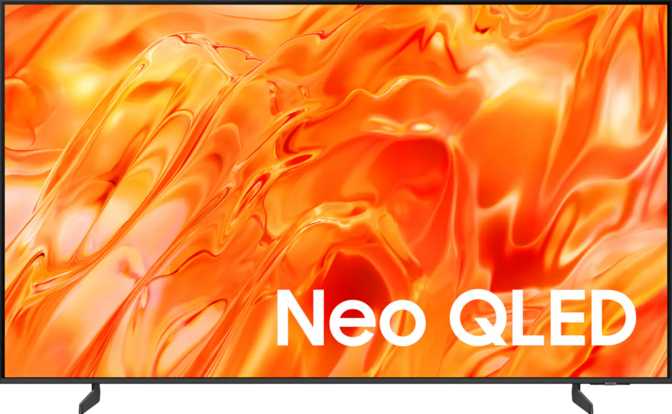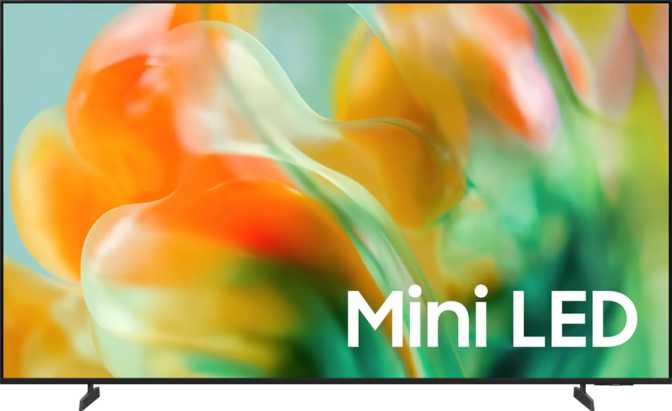
TCL 85P7L 85-Inch QLED TV: Full Review and Honest Verdict
TVsOverall Rating
Based on full specification analysis and real-world usage assessment
- 85-inch QLED 4K with 10-bit color depth
- All four HDR formats: HDR10, HDR10+, Dolby Vision, HLG
- Built-in subwoofer plus Dolby Atmos and DTS:X
- AirPlay and Chromecast both built in simultaneously
- Google Assistant and Amazon Alexa compatible
- 60Hz only — no VRR or 120fps gaming support
There's a specific kind of buyer who searches for an 85-inch TV at this price point: someone who wants cinema-scale presence in their living room without the four-figure premium that usually comes with it. The TCL 85P7L is built squarely for that person. It combines a large-format QLED panel with a surprisingly complete feature set — full HDR format support, a built-in subwoofer, and a smart platform that works with every major voice assistant ecosystem. But big screens expose every weakness as readily as they showcase every strength. This review examines whether the 85P7L delivers on its considerable promise, and where you'll need to set your expectations realistically.
Panel Technology: What QLED Means on a Budget Screen
The 85P7L uses a Quantum Light-Emitting Diode (QLED) display — which is important to understand clearly before you buy. QLED is not the same as OLED. While OLED panels generate their own light at the pixel level (allowing for perfect blacks), QLED is an LCD panel enhanced with a quantum dot filter that sits between the LED backlight and the screen. The quantum dots absorb the backlight and re-emit it at much more precise color wavelengths, producing richer, more saturated colors than standard LED LCD panels at a lower manufacturing cost.
In practical terms: the 85P7L delivers noticeably more vivid, accurate colors than a conventional LED TV in the same price bracket — particularly in reds and greens — but it won't match the black-level depth of an OLED screen. For bright, naturally lit rooms, this trade-off heavily favors QLED. For dark home theater setups where inky blacks define the picture, OLED remains in a different league.
The panel resolves a full 4K image across the 84.6-inch active screen area at 52 pixels per inch. At a typical viewing distance of 10 to 12 feet, the image is sharp and detailed without visible pixel structure. Sitting significantly closer than eight feet may reveal some grain, but at normal furniture distances the image reads as crisp.
| Factor | QLED (85P7L) | OLED |
|---|---|---|
| Black levels | Good | Excellent |
| Brightness | Better | Limited |
| Color saturation | Very good | Excellent |
| Bright room use | Yes | Challenging |
| 85-inch price | Accessible | Premium |
Brightness, Contrast, and HDR Performance
Brightness
Enough for comfortable daytime viewing in moderately lit rooms with curtains drawn or indirect light. Rooms flooded with direct sunlight will wash out highlights even with the anti-reflection coating present.
Contrast
Dark scenes render with discernible shadow detail rather than crushed, indistinct blacks. Bright highlights pop without bleeding into surrounding areas — considerably better than what budget LED panels at this price typically achieve.
HDR
All four primary HDR standards are supported, so the TV never falls back to a less-capable format. Most TVs in this class cover HDR10 and maybe Dolby Vision — adding HDR10+ as well puts the 85P7L in a stronger position.
All Four HDR Formats Supported
Color Depth and Accuracy
The 10-bit panel can distinguish over a billion distinct colors — specifically just over 1.07 billion. A standard 8-bit display manages around 16.7 million. The gulf between these numbers is directly visible as smoother gradients in skies, skin tones, and subtle background color shifts throughout a scene.
Banding — the stepped, posterized effect that appears in gradients on cheaper panels — is substantially reduced on a 10-bit display. Combined with the quantum dot layer, this positions the 85P7L well above entry-level 4K panels for color fidelity. The benefit shows most during well-mastered film content, nature documentaries, and anything with complex, gradual color transitions.
Wide viewing angles of 178 degrees both horizontally and vertically mean color and contrast remain consistent whether you're seated directly in front or toward either side — a significant advantage on an 85-inch display in a wide room with multiple seating positions.
Color and Display Specifications
- Color bit depth
- 10-bit native
- Distinct colors
- 1.07 billion
- Standard 8-bit
- 16.7 million
- Horizontal viewing angle
- 178°
- Vertical viewing angle
- 178°
- Anti-reflection coating
- Ambient light sensor
Refresh Rate and Motion Handling
The display refreshes the image 60 times per second. For films, television drama, sports broadcasts, and all mainstream streaming content, this is entirely adequate — the picture looks smooth and natural throughout.
Where this becomes a relevant limitation is gaming. Competing TVs in larger formats sometimes offer 120Hz panels, which halve the time between each frame update and produce noticeably smoother motion during fast camera pans or high-frame-rate game content. The 85P7L does not offer this.
Compounding this for gamers: the TV has no adaptive synchronization technology. VRR (Variable Refresh Rate), which synchronizes the TV's refresh rate to the output of a connected games console or PC to eliminate screen tearing, is absent. PlayStation 5 and Xbox Series X both support VRR natively — it simply won't be engaged here.
- Casual and turn-based games
- RPGs and adventure titles
- Sports and racing sims at 60fps cap
- Competitive FPS at high frame rates
- PS5 / Xbox Series X VRR
- 4K / 120fps console game output
Design and Build: Managing 85 Inches of Screen
Physical Presence in a Room
At just under 1,900mm wide and standing 1,086mm tall including the stand, the 85P7L dominates any wall it faces. The cabinet depth of 63mm is typical for a large LCD panel — slim but not razor-thin. At 31 kilograms, this is a two-person installation job without exception.
Wall mounting requires a second set of hands and wall anchors rated for the load. The TV is VESA-mount compatible, giving flexibility to use third-party wall brackets suited to the weight and wall type. Always use a bracket with a weight rating that exceeds the TV's mass.
Physical Specifications
- Width
- 1,889.6 mm
- Height (with stand)
- 1,086 mm
- Cabinet depth
- 63 mm
- Weight
- 31 kg
- VESA mount
- Compatible
- Operating temperature
- 5°C – 35°C
- Standby power draw
- 0.5W
Audio: A Built-In Subwoofer Changes the Equation
Most flatscreen TVs in this category deliver thin, forward-facing sound that works fine for dialogue but falls flat on anything with bass — explosions, music, film scores. The 85P7L includes a built-in subwoofer alongside its stereo speaker array, which meaningfully changes the baseline audio experience compared to most competitors at this size and price.
The TV supports Dolby Atmos and DTS:X — the two leading object-based audio formats that create a sense of three-dimensional sound placement. It's important to be clear: object-based spatial audio from built-in TV speakers won't replicate what a proper surround system achieves. But Dolby Atmos content decoded through a capable built-in speaker with a subwoofer is a noticeably richer experience than the flat stereo that most flat-panel TVs produce.
For buyers not immediately adding a soundbar, the onboard audio holds its own well at this price. The HDMI eARC port opens the door to a dedicated audio system for those who want to go further — eARC supports lossless Dolby Atmos passthrough from streaming apps, the current standard for premium audio chains.
- Dolby Atmos (object-based spatial audio)
- DTS:X (object-based surround)
- Dolby Digital and Dolby Digital Plus
- Dolby Audio processing
- Stereo speakers with built-in subwoofer
- HDMI ARC and eARC output
- Digital audio optical output
- 3.5mm headphone output
Connectivity: Ports and Wireless
Physical Connections
Three HDMI 2.0 ports handle 4K content at 60fps without issue, covering every major streaming device, games console, and Blu-ray player. Two USB ports support external drives and USB recording. A single ethernet port provides wired network stability — a wise choice for 4K streaming where wireless interference can occasionally cause buffering. The 3.5mm headphone output is a quietly appreciated inclusion that has disappeared from many smart TVs.
| Port | Qty | Notes |
|---|---|---|
| HDMI 2.0 | 3 | Includes ARC and eARC |
| USB | 2 | USB recording supported |
| Ethernet (RJ45) | 1 | Stable wired streaming |
| 3.5mm audio | 1 | Private listening output |
Wireless Capabilities
Wi-Fi coverage spans both 2.4GHz and 5GHz bands. The 5GHz band delivers more than enough bandwidth for 4K HDR streaming with headroom to spare. Bluetooth 5.4 — among the most current implementations available — handles wireless audio output to headphones or soundbars with improved connection stability. Miracast allows direct Android screen mirroring without a network relay.
Smart TV Platform and Ecosystem Compatibility
The 85P7L runs a full smart TV platform with a built-in browser and unusually broad ecosystem compatibility. Voice command support is built directly into the TV — no separate smart speaker is required — meaning search and navigation can happen without picking up the remote. The TV can also be controlled from a smartphone app, useful when the physical remote has gone missing in the sofa cushions.
Cast directly from any Chromecast-compatible app on Android or iOS without extra hardware
Mirror or cast from iPhone, iPad, or Mac without any additional hardware or adapters
Hands-free voice search, content launch, and smart home control
Full Alexa integration for users embedded in the Amazon smart home ecosystem
Ecosystem Support Summary
- Chromecast built-in
- AirPlay
- Google Assistant
- Amazon Alexa
- Smartphone app remote
- Voice commands (built-in)
- Built-in browser
- Siri / Apple HomeKit
- Rechargeable remote
Built-In Broadcast Tuner and USB Recording
The 85P7L supports USB recording — live TV broadcasts can be saved directly to an external USB drive without a separate PVR device. The built-in tuner suite covers terrestrial, cable, and satellite broadcast standards (DVB-T, DVB-T2, DVB-C, DVB-S, DVB-S2), making the TV self-sufficient as a complete broadcast TV solution for cord-cutters who still receive over-the-air or satellite content.
Who Should Buy the TCL 85P7L?
- A lounge-first viewer who wants maximum screen presence for films, sports, and streaming in a moderately lit room without paying a large-format premium
- A family wanting a complete plug-in-and-use TV that handles broadcast TV, all major streaming platforms, USB recording, and voice assistants without extra boxes
- A mixed Apple and Android household where having both AirPlay and Chromecast on one screen eliminates compatibility friction between family members
- An upgrader from a 55" or 65" set who wants to experience the transformation an 85-inch image brings to sports and widescreen cinema before committing to premium pricing
- A cord-cutter who still receives broadcast or satellite TV and wants one screen to handle everything, including recording, without separate hardware
- A competitive or serious gamer — the 60Hz panel and absent VRR support are significant limitations. A 120Hz screen with HDMI 2.1 is the correct target regardless of the extra cost.
- A dark-room cinephile who prioritizes deep blacks above all else — OLED alternatives deliver shadow depth and infinite contrast the QLED panel cannot replicate.
- A buyer in a very bright room with large south-facing windows — the panel will struggle against direct sunlight and the coating only compensates so much.
- An Apple HomeKit user who needs the TV as a connected smart home device — AirPlay works, but the TV won't appear as a Siri or HomeKit-controllable device.
How It Compares to Logical Alternatives
| Feature | TCL 85P7L | Typical 85" Budget LED | Mid-Range 85" QLED |
|---|---|---|---|
| Panel technology | QLED | LED LCD | QLED |
| HDR formats | HDR10, HDR10+, Dolby Vision, HLG | HDR10 only | HDR10, Dolby Vision |
| Refresh rate | 60Hz | 60Hz | 60–120Hz |
| Adaptive sync (VRR) | None | None | Often included |
| Built-in subwoofer | Yes | Rarely | Sometimes |
| Dolby Atmos | Yes | Rarely | Yes |
| AirPlay + Chromecast | Both | Rarely both | Usually both |
| HDMI version | 2.0 | 2.0 | 2.0 – 2.1 |
| HDMI eARC | Yes | Rarely | Yes |
The 85P7L sits in a specific gap: meaningfully above generic budget large-screen TVs in panel quality, HDR breadth, and audio capability, but below premium mid-range screens that add 120Hz, VRR, and higher peak brightness. Its competitive strength is the combination of screen size, QLED quality, and feature completeness at a price where alternatives typically compromise more heavily.
Honest Assessment: Strengths and Limitations
Where It Genuinely Delivers
The 85P7L's genuine strengths are its screen size-to-price ratio, unusually complete HDR format coverage across all four standards, the simultaneous inclusion of both AirPlay and Chromecast, and the built-in subwoofer. These are not taken for granted at this price tier — they represent deliberate choices that benefit daily use in ways that are immediately noticeable.
The broad smart ecosystem compatibility — Google Assistant, Alexa, Chromecast, AirPlay, smartphone remote, and built-in voice commands — makes setup and daily operation straightforward across household members with different device preferences, without requiring anyone to adapt to a single platform.
Where It Falls Short
The 60Hz panel and absent adaptive sync close the door on premium gaming use. The brightness ceiling is acceptable but not aspirational, particularly for HDR content that benefits from headroom to render highlights properly. HDMI 2.0 is adequate for this TV's capabilities but will feel dated sooner than HDMI 2.1 ports would.
The one-year warranty is the industry minimum and reflects the budget positioning. The battery-powered remote — rather than rechargeable — is a minor but recurring inconvenience that more expensive models have addressed. Neither weakness is hidden, but both are worth factoring in before purchasing.
Frequently Asked Questions
Final Verdict
The TCL 85P7L is a well-considered large-screen TV that delivers where it counts for its target audience. An 85-inch QLED panel with 10-bit color, full HDR format support across all four standards, built-in Dolby Atmos with a subwoofer, and dual casting ecosystems is a genuinely strong package at this price.
The compromises are real and consistent with the positioning: 60Hz only, no gaming-grade features, brightness that suits living rooms but not sun-drenched spaces. These aren't hidden weaknesses — they're the expected trade-offs for getting 85 inches of QLED onto the market at an accessible price.
Skip for:Gaming, OLED-level blacks, bright rooms