TCL CrystalClip Review: The Open-Ear Earphone That Translates
Wireless EarbudsMost earbuds force a choice: stay aware of the world around you, or actually hear your music. The TCL CrystalClip challenges that trade-off with an open-ear clip design that keeps you connected to your surroundings while still delivering stereo sound — no silicone tips forced into your ear canal, no isolation from the world you're living in. Add a built-in real-time language translator and you have earphones reaching for a genuinely different use case than the standard commuter ANC bud. Whether that pitch lands depends entirely on who's buying — and this review will tell you exactly which side of that line you're on.
36 Hours Total
Battery Ecosystem
4-Mic Array
Noise-Canceling Calls
Built-In Translator
Real-Time Language
Bluetooth 5.4
Latest Generation
Design and Build: Light, Clip-On, and Sweat-Ready
Physical experience, fit mechanics, and durability
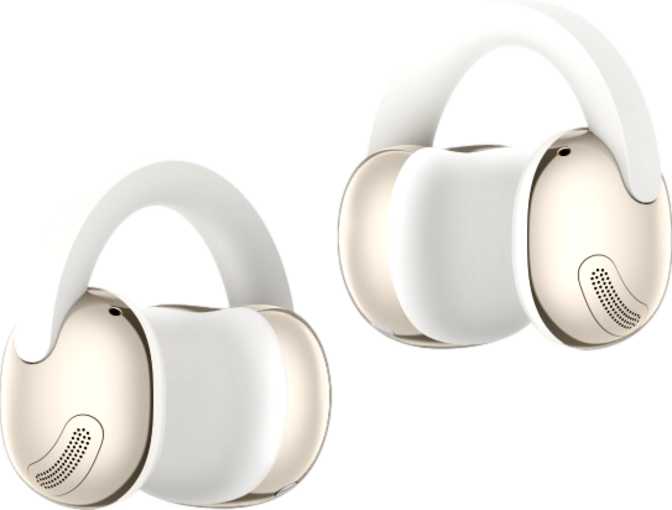
At 11 grams total, the TCL CrystalClip is featherweight — light enough that after a few minutes of wear, you're likely to forget they're there. That's a meaningful quality in an open-ear form factor, where the fit doesn't rely on in-ear seal pressure to stay put. Instead, these earbuds clip directly onto the ear, a style that trades the passive grip of an in-ear tip for a more open, airy wear experience.
The absence of wingtips is worth considering directly. For active use, wingtips are usually what keep earbuds from shifting during movement. Without them, the CrystalClip relies entirely on its clip mechanism — which works well for casual wear and light activity, but deserves scrutiny for anything high-intensity.
The design is clean and minimal: no RGB lighting, no status displays, no unnecessary embellishments. Physical controls sit on the earbud body itself, giving direct access to playback, calls, and other functions without fumbling for a companion app.
Build Specifications
- Fit Style
- Open-Ear Clip
- Total Weight
- 11 g (both earbuds)
- Water Resistance
- IPX4 — sweat & splash
- Wingtips
- Not included
- Cable-Free
- True wireless
- Physical Controls
- On-body panel
IPX4 Protection — What It Means in Practice
The IPX4 rating means the CrystalClip handles sweat and directional splashes without damage. A gym session, a drizzly walk, or a sweaty commute won't hurt them. They are not designed for submersion or sustained heavy rain — think splash-proof, not waterproof.
Sound Quality: Open-Ear Physics and What to Expect
Driver performance, frequency behavior, spatial audio, and codec support
The Open-Ear Trade-Off — Read This First
Because these earbuds sit outside the ear canal rather than sealing inside it, they produce zero passive noise isolation. That's not a flaw — it's the defining feature. You'll hear your music and the world simultaneously. For pedestrians, cyclists, parents, and anyone whose safety or social awareness depends on environmental awareness, this is the entire point. If you want to be sealed off from your surroundings, the CrystalClip is the wrong product.
Driver Performance
The CrystalClip uses a 10.8mm audio driver — a generously sized element for earbuds of this class. Larger drivers typically produce more air movement, which matters for low-end presence and overall sound body. Given the open-ear format, bass will naturally be less pronounced than in a sealed in-ear design (there's no acoustic chamber to amplify low frequencies), but the driver size helps compensate by pushing more physical air.
Frequency coverage spans the full range of human hearing — from the lowest rumble to the highest treble — meaning TCL isn't artificially limiting the audio spectrum. Full-spectrum coverage is the right starting baseline.
Spatial Audio
The CrystalClip supports spatial audio processing, which creates a sense of sound coming from around you rather than from two fixed points in your head. For open-ear listening, this is a particularly natural pairing — your brain is already receiving ambient sound from the environment, and spatial audio helps music integrate into that experience rather than fight against it.
Streaming services and media apps that support spatial audio will benefit most from this feature, making it a genuine value-add for everyday entertainment.
Wireless Audio Codec Support
| Codec | Supported | What It Means |
|---|---|---|
| AAC | Apple-optimized, noticeably better than baseline SBC — solid for streaming and calls | |
| LDAC | High-resolution wireless (Sony codec) — not supported; audiophiles will feel this limit | |
| aptX / aptX HD | Qualcomm's high-fidelity codecs — absent across all aptX variants | |
| aptX Adaptive | Low-latency adaptive streaming — not included | |
| LE Audio | Next-gen Bluetooth audio standard — not supported |
For mainstream listening — podcasts, playlists, video calls — AAC handles the job cleanly. For lossless wireless audio, the CrystalClip is not the tool.
Connectivity: Bluetooth 5.4 in Real-World Use
Wireless generation, range, pairing, and latency
The CrystalClip runs on Bluetooth 5.4 — the current generation of the standard. This means a stable, low-power connection with improved handling of crowded wireless environments compared to older versions, which is relevant in offices, airports, and public transport where dozens of devices compete for the same spectrum.
Fast pairing gets you connected without navigating Bluetooth menus manually — open the case near your compatible phone and the connection happens automatically. The wireless range reaches approximately 10 meters in ideal conditions, covering a normal room or a nearby bag without signal loss. Moving into adjacent rooms or leaving your phone at a distance will test that limit.
Latency — Be Aware Before You Buy
Audio latency sits at 127 milliseconds. For music and podcasts, this is imperceptible — the human ear doesn't notice audio delay in music-only contexts. For video watching, it sits at the edge of noticeable. Casual viewing on most platforms is generally fine; video editing or frame-accurate media work is not a recommended use case.
Connectivity Specs
- Bluetooth Version
- 5.4
- Range (line of sight)
- ~10 m
- Audio Latency
- 127 ms
- Fast Pairing
- Yes
- NFC Pairing
- No
- USB-C Charging
- Yes
- Primary Codec
- AAC
Battery Life and Charging: Practical All-Day Coverage
Earbud endurance, case capacity, charge speed, and format
8 hrs
Per Earbud Charge
A full workday of background listening or a long-haul flight without reaching for the case
36 hrs
Total with Case
Earbuds + case combined; covers most users for 2–3 days of real-world use
1.5 hrs
Full Recharge Time
Via USB-C; fast charging supported for a meaningful rescue charge without waiting
Who the Battery Works Best For
Light daily users — those who listen a few hours per day — can go multiple days without thinking about charging. The case carries enough reserve for roughly three and a half full earbud refills, so even heavier listeners who use the buds throughout the day will find the case covering two to three days of real use.
Fast charging is a practical lifesaver when the case is running low. A brief top-up doesn't require waiting through the full 90-minute cycle — fast charging typically restores meaningful playtime in 15 to 20 minutes.
Charging Limitations to Know
- USB-C universal charging
No proprietary cables or legacy connectors — use any modern USB-C cable
- Battery level indicator included
Check charge status at a glance — no guessing games
- No wireless charging
If a Qi charging pad is your daily routine, the CrystalClip requires you to reach for a cable
The Built-In Translator: A Feature Worth Taking Seriously
What it does, who it's for, and how to frame expectations
This is the CrystalClip's most distinctive capability and the feature that sets it apart most clearly from competitors at its price tier. A built-in real-time language translator allows the earbuds to translate spoken language directly to the wearer — useful for international travel, cross-language business meetings, customer-facing roles where language barriers arise, or simply navigating an unfamiliar country without staring at a phone screen.
For frequent travelers or professionals who regularly navigate multilingual environments, this single feature may justify serious consideration of the CrystalClip over similarly priced alternatives that offer none of it.
Framing Expectations Honestly
The translator works through TCL's companion ecosystem and relies on software processing. It is a genuine, functional feature — not a marketing footnote — but real-world translation quality always scales with language pairs, accents, connection quality, and speaking speed. The hardware is built to support it; the experience quality depends on the software stack.
Who Benefits Most
- International Travelers
Navigate multilingual environments without pulling out your phone
- Business Professionals
Cross-language meetings and client interactions handled directly in-ear
- Customer-Facing Roles
Break language barriers in real-time at work without hardware intermediaries
Call Quality: Four Microphones and Active Noise Reduction
Microphone array, call performance, and remote work suitability
The CrystalClip deploys four microphones across both earbuds, with active noise-canceling microphone processing applied specifically to call audio. More microphones means more directional data for the processor to work with when isolating your voice from background noise — and four is above average for this category.
The practical result is call quality that performs well in moderately noisy environments — a coffee shop, an open-plan office, a street corner. The four-mic array gives the system enough spatial data to suppress ambient noise while keeping your voice clear to the listener on the other end. This is also the microphone configuration that enables the translation feature to capture speech accurately.
The earbuds function as a full headset with a dedicated mute function. For remote workers or anyone who takes significant call volume throughout the day, the mute toggle is a practical convenience — no need to scramble for a software button mid-meeting.
Call Feature Summary
- 4 active microphones across both earbuds
- Noise-canceling mic processing on call audio
- Dedicated mute function
- Full headset mode for voice calls
- Voice prompts for connection & battery status
- Auto-pause on ear removal
Smart Features That Reduce Daily Friction
Wear detection, voice prompts, accessories, and everyday convenience
Wear Detection & Auto-Pause
The CrystalClip detects when it's removed from your ear and automatically pauses playback. Remove one to talk to someone and audio stops. Put it back and audio resumes. It sounds simple, but in daily use it becomes one of those features you immediately notice when it's missing on lesser earbuds.
Voice Prompts
Audible voice prompts cover connection status, battery warnings, and pairing — keeping you informed without needing to glance at your phone. Clear feedback for connection state is a small but consistently appreciated quality-of-life feature.
Travel Bag Included
A carrying pouch ships in the box, providing an extra layer of protection when the earbuds are in a bag or pack. Not a premium hard shell, but useful for everyday portability beyond what the charging case alone provides.
Real-World Usage: Who This Is For — and Who It Isn't
Match your lifestyle to the CrystalClip's strengths and honest limitations
The CrystalClip Is a Strong Match For
- Cyclists, runners, and commuters
Need to hear traffic and announcements while still enjoying audio
- Frequent international travelers
Will actively use the translation feature across language barriers
- Remote workers and call-heavy users
Reliable 4-mic performance and headset mode for daily meetings
- Users who dislike in-ear tips
Comfort or ear sensitivity preference — no canal insertion required
- Parents and caregivers
Need to remain alert to their environment and people around them all day
The CrystalClip Is Not the Right Tool For
- Commuters who want noise isolation
No passive or active noise cancellation — zero noise blocking by design
- Audiophiles and hi-res listeners
No LDAC or aptX variants; AAC is the audio ceiling
- High-intensity gym users
No wingtips — the clip alone handles retention under vigorous movement
- Video editors and competitive gamers
127ms wireless latency is not optimized for frame-accurate or low-latency work
- Wireless charging households
Qi charging pads won't work — a USB-C cable is always required
Competitive Positioning: How It Compares
TCL CrystalClip vs. typical open-ear competitors at a similar price tier
| Feature | TCL CrystalClip | Typical Open-Ear Competitor |
|---|---|---|
| Earbud Battery Life | 8 hours | 6–8 hours (varies) |
| Total Battery with Case | ~36 hours | 24–32 hours (varies) |
| Bluetooth Version | 5.4 | 5.2–5.3 (most) |
| Built-In Translator | Rarely at this tier | |
| Microphone Count | 4 mics | 2–3 (typical) |
| Fast Charging | Not always included | |
| Spatial Audio | Inconsistent | |
| LDAC / aptX Support | Varies by model | |
| Wireless Charging | Varies by model | |
| Weight | 11 g | 8–14 g (varies) |
Comparison represents typical category competitors. Individual alternatives may differ. The translator and four-microphone array are differentiators that most open-ear earbuds at a comparable price point simply don't offer.
Honest Assessment: Strengths and Limitations
A balanced, direct evaluation of what this earphone does well and where it falls short
Where It Excels
The CrystalClip's greatest asset is clarity of purpose. It knows what it is — an open-ear earphone for aware, communicative listening — and builds its feature set around that purpose with genuine thoughtfulness. The translator is not a gimmick; it's a real capability that opens the product to audiences that typical earbuds don't address.
The four-mic call array outperforms what most earbuds in this category provide. The battery ecosystem is substantial, and fast charging via USB-C is the right practical choice. Bluetooth 5.4 offers connection stability that older-generation earbuds in the same price bracket can't match.
At 11 grams, the CrystalClip sets a high bar for long-session comfort — genuinely forgettable weight is rare and valuable in an open-ear clip design.
Where It Falls Short
The open-ear format means noise isolation is zero, by design. Anyone who wants to use these as quiet-time earbuds will be disappointed — this isn't a limitation to work around, it's a fundamental design decision.
The absence of high-resolution audio codecs means the CrystalClip is not the choice for listeners who care about wireless audio fidelity above AAC quality. Latency at 127ms is acceptable but not best-in-class, and video-watching users may occasionally detect a sync offset.
The clip retention question for vigorous athletic use deserves honest attention. Without wingtips, the clip mechanism carries all retention responsibility — and prospective buyers engaged in high-intensity sport should investigate this before committing.
Common Questions Answered Before You Buy
Real questions buyers search for — answered directly
Final Verdict
TCL CrystalClip — Our Recommendation
The TCL CrystalClip earns its place as a thoughtful open-ear option for a specific type of listener. If you live in the open-ear world — by necessity or preference — the combination of substantial battery life, Bluetooth 5.4, a capable four-mic call array, and a built-in translator makes a compelling case. The translator alone separates this product from the crowd of open-ear earbuds that differentiate only on comfort and battery.
The right buyer values situational awareness, spends meaningful time on calls, travels internationally, or simply cannot stand the sealed feeling of in-ear designs. The wrong buyer wants noise isolation, high-resolution wireless audio, or a gym companion that can handle vigorous movement without fit uncertainty. For everyone else in the open-ear category — the CrystalClip is one of the more thoughtfully equipped options available, and the translator makes it genuinely unique.
Best For
Aware listeners, travelers, remote workers, open-ear comfort seekers
Skip If
You need noise isolation, hi-res codecs, or a serious gym companion