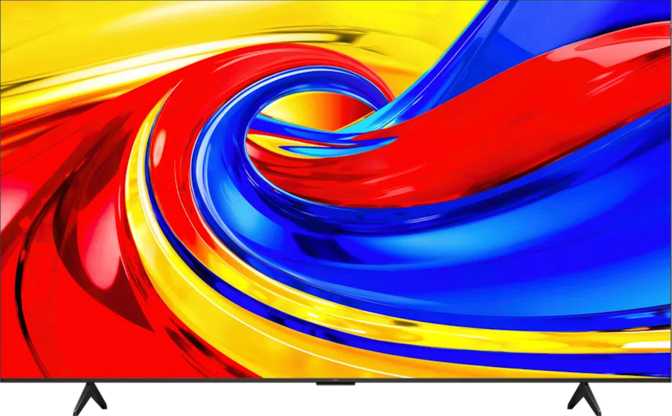
TCL 55P7L 55" QLED TV – Full Review and Real-World Performance Test
A 55-Inch QLED That Plays Above Its Price Tag
The 55-inch TV market is brutally competitive. Every brand claims vivid color, sharp detail, and smart features — yet most budget panels disappoint the moment you sit down with a dark film or a sports broadcast. The TCL 55P7L arrives with a specification sheet that raises genuine expectations: a quantum dot-enhanced display, full HDR format support, and a smart platform that actually works.
This review unpacks every specification with real-world meaning — so whether you are upgrading from an older 1080p display or deciding between competing QLED options, you will have a complete picture before spending a cent.
Display Quality
What QLED technology actually delivers in the real world at this price point
Quantum Dot Color and 10-Bit Processing
The P7L's panel uses QLED technology — the LCD backlight passes through a layer of quantum dots, tiny semiconductor particles that convert light into precisely tuned, highly saturated colors. The result is a display capable of rendering over one billion distinct color shades, a substantial leap over the 16 million produced by a standard 8-bit LCD.
The 10-bit color processing built into the panel gives those colors somewhere to go. In visible terms, gradients — a sunset sky, the shadow-side of a face in portrait footage — appear smooth and photographic rather than stepped or posterized. It is a difference you notice on the first night of use and continue to appreciate daily.
Brightness and Contrast: The Honest Numbers
The panel's typical brightness sits around 400 nits — competent for moderately lit living rooms, but not the category-leading output of premium Mini LED displays. In a dim or darkened room the picture is genuinely impressive. In a room with afternoon sun through large windows, you may find yourself adjusting the blinds rather than the TV settings.
Native contrast is where the P7L makes up ground. The gap between its deepest black and its brightest white is strong for an LCD panel — far more defined than budget competitors whose contrast ratios are often three to five times weaker. Shadow detail in dark scenes is clearly resolved, and the built-in ambient light sensor adjusts brightness automatically as room conditions shift.
Viewing Angles and Pixel Density
Across the 54.6-inch panel, 4K resolution translates to 81 pixels per inch. At a standard living room distance of six to eight feet, individual pixels are invisible — the image reads as sharp and film-quality, with fine texture in nature footage clearly resolved. The near-180-degree viewing angles mean anyone in the room, even at the outer edges of a wide sofa, sees accurate color without the washed-out shift common in budget VA-panel displays.
- Panel TypeQLED LED-backlit
- Resolution3840 × 2160
- Screen Size54.6 inches
- Pixel Density81 ppi
- Peak Brightness~400 nits
- Native Contrast5000:1
- Color Depth10-bit / 1.07B
- Refresh Rate60Hz native
- Viewing Angles178° H + 178° V
Anti-Glare Coating: An anti-reflection coating and ambient light sensor work together to keep the image watchable in mixed-lighting environments without constant manual adjustments.
HDR Format Support: All Four Major Standards
The P7L covers every HDR standard in active use by streaming platforms, physical media, and broadcast TV — a genuinely uncommon achievement at mid-budget pricing, where competitors frequently omit one or two formats.
The universal open standard. Supported by all 4K HDR content without exception.
Dynamic scene-by-scene tone-mapping. Amazon Prime Video and select Blu-ray releases.
The premium HDR tier. Netflix, Disney+, and Apple TV+ — the gold standard for HDR.
The broadcast HDR standard used by live TV channels and broadcast-pipeline streaming services.
Refresh Rate: The Spec Gamers Must Know
The display operates at 60Hz natively. For standard 4K streaming, broadcast TV, Blu-ray, and the majority of console gaming, this is entirely sufficient — all current streaming platforms deliver at 60Hz or lower, and most 4K console gaming targets this frame rate.
The ceiling becomes meaningful only for PC gaming or next-generation console modes targeting 120fps output. There is no adaptive sync (VRR) support either. For casual viewers and standard console gaming this is inconsequential. For dedicated high-fps gamers it is a hard constraint worth understanding before purchasing.
Smart Platform
Google TV with Chromecast, AirPlay, and dual voice assistant support
Chromecast and AirPlay: A Rare Combination
The P7L includes Chromecast built in and full AirPlay support — an unusually inclusive pairing at this price point. Chromecast allows any Android phone, Chromebook, or Chrome browser tab to cast content directly to the TV without additional hardware. AirPlay brings native iPhone, iPad, and Mac streaming to the screen.
Between the two, every major smartphone ecosystem is covered. Mixed-device households — some on Android, some on iOS — can both cast without workarounds or adapters. This combination alone sets the P7L apart from most competitors at this price.
Voice Assistants and Smart Home
The TV responds to Google Assistant natively and is compatible with Amazon Alexa. Google Assistant covers content search, smart home control, and playback commands. Alexa compatibility extends this to households already built around Amazon's ecosystem.
Apple Siri and HomeKit are not supported — a relevant limitation for households that rely on HomeKit for home automation, though AirPlay streaming from Apple devices works fully regardless of the HomeKit absence.
Smart Features at a Glance
-
Chromecast Built-In
Cast directly from Android, Chrome, or any compatible app — no streaming stick needed. -
AirPlay Support
Mirror or stream from iPhone, iPad, and Mac natively without additional hardware. -
Smartphone as Remote
The TCL app replaces the physical remote — type searches on your phone keyboard instead of navigating on-screen. -
USB Live TV Recording
Plug in a USB drive and record broadcast channels directly — no DVR subscription required. -
Miracast Screen Mirroring
Direct Android screen mirroring without a Wi-Fi network — useful for presentations or content sharing. -
Built-In Web Browser
Light browsing directly from the TV. Native apps are smoother for regular streaming use. -
No Apple HomeKit / Siri
HomeKit home automation and Siri voice control are not supported on the P7L.
Audio Performance
Functional built-in speakers, premium audio decoding, and clean soundbar integration
Built-In Speaker System
The P7L uses a stereo speaker configuration delivering 20 watts of total output — two drivers at 10 watts each, with no built-in subwoofer. Most TVs at this size ship with 10 to 20 watts total, placing the P7L at the upper end of typical output for its class.
In a normal-sized living room this is sufficient for clear dialogue and comfortable listening at reasonable volumes. Loud action sequences or large rooms will reveal the limits of any TV speaker. The absence of a subwoofer means bass frequencies are noticeably thin — explosions, music, and cinematic scores lack the low-frequency weight the content demands.
Dolby Atmos, DTS:X, and What They Mean Here
The P7L decodes Dolby Atmos and DTS:X — the two dominant immersive audio formats used by Netflix, Disney+, Blu-ray, and most streaming services. Native decoding improves the perceived soundstage from the built-in speakers, producing a noticeably wider and more three-dimensional sound field compared to standard stereo decoding.
More significantly, both formats pass through cleanly via the HDMI eARC port to a connected soundbar or AV receiver. If a soundbar is in the plans — recommended for any serious listening — the P7L hands off the full lossless Dolby Atmos signal without degradation.
HDMI eARC: Why It Matters for Soundbar Users
The television includes both HDMI ARC and HDMI eARC. HDMI eARC is the high-bandwidth version of the audio return channel — a single HDMI cable carries video in and lossless audio out simultaneously. No separate optical cable is needed, and unlike optical connections, eARC transmits full uncompressed Dolby Atmos without format or bandwidth compromise.
The 3.5mm headphone jack provides direct private listening without Bluetooth pairing — zero latency and genuinely useful for late-night viewing without disturbing others in the home.
- Speaker Config2.0 Stereo
- Total Output Power20W (2 × 10W)
- SubwooferNo
- Dolby AtmosYes
- DTS:XYes
- Dolby Digital PlusYes
- HDMI ARCYes
- HDMI eARCYes
- Digital Optical OutYes
- 3.5mm Headphone JackYes
Soundbar Recommended: The eARC port makes soundbar integration clean and capable. A mid-range Atmos soundbar dramatically transforms the audio experience using what the P7L can already pass through natively.
Connectivity
Physical ports, wireless standards, and built-in broadcast tuner coverage
Physical Port Layout
Three HDMI 2.0 ports handle simultaneous connection of a games console, a soundbar or streaming device, and a third device — Blu-ray player, laptop, or cable box — without swapping cables. HDMI 2.0 supports 4K at 60Hz with HDR, covering everything in the standard content pipeline.
Two USB ports serve USB recording and media playback from drives or flash storage. A wired Ethernet port provides a stable, uninterrupted network connection — a meaningful option for households where wireless congestion affects 4K streaming quality. There is no SD card slot or memory card reader.
| Port / Connection | Detail | Count |
|---|---|---|
| HDMI 2.0 | 4K@60Hz with HDR support | 3 |
| HDMI ARC / eARC | 1 port supports both ARC and eARC | 1 |
| USB | Media playback and USB recording | 2 |
| Ethernet (RJ45) | Wired network connection | 1 |
| 3.5mm Audio Jack | Headphone / private listening | 1 |
| Digital Optical Out | Toslink audio output | 1 |
| VGA / DVI | Not available | 0 |
| SD / Memory Card | Not available | 0 |
Wireless and Broadcast
- Wi-Fi StandardsWi-Fi 4 + Wi-Fi 5
- Wi-Fi Bands2.4GHz + 5GHz
- Bluetooth Version5.4
- Screen MirroringMiracast
- DVB-T / DVB-T2 — Terrestrial / Over-the-Air
- DVB-C — Cable
- DVB-S / DVB-S2 — Satellite
Full Tuner Coverage: The built-in tuner supports terrestrial, cable, and satellite signals — no external tuner box required for any broadcast source worldwide.
Design and Build
Physical dimensions, wall mounting, and installation considerations
Footprint and Installation
The P7L measures 1,224mm wide and 708mm tall, with a depth of 69.5mm including the stand. At around 10.7 kilograms it is manageable for a two-person installation. Standard pedestal placement on a media unit is straightforward.
The 69.5mm depth means the TV protrudes noticeably from a wall bracket — this is not an ultra-thin panel. For those prioritising a flush wall-mounted appearance, the side profile depth is worth factoring in. For pedestal placement, it is entirely inconsequential. VESA mount compatibility is included, making wall mounting with standard third-party brackets straightforward.
The operating temperature range of 5°C to 35°C covers all standard indoor environments but excludes unconditioned spaces — garages or enclosed outdoor structures — where summer temperatures may exceed the upper limit. Standby power draw is just 0.5 watts, negligible over time.
- Width1,224 mm
- Height708 mm
- Depth (with stand)69.5 mm
- Weight10.7 kg
- VESA MountCompatible
- Operating Temp5°C – 35°C
- Standby Power0.5W
- Warranty1 Year
Who This TV Is For
And — just as importantly — who should look at alternatives
- Households upgrading from a 1080p TV who want a clear, noticeable improvement in picture quality without flagship pricing.
- Streaming-first viewers whose library spans Netflix, Disney+, Amazon Prime, and Apple TV+ — full HDR format coverage means every platform delivers its best picture.
- Mixed-device households where some members use Android and others use iOS — AirPlay and Chromecast together cover both ecosystems without compromise.
- Buyers who want Dolby Vision at this price point — it is still uncommon below this tier and delivers a genuine upgrade for supported Netflix and Disney+ content.
- Anyone planning to pair the TV with a soundbar — the eARC implementation handles full Dolby Atmos passthrough cleanly with a single HDMI cable.
- Families watching broadcast TV who want live recording without a paid DVR subscription — the USB recording feature handles this directly and without ongoing cost.
- A dedicated gamer prioritising 120fps gameplay or VRR support — the 60Hz panel with no adaptive sync is a hard, non-negotiable ceiling at the hardware level.
- Installing the TV in a very bright room with large windows or direct sunlight — 400 nits of typical brightness will struggle against strong ambient light conditions.
- A home cinema enthusiast chasing absolute black levels — OLED's per-pixel contrast is a category apart from any LCD-based panel, regardless of quantum dot enhancement.
- A household fully committed to Apple HomeKit automation — Siri voice commands and HomeKit integration are absent from the P7L's feature set.
- Anyone expecting premium audio from the built-in speakers alone — the 2.0 stereo system is functional but lacks the bass weight needed for a cinematic sound experience.
How It Compares
TCL 55P7L against typical budget 4K LCD and entry-level OLED alternatives at 55 inches
| Feature | TCL 55P7L This Model |
Budget 4K LCD | Entry OLED 55" |
|---|---|---|---|
| Panel Technology | QLED Quantum Dot | Standard LCD | OLED Self-Emissive |
| Native Contrast | 5000:1 | ~1000–2000:1 | Infinite (pixel-level) |
| Dolby Vision | Often No | ||
| HDR10+ | Rarely | Varies | |
| Refresh Rate | 60Hz | 60Hz | 60–120Hz (varies) |
| AirPlay + Chromecast | Rarely both | Varies | |
| HDMI eARC | Often No | ||
| Price Tier | Mid-Budget | Entry-Budget | Significantly Higher |
Strengths and Honest Weaknesses
A balanced assessment based on specifications and their real-world implications
Where It Excels
The HDR format lineup is genuinely comprehensive and not a given at this price point. Dolby Vision, HDR10+, HDR10, and HLG together ensure the best available picture from every streaming platform, disc, and broadcast source — with no format left unsupported. This matters every time you press play on Netflix or Disney+.
QLED color performance, backed by 10-bit processing and a 5000:1 native contrast ratio, lifts picture quality meaningfully above standard LCD competition. The difference is visible from the first power-on and sustained across all content types, not just carefully chosen demo material.
The dual AirPlay and Chromecast smart platform is remarkably inclusive for mixed-device households. Bluetooth 5.4 is a more current standard than most competitors offer at this tier. HDMI eARC, Dolby Atmos decoding, and full DVB tuner coverage all add utility that is genuinely rare below this price level.
USB live TV recording adds tangible value for broadcast TV households — eliminating the need for a subscription-based DVR service. The combination of all these capabilities in a single mid-budget package is the P7L's most compelling argument for the money.
Where It Falls Short
The 60Hz ceiling with no adaptive sync is the P7L's most significant limitation for a sizable portion of buyers. For gaming households this is not a minor footnote — it is a hard constraint that prevents 120fps gameplay and variable frame rate rendering. No firmware update can address it; it is a panel-level restriction.
Brightness at around 400 nits is functional but not exceptional. In a brightly lit or naturally sunlit room, the picture will appear washed compared to panels in the 600-nit range. Buyers in living rooms with large windows or strong overhead lighting should weigh this carefully before committing.
Built-in audio, while adequately powered at 20 watts, is bass-light. The absence of a subwoofer driver means cinematic low frequencies land with noticeably less impact than the content demands — a soundbar genuinely transforms the experience here.
The one-year warranty is standard for the category but not generous for a display purchase. Apple HomeKit users will find no native integration, and Siri voice commands are absent — a specific but meaningful gap for committed Apple household automation setups.
Buyers' Questions Answered
The questions real buyers search for before purchasing the TCL 55P7L
Final Verdict
The TCL 55P7L 55" is a well-assembled mid-budget QLED television that consistently delivers above its price class where it matters most: color quality, HDR format depth, and smart platform versatility. Dolby Vision support, HDR10+ compatibility, HDMI eARC, and the combined AirPlay and Chromecast ecosystem make this a more capable television than the specification sheet alone suggests at first reading.
The 60Hz panel and absent adaptive sync are real constraints for gaming-focused households — this is the one area where the P7L does not compete with alternatives that prioritise gaming features. For streaming-first buyers, film watchers, casual gamers, and mixed-use family households, those limitations are rarely encountered in daily use.
For anyone upgrading from an older 1080p set — or from a budget 4K display without Dolby Vision — the P7L represents a clear and meaningful step forward in picture quality at a price that does not require justification. It earns a confident recommendation in its category.
- Dolby Vision + HDR10+ + HLG
- AirPlay + Chromecast dual platform
- HDMI eARC + Dolby Atmos passthrough
- Bluetooth 5.4 + Full DVB tuner
- 60Hz panel — no 120fps or VRR
- 400 nits — limited in bright rooms
- No Apple HomeKit / Siri support