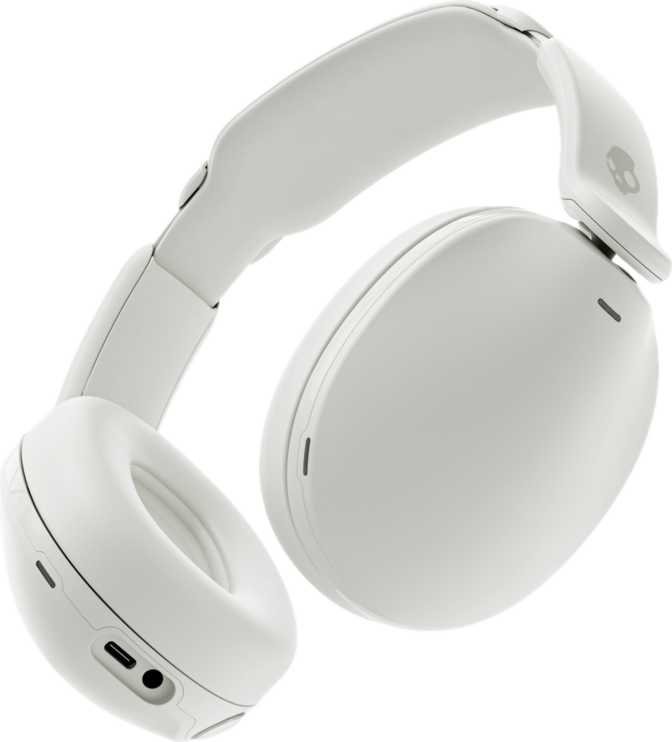
Skullcandy Hesh 360 Review: 100-Hour Battery, Real Trade-offs
HeadphonesThere's a specific frustration every wireless headphone user knows: you reach for them mid-commute, mid-call, or mid-deadline and find a dead battery. Skullcandy designed the Hesh 360 as a direct answer to that frustration — and the answer is striking enough that it reframes everything else about the headphone.
At four hours of daily use, roughly 25 days between charges — exceptional by any measure in this category
One hundred hours of claimed wireless playback. At a category where most competitors measure endurance in the low-to-mid dozens of hours, that number demands attention. The question this review answers is whether the rest of the Hesh 360 — the sound, the features, the build — holds up well enough to make the choice easy, or whether the battery life is carrying a weak supporting cast.
Key Specifications at a Glance
Design, Build, and Physical Experience
Lighter Than Over-Ear Usually Feels
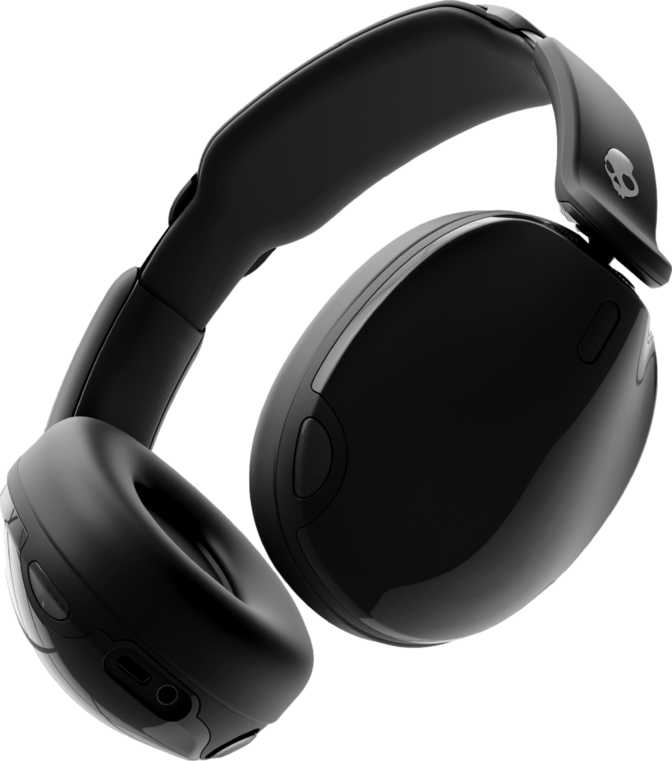
At 249 grams, the Hesh 360 sits on the lighter end of over-ear headphones. To put that weight into everyday terms: it is roughly comparable to a full-size orange, or slightly less than a standard can of soup. For headphones that sit on your head for hours at a stretch, this matters — heavier over-ear designs create cumulative pressure fatigue that lighter ones avoid, and the Hesh 360 is clearly built with long sessions in mind.
The over-ear fit is significant. Rather than pressing cushions against the ear, the Hesh 360 surrounds the ear completely, distributing any clamping force around the outer ear. Most listeners find this more comfortable over time, particularly during extended wear. The design is closed-back — the ear cups are sealed rather than vented — which both contains the sound you are listening to and creates a physical barrier against outside noise.
Portability Done Right
The headphones fold into a more compact configuration, making them genuinely bag-friendly in a way that non-folding over-ear headphones simply are not. A headphone designed for extended wireless use needs to travel well, and the Hesh 360 does.
The cable is both detachable and tangle-free — two details that affect long-term ownership more than almost any other design choice. Cables are the most failure-prone component on any headphone, and a detachable cable means a worn-out cable is a minor replacement rather than a reason to buy new headphones. A tangle-free design means less daily irritation when pulling it from a bag.
There is no rated water or sweat resistance on the Hesh 360. For desk use, commuting, or travel, this is irrelevant. For gym sessions, outdoor runs, or use in wet weather, it is a meaningful constraint — and one of the clearest not-for-you scenarios for this headphone.
Sound Performance: What the Hardware Actually Delivers
Drivers, Impedance, and Source Compatibility
Each ear cup contains a 40mm dynamic driver — the element that physically moves air to produce sound. Forty millimeters is a well-established standard size for over-ear headphones, large enough to reproduce strong low-end frequencies with physical weight and authority without making the cups cumbersome.
The impedance is 32 ohms, which is critical practical context. Lower-impedance headphones like this one reach their full intended volume and performance directly from phones, laptops, tablets, and most standard Bluetooth sources — no external headphone amplifier required. The drivers are also capable of producing very high output levels, providing headroom for dynamic content like film scores and live recordings where instantaneous peaks push well above the average listening level. The frequency response covers the complete range of human hearing without artificially cutting off any part of the audio spectrum.
Passive Noise Isolation: How It Works Without ANC
The Hesh 360 does not include active noise cancellation. What it does include is passive noise isolation — the physical sound-blocking effect of a sealed, over-ear design sitting around your ears.
ANC uses onboard microphones and processing to generate opposing frequencies that cancel out external noise, and performs best against low-frequency, consistent sounds like aircraft engines and subway rumble. Passive isolation works mechanically: the physical mass and sealing of the ear cup attenuates external sound, performing best against mid-range frequencies like voices, office chatter, and traffic noise. For moderately noisy environments — open-plan offices, cafés, typical public transit — the Hesh 360's passive approach is genuinely adequate. For frequent flyers or subway commuters dealing with sustained low-frequency roar, it will not match a dedicated ANC headphone.
The Codec Ceiling: Critical for Audiophiles
The Hesh 360's Bluetooth audio supports none of the premium wireless codecs — no aptX, no aptX HD, no LDAC, no AAC. The wireless connection defaults to SBC, the mandatory baseline codec that every Bluetooth audio device supports. If you subscribe to a high-resolution or lossless audio tier specifically for its quality, the Hesh 360 will not transmit that quality wirelessly.
This is not a dealbreaker for the headphone's intended audience. The overwhelming majority of casual listeners will not perceive an audible difference between SBC and higher-quality codecs in most music under most conditions. But the ceiling is real. Plugging in the detachable cable bypasses this entirely — the wired connection delivers whatever quality the source is producing. The wireless experience, however, is capped regardless of source quality.
One Hundred Hours: What This Means in Real Life
The 100-hour battery claim deserves to be made concrete rather than left as a raw figure. At four hours of daily listening — a reasonable estimate for commute, work, and evening use combined — the Hesh 360 would last approximately 25 days between charges.
How the Hesh 360 Compares to the Field
The practical experience this creates is qualitatively different from what most wireless headphone users know. These are headphones you can forget to charge for a week and pick up without concern. The charging anxiety that accompanies most wireless audio devices simply evaporates.
Uses the same port as most modern phones and laptops — no proprietary cable to track down or lose.
Check remaining charge at a glance on the headphone itself — no app required.
Manufacturer figures are measured at moderate volume with ambient mode inactive. Real-world usage at higher volumes or with ambient mode active will reduce total playback time. Even at 60–70% of rated capacity, endurance remains exceptional relative to the market.
Features That Earn Their Place
Ambient Sound Mode
External microphones pipe environmental audio through the headphones so you can hold a conversation or hear a transit announcement without removing them. Once a premium-only feature, now standard here.
Dual-Device Multipoint
Two devices stay simultaneously connected and active. Audio routes automatically from whichever device is producing it — no manual switching between your phone and laptop during the workday.
Find My Device
A companion app integration lets you locate the headphones if misplaced. For a daily-use device that travels between rooms and bags, this is quietly useful and rarely found at this price tier.
Headset and Controls
On-device controls manage playback and calls without reaching for the connected device. The built-in microphone handles phone calls and video conferencing. Note: there is no dedicated mute button on the headphone itself.
Bluetooth 5.3 and Wireless Range
Bluetooth 5.3 is the most current mainstream wireless standard at this price tier. Compared to older iterations, it brings improved connection efficiency, better stability in dense wireless environments like busy offices or crowded transit stations, and modestly reduced energy consumption — all of which contribute to the headphone's overall battery performance.
The listed wireless range is approximately 10 meters, or roughly 33 feet. This is on the conservative end for modern Bluetooth headphones, which sometimes claim ranges of 30 meters or more. Real-world Bluetooth range is always shorter than stated figures due to walls, interference, and other active wireless devices.
Phone in a pocket, laptop on a nearby desk — 10 meters covers virtually every standard everyday scenario without interruption.
Walking around a large home while the source device stays in one room may require staying in closer proximity than some competing headphones allow.
Fast pairing is supported, meaning initial connection to a compatible device is quick. NFC tap-to-pair is not included. Both wired and wireless connectivity are supported, so the detachable cable provides a reliable fallback when Bluetooth is unavailable or the battery is depleted.
Who the Skullcandy Hesh 360 Is For
Perfect For
Who have been burned by dead headphones mid-journey and want to stop thinking about charging entirely.
Who need reliable all-day wireless audio and benefit from multipoint pairing across phone and laptop simultaneously.
Who enjoy music, podcasts, and calls without placing high stakes on wireless codec performance or critical audio quality.
Who want modern wireless conveniences — ambient mode, USB-C, two-device pairing — without stepping into premium pricing.
Look Elsewhere If...
Frequent flyers, open-plan office workers, and loud-commute riders will find passive isolation insufficient for sustained low-frequency noise.
The SBC-only wireless connection cannot transmit lossless or high-resolution audio. Look at LDAC or aptX HD alternatives for quality-first listening.
No sweat or water resistance rating makes moisture exposure a genuine risk to the headphone's longevity in active use.
The absence of in-ear detection means no automatic playback pause when the headphones come off — a consistent adjustment for users accustomed to this feature.
Competitive Positioning at a Glance
The Hesh 360's endurance advantage is unambiguous and dramatic. The primary concessions relative to mid-range ANC competitors are active noise cancellation and wireless codec quality — features that carry a meaningful price premium in most competing options.
| Feature | Skullcandy Hesh 360 | Budget Wireless (Typical) | Mid-Range ANC (Typical) |
|---|---|---|---|
| Battery Life | ~100 hours | 20–30 hours | 30–40 hours |
| Active Noise Cancellation | Rarely included | Standard | |
| Premium Bluetooth Codec | Rarely included | Often (aptX / LDAC) | |
| Ambient Sound Mode | Rarely included | Standard | |
| Two-Device Multipoint | Rarely included | Often included | |
| USB-C Charging | Inconsistent | Standard | |
| Water Resistance | Varies | Often IPX4 | |
| Foldable Design | Often | Varies | |
| Detachable Cable | Rarely | Occasionally |
Strengths and Weaknesses, Honestly
What It Does Well
The Hesh 360 is a headphone with one genuinely extraordinary quality and several supporting features that are solid without being exceptional. The battery life is not just a marketing figure — it is the kind of category-outlier specification that changes the daily ownership experience in ways that are difficult to overstate once you have lived without charging anxiety for several weeks.
The build supports that positioning: foldable, lighter than most over-ear competitors, with a detachable cable that extends the headphone's functional lifespan well beyond what fixed-cable alternatives offer. The ambient mode, multipoint pairing, find-my feature, and USB-C charging form a coherent, modern feature set around the headphone's signature advantage.
Where It Falls Short
Where the Hesh 360 is genuinely weaker, the gaps are real rather than theoretical. SBC-only Bluetooth is a ceiling on wireless audio quality that matters to a specific buyer type. The absence of ANC limits its usefulness in high-noise travel environments. The 10-meter Bluetooth range and lack of auto-pause are small ongoing annoyances that users coming from premium headphones will notice.
None of these weaknesses undermine the product's core proposition. They define its limits — which is what honest evaluation should do. The Hesh 360 makes a specific, committed bet, and delivers on that bet. Understanding the limits tells you whether those limits matter in your life.
Questions Real Buyers Ask Before Purchasing
Verdict: Who Should Buy It and Why
The Skullcandy Hesh 360 makes a specific, committed bet: put extraordinary battery life at the center of the product, support it with a practical set of everyday features, and offer it at a price that does not require tradeoffs elsewhere in a buyer's budget. For commuters, students, remote workers, and anyone who wants wireless headphones that do not demand weekly charging rituals, that bet pays off.
The ambient mode, multipoint pairing, find-my feature, detachable cable, and USB-C charging form a coherent, modern feature set around the headphone's signature advantage. This is a product that knows what it is, delivers on its promise, and does not overreach.
Skip if you need ANC. If active noise cancellation is a genuine requirement for your daily environment, the Hesh 360 is not the right tool — look at headphones purpose-built for noise blocking.
Skip if codec quality matters. If you have invested in lossless streaming for its quality, the SBC ceiling is a concrete reason to look at alternatives supporting LDAC or aptX HD.
Strong Recommendation for Everyday Use
If neither limitation applies to you, the Hesh 360 earns a confident recommendation as one of the most practically useful everyday wireless headphones at its price point. It solves the problem most wireless headphone users actually have — not whether the audio is perfectly transparent, but whether the headphones will be alive when needed. And it solves that problem better than almost anything else available.