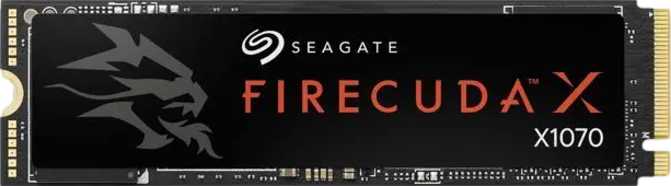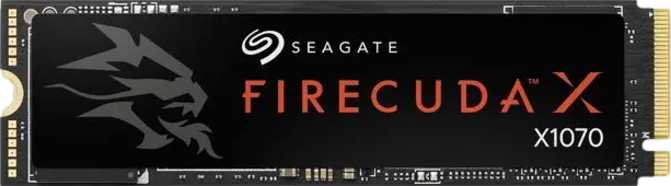
Seagate Firecuda X1070 2TB: Full Review and Performance Breakdown
SSDsAt a Glance — Key Specifications
The storage market is crowded with drives that promise top-tier speeds on a specification sheet and then quietly underperform the moment real workloads hit them. The Seagate Firecuda X1070 2TB takes a different angle: it pairs genuinely fast PCIe Gen 4 transfer rates with a storage architecture that keeps costs accessible — but that architecture comes with trade-offs every buyer should understand before purchasing.
This is a drive that rewards the right user enormously and quietly frustrates the wrong one. Knowing which side of that line you fall on is the entire point of this review.
Design and Physical Profile
Form Factor & Build Quality
The Firecuda X1070 2TB uses the M.2 form factor, which means it mounts directly onto your motherboard — no cables, no drive bay, no power connector. It disappears inside your PC entirely, occupying only a dedicated slot on the board.
There is no integrated heatsink included, and there is no RGB lighting. For enthusiasts who want a drive that glows, this is not it. For everyone else, both omissions are positives: no heatsink means the drive sits lower in tighter M.2 slots, and no RGB means no additional power draw or compatibility concerns with lighting ecosystems.
The drive uses the standard M.2 2280 length — 80mm — the most universally supported size across desktops, laptops, and mini-ITX builds alike. Many modern motherboards ship with their own M.2 heatsink covers, making the absence of one on the drive itself a non-issue in practice.
Performance Analysis
Sequential, Random & Sustained Workloads
Sequential Transfer Speeds
The Firecuda X1070 2TB reads data at speeds that sit near the practical ceiling of what PCIe Gen 4 can deliver over an M.2 slot. To make that tangible: transferring a 50GB game install from one drive to another takes a matter of seconds. Unzipping large archives, moving video project folders, and loading virtual machine images — operations that once required patience — now feel near-instantaneous.
Sequential write performance is similarly strong, keeping creative workflows moving without a storage bottleneck when ingesting raw footage, duplicating backup archives, or writing large OS images.
The QLC Trade-Off — What Every Buyer Needs to Know
The Firecuda X1070 uses QLC (Quad-Level Cell) NAND flash. QLC stores four bits per cell versus the three bits used by TLC — allowing manufacturers to pack more storage into the same physical space at a lower cost per gigabyte. That cost advantage is why this 2TB drive can be priced more competitively than many TLC alternatives.
The practical implication: QLC NAND writes data more slowly at the raw cell level than TLC. To compensate, a portion of the NAND operates as a fast SLC write cache — data lands there first at full speed, then migrates to QLC cells in the background. Within that cache window, write performance is excellent. If you exhaust that cache during a single massive write session — copying hundreds of gigabytes without pause — write speeds will step down noticeably until the cache clears.
For the vast majority of users — gaming, everyday computing, creative work with normal-sized project files — this cache limit is never reached. It becomes relevant only for workflows that routinely write hundreds of gigabytes in a single uninterrupted session.
HMB Instead of Dedicated DRAM
Rather than carrying a dedicated DRAM chip, the Firecuda X1070 uses Host Memory Buffer (HMB) — borrowing a small slice of your system's RAM to store the drive's data mapping table. The performance gap versus DRAM-equipped drives has narrowed considerably with modern controllers. On systems with 16GB of RAM or more, HMB functions without friction. The difference matters more under sustained, intense random workloads on memory-constrained systems — a scenario most home and office users will never encounter.
Inside the Drive: The TenaFE TC2201 Controller
Controller Architecture & Interface
The Firecuda X1070 is built around the TenaFE TC2201, a four-channel controller design. Compared to the eight-channel silicon found in some flagship drives, four channels provide less parallelism — but the TC2201 is paired with PCIe Gen 4 bandwidth wide enough that, across consumer workloads, this architecture does not represent a meaningful bottleneck.
It is a sensible pairing for a drive targeting buyers who want genuine Gen 4 performance without paying for hardware headroom they will never use. The TenaFE TC2201 is less familiar than Phison or Silicon Motion controllers that appear in many competing drives — worth acknowledging for buyers who factor controller pedigree into their decision.
Endurance and Long-Term Reliability
TBW, MTBF & Warranty
1,200 TBW
Terabytes Written Rating
A user writing 100GB per day — an extremely heavy pace — would take over 32 years to exhaust this rating. For typical home users writing 10–20GB daily, the TBW limit is effectively irrelevant over any normal ownership window.
1.8M Hours
MTBF Rating
Mean Time Between Failures is a standard reliability benchmark for this storage tier. While no drive is indestructible, this figure reflects the manufacturing standards applied to consumer NVMe at this performance level.
5-Year Warranty
Seagate Coverage
Five years is among the longest warranty periods in the consumer SSD category. It is a genuine statement of manufacturer confidence and provides meaningful peace of mind for buyers keeping a system long-term.
Who Should Buy the Firecuda X1070 2TB?
Real-World Usage Scenarios
Strong Fit
- PC GamersFast load times and a snappy system without paying flagship SSD prices.
- Students & ProfessionalsOffice work, web browsing, and light creative tasks — a major step up from SATA or HDD-based systems.
- Laptop UpgradersOpen M.2 slot? This drive delivers maximum speed per dollar in a thin, cable-free package.
- Gen 3 & SATA UpgradersThe generational jump in daily responsiveness will be immediately and tangibly noticeable from day one.
- Value-Conscious BuildersProper Gen 4 performance without paying a premium for features your workload will never use.
Not the Right Choice For
- 4K / 8K Video EditorsWorkflows requiring sustained writes of hundreds of gigabytes per session will hit the QLC cache limit. A TLC-based drive serves better here.
- High-Volume Data MoversNAS power users who regularly copy hundreds of gigabytes in single sessions need TLC endurance and DRAM cache stability.
- DRAM Cache EnthusiastsIf dedicated DRAM is non-negotiable for consistent peak random workload performance, TLC + DRAM alternatives are the right call.
Competitive Positioning
How It Compares to the Alternatives
| Specification | Firecuda X1070 2TB | Gen 4 TLC / DRAM Drive | Gen 3 NVMe Drive |
|---|---|---|---|
| Sequential Read | ~7,200 MB/s | ~7,000–7,400 MB/s | ~3,400–3,500 MB/s |
| Sequential Write | ~6,500 MB/s | ~6,500–6,800 MB/s | ~3,000–3,300 MB/s |
| NAND Type | QLC | TLC | TLC / MLC |
| Cache Architecture | HMB | Dedicated DRAM | DRAM or HMB |
| Sustained Write | Good within SLC cache | Stronger sustained write | Moderate |
| Price Position | Value-competitive | Mid to premium | Budget |
| Warranty | 5 years | 3–5 years | 3–5 years |
Comparison reflects typical category specifications. Individual drive performance varies by model and revision.
Strengths and Weaknesses
An Honest Assessment
Where the Firecuda X1070 Excels
The Firecuda X1070 2TB's greatest strength is its real-world feel. The sequential transfer rates are not just benchmark bragging rights — at this speed tier, the difference between this drive and a Gen 3 NVMe is perceptible during system boot, application launches, and large file operations. Pairing that performance with a five-year warranty and competitive pricing is difficult to argue against for the target buyer.
The no-nonsense physical profile — no heatsink, no RGB — actually works in its favor for system builders who want clean, unobtrusive internals or who are slotting this into a laptop where neither feature is possible or relevant.
Where Honest Scrutiny Is Required
The QLC NAND and HMB architecture are honest trade-offs, not defects. They serve the target user without compromise in any situation that user is likely to encounter. But professional workflows involving sustained, large-volume writes will expose the SLC cache limit in ways a TLC-plus-DRAM drive would not. The drive does not hide this — it simply serves a different primary audience than those workloads demand.
The TenaFE TC2201 controller is less established than Phison or Silicon Motion silicon that many buyers will recognize from competing drives. That is worth acknowledging, though the specification outcomes it delivers within this drive speak for themselves.
Common Questions Before You Buy
Answers to What Real Buyers Search For
Final Verdict
The Seagate Firecuda X1070 2TB is a well-executed value proposition in the PCIe Gen 4 NVMe category. It delivers sequential performance that sits at the upper boundary of what Gen 4 can offer, pairs it with strong random I/O numbers that translate into a genuinely responsive system, and backs the whole package with a five-year warranty that few competitors match at this price tier.
The QLC NAND and HMB architecture are honest trade-offs, not defects. They serve the target user — a gamer, a student, a professional upgrading from slower storage — without compromise in any situation they are likely to encounter. Only buyers with specific sustained-write workloads need to look elsewhere.
If you are building or upgrading a PCIe Gen 4 system and want the fastest storage your budget can support without paying a premium for features your workload will never use, the Firecuda X1070 2TB earns a confident recommendation.