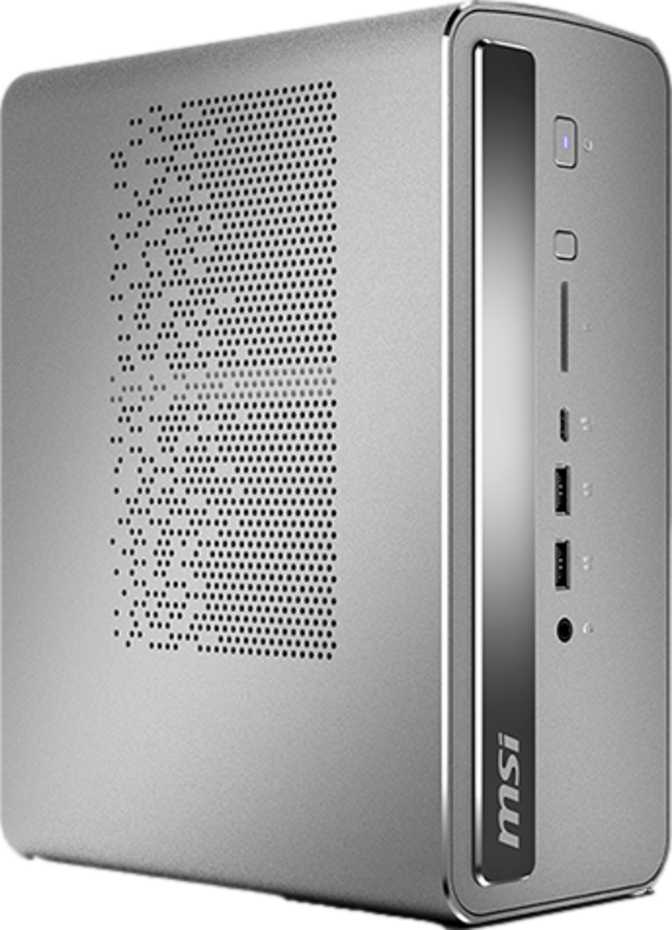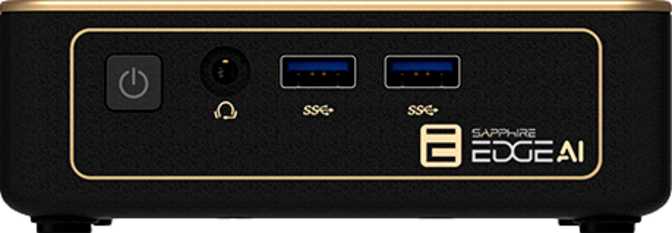
Mini PCs have historically asked for compromise — you accept a slower processor and constrained memory in exchange for a machine small enough to tuck behind a monitor. The Sapphire Edge AI arrives with a different proposition: a processor carrying dedicated AI acceleration, a memory configuration that embarrasses most full-size desktops, and a physical footprint smaller than a sheet of paper. Whether that proposition holds under scrutiny is what this review determines.
Design and Physical Experience
Build Quality • Dimensions • Thermal Engineering
The Sapphire Edge AI occupies an almost implausible amount of physical space — or rather, implausibly little of it. Its footprint fits within the outline of a standard sheet of writing paper, and at just 30 millimetres tall, it sits lower than a paperback novel. The Mini-ITX designation describes the motherboard standard inside, not the chassis dimensions. The actual measurements point to an engineered enclosure built specifically around this silicon — nothing about these proportions is accidental.
The processor operates within a 28-watt thermal ceiling borrowed from mobile computing. This is how the machine stays quiet in such a tight enclosure. It also means that sustained maximum-effort workloads may encounter performance ceilings that a larger chassis with unrestricted cooling would not. That trade-off is real, worth knowing, and not disqualifying for the intended audience.
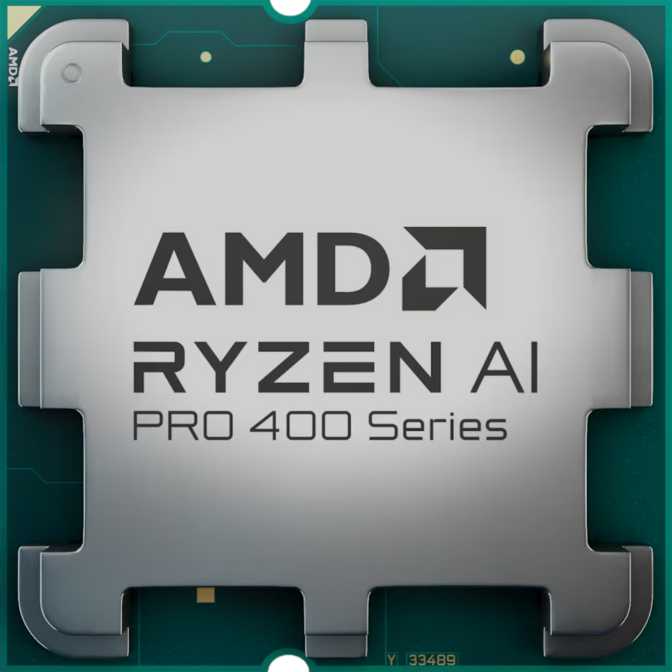
Processor Performance: What Twelve Cores at 28 Watts Actually Delivers
Core Count • Multithreading • Cache Architecture • Instruction Sets
The Sapphire Edge AI's processor brings twelve cores to work simultaneously, with each core handling two instruction streams at once through simultaneous multithreading. In practice, the operating system sees 24 logical processors to distribute tasks across — a thread count that was firmly in workstation territory just a few product generations ago.
What defines this processor's character is the gap between its resting behaviour and its peak capability. Under light loads — web browsing, document editing, video calls — the cores clock conservatively, keeping temperatures low and the cooling system near-silent. When demanding work arrives, the processor ramps sharply, reaching boost speeds above 5 GHz. This shift happens automatically, in milliseconds, and recedes just as quickly once the load subsides.
Cache Architecture and Why It Matters
Shared across all cores. Data held here is accessible in nanoseconds, reducing the cost of RAM round-trips for memory-intensive workloads like video encoding and code compilation.
1 MB per core — a generous per-core allocation that keeps each core well-supplied even when all twelve are simultaneously running under full load.
Instruction Set Support for Technical Buyers
The processor supports a complete set of modern acceleration extensions. AVX2 and FMA3 together allow certain matrix and vector operations to execute at twice the throughput of processors lacking those extensions — directly relevant to machine learning workloads and the AI designation in this product's name. AES hardware acceleration handles encryption and decryption in silicon rather than software, delivering consistent security performance without CPU overhead.
On Overclocking
The processor multiplier is locked — clock speeds cannot be pushed beyond factory settings. For most buyers this is entirely irrelevant; the factory boost behaviour is already aggressive. For enthusiasts who treat overclocking headroom as a purchase criterion, this platform does not accommodate that goal.
Integrated Graphics: What the Radeon 890M Can and Cannot Do
GPU Architecture • Gaming • Creative Use • Display Output
The Radeon 890M is the graphics engine inside the Sapphire Edge AI — integrated directly onto the same chip as the processor rather than occupying a separate card. This is standard for compact machines, but the 890M is not a token concession to form factor. It sits at the upper tier of integrated graphics available in any current form factor.
All 1,024 shading units run across 16 compute units, with the GPU ramping from a conservative idle clock up to nearly 2.9 GHz under load. The architecture is built on a 4-nanometre manufacturing process — the same node used in high-end discrete graphics cards — which delivers more computing elements per unit of power than older GPU manufacturing generations.
Gaming Capability
The Radeon 890M handles modern titles at 1080p with medium to high settings depending on the engine. Esports titles and older AAA games run at high framerates. The latest technically demanding releases require lowered settings to stay smooth. This is not a gaming-first GPU — manage those expectations and it covers moderate to casual gaming confidently.
Creative & Professional Use
GPU-accelerated effects in video editing, photographic processing, colour grading, and 3D viewport work all run without the bottlenecks of older integrated solutions. Hardware video decode handles 4K playback without straining the processor. For anyone not specifically targeting high-refresh competitive gaming, this GPU covers the full range of daily creative use.
API Compatibility
Full compatibility with modern graphics and GPU compute APIs — relevant to developers, researchers, and professionals using GPU-accelerated software toolchains.
Four Displays From One Compact Box
The Sapphire Edge AI drives up to four displays simultaneously — a genuinely useful capability for professionals running multi-monitor setups. Running a three or four-screen productivity workspace from a machine this size is entirely practical.
Memory and Storage: Where the Sapphire Edge AI Pulls Ahead
DDR5 Capacity • Integrated GPU Bandwidth • NVMe Performance
Ninety-six gigabytes of DDR5 memory is the specification that most immediately distinguishes the Sapphire Edge AI from everything else at its physical scale. Most compact machines in this category cap out at 32 or 64 gigabytes. The gap is not a minor increment — it represents the difference between a machine that manages memory pressure carefully and one that never encounters it.
DDR5 memory at this bandwidth tier feeds both the processor and the integrated Radeon 890M, which draws from the same pool rather than maintaining a separate video memory allocation. Faster, larger memory directly translates to better GPU performance alongside better CPU performance — a compounding benefit unique to this integrated architecture.
NVMe drives communicate through the PCIe bus rather than older storage interface standards, making the storage layer effectively invisible in normal use.
- Fast OS and application loading
- Large project file transfers without delay
- Ample capacity for software, games, and media
What 96 GB Enables That Competitors Cannot
Connectivity: More I/O Than Its Size Has Any Right to Offer
Thunderbolt • USB • Display Outputs • Wireless • Audio
High-Speed USB and Thunderbolt Ports
Display Outputs
Networking and Wireless
On the Thunderbolt 4 Ports: Each carries data, video, and power simultaneously over a single cable — connecting an external GPU enclosure, a high-resolution display, or a Thunderbolt dock that multiplies connectivity further. The two additional USB4 40 Gbps ports deliver equivalent raw bandwidth for compatible peripherals, bringing the total count of ultra-high-speed connections to four.
Benchmark Performance in Context
PassMark • Geekbench 6 • Multi-Core vs Single-Core
Published benchmark scores place the Sapphire Edge AI's processor clearly within its competitive landscape. The multi-core result above 35,000 in PassMark is the headline figure: achieving this within a 28-watt thermal budget represents genuine architectural efficiency. Processors posting comparable multi-core numbers in conventional desktop towers typically draw two to three times the power, require substantially larger heatsinks, and produce considerably more noise.
| Benchmark | Score | Relative Performance | What It Means |
|---|---|---|---|
| PassMark Multi-Core |
35,142 |
|
Competitive with high-end mainstream desktop processors from recent generations |
| PassMark Single-Core |
3,872 |
|
Strong single-thread performance; apps that don't parallelise still respond quickly |
| Geekbench 6 Multi-Core |
13,283 |
|
On par with high-performance laptop CPUs at peak, within a 28-watt envelope |
| Geekbench 6 Single-Core |
2,593 |
|
Solid per-core output; browser performance, image processing, and app responsiveness |
Single-core performance governs everyday responsiveness more than any other specification for the majority of consumer tasks. Scores above confirm per-core performance is strong rather than merely passable — which matters for professional creative tools and development environments where single-thread execution speed directly affects how quickly work completes.
Who Should Buy the Sapphire Edge AI — And Who Should Not
Ideal Buyer Profiles • Real Use Cases • Honest Limitations
Strong Match For
-
Home office professionals who need a clean desk, capable processing, and multi-monitor support without a tower sitting underfoot.
-
Creative professionals in photography, video production up to 4K, and design — particularly those whose asset libraries benefit from two terabytes of fast local storage and 96 GB of working memory.
-
Developers and engineers running local build environments, containers, or servers that reward high thread counts and generous memory headroom.
-
AI and machine learning hobbyists interested in local inference workloads — 96 GB of system memory, shared with the integrated GPU, makes practical local model inference achievable in a way it is not on machines with one-third the RAM.
-
Multi-display power users who need to drive three or four screens from a single, unobtrusive machine.
Not the Right Fit For
-
Competitive or performance-first gamers targeting high frame rates at 1080p or beyond. The Radeon 890M covers moderate gaming but cannot match even an entry-level discrete GPU in sustained high-demand scenarios.
-
Overclocking enthusiasts. The multiplier is locked, the thermal budget is fixed, and the chassis provides no space for aftermarket cooling modifications.
-
Buyers expecting internal storage expansion. There is no internal upgrade path beyond the pre-installed 2 TB drive. External drives connect via Thunderbolt, but this adds cost and desk presence.
How It Compares to Key Alternatives
Memory • Storage • GPU • I/O • Platform • Warranty
| Sapphire Edge AI | Typical Windows Mini PC | Apple Mac Mini (Premium) | |
|---|---|---|---|
| Memory | 96 GB DDR5 | 32–64 GB DDR5 | Up to 96 GB Unified |
| Storage | 2 TB NVMe | 512 GB–1 TB | 512 GB–2 TB NVMe |
| Integrated GPU | Radeon 890M (1,024 shaders) |
Lower-performance iGPU typical | Apple GPU (highly efficient) |
| Simultaneous Displays | 4 | 2–3 typical | Up to 3 |
| High-Speed USB-C / TB4 | 2× TB4 + 2× USB4 | 0–2 typical | 3× Thunderbolt |
| Platform | Open (Windows/Linux) | Open (Windows/Linux) | macOS only |
| Warranty | 2 years | 1–2 years | 1 year (standard) |
The memory configuration is the hardest specification for competitors to replicate at similar physical scale. Against Apple's Mac mini, the key differentiator is platform openness — full compatibility with Windows, Linux, and any other supported OS — which matters for the substantial portion of professional software that does not run on macOS or performs differently across platforms.
Where It Excels and Where It Falls Short
Honest Assessment • Strengths • Limitations
Where It Excels
The Sapphire Edge AI's strongest quality is the coherence between its ambitions and its execution. A 28-watt processor delivering multi-core benchmark results that challenge much larger, louder competitors is confirmed by independent testing, not just specification sheets. Achieving PassMark scores that rival mainstream gaming desktops while running on a power budget appropriate for a laptop is a genuine architectural achievement.
The 96-gigabyte memory configuration is the specification that earns this machine its strongest recommendation. It enables workload categories that competing compact machines simply cannot address: large local AI model inference, professional video editing with complex timelines, heavy virtualisation, and development environments that would exhaust 32 or 64 gigabytes of RAM.
The connectivity layout is generous in ways that ease real desktop use — four simultaneous display outputs, dual Thunderbolt 4 ports, and dual USB4 connections all combine to handle sophisticated peripheral setups without hubs or adapters.
Where It Falls Short
The integrated Radeon 890M GPU is capable and well above average for integrated graphics, but buyers who discover they need discrete GPU performance for gaming or GPU-intensive rendering will find it limits them. The Thunderbolt 4 ports do support external GPU enclosures — a practical upgrade path — but that adds cost and bulk that partially undercuts the compact form factor.
The locked processor multiplier and the 28-watt thermal ceiling are two sides of the same engineering decision. They deliver a quiet, efficient machine and simultaneously rule out the maximum performance extraction that enthusiasts pursue. That is the right trade-off for this machine's intended audience and the wrong one for those outside it.
The two-year warranty period is standard for the category but falls short of what some enterprise mini PC competitors offer. Buyers considering this as a long-term professional workstation may want to factor extended coverage options into their purchase assessment.
Questions Buyers Are Asking Before They Purchase
Common Concerns • Real Answers • Technical Clarifications
Final Verdict
Our definitive recommendation on the Sapphire Edge AI
The Sapphire Edge AI earns a strong recommendation for the buyer who needs professional-grade, memory-rich computing in a machine that disappears from the desk rather than dominating it. The processor delivers multi-threaded performance that rivals much louder, more power-hungry alternatives. The 96 gigabytes of DDR5 memory sets this machine apart from nearly everything else at its physical size. The connectivity layout — dual Thunderbolt 4, dual USB4 40 Gbps, and four-display support — handles sophisticated setups without external hubs.
Buy It If
- Memory-intensive tasks are core to your workflow
- Multi-display productivity is a daily requirement
- You need software development or AI inference capability
- A capable machine that claims almost no desk space is the goal
Hold Off If
- Gaming at high settings and high framerates is the primary goal
- Overclocking headroom is a purchase criterion
- GPU-accelerated rendering or CUDA workloads are essential
2-year manufacturer warranty included. All specifications verified at time of review.