MSI AI Edge Review: Compact AI Powerhouse for Serious Workloads
Mini PCsEditorial Ratings
Scored across five categories based on full specification analysis and real-world capability assessment.
An outstanding compact workstation for AI developers and data professionals. Minor connectivity gaps prevent a perfect score.
Category Breakdown
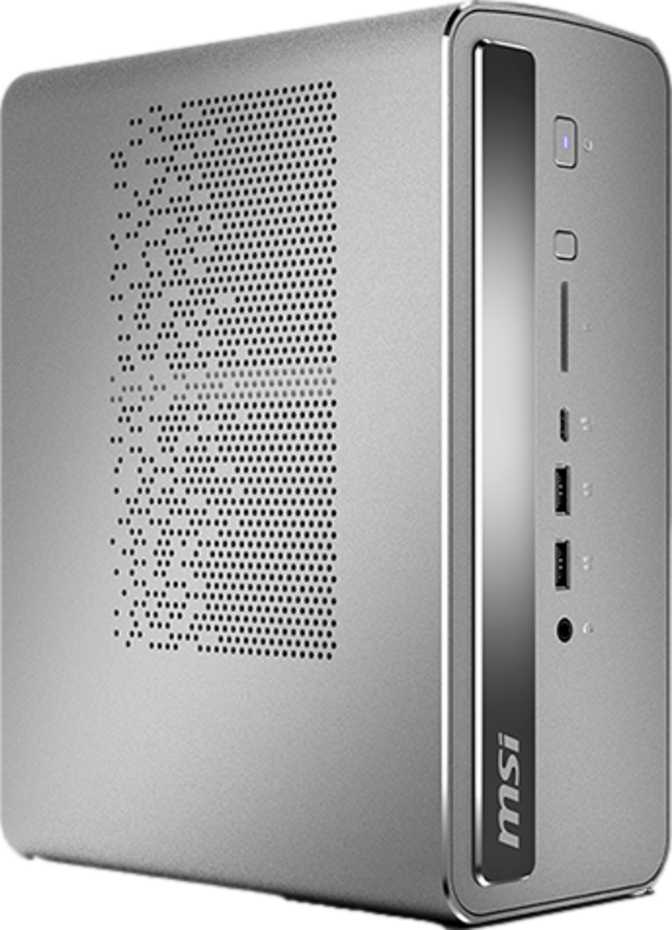
Design and Build Quality
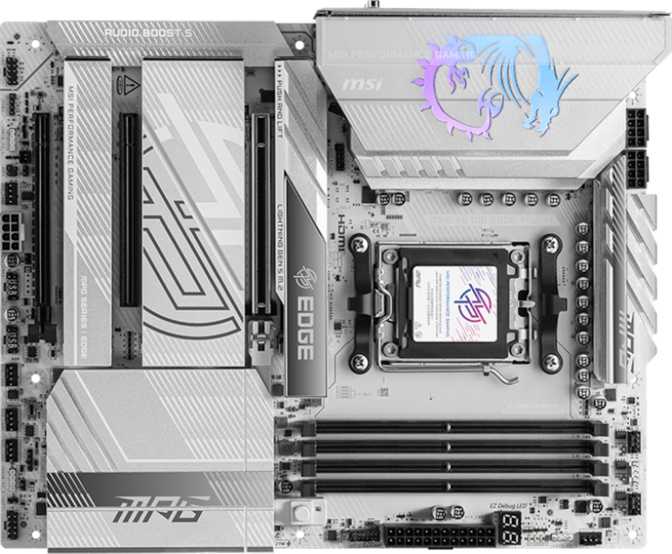
Micro-ATX sits in a practical middle ground — genuinely compact compared to a full tower, yet roomier than the ultra-small mini-PC enclosures that have surged in popularity. For the MSI AI Edge, this extra breathing room matters: it allows real cooling hardware to manage a processor that sustains demanding workloads without triggering thermal throttling.
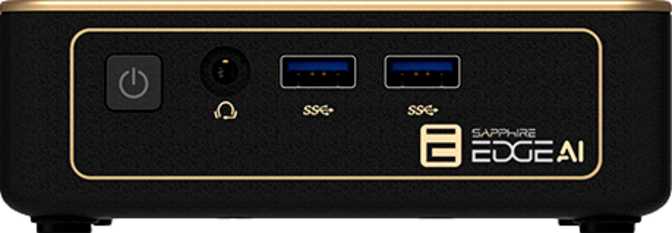
The chassis reflects a workstation aesthetic — functional, understated, and aimed at a professional environment rather than a gaming setup. There are no RGB lighting effects competing for attention. The physical footprint fits comfortably under most monitors, beside a standard tower, or behind a display with a compatible VESA mount — a practical option for space-constrained offices and multi-screen environments.
More internal volume than ultra-compact mini PCs, enabling proper thermal management under sustained professional loads.
Clean, restrained design language built for offices and workstations. No decorative lighting — all focus is on internal capability.
Compact enough for under-monitor positioning or VESA mounting behind a display, keeping desk surfaces clear.
Processor Performance
A 16-core, 32-thread chip with a 5.1GHz peak clock and 64MB of L3 cache — here is what those figures mean for the work you actually do.
Core Count and Multithreading
The 16-core, 32-thread design is largely invisible during everyday single-tasking — you won't notice a difference between this and a four-core machine while browsing or writing. The gap opens the moment you stack multiple heavy workloads simultaneously: running a local AI inference server while editing video, compiling code, or processing large datasets in parallel.
Thirty-two threads give the operating system 32 independent execution lanes. Practically, this is the difference between an AI model crawling while you use other applications and it responding instantly because it has dedicated resources that don't compete with your open tasks.
Base and Boost Clock Speeds
At 3GHz across all cores, the processor holds a reliable, sustained speed for continuous workloads. When tasks are lighter or brief in duration, it surges to 5.1GHz on the cores that need it most — a peak competitive with enthusiast-grade desktop chips costing significantly more.
This dual-speed design delivers strong responsiveness for single-threaded tasks like opening files and running scripts, alongside the raw throughput needed for deeply parallel AI and data workloads.
The 55-Watt Efficiency Advantage
Traditional desktop processors with comparable core counts typically operate between 65 and 125 watts. The AI Edge targets 55 watts — a deliberate design decision that produces less heat, draws less continuous power, and enables quieter operation in a compact chassis that cannot move the same air volume as a full tower.
The trade-off is real: sustained all-core performance under extreme loads may fall slightly below a fully unlocked 125W desktop chip. For AI inference, data processing, and professional productivity, this gap is unlikely to surface. For encoding 8K video continuously for hours or running fully saturated compute jobs around the clock, a thermally unconstrained platform deserves consideration.
Cache Architecture and AI Suitability
The 64MB L3 cache is one of the most consequential — and least discussed — specifications on this chip. It is a large on-die memory buffer that lets the processor store frequently accessed data close to the cores, avoiding slower trips to system RAM entirely.
For AI inference specifically, large cache allows model weights to be accessed with lower latency during token generation. This is not a minor implementation detail — it is a primary reason this class of processor handles local AI inference better than older chips with larger core counts but shallower caches. A further 16MB of L2 cache across all cores and 1,280KB of ultra-fast L1 cache complete the hierarchy.
Benchmark Scores
These scores represent what the hardware delivers under standardized testing conditions. The processor multiplier is locked, so these figures represent the ceiling as configured — no overclocking headroom is available.
Memory: 128GB DDR5 Is Not Normal — That Is the Point
This machine's memory specification is its most important differentiator. Understanding why requires knowing what this much RAM actually unlocks in practice.
Why This Much RAM Matters
Most consumer desktops ship with 16 to 32GB of RAM. The MSI AI Edge supports up to 128GB of DDR5. Running large language models locally requires keeping model weights in system memory — a 7-billion-parameter model needs roughly 14GB in standard precision, and larger models scale proportionally. With 128GB available, this machine holds multiple substantial models in memory simultaneously without swapping to storage between tasks.
For non-AI workloads, 128GB accommodates database administrators working with large in-memory datasets, developers handling enterprise-scale applications, and creative professionals processing very high-resolution assets without hitting paging. Short of enterprise server work, this capacity ceiling is unlikely to be reached.
- 7B parameter models (~14GB)
- 13B parameter models (~26GB)
- 34B parameter models (~68GB)
- Multiple models loaded simultaneously
DDR5 Speed and Four-Channel Architecture
Operating at up to 8,000MHz across four parallel memory channels, this is one of the highest-bandwidth memory configurations available in a compact desktop. Four-channel memory moves data across four independent lanes simultaneously — rather than two — which directly benefits both the processor and the integrated GPU. For the GPU specifically, which shares system memory rather than dedicated VRAM, this bandwidth is critical to performance in graphics and compute workloads.
ECC Support: A Workstation-Class Credential
Error-Correcting Code memory detects and silently corrects single-bit memory errors before they surface as crashes, data corruption, or subtly wrong computational results. For AI researchers running long inference or training jobs, financial professionals processing sensitive data, and developers whose applications must run for days without interruption, ECC is a requirement rather than a luxury. Finding it in a Micro-ATX compact desktop is a genuine differentiator at this form factor and price tier.
Graphics: Integrated, But Built for Modern Work
The Radeon 8060S redefines what integrated graphics can deliver — but it is still integrated graphics, with all the implications that carries for demanding visual workloads.
Radeon 8060S: Capabilities and Context
Built on a 4-nanometer manufacturing process — the same leading-edge fabrication used in high-end discrete GPUs — the Radeon 8060S packs more transistors in less space while consuming less power than any previous generation of integrated graphics. With 2,560 shader processors, 160 texture mapping units, and a boost clock reaching 2,900MHz, it handles hardware-accelerated video playback and editing, light 3D rendering, and GPU-accelerated AI compute via OpenCL 3.0 and DirectX 12.
OpenGL 4.6 support covers the full range of professional visualization applications that rely on it. For inference tasks using smaller to mid-sized models, offloading processing to this GPU meaningfully reduces latency compared to CPU-only execution — a considered design choice in a machine explicitly marketed for AI workloads.
Four-Display Output
The AI Edge drives up to four independent monitors simultaneously — two via HDMI 2.1, one via DisplayPort, and a fourth through the additional video-capable output. HDMI 2.1 supports 4K at 144Hz or 8K at 30Hz per connection, meaning no resolution compromise for high-end professional displays.
GPU Specification Summary
| GPU Model | Radeon 8060S |
|---|---|
| Process Node | 4 nanometer |
| Shader Units | 2,560 |
| Texture Units | 160 |
| Render Outputs | 64 |
| Boost Clock | 2,900 MHz |
| API Support | DirectX 12, OpenGL 4.6, OpenCL 3.0 |
| Max Displays | 4 simultaneous |
Storage: 2TB NVMe — Speed Matched to Capacity
The 2TB NVMe SSD connects via PCIe 4.0, the high-bandwidth storage interface that delivers roughly double the throughput of PCIe 3.0 drives. In practice: fast application launches, near-instant OS boot times, and rapid file transfers when moving large datasets, AI model archives, or project files.
Two terabytes is genuinely generous. An operating system with a full suite of productivity and development applications typically occupies under 100GB. The remaining capacity absorbs large AI model files, video editing projects, development environments, and extensive data archives without reaching for external storage during routine work.
Connectivity: Modern Standards, One Critical Gap
The AI Edge is equipped with the latest wireless technology and modern high-speed USB — but one missing port stands out for a professional-class machine.
Wireless Connectivity
Wi-Fi 7 (802.11be) is the newest wireless standard available. It operates across multiple radio bands simultaneously, delivering higher throughput and lower latency than Wi-Fi 6E. In dense wireless environments, its multi-link operation maintains stable connections even when many devices share the same airspace. Full backward compatibility with Wi-Fi 6E, 6, 5, and 4 networks is included — no router upgrade is required to connect today.
Bluetooth 5.4 handles peripheral connections with improved stability and data throughput over earlier versions — relevant for users building a clean wireless desk setup with keyboard, mouse, and audio devices.
Port Layout at a Glance
| Port Type | Count | Speed / Standard |
|---|---|---|
| USB-A (3.2 Gen 2) | 2 | 10 Gbps each |
| USB-C (3.2 Gen 2) | 1 | 10 Gbps |
| HDMI 2.1 | 2 | 4K@144Hz / 8K@30Hz |
| DisplayPort | 1 | High-resolution capable |
| 3.5mm Audio Jack | 1 | Headphones / Speakers |
| Wired Ethernet (RJ45) | 0 | Adapter required |
| Thunderbolt 4 | 0 | Not supported |
Who the MSI AI Edge Is — and Is Not — For
This machine is well-targeted for a specific kind of professional buyer. The clearer you are about which side of this divide you sit on, the easier the purchase decision becomes.
-
AI Developers and Researchers128GB ECC DDR5 with GPU compute acceleration enables local inference of mid-to-large language models without cloud dependency or latency.
-
Data Professionals and AnalystsLarge in-memory datasets and ECC reliability justify the memory configuration for enterprise-scale local data processing and analytics.
-
Multi-Monitor Power UsersFour simultaneous 4K-capable displays driven without a discrete GPU serve demanding visual workflows right out of the box.
-
Edge Computing DeploymentsEfficient sustained performance, ECC memory, and compact form factor support long-running inference where cloud latency is unacceptable.
-
Space-Constrained ProfessionalsMicro-ATX footprint, wireless connectivity, and low continuous power draw suit offices and labs where a full tower is impractical.
-
PC Gaming at High SettingsNo discrete GPU slot and no expansion path for standalone graphics. The Radeon 8060S is not competitive with modern gaming cards for current-generation titles.
-
Mandatory Wired NetworkingNo onboard Ethernet. Data centers and environments requiring LAN for security or reliability must use a USB adapter — a dependency that should not exist at this tier.
-
Thunderbolt WorkflowsNo Thunderbolt 4 limits compatibility with high-speed docks, Thunderbolt storage, and external GPU enclosures if needs evolve.
-
Overclocking EnthusiastsThe processor multiplier is locked. Performance is fixed at the manufacturer's configured levels — no headroom for tuning or pushing beyond spec.
Competitive Positioning
How the MSI AI Edge stacks up against logical alternatives in the compact professional desktop segment.
| Feature | MSI AI Edge | Typical Compact AI Workstation | Standard Consumer Mini PC |
|---|---|---|---|
| Maximum RAM | 128GB DDR5 | 64–128GB DDR5 | 32–64GB DDR4/DDR5 |
| ECC Memory | Yes | Sometimes | Rarely |
| CPU Threads | 32 | 16–32 | 8–16 |
| Integrated GPU | Radeon 8060S (4nm) | Varies | Entry-level iGPU |
| Wi-Fi Generation | Wi-Fi 7 | Wi-Fi 6E | Wi-Fi 6 |
| Display Outputs | 4 simultaneous | 2–3 | 2 |
| Wired Ethernet | No — adapter needed | Usually yes | Usually yes |
| Base Storage | 2TB NVMe PCIe 4.0 | 512GB–2TB | 256GB–1TB |
| Form Factor | Micro-ATX | Micro-ATX / Mini-ITX | Ultra-compact |
The MSI AI Edge's strongest competitive advantage is its memory ceiling combined with ECC support at this form factor. Concessions in wired networking, discrete graphics expansion, and Thunderbolt are mostly calculated trade-offs — with the exception of the missing Ethernet port, which has no similarly clean justification.
Honest Assessment: Strengths and Limitations
Where It Excels
The memory architecture alone makes a compelling case. 128GB of ECC DDR5 running across four channels at speeds up to 8,000MHz is a specification found in workstation towers costing considerably more. Pairing that with a 16-core processor that maintains efficiency under sustained load results in a machine that genuinely earns the AI positioning in its name.
The 64MB L3 cache is the quiet star of the specification sheet. It doesn't appear in marketing materials, but it has a direct, measurable effect on AI inference responsiveness, database query performance, and any workload that benefits from keeping hot data close to the cores. The four-channel DDR5 bandwidth amplifies this advantage further.
The Radeon 8060S — built on 4nm and capable of driving four simultaneous displays while contributing to GPU-accelerated compute — is more capable than the term "integrated graphics" has historically implied. For the workstation and AI compute use case this machine targets, it is appropriately and thoughtfully specified.
Where It Falls Short
The missing wired Ethernet port is the most frustrating gap in an otherwise coherent design. In a machine positioned for professional and edge-deployment use cases — environments where wired connectivity is often a requirement rather than a preference — this forces a USB adapter dependency that the hardware does not deserve.
The absence of Thunderbolt 4 is a secondary concern for the core audience, but it closes the door on external GPU expansion and limits high-speed dock compatibility for users whose peripheral ecosystem has moved in that direction.
The integrated GPU is genuinely capable for its class, but "integrated" still applies — it shares system memory rather than having dedicated VRAM. This is the correct trade-off for an AI and data workstation, but professionals handling heavy 3D rendering or GPU-intensive video production should weigh this carefully against systems with discrete graphics before committing.
Frequently Asked Questions
The questions real buyers ask before purchasing the MSI AI Edge.
Final Verdict
4.3 out of 5 — Highly Recommended for AI and Data Professionals
The MSI AI Edge is a well-targeted machine for a specific professional buyer — and for that buyer, it is an exceptionally strong choice. The combination of 128GB ECC DDR5, a highly capable 16-core processor with substantial cache, Wi-Fi 7, four-display output, and a 2TB NVMe SSD in a Micro-ATX footprint addresses a real gap in the market for compact workstations capable of serious AI and professional compute work.
It is not a machine for everyone. Gamers, users who need wired Ethernet without adapters, and creative professionals requiring discrete graphics will find better options elsewhere. But for developers building and testing AI applications locally, analysts working with large datasets, and professionals deploying inference at the edge of a network — the MSI AI Edge delivers a rare combination of ECC reliability, memory capacity, and processing efficiency in a form factor that fits where servers simply do not.