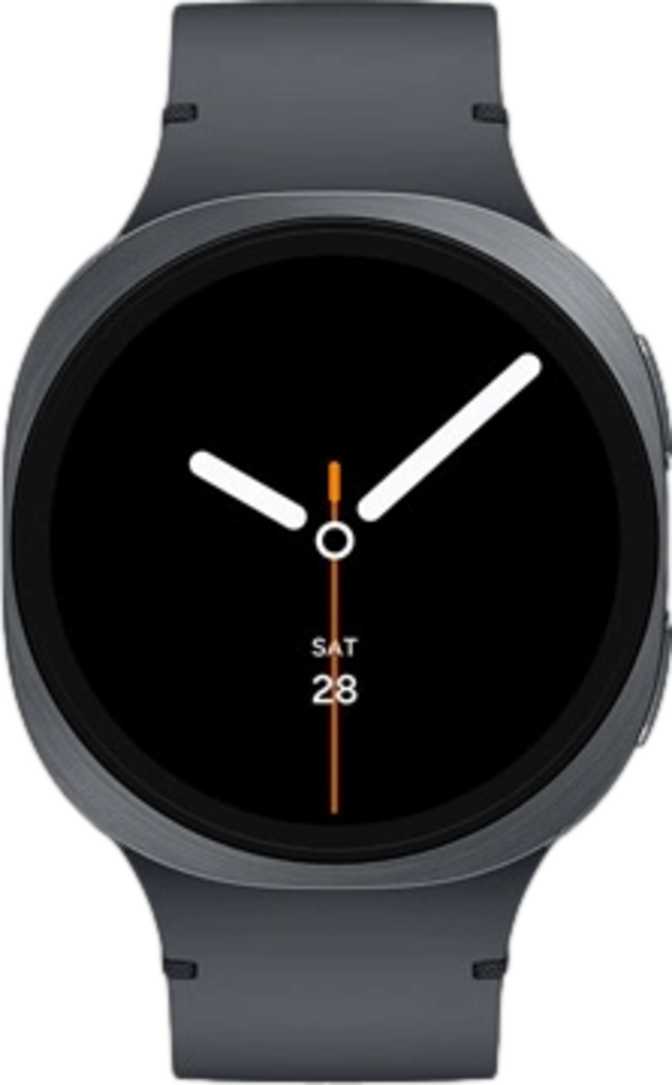
Samsung Galaxy Watch8 LTE 44mm – An Honest Review for Android Users
SmartwatchesThe smartwatch market is crowded at every price tier, but the 44mm category sits in a particularly contested sweet spot — large enough to deliver serious health features, small enough that most wrists won't protest. The Samsung Galaxy Watch8 LTE 44mm enters this space carrying a dense feature roster, a cellular connection that cuts the phone cord entirely, and health monitoring hardware that would have required a clinic visit just a few years ago. Whether that adds up to the right watch for you depends on a handful of factors that most reviews gloss over. This one won't.
Design and Build Quality
Physical experience, materials, and wearability
A Surprisingly Wearable Build
At 34 grams, the Galaxy Watch8 44mm pulls off something genuinely difficult: it feels solid without feeling heavy. The case measures 46mm tall and 43.7mm wide — at the upper edge of what most people consider "medium" — reading as a proper full-sized watch without crossing into hockey-puck territory.
The 8.6mm case profile keeps the watch from snagging on cuffs and makes it far more comfortable during sleep tracking than bulkier competitors. This is a detail that matters enormously day-to-day and tends to get buried under flashier specifications.
Always-On AMOLED Display
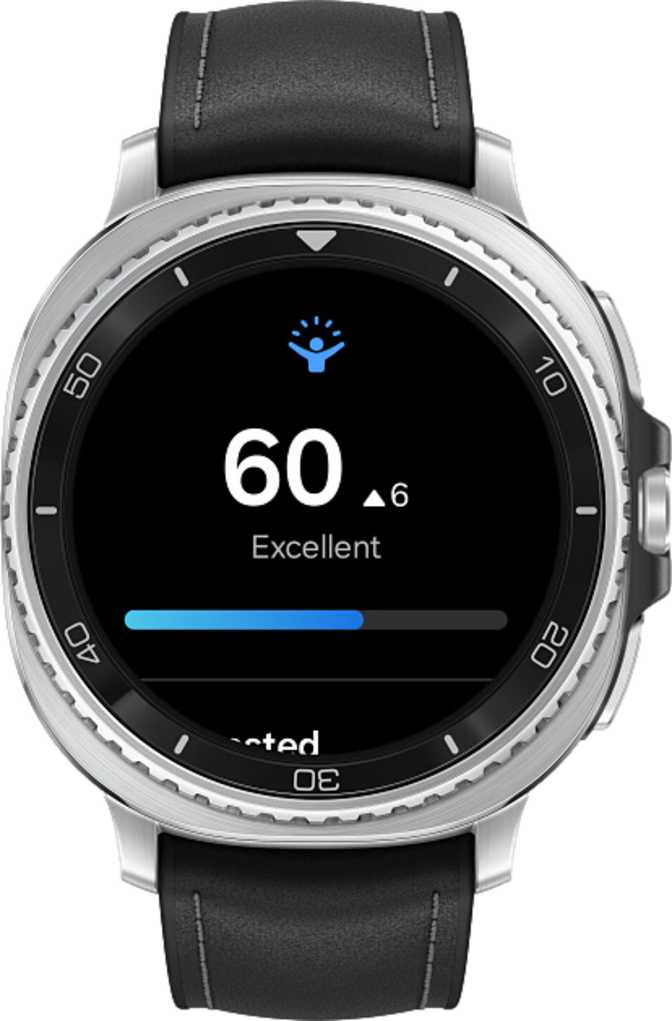
The 1.47-inch AMOLED panel runs at 480 by 480 pixels — dense enough that text and watch faces appear sharp with no visible pixel structure. AMOLED means blacks are genuinely black (pixels switch off entirely), delivering excellent contrast in direct sunlight without the power cost an LCD would incur.
The always-on display is a genuine usability feature: glancing at the time without raising your wrist or tapping the screen is something you'll use dozens of times a day. Its absence on lesser watches becomes noticeable almost immediately.
Sapphire Glass: The Real Thing
The display is protected by genuine sapphire glass — the same material used in high-end mechanical watches. At 9 on the Mohs hardness scale, it resists scratching from virtually every material you'll encounter in daily life. This is not scratch-resistant glass with a brand name; it is the actual material.
The absence of a third-party branded coating confirms a true sapphire panel rather than chemically-treated glass dressed up with marketing language — a meaningful distinction at this price tier.
Water Resistance
Both IP68 certification and a 5 ATM rating apply, with a tested depth of 50 meters. The swim stroke counter confirms Samsung built this for pool use, not just rain resistance.
Recreational surface swimming is fully supported. Scuba or freediving operations exceed the tested rating.
Interchangeable Band System
The 20mm band width taps into Samsung's interchangeable ecosystem, compatible with a wide range of bands from both Samsung and third-party makers. Swapping between a silicone sport band for workouts and a fabric or leather option for everyday wear takes about five seconds with no tools required. For a watch designed to be worn around the clock, this flexibility has real practical value.
Connectivity: What LTE Actually Changes
eSIM, Bluetooth 5.3, NFC, Wi-Fi, GPS, and the Android-only platform
A Watch That Doesn't Need Your Phone
The headline specification of this model is its LTE cellular connectivity, delivered via a built-in eSIM. An eSIM is a digital SIM card embedded in the hardware — you add a watch plan through your carrier's app rather than swapping a physical card. Most major carriers offer paired watch plans that share your existing number and data.
What this means in practice: you can leave your phone at home — at the gym, on a run, at the beach — and still receive calls, send messages, stream music, and receive notifications. For people who exercise outdoors without wanting to carry a phone for safety reasons, this is a substantive capability, not a checkbox feature.
Wireless Specs
- LTE via eSIMStandalone calls, messages, streaming
- Wi-Fi 4 (802.11n)Home and office network sync
- Bluetooth 5.3Headphones and Android pairing
- NFC PaymentsTap to pay without wallet or phone
- GPS + GalileoFast lock, dual satellite support
The Galaxy Watch8 is fully compatible with Android devices and completely incompatible with iOS. If you own an iPhone, this watch will not function as intended. There is no workaround — this restriction is a hardware and software architecture decision, not a configuration issue. iPhone users should look elsewhere.
GPS and Satellite Accuracy
Built-in GPS with fast lock capability combines with Galileo satellite support — the European system that significantly improves positioning accuracy in dense urban environments and at high latitudes. Fast GPS acquisition means the watch doesn't make you stand waiting for signal at the start of a run. The built-in compass and barometer complete what amounts to a capable navigation and environmental sensor suite.
Health Monitoring: The Sensor Suite Explained
Cardiovascular, biometric, and safety sensors in plain language
Cardiovascular Monitoring
The watch tracks resting heart rate continuously, with alerts if your rate climbs too high or drops too low — useful for people managing cardiac conditions or simply wanting to know their baseline.
ECG (electrocardiogram) measurements can be taken on demand, capturing the electrical activity of your heart in a format that can be shared with a physician. This is the same fundamental technology used in medical devices, miniaturized into a wrist sensor.
Heart rate variability (HRV) tracking measures tiny fluctuations in time between heartbeats — a metric athletes use as a proxy for recovery status. The watch uses this data alongside other biometrics to generate a daily readiness score, telling you whether your body is prepared for intense training or needs a lighter day.
Blood Oxygen, Temperature, and Safety
The SpO2 sensor measures blood oxygen saturation — the percentage of hemoglobin carrying oxygen. Fitness enthusiasts use this during altitude training; anyone recovering from respiratory illness uses it as a general wellness indicator.
A dedicated skin temperature sensor tracks physiological trends over time, particularly relevant for menstrual cycle monitoring and illness onset patterns.
Fall detection uses the accelerometer and gyroscope together to identify impact patterns consistent with a fall, sending an alert and optionally contacting emergency services if there's no response. For older users or solo runners in remote areas, this is a genuine safety feature, not a marketing bullet.
Full Sensor Inventory
- No cadence sensor — relevant for cyclists tracking pedal revolutions per minute
- No perspiration or galvanic skin response monitoring
- No dedicated multi-sport mode with per-sport tracking algorithms
Activity and Fitness Tracking
What the watch monitors day-to-day and how it handles workouts
Day-to-Day Tracking
Step counting, distance, and pace tracking cover the basics most people actually look at daily. Elevation tracking via barometer means stair climbing, hiking, and hilly terrain count properly — vertical effort isn't conflated with flat distance. Route tracking uses GPS and satellite data to map outdoor activities, stored and accessible through the companion app.
Sleep tracking captures time asleep, sleep stages, and generates reports identifying quality patterns — not just total hours. The watch's 8.6mm slim profile makes wearing it to bed realistic, which is a prerequisite for sleep tracking to be genuinely useful.
Swimming and Holistic Health
Swimming is specifically supported with stroke counting — confirming the hardware is purpose-built for pool use, not just splash-resistant. The watch does not have a diving mode, so freediving or scuba metrics are outside its scope.
Beyond movement, the ecosystem tracks calorie intake via manual logging, water consumption, and integrates with compatible smart scales to pull in weight and BMI data. Having these centralized in one platform reduces the friction of tracking multiple health variables across separate apps.
VO2 max estimation gives athletes a long-term aerobic fitness capacity trend to track over months of consistent use — increasingly common on fitness-focused devices but genuinely useful here.
Performance Hardware
2GB RAM and 32GB storage — what these numbers mean on a watch
2GB RAM
RAM is the working memory that allows the watch's operating system and apps to run without stuttering. On a smartwatch, this directly affects how quickly the device responds when you raise your wrist, navigate menus, or switch between apps. 2GB is a meaningful step above minimum configurations and suggests the watch handles its full software load without the lag that plagues under-specced wearables — something that becomes obvious in daily use but rarely gets the prominence it deserves in spec comparisons.
32GB Storage
32GB of internal storage is a substantial allocation for a wearable. In practical terms, this means storing a significant music library directly on the watch — enough for offline playback via Bluetooth headphones without a phone nearby. Combined with the LTE connection, offline music during phone-free workouts is a genuine daily use case that the 4–8GB found on competing watches simply cannot support in the same way.
Battery Life: Honest Context
What two days means in real use — and what it doesn't
The rated battery life of approximately two days represents real-world mixed use — always-on display active, GPS tracking for one workout per day, LTE and Bluetooth connected, health sensors running continuously. Two days is not a long battery life compared to dedicated fitness trackers, which routinely last five to fourteen days. It is consistent with what full-feature AMOLED smartwatches in this category typically deliver.
What this means practically: you charge every other night at minimum, or every night if you use GPS-intensive activities daily or keep LTE active throughout the day. Wireless charging removes cable friction — set it on the pad at night, pick it up in the morning.
If multi-day battery life without charging is a non-negotiable requirement, this watch is not the right choice. This is a category-wide engineering trade-off, not a Samsung-specific weakness.
Battery Life by Category
Trade-off: richer features, shorter endurance. A pattern across the full-feature smartwatch category, not a Watch8-specific flaw.
The App Ecosystem
Samsung Health — free, ad-free, and more capable than it looks
The companion app is free and ad-free — no subscription required to access core functionality. The platform supports goal setting, achievement tracking, an exercise diary, coaching guidance, voice feedback during workouts, food and water diaries, weight and BMI logs, and on-watch maps for outdoor navigation. Period cycle tracking includes date prediction and notifications, making the platform genuinely useful for reproductive health monitoring.
The one notable gap: no barcode scanner for food logging. Users who prefer scanning packaged foods will need to enter nutritional data manually or use a secondary app for that specific step.
Who Should Buy This Watch
And who should definitely look elsewhere
Best Fit If You...
- Use an Android smartphone — this is an absolute requirement, not a preference
- Want to leave your phone behind during workouts or errands without going fully off-grid
- Take health monitoring seriously — particularly cardiac health, recovery tracking, and sleep quality
- Swim regularly and want a watch that tracks pool sessions with proper stroke counting
- Value a sharp, always-on display and genuine scratch resistance over multi-week battery life
- Want a watch that works as a standalone communication device, not just a phone accessory
Not the Right Fit If You...
- Own an iPhone — full stop, no workaround exists
- Prioritize battery life above all else and resist charging a wearable every one to two days
- Need dedicated multi-sport mode with individual algorithms for cycling, rowing, and niche sports
- Require a cadence sensor or perspiration monitoring for advanced endurance training analytics
- Exercise regularly in sub-freezing temperatures — operation below 0°C is outside the rated range
Competitive Positioning
How the Galaxy Watch8 LTE 44mm sits in the Android smartwatch market
| Feature Area | Galaxy Watch8 LTE 44mm | Budget Android Watch | Dedicated Fitness Tracker |
|---|---|---|---|
| Cellular (LTE) | Yes — eSIM | Rarely | No |
| ECG | Yes | No | Uncommon |
| Display | AMOLED, Always-On | LCD or basic AMOLED | Often none |
| Battery Life | ~2 days | 2–5 days | 5–14 days |
| Sapphire Glass | Yes | No | No |
| Onboard Storage | 32GB | 4–8GB | Minimal or none |
| iOS Compatibility | No | Varies | Often yes |
| Swim Tracking | Yes — stroke count | Basic | Varies |
Category Ratings
Honest Strengths and Real Weaknesses
Where It Excels
The sapphire display is genuinely premium and makes scratch anxiety a non-concern from day one. The always-on AMOLED panel delivers the kind of at-a-glance usability that watch faces are supposed to provide — something lesser displays actively undermine with lag and dimness.
The LTE cellular module is the defining feature of this variant and works as advertised. The watch functions as a standalone communication device when needed, changing how you relate to it — from phone accessory to independent wearable in its own right.
The health sensor suite — particularly ECG, HRV, and fall detection — goes meaningfully beyond what most people expect from a watch. For health-conscious users and those with medical monitoring needs, these sensors provide real value, not feature-list padding.
The 32GB of onboard storage is an outlier in the category and makes this a credible offline music player — a practical daily benefit for anyone who exercises without a phone.
Where It Falls Short
Battery life demands a consistent charging habit — every other night at minimum, nightly for heavy users. There is no workaround; the feature density and display technology consume the power budget they require. It is a predictable trade-off, but still a real one that affects daily routine.
The Android exclusivity eliminates a significant portion of potential buyers with no workaround available. This is a hard platform restriction built into hardware and software architecture — not a minor footnote.
The absence of multi-sport mode and cadence sensing means serious endurance athletes and cyclists will find the activity tracking less granular than purpose-built sports watches in the same price range.
The temperature operating range — rated only down to 0°C — means sub-freezing operation is outside specified parameters. Winter runners and skiers in genuinely cold climates should factor this in before purchasing.
Frequently Asked Questions
Clear Recommendation — For the Right Android Buyer
The Samsung Galaxy Watch8 LTE 44mm is a premium Android smartwatch that justifies its position through a combination of genuine hardware quality and a cellular capability that meaningfully expands what a watch can do. The sapphire glass, AMOLED always-on display, and comprehensive health sensor package — including ECG, HRV, and fall detection — represent a coherent and thoughtfully assembled feature set.
It is not a watch for iPhone users, not a watch for anyone who resents charging every two days, and not the optimal choice for competitive endurance athletes needing deep multi-sport analytics. Those are real constraints — not edge cases.
For Android users who want a watch that functions as a capable standalone device, monitors health with clinical-grade sensors, survives swimming and daily punishment behind sapphire glass, and has enough storage to be a genuine music player — the Galaxy Watch8 LTE 44mm delivers on all of those counts. It earns its recommendation confidently within that well-defined audience.