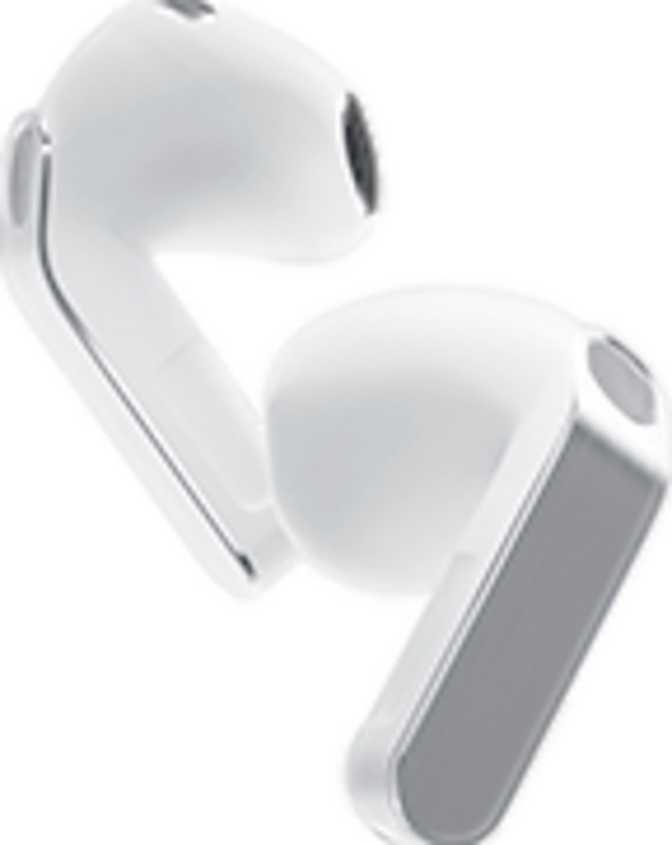
Samsung Galaxy Buds 4 Review: Lightweight Earbuds With a Lot to Offer
Wireless EarbudsCompetitive driver size with full-spectrum coverage and tunable EQ via the Galaxy Wearable app.
6 hrs per charge (5 hrs with ANC), extended to 24 hrs total with the charging case.
Latest Bluetooth standard with LE Audio and Auracast broadcast support built in.
Six mics with noise-canceling processing for clear call quality in demanding environments.
Dust-protected and splash/sweat resistant — ready for workouts, commutes, and light rain.
Full charge in ~70 minutes via USB-C. No wireless Qi charging on the case.
First Impressions: Compact Earbuds With a Serious Feature List
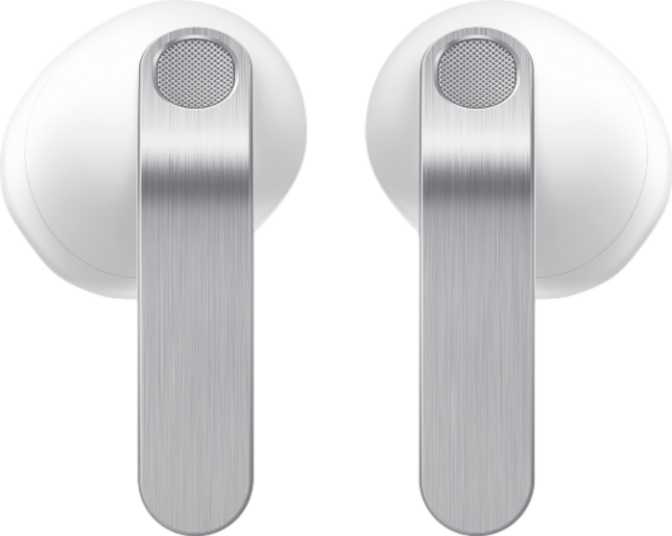
The wireless earbud market is crowded at every price point, and Samsung has been one of its most consistent players. The Galaxy Buds 4 represent the brand's latest attempt at the sweet spot — small enough to forget you are wearing them, capable enough to replace over-ear headphones for everyday life. At 9.2 grams per earbud, they are featherweight. Whether that lightness comes with trade-offs worth caring about depends entirely on what you need from a pair of earbuds. That is what this review is here to answer.
Design and Build: Light, Snug, and Ready for the Real World
Fit and Comfort
The Galaxy Buds 4 use a traditional in-ear design — sitting in the ear canal with silicone tips rather than resting loosely in the outer ear. This physical seal dramatically improves isolation from background noise and keeps bass frequencies from leaking away.
At just over 9 grams each, they land comfortably in the lighter half of the true wireless category, where competitors typically range from 5 to 12 grams.
No wingtips included. High-impact runners and athletes may find the fit less secure during intense movement.
Sweat & Splash Protection
The IP54 rating provides genuine dust protection and handles water splashing from any direction. For the vast majority of daily use scenarios, this is solid and appropriate protection for the form factor.
- Gym and workout sessions
- Light rain and drizzle
- Accidental splashes
- Submersion not covered
In the Box
A travel bag is included — a thoughtful touch that not every manufacturer provides at this tier. The case charges via USB-C, keeping you aligned with the single cable standard that most modern devices already use.
Sound Quality: What the Hardware Actually Delivers
The 11mm Driver Explained
Each earbud houses an 11-millimeter dynamic driver. Driver size correlates loosely with low-frequency reproduction — larger drivers can move more air and produce more convincing bass. At 11mm, the Buds 4 sit well within the competitive range (8mm to 12mm) where skilled engineers extract excellent sound through careful tuning.
The frequency response covers the complete range of human hearing — from the deepest bass to the highest treble. What matters most in practice is how Samsung tunes the sound within that range. The Galaxy Wearable app exposes an equalizer so you can adjust to your own preferences.
Spatial Audio
Spatial audio creates a three-dimensional sound field — music and movie audio can feel like it is coming from in front of you rather than from inside your skull. This is particularly effective for films and games where directional sound adds to immersion. For pure music listening, it is a personal taste question: some listeners love the width, others prefer a focused stereo image.
Codec Support at a Glance
- AAC — high-quality wireless audio, Android and iOS compatible
- Bluetooth LE Audio — next-generation efficient streaming
- LDAC — Sony's hi-res codec not included
- aptX / aptX HD — Qualcomm codecs absent
- Dolby Atmos — not natively supported
For most listeners: AAC delivers excellent wireless audio quality. Only audiophiles with dedicated hi-res streaming setups will notice the missing codecs.
Active Noise Cancellation: The Numbers Behind the Quiet
How ANC Affects Battery Life
Running ANC costs energy. The trade-off here is measured compared to category norms — roughly a 17% reduction in playback time. Five hours of ANC-on listening covers most full workdays, long-haul flights, and morning commutes with headroom to spare.
Approximately 17% reduction — among the more moderate trade-offs in this product tier.
Ambient Sound Mode
Ambient sound mode inverts the logic of ANC — instead of blocking the outside world, it pipes environmental audio in through the microphones so you can hear announcements, conversations, or traffic without removing the earbuds. This is a practical daily feature for city commuters who need to switch quickly between focus and situational awareness.
What ANC Handles Best
- Engine hum on planes and trains
- HVAC and office background hum
- Consistent low-frequency rumble
- Unpredictable sharp sounds only partially reduced
Battery and Charging: Daily Driver Credentials
Total Endurance
The case carries enough reserve charge to refill the earbuds approximately four times, giving a combined total of around 24 hours of listening before you need to find a wall outlet. For most people, that means charging the case roughly twice a week — not every night. The daily routine is simply dropping the earbuds back in the case when not in use.
Charging Speed and Method
Fast charging is supported, and a roughly 70-minute full charge is competitive for this category. A short top-up while you are getting ready can add meaningful listening time when you are caught short. The case uses USB-C — consistent with the single-cable setups most modern users already run.
One Notable Absence
There is no wireless Qi charging for the case. Competitors at various price points do include this feature, and if you run a charging pad as part of your daily desk or nightstand routine, the Buds 4 will require you to reach for a USB-C cable instead.
It is a minor friction point rather than a dealbreaker — but if wireless case charging is a meaningful part of your workflow, this is worth factoring into your decision.
Connectivity: Bluetooth 6.1 and What It Actually Means
A Forward-Looking Wireless Stack
Bluetooth 6.1 is among the most current wireless standards available. Newer Bluetooth versions bring improvements in connection stability, reduced audio-to-video latency, and more efficient power use. In everyday terms, this means a more reliable connection that drops less frequently in complex RF environments — offices packed with devices, busy transit, or crowded public spaces.
Bluetooth LE Audio and Auracast
Bluetooth LE Audio is a next-generation audio standard built on top of newer Bluetooth specifications, enabling more efficient streaming. Related to this, Auracast is a broadcast feature that allows a single source to transmit to unlimited receiving devices simultaneously.
In venues where Auracast-compatible infrastructure is installed — airports, cinemas, public transit systems — you will be able to tune into shared audio streams directly through these earbuds. Adoption is growing and having it built in meaningfully future-proofs the Buds 4.
Multipoint Pairing: Phone and Laptop Together
The Buds 4 stay connected to two devices simultaneously. Audio switches automatically depending on which device is actively playing. For anyone working at a desk while keeping their phone nearby, this removes the frustration of manual reconnection every time you switch contexts.
Connectivity Specs at a Glance
| Bluetooth Version | 6.1 |
| LE Audio | Yes |
| Auracast | Yes |
| AAC Codec | Yes |
| LDAC / aptX | No |
| Multipoint Devices | 2 |
| Open-Air Range | ~10 metres |
| Charging Port | USB-C |
Microphone Performance: Six Mics for a Reason
Six microphones across both earbuds is a higher count than budget earbuds typically carry. More pickup points allow the system to better isolate your voice from ambient noise — through beamforming and noise-canceling processing — which is what produces clear call quality in demanding environments.
This configuration is built to handle busy coffee shops, street noise, and windy conditions. The person on the other end of your call should hear your voice clearly rather than the background chaos around you. This matters not just for phone calls but for voice assistant interactions and the notification-reading feature.
Smart Features Worth Knowing About
Playback pauses automatically when an earbud is removed and resumes when you put it back in — no need to reach for your phone every time someone talks to you.
Conversations in different languages are translated through the earbuds in real time. A compelling feature for travelers and multilingual households, working best within the Samsung Galaxy ecosystem.
A built-in find-device feature helps locate your earbuds when they go missing. If you have ever spent ten minutes hunting for one that rolled under furniture, this feature earns its place immediately.
Incoming notifications are read aloud through the earbuds. Useful when your phone is in a bag or pocket and you want to stay informed without repeatedly checking a screen.
The Buds 4 function as a full wireless headset for calls and conference use. A mute function is included, making them practical for back-to-back meetings and video calls.
Battery level indication keeps you informed of the charge status of both earbuds and the case, so you are never caught off guard by a dead bud mid-commute or during a long call.
Who Should Buy the Galaxy Buds 4 — And Who Should Not
A Strong Match For
-
Daily commuters and office workersReliable ANC, clear call quality, and enough battery for a full workday without anxiety.
-
Samsung Galaxy phone usersTight integration with the Galaxy Wearable app, notification reading, and seamless device switching.
-
Casual to moderate exercisersSweat-protected and lightweight — gym regulars, walkers, and cyclists are all well served.
-
Multi-device usersDual-device pairing means your earbuds follow you between phone and laptop automatically.
-
Frequent travelersANC for flights, built-in translator for language barriers, and a travel bag included in the box.
A Weaker Fit For
-
Audiophiles and hi-res streaming fansNo LDAC or aptX HD means the wireless audio quality ceiling is set by AAC, not lossless-adjacent codecs.
-
Intense runners and high-impact athletesNo wingtips means the fit may not stay secure during aggressive physical activity.
-
Wireless charging devoteesThe case requires USB-C cable — no charging pad support.
-
Non-Samsung Android / iOS primary usersCore audio works cross-platform, but smart integrations are optimized for Galaxy devices and may be limited elsewhere.
How the Galaxy Buds 4 Compare to the Alternatives
| Feature | Samsung Galaxy Buds 4 | Budget Tier Alternative | Premium Tier Alternative |
|---|---|---|---|
| Active Noise Cancellation | Yes | Sometimes | Yes |
| ANC Battery Life | ~5 hours | ~4–5 hours | ~6–8 hours |
| Total Battery with Case | ~24 hours | ~20–24 hours | ~24–36 hours |
| Bluetooth Version | 6.1 | 5.3 | 5.3–5.4 |
| Bluetooth LE Audio | Yes | Rare | Occasional |
| LDAC Support | No | No | Sometimes |
| Wireless Case Charging | No | Sometimes | Often |
| Microphone Count | 6 | 2–4 | 4–6 |
| Multipoint Connections | 2 | Sometimes | Yes |
| IP Rating | IP54 | IPX4–IP54 | IP54–IP57 |
| Built-In Translator | Yes | No | Rare |
Competitor specifications represent typical ranges at each price tier. Individual models vary. Comparison is for orientation purposes only.
Honest Assessment: Strengths and Real Limitations
Where the Buds 4 Excel
The Buds 4's most compelling quality is not any single feature — it is the density of thoughtful, practical inclusions in a form factor this light. ANC, six-mic call quality, dual-device pairing, in-ear detection, notification reading, and a built-in translator in a 9.2-gram earbud is genuinely impressive packaging.
The Bluetooth 6.1 and LE Audio stack means these earbuds are better positioned for the near future of wireless audio than many rivals shipping with older specifications. The six-microphone array is a genuine competitive strength for call quality — well above what most budget earbuds offer and on par with several premium competitors.
Where They Fall Short
The gaps are in places Samsung has chosen not to compete. No LDAC sets the wireless audio quality ceiling at AAC rather than lossless-adjacent codecs — a real limitation for dedicated hi-res listeners. No wireless case charging feels out of step with the otherwise modern feature set at this tier.
While IP54 is appropriate for workouts and rain, buyers wanting genuine water resistance beyond sweat and splashing should look higher. Without wingtips, the fit story for serious athletes is incomplete. Real-world mic performance in extreme environments is shaped by software processing that specs alone cannot fully evaluate.
Common Questions Buyers Ask Before Purchasing
The Samsung Galaxy Buds 4: A Confident, Feature-Rich Daily Driver
The Samsung Galaxy Buds 4 are a well-considered everyday earbud with a feature set that would have been considered premium-tier not long ago. The combination of Bluetooth 6.1, LE Audio, Auracast, ANC, six-mic call quality, dual-device pairing, and a built-in translator in a 9.2-gram earbud is genuinely impressive work in a compact package.
If you are in the Samsung ecosystem, the Buds 4 are an easy recommendation for commuters, office users, and anyone who prioritizes call quality and smart integrations. Outside the Samsung ecosystem, they still hold their ground as capable, forward-looking wireless earbuds — provided LDAC is not a requirement for you.
If your priorities are maximum ANC endurance, hi-res codec streaming, or wireless case charging, you should look one tier up in Samsung's own lineup or toward Sony's equivalent offerings. For a lightweight, feature-rich, future-ready daily driver, however, the Galaxy Buds 4 earn their place in a genuinely competitive field.
- Excellent call quality
- Future-ready connectivity stack
- Smart, practical daily features
- Featherlight at 9.2g per earbud
- No LDAC or aptX codecs
- No wireless case charging