Portronics Beem 570 Full Review: Budget 1080p Smart Projector Tested
ProjectorsThe home projector market has a crowded middle — full of devices that promise a cinematic experience but deliver a frustrating compromise between picture quality, connectivity, and usability. The Portronics Beem 570 positions itself as an accessible entry point into proper 1080p projection, packing a striking number of smart features without demanding flagship-level spending. The details matter though, and there are a few important ones to know before committing.
Beem 570 — Quick Verdict
Design and Build Quality
Compact enough to move, solid enough to stay put
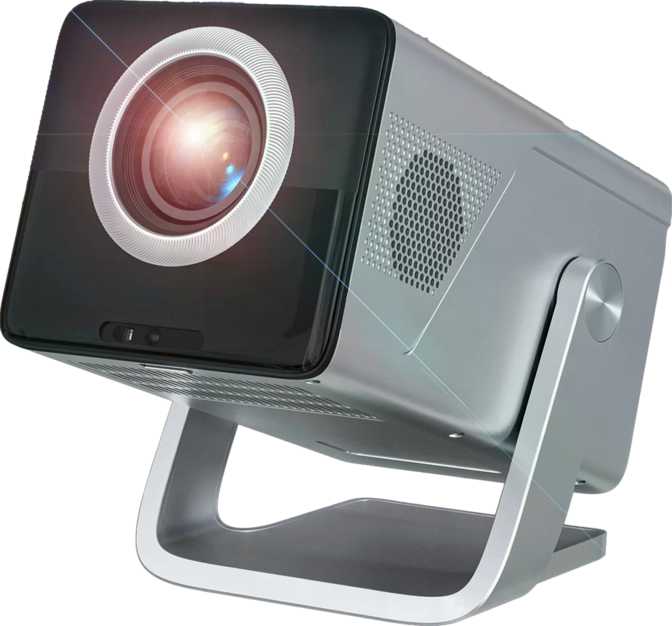
At roughly 215mm wide, 204mm tall, and 266mm deep — about the size of a thick hardcover book — the Beem 570 sits in a practical zone where it doesn't demand a dedicated shelf but doesn't feel insubstantial. At just over 2.3 kilograms, moving it between rooms requires no real effort, yet the chassis carries enough weight to feel considered rather than cheap.
The footprint is cube-adjacent rather than slim, which is typical for LED projectors at this price tier. This is a device designed to sit on a table or shelf and do its job without demanding attention. Don't expect the sleek, flat profile of a premium ultra-short-throw unit — this is an honest, functional form factor.
The absence of legacy ports — no VGA, no DVI, no wired Ethernet — is a deliberate design direction aimed at wireless-first, modern households. If your environment still depends on older video connections, that trade-off is worth knowing upfront.
Physical Specifications
- Width
- 215 mm
- Height
- 204 mm
- Depth
- 266 mm
- Weight
- 2,350 g
- Warranty
- 1 Year
Picture Quality
True 1080p in a category that often cheats on resolution
What Native 1080p Actually Means
Full HD output — 1,920 × 1,080 pixels — is the Beem 570's defining specification, and it's a genuine differentiator at this price point. Many budget projectors advertise "HD" while internally processing at much lower resolutions and upscaling the signal. The Beem 570 outputs a true 1080p image: sharper text, cleaner edges, and more film-accurate detail when playing back HD content.
Screen Size and Placement Flexibility
The projector can fill a screen up to 120 inches diagonally — roughly ten feet wide — which most living room walls accommodate without issue. The minimum practical throw distance is around one metre, with larger screen sizes requiring more distance from the wall. Very tight apartments may find the maximum sizes impractical, but most living spaces have no problem.
HDR: The One Honest Limitation
The Beem 570 has no HDR10, HDR10+, or Dolby Vision support. Content filmed in HDR will still play — but it will be tone-mapped down to standard dynamic range, which appears visually flatter, with less contrast pop and less saturated highlights than a genuine HDR display would show.
Projection Specs
- Native 1080p Output1,920 × 1,080 pixels
- Up to 120-Inch Screen~10 feet wide diagonal
- From 1 Metre AwayMinimum throw distance
- No HDR10 / HDR10+SDR display only
- No Dolby VisionNot supported
- No Lens ShiftPrecise placement required
LED Light Source and Longevity
Why the light source matters more than most buyers realise
The Beem 570 uses an LED light source rather than a traditional replaceable lamp. Traditional projector bulbs typically last between 2,000 and 5,000 hours before losing significant brightness — and replacing them can cost a meaningful fraction of the projector's original price.
The Beem 570's LED source carries a rating of 50,000 hours in eco mode. At four hours of viewing per day, that equates to over 34 years of use before the light degrades to replacement territory. In practical terms: the LED will almost certainly outlast every other component in this projector.
LED sources also run cooler than traditional lamps, meaning quieter fan operation and no heat-related degradation during extended sessions. There's no warm-up period either — the image is ready the instant you press power, with no wait for the bulb to reach operating temperature.
Smart Features and Connectivity
Where the Beem 570 truly earns its price
The built-in smart TV platform turns this from a simple display device into a self-contained streaming hub — no additional stick or set-top box required. The projector runs apps natively and handles casting from every major wireless standard simultaneously. For mixed-device households, this breadth is genuinely hard to match at this price.
Wireless Casting — All Four Major Protocols
Chromecast Built-in
Cast from any Android device, Chrome browser, or compatible streaming app — no dongle required.
AirPlay
iPhone and iPad users cast content natively — no adapters, no third-party apps, zero setup friction.
Miracast
Wireless screen mirroring for Windows laptops and Android devices, without requiring a shared Wi-Fi network.
DLNA Certified
Stream locally stored media from a NAS drive, home computer, or any DLNA-compatible device on your network.
Physical Ports and Additional Features
- One HDMI InputConnects consoles, Blu-ray players, or laptops. A single port means factoring in an HDMI switcher for multi-device setups.
- USB Media PlaybackPlug in a flash drive to play personal photos, videos, or locally stored movie files without streaming.
- Bluetooth Audio OutputPair wireless headphones for private viewing, or connect a Bluetooth speaker to extend the audio experience beyond the built-in speakers.
- Smartphone App ControlA companion app enables wireless control from your phone — particularly useful when the room is dark and locating the physical remote is inconvenient.
Audio Performance
Functional for quiet rooms — external audio is the smarter play
The built-in stereo speakers deliver 2.5 watts per channel — five watts total. In a quiet room, dialogue is clear and content is fully audible. For casual viewing in a small space, the built-in audio handles the basics without embarrassing the projector.
What it won't do is fill a large room convincingly or reproduce bass with any weight. There is no Dolby Atmos processing, which is consistent with this hardware tier. The audio performs its supporting role adequately, but it's not a feature you'd highlight when recommending this projector.
One notable absence is the 3.5mm headphone jack. Wired audio routing is simply not possible on this device — private listening or wired external speakers must go exclusively through Bluetooth. Anyone who relies on wired headphones needs to account for this before purchasing.
Audio Capabilities
- Stereo configuration — 2 channels
- 2 × 2.5W output (5W total)
- Bluetooth wireless audio output
- No Dolby Atmos processing
- No 3.5mm headphone jack
Who Is the Beem 570 For?
Honest buyer guidance — before you commit
Buy the Beem 570 If...
- You want genuine 1080p without paying the 4K premium your content doesn't require
- Your household has a mix of Apple and Android devices — everyone casts without friction or compromise
- You want a self-contained smart projector that works from day one with no additional streaming stick needed
- You primarily stream from Netflix, YouTube, Prime Video, or local media files
- You occasionally move the projector between rooms or take it outdoors for movie nights
- Long-term reliability and low maintenance costs matter more to you than peak brightness output
Consider Alternatives If...
- You own an HDR television and expect equivalent contrast performance from your projector
- You need two or more simultaneous HDMI inputs for console, Blu-ray player, and cable box
- You rely on wired headphones or need a 3.5mm audio output for any reason
- You need wired Ethernet for stable streaming in a poor or inconsistent Wi-Fi environment
- Voice assistant integration is central to how you control your smart home setup
- Your room gets significant ambient light — a high-brightness laser projector would serve you better
How It Compares to the Competition
Feature positioning in the 1080p LED projector market
The Beem 570's connectivity breadth is its strongest competitive position. Most projectors at this price offer one or two casting protocols — rarely all four, and almost never alongside a built-in smart TV platform. The trade-offs are the lack of HDR and a single HDMI port, both of which projectors at a higher price tier address directly.
| Feature | Portronics Beem 570 | Typical Budget 1080p | Mid-Range 1080p (HDR) |
|---|---|---|---|
| Native 1080p Output | Varies | ||
| HDR10 Support | |||
| AirPlay Support | Sometimes | ||
| Chromecast Built-in | Sometimes | ||
| Miracast + DLNA | Rarely | ||
| Built-in Smart TV | Sometimes | ||
| 50,000-hr LED Rating | Varies | Varies | |
| Dual HDMI Inputs | Sometimes | ||
| 3.5mm Audio Output | Sometimes |
Honest Strengths and Weaknesses
The full picture — without spin in either direction
What Works Well
Wireless ecosystem coverage is the standout strength. AirPlay, Chromecast, Miracast, and DLNA on a single device at this price is uncommon. Mixed-device households benefit immediately — no ecosystem compromise, no extra hardware purchase.
Genuine 1080p output distinguishes this from lower-tier competitors that upscale rather than output natively. Sharper text, cleaner edges, and more accurate film detail are the visible result.
The 50,000-hour LED light source is a compounding advantage — lower total ownership cost, no lamp replacements, quieter operation, and consistent output across the device's entire life.
Built-in smart TV makes the projector self-sufficient from day one, removing both the cost and the cable clutter of a separate streaming device.
Where It Falls Short
No HDR support is the most significant technical weakness. HDR content is tone-mapped to SDR, appearing visually flatter with less contrast pop. Buyers used to HDR televisions will feel this gap directly and immediately.
A single HDMI port is manageable for simple setups but creates real friction in living rooms where multiple devices compete for the same input. An external HDMI switcher becomes a practical necessity.
Built-in audio is functional rather than impressive. Five watts total won't fill a large space or deliver satisfying bass — for true home theater use, a Bluetooth soundbar is effectively required.
No 3.5mm headphone jack eliminates wired audio routing entirely — a genuine limitation for those who haven't gone fully wireless in their audio setup.
Common Buyer Questions
Answers to what buyers search for before committing
Smart Choice for Wireless-First Households
The Portronics Beem 570 makes a clear, coherent argument: a genuine 1080p smart projector, built on an LED source rated for decades of use, with wireless casting for every device in your home.
It is not the brightest projector in its class, not the most versatile in a multi-device AV cabinet, and not a substitute for an HDR display if that contrast quality matters to you. But for a living room movie setup, a backyard screen night, or a casual home theater where a 120-inch picture matters more than HDR pop — this projector delivers exactly what it promises.
Buy it if your priority is a reliable, wireless-first projector that works with every phone in the house and won't need a new bulb for decades. Look elsewhere if HDR, multiple HDMI inputs, or wired audio output are on your requirements list.
- Picture Quality3.8
- Connectivity4.8
- Smart Features4.3
- Audio2.8
- Value for Money4.0