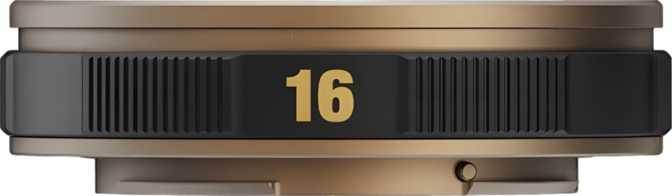
PolarPro Lightleak 16mm f/11 Review: Fixed Aperture, Clear Purpose
Camera LensesSpecs at a Glance
Core specifications of the PolarPro Lightleak 16mm f/11 for Sony E-mount
What the PolarPro Lightleak 16mm f/11 Actually Is
Most lens reviews start with performance benchmarks. This one has to start with a clarification, because the PolarPro Lightleak 16mm f/11 is not a conventional optic — and buying it without understanding that distinction is the fastest path to disappointment.
This is a fixed-aperture, fixed-focal-length prime lens for Sony E-mount cameras. It cannot be stopped down. It cannot be opened up. The aperture is f/11, always, without exception — because there are literally zero aperture blades inside it. That is not a manufacturing defect. That is the entire design philosophy.
The Lightleak is built for creators who want a specific visual character baked into their shooting, not maximum optical flexibility. If you can accept that framing, nearly everything else about this lens makes perfect sense.
Design Philosophy
Zero aperture blades. Fixed f/11. Always. This is an intentional creative tool — not a compromised optic. The entire lens is built around a consistent, wide, deep-focus visual identity that prioritizes character over flexibility.
Build Quality and Physical Design
Weight and Balance
At 97 grams, the Lightleak is featherlight. On a compact Sony APS-C body like the ZV-E10 or a6700, it creates a setup that practically disappears in a bag or rides comfortably on a gimbal without tipping the balance. On a full-frame A7-series body, the weight ratio is minimal and rarely a problem in practice.
Metal Mount
The metal mount matters for longevity. A plastic mount on a lens that gets swapped frequently wears faster and introduces wobble. Metal here means the lens seats cleanly and stays that way through hundreds of mount cycles.
Non-Rotating Front
The front element does not rotate. When you attach a circular polarizer or VND filter, you set it once and your composition does not shift as you adjust focus. For video shooters who reach for ND filters constantly, this removes a genuine friction point.
Reversible Hood
The reversible lens hood ships in the box. Being able to flip and store it on the lens during transport keeps it from rattling around separately — a practical feature that professional shooters will appreciate immediately.
The Fixed f/11 Aperture: What It Means for Your Shooting
This is the lens's defining characteristic. Internalizing it before purchasing is non-negotiable.
What a Fixed f/11 Aperture Does
- Extreme depth of field. From roughly 1 meter to infinity, almost everything in the frame appears sharp simultaneously. There is no selective focus, no background separation, no subject isolation.
- High light demand. f/11 is a very small opening. Bright daylight or well-lit interiors work without complaint. As light drops, your sensor's ISO ceiling becomes the limiting factor fast.
- Exposure control shifts entirely. Shutter speed, ISO, and external ND filters carry the full burden. Aperture is removed from the exposure equation permanently.
- Distinctive rendering. Fixed-aperture lenses without blade mechanisms produce a specific optical character — flare behavior, edge rendering, diffraction characteristics — that sets them apart from corrected, blade-equipped primes.
On APS-C vs. Full-Frame Sony Bodies
The 75-degree angle of view at 16mm means wide coverage. On an APS-C body, the crop factor delivers an effective field of view closer to 24mm on full frame — a moderately wide perspective suited to environmental portraiture, architecture, street scenes, and video establishing shots. On a full-frame Sony body, 16mm is genuinely expansive with visible edge curvature at the extremes.
The Bottom Line on f/11
This aperture limitation is not a nuanced trade-off — it is a binary constraint. You either work within f/11, or you pick a different lens. There is no workaround except external ND filters, and even then you manage exposure without one of the fundamental tools most photographers expect.
Focus System: More Capable Than It Looks
Given the deep depth of field at f/11, focus might seem irrelevant. The Lightleak's focus system tells a different story.
Silent Motor
A focus motor that clicks audibly is captured by on-camera microphones. Silent operation keeps the lens entirely out of the audio track — critical for run-and-gun and documentary video work where audio is captured in-camera.
Full-Time Manual Override
Grab the focus ring mid-recording without fighting the motor or diving into menus. For any situation where the shot cannot be paused to toggle focus modes, this is a practical advantage that matters in the field.
Infinity to 1 Meter
The focus range spans from infinity — ideal for landscapes and cityscapes — down to a 1-meter minimum. That 1-meter floor is a hard creative boundary: anything closer will not render sharp, full stop.
Real-World Usage: Who This Lens Serves Best
The Lightleak Works Best For
- Outdoor video content creators. Wide field of view, silent focusing, lightweight build, and consistent visual character make this compelling for vloggers, travel filmmakers, and social media creators shooting in natural light.
- Gimbal operators. Under 100 grams means minimal counterbalance adjustment. The lens does not upset a balanced rig, and the silent motor keeps things clean on dynamic shots.
- Filter-heavy workflows. The 58mm non-rotating front element is designed to anchor ND and polarizing filters cleanly. The outcome for end users is genuinely useful — filters stay put, compositions stay clean.
- Hyperfocal-distance shooters. Set focus once and shoot freely. The fixed aperture and wide focal length make this lens nearly point-and-shoot in bright conditions.
- Creative and lo-fi aesthetic projects. The "Lightleak" name signals intentional character and mood over clinical sharpness. If you are chasing a specific imperfect, cinematic look, this lens is engineered toward that sensibility.
Not the Right Choice For
- Low-light photography or video. f/11 in dim environments means either very high ISO or very slow shutter speeds. Neither outcome is acceptable for most professional low-light applications.
- Portrait photographers needing background separation. At f/11, bokeh does not exist in any meaningful sense. If shallow depth of field is part of your creative toolkit, this lens has nothing to offer you.
- Photographers needing exposure flexibility. Without the ability to vary the aperture, you lose a fundamental exposure control tool permanently. ND filters and ISO adjustments carry the entire load.
- Macro or close-up work. The 1-meter minimum focus distance rules out tight detail shots entirely. Product photography, food, and close environmental subjects will consistently frustrate you.
- General-purpose walk-around shooting. This lens does one thing well. Anyone expecting a single versatile lens to handle a broad creative range will be disappointed.
Competitive Positioning
How the Lightleak 16mm compares to logical Sony E-mount alternatives in the wide-angle space.
| Feature | PolarPro Lightleak 16mm f/11 | Sony E 16mm f/2.8 | Sony E 15mm f/1.4 G |
|---|---|---|---|
| Aperture Range | Fixed f/11 only | f/2.8 – f/22 | f/1.4 – f/16 |
| Weight | ~97g | ~69g | ~219g |
| Depth of Field Control | None | Yes | Yes (extensive) |
| Low-Light Capability | Limited | Moderate | Excellent |
| Visual Character | Distinctive / lo-fi | Clean, corrected | High res, clinical |
| Non-Rotating Filter Front | Yes | No | No |
| Gimbal-Friendly | Excellent | Excellent | Moderate |
| Intended User | Creative / specialty | Casual / travel | Enthusiast / professional |
The fixed f/11 aperture positions the Lightleak in a fundamentally different category from conventional primes rather than competing with them directly.
Honest Assessment
Where It Shines
The Lightleak's strengths are highly specific but genuinely useful within their context. The build feels purposeful — metal mount, non-rotating front, a focus motor you can trust for video — and the weight makes it one of the least intrusive lenses you can attach to a Sony E-mount body.
For daytime and well-lit shooting, the deep depth of field removes focus anxiety entirely. That is a real benefit for fast-moving documentary or travel work where stopping to adjust focus is not an option.
The 58mm filter thread with a non-rotating front element is a quietly significant feature. PolarPro designed this lens to integrate cleanly with their filter ecosystem, and the practical outcome is genuinely good — filters stay put, compositions stay clean.
Where It Strains
Where the lens strains is in anything demanding versatility. The aperture limitation is not a nuanced trade-off to weigh carefully — it is a binary constraint. You either work within f/11, or you pick a different lens. There is no workaround except external ND filters, and even then you manage exposure without one of the fundamental tools most photographers and cinematographers expect.
The 1-meter minimum focus distance is also worth treating as a firm creative boundary rather than a mild inconvenience. Anyone who regularly shoots tight product details, food, or close environmental subjects will find themselves stepping backward more than they want to — and sometimes stepping out of frame entirely.
Common Questions Before Buying
Real questions buyers search for about the PolarPro Lightleak 16mm f/11.
Final Verdict
The PolarPro Lightleak 16mm f/11 is a specialty tool wearing the form factor of an everyday lens. For the right creator, it is genuinely compelling — lightweight, filter-ready, video-friendly, and built with enough physical quality to justify its position in a working kit.
The fixed f/11 aperture that will immediately disqualify it for many buyers is, for others, the entire point: a consistent, deep-focus, wide-angle perspective that never demands aperture decisions and pairs cleanly with external filter systems.
This is not a lens for everyone. It knows exactly what it is — and if that matches what you need, it delivers it cleanly.
For outdoor video creators, gimbal operators, and filter-system users
Skip It If You Need:
Low-light flexibility, background separation, or a versatile walk-around lens