Panasonic Lumix S 28-200mm f/4-7.1 Macro OIS: An Honest Review

Panasonic Lumix S 28-200mm f/4-7.1 Macro OIS: An Honest Review

Camera Lenses

Travel photographers and event shooters share the same recurring headache: the wide shot and the tight shot are never more than thirty seconds apart, and changing lenses to catch both means missing one of them. The Panasonic Lumix S 28-200mm f/4-7.1 Macro OIS is built around solving exactly that problem for full-frame L-mount cameras. It spans more than seven times zoom range in a single barrel, focuses close enough to handle convincing macro-style shots, and does it all at 413 grams — light enough to disappear in a sling bag next to a second body. That combination of reach and portability is rare, but a variable aperture, a composite mount, and a stabilization design that leans on your camera body rather than the lens itself mean this isn't a lens you buy without understanding the trade-offs first. Here's exactly what you're getting.

413 g
Lens Weight
7.14x
Zoom Range
0.5x
Macro Magnification
67 mm
Filter Thread

Design, Build Quality, and How It Feels in Hand

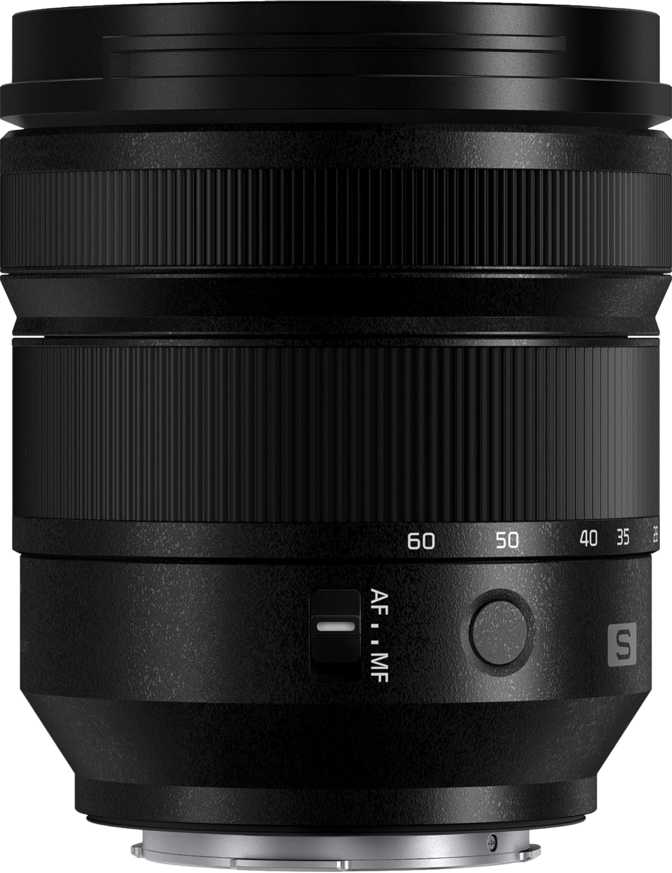
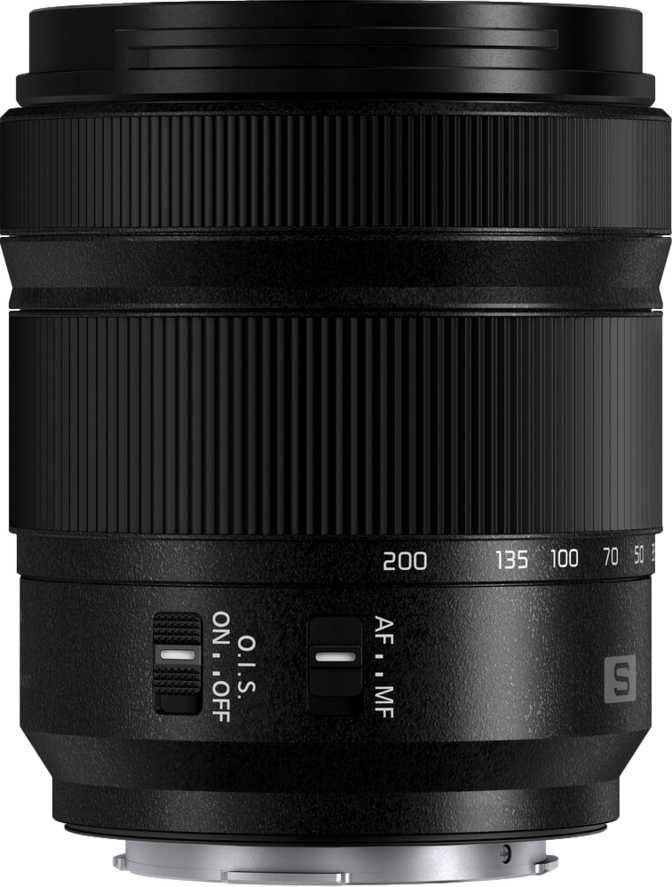
Pick this lens up after using a standard 24-70mm zoom and the first thing you'll notice is how little it weighs for how much focal range it covers. At 413 grams, it sits closer to a lightweight prime than to the typical superzoom, which is exactly the point — Panasonic clearly prioritized a lens you'll actually want to carry all day over one engineered purely to maximize sharpness charts. That weight saving comes from somewhere, though, and the most relevant compromise is the mount itself.

The Mount Material Trade-Off

This lens uses a composite (non-metal) mount rather than the machined metal mount found on many of Panasonic's pricier L-mount optics. For the vast majority of owners, this is a non-issue — composite mounts on modern lenses are engineered to handle thousands of mount cycles without measurable play. Where it matters is for working professionals who swap lenses dozens of times a day, every day, for years; metal mounts simply resist long-term wear and micro-flex slightly better under that kind of repeated stress. If you're a casual shooter, a hybrid creator, or a traveler who mounts a lens once in the morning and leaves it there, this trade-off works entirely in your favor: less weight, lower cost, no real-world downside.
Weather Sealing for Real Shooting Conditions

The lens carries splash-resistant weather sealing, which means light rain, dust, and humidity on a hike or a street shoot won't immediately put your gear at risk. This isn't a fully waterproof or freeze-rated design — don't submerge it or expect it to shrug off a downpour indefinitely — but it does mean you can keep shooting through the kind of unpredictable weather that ends a shoot with an unsealed lens. Sealing performance is also a team effort: pair this lens with a similarly weather-sealed Lumix S body and you get a genuinely resistant combination, while pairing it with an unsealed body undercuts the protection at the connection point.

Filter Size and Hood Design

The 67mm filter thread is one of the more practical decisions on this lens. It's a common, widely-stocked size, which means circular polarizers and ND filters cost noticeably less than the 77mm or 82mm filters that larger zooms demand — and if you already own 67mm glass from another lens, it carries straight over. The included lens hood reverses for storage, so it shrinks down for the camera bag instead of taking up an awkward, oversized footprint, which matters more than it sounds like for anyone packing a bag for a flight.

Optical Performance: Making Sense of the 28-200mm Range

The headline number here is the 7.14x zoom ratio — the distance between the widest and longest focal length divided into a single ratio. In practical terms, that's the difference between a wide environmental shot and a tightly compressed telephoto frame, covered without ever touching the lens release button.

Focal length coverage and what each end of the zoom is best used for
Focal LengthAngle of ViewWhat You're Actually Shooting
28mm (wide end)75°Interiors, group shots, landscapes, environmental portraits — wide enough to include context around your subject
200mm (telephoto end)12°Compressed portraits, distant details, casual wildlife or sports framing where you can't physically get closer

That 75-degree wide angle is comparable to how most people naturally perceive a scene in front of them, which is why 28mm has long been a default "everyday" focal length. At the other end, 12 degrees of coverage at 200mm pulls distant subjects in dramatically and flattens background perspective in the way classic telephoto portraits rely on. Having both ends in one lens means you're not choosing between "the wide lens" and "the long lens" before you leave the house — you decide once you're already there, mid-shoot.

Variable Aperture Explained: What f/4-7.1 Actually Means

This is the most important technical trade-off to understand before buying. The maximum aperture isn't fixed across the zoom range — it narrows as you zoom in.

Focal LengthWidest Aperture AvailableNarrowest Aperture Available
28mmf/4f/45
200mmf/7.1f/32

At the wide end, f/4 lets in a reasonable amount of light for handheld daytime and well-lit indoor shooting. By the time you've zoomed to 200mm, the maximum opening shrinks to f/7.1 — roughly a stop and a half less light than f/4. In bright daylight this is barely noticeable. Indoors, at dusk, or in any dim venue, it means leaning harder on higher ISO settings or a slower shutter speed to compensate, since the lens itself is letting in less light at full reach. This is a standard trade-off for compact superzoom lenses, not a flaw unique to this one — you're trading light-gathering ability for a zoom range and weight that a constant-aperture lens couldn't match without becoming significantly larger and heavier. On the other end, the ability to stop down to f/32 or even f/45 gives you enormous depth-of-field control for macro work or long daylight exposures, though pushing that far will introduce visible softening from diffraction — a physical limit of small apertures that affects every lens, not a defect. Treat f/32 and f/45 as creative tools for specific situations rather than your everyday working aperture.

Bokeh Quality: The 9-Blade Aperture

Nine rounded aperture blades keep out-of-focus highlights looking like soft circles rather than harsh polygons, even when you stop down slightly from wide open. This matters most in two scenarios this lens is well suited for: close-up macro-style shots where a creamy, circular background blur sells the image, and telephoto portraits where smooth bokeh separates your subject from a busy background. Don't expect the dramatic, razor-thin background blur of an f/1.4 prime — the variable aperture limits how much blur you'll get, especially at the long end — but what blur you do get will look clean rather than choppy.

Macro Performance: A Genuine Surprise for a Travel Zoom

The "Macro" in the name isn't a marketing throwaway. With a minimum focus distance of just 0.19 meters and a maximum magnification of 0.5x, this lens reproduces subjects at half life-size on your sensor — a genuinely strong figure for a zoom lens. Most standard zoom lenses top out around 0.2x to 0.3x magnification, so this is meaningfully closer and bigger than what you'd get from a typical all-purpose zoom.

0.19 m
Minimum Focus Distance
0.5x
Maximum Magnification

In real terms, that's enough to shoot convincing close-ups of flowers, food, textures, jewelry, and small product details without reaching for a dedicated macro lens. Purists chasing true 1:1 macro reproduction for insects or extreme detail work will still want a specialized macro prime, but for the large majority of close-up shooting most photographers actually do, 0.5x at this focal range covers the need comfortably — and it means you can go from a wide travel shot to a tight close-up of a market stall's produce without changing lenses.

Autofocus, Manual Control, and Video Usability

The lens uses a dedicated focus motor designed to run silently, which is a bigger deal for video shooters than it might first sound. A noisy focus motor gets picked up by a camera's built-in microphone, ruining otherwise usable audio — a silent motor means you can rely on autofocus during a vlog or interview without that risk. Stepping-motor-style designs like this are also generally efficient with power draw, so you shouldn't notice a meaningfully faster battery drain on your camera body compared to older screw-drive lenses, even with continuous autofocus running during video recording.

  • Silent focus motor keeps autofocus noise out of your video audio
  • Full-time manual override lets you grab the focus ring anytime
  • Focuses all the way to infinity for confident landscape framing

Full-time manual focus override is included, meaning you can grab the focus ring and fine-tune manually at any moment without flipping a separate AF/MF switch first. For macro work where autofocus sometimes hunts on small, low-contrast subjects, or for video focus pulls where you want precise manual control mid-shot, this is the kind of feature that becomes genuinely useful the first time you need it. The lens also focuses all the way out to infinity, which matters for landscape and architecture shooters who need confidence that distant subjects will lock in sharp.

Image Stabilization: What to Actually Expect Handheld

This is worth understanding clearly, because stabilization performance here is a shared responsibility between the lens and the camera body rather than something the lens handles entirely on its own. Based on this lens's configuration, shake reduction draws on the sensor-based stabilization built into compatible Lumix S camera bodies rather than a separate stabilizing element inside the lens barrel itself. Practically, that means your results will vary depending on which body you pair it with: a full-frame Lumix S camera with effective in-body stabilization will compensate well across the zoom range, while a body with weaker or no in-body stabilization will ask more of your shutter speed and your hands — particularly at 200mm, where the narrower f/7.1 aperture already pushes you toward higher ISOs in anything but good light. If you shoot handheld in low light often, pairing this lens with a Lumix S body known for strong in-body stabilization will get you noticeably more usable, blur-free shots than treating the lens as a standalone solution.

Who This Lens Is For — and Who Should Look Elsewhere

This lens is built for a specific kind of shooter, and it's worth being honest about both sides of that.

It's an Excellent Fit If You

  • Travel frequently and want one lens that handles wide environmental shots and distant telephoto subjects without a lens change
  • Shoot a mix of content — landscapes, portraits, casual wildlife, street photography, and close-up detail shots — in a single outing
  • Prioritize a lightweight kit over chasing the absolute widest aperture available
  • Want genuine macro-style close-focusing without buying and carrying a second dedicated macro lens
  • Shoot hybrid photo-and-video content and need quiet, reliable autofocus

You Should Look Elsewhere If You

  • Regularly shoot in low light and need a wide, constant aperture for fast shutter speeds without bumping ISO
  • Photograph fast action or sports professionally, where autofocus speed and a brighter telephoto aperture matter more than range
  • Want the sharpest possible per-focal-length image quality and are willing to carry multiple lenses to get it
  • Need a metal mount for heavy daily professional use with constant lens swaps

How It Compares to Other L-Mount Zoom Options

Because this lens uses the Leica L mount, it fits natively — without an adapter — on any current full-frame body across the L-Mount Alliance, including Panasonic's Lumix S series, Leica's SL line, and Sigma's fp cameras. Within that ecosystem, this lens occupies a clear niche compared to the other zoom categories you'd be choosing between.

Lens CategoryStrengthWhat You Give Up
Standard zoom (e.g., a 24-105mm f/4 type lens)Constant aperture, generally sharper across its narrower rangeNo telephoto reach beyond roughly 100mm
This 28-200mm superzoomMassive focal range in one lightweight lens, strong close-focusingVariable, narrower aperture at the long end
Dedicated telephoto zoom or primeFaster aperture, better subject isolation at distanceNo wide-angle coverage; heavier, often pricier

If your shooting genuinely splits evenly between wide and long focal lengths and you don't want to carry two lenses, this is the more practical choice. If you mostly shoot in one zone — always wide, or always tight on a subject — a dedicated lens in that range will usually out-resolve and out-aperture this one for its specific job.

Strengths and Weaknesses: The Honest Take

What Works

The strongest argument for this lens is simply how much capability Panasonic packed into something this light. Carrying one 413-gram lens that covers wide-angle interiors, standard portraits, and 200mm telephoto reach — with genuine macro-style close focusing thrown in — is a kind of convenience that's hard to overstate once you've actually traveled with it. The 67mm filter size keeps accessory costs down, the reversible hood respects how little space you actually have in a travel bag, and the quiet, full-time-manual-capable autofocus motor makes it just as comfortable for video as for stills.

What to Weigh Carefully

The honest weaknesses sit almost entirely in the aperture and stabilization story. f/7.1 at 200mm is genuinely dim by the standards of dedicated telephoto lenses, and shooting handheld at the long end in anything but good light will test your technique or your camera body's in-body stabilization. The composite mount, while not a problem for most owners, is a clear cost-and-weight trade-off rather than a premium build choice, and buyers expecting the same mount-level durability as Panasonic's higher-end L-mount lenses should adjust their expectations accordingly. None of these are surprises for a lens in this category — they're the same trade-offs every superzoom design makes — but they're worth knowing before you shoot your first low-light event with it rather than after.

Frequently Asked Questions

Stabilization performance depends on the camera body it's paired with rather than a stabilizing element built into the lens itself. Pair it with a Lumix S body that has strong in-body stabilization for the best handheld results, especially at the telephoto end.

Yes, it includes splash-resistant weather sealing, suitable for light rain, dust, and humid conditions. It is not rated for submersion or extreme weather, and sealing performance is strongest when paired with a similarly sealed camera body.

67mm — a common, affordable filter size that's easy to find and often shared with other lenses you may already own.

It reaches 0.5x magnification at a minimum focus distance of 0.19 meters, which covers convincing close-up work on flowers, food, and small details. It won't match a dedicated 1:1 macro lens for extreme close-ups of very small subjects, but it comfortably covers most everyday macro-style shooting.

Yes. It uses the Leica L mount, so it fits any current full-frame camera across the L-Mount Alliance — Panasonic Lumix S, Leica SL, and Sigma fp bodies — without needing an adapter.

In daylight, no — it's perfectly usable. In dim indoor venues or at dusk, you'll need to raise your ISO or slow your shutter speed to compensate, since it lets in noticeably less light than the f/4 available at the wide end.

No, it uses a composite mount. This keeps weight and cost down and holds up fine for typical use, though it doesn't offer the same long-term wear resistance as a metal mount under heavy daily professional cycling.

Yes — the focus motor is designed to run silently, which keeps autofocus noise out of your audio, and full-time manual focus override lets you take manual control instantly for focus pulls without switching modes first.

At 413 grams, it's noticeably lighter than many standard zoom lenses, making it a realistic all-day carry option rather than something that weighs your bag down on a long shooting day.

Final Verdict

The Panasonic Lumix S 28-200mm f/4-7.1 Macro OIS earns its place as a genuine one-lens travel solution for L-mount shooters rather than a compromise pick. The combination of a 7.14x zoom range, real 0.5x macro capability, and a 413-gram build is difficult to find anywhere else in this mount ecosystem, and the quiet, manually-overridable autofocus makes it just as comfortable behind a camera shooting video as it is for stills. The trade-offs — a variable aperture that narrows to f/7.1 at full zoom, a composite rather than metal mount, and stabilization that depends on your camera body rather than the lens alone — are real, but they're the expected cost of this much range in this little weight, not hidden flaws. If your priority is carrying one capable lens instead of three specialized ones, and you're shooting on a Lumix S, Leica SL, or Sigma fp body with solid in-body stabilization, this lens deserves a serious look. If you need fast glass for low light or sports-level autofocus speed at long range, this isn't built for that job, and you'll be happier with a dedicated telephoto instead.

Best For: Travel & Hybrid Photo/Video Shooters