Oneodio SuperEQ A200 Full Review: Is the 100-Hour Battery Real?
HeadphonesA headphone that claims 100 hours of battery life is either making a very bold promise or a very deliberate trade-off. The Oneodio SuperEQ A200 makes both. That extraordinary runtime figure — reduced to a still-exceptional 60 hours when active noise cancellation is running — is the defining characteristic of this over-ear wireless headphone, and it reframes every other conversation about it. What did this headphone give up to get there? Does the rest of the package hold together across real daily use? Here is a complete breakdown of everything you need to know before spending your money.
Design and Build Quality
Physical Form and Weight
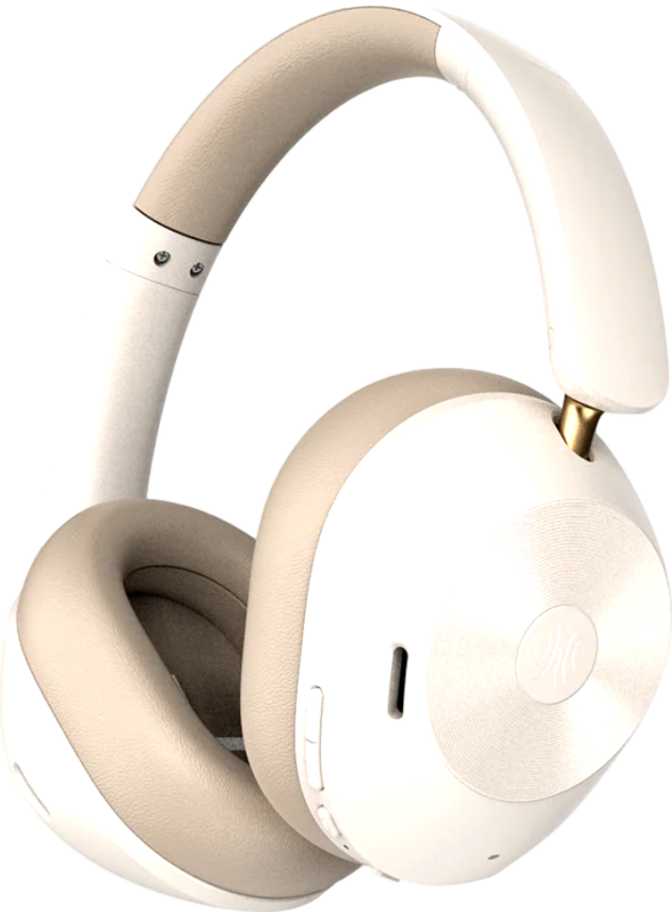
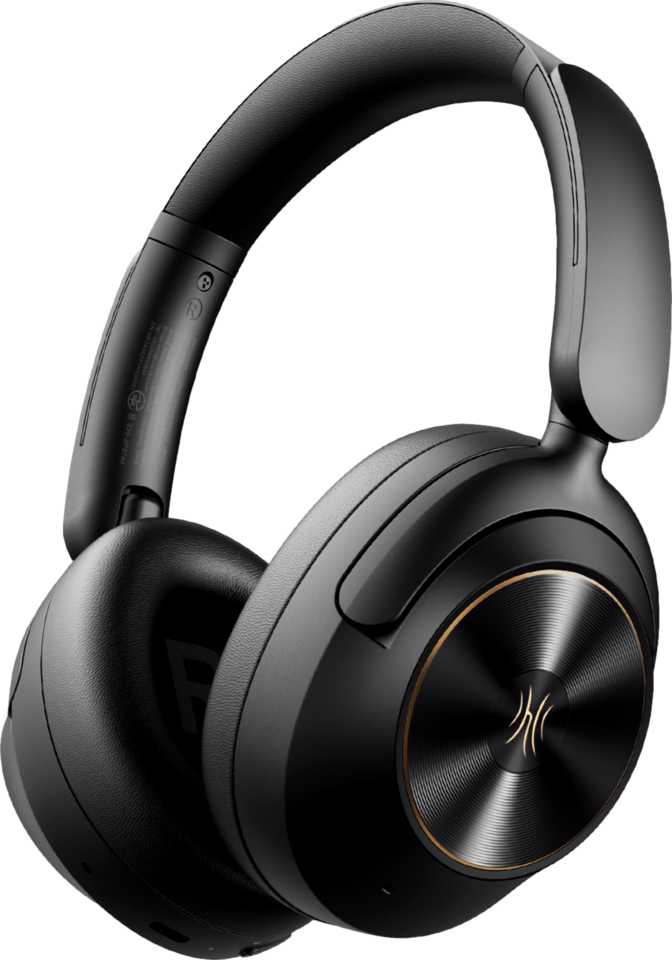
The A200 is a closed-back, over-ear headphone — the earcups fully encircle your ears rather than resting on them, and the sealed housing behind the drivers traps sound in rather than allowing it to breathe out. These two design choices set expectations: this is a headphone built for isolation and endurance, not for audiophile soundstage width.
At 285 grams, it sits toward the lighter end of the over-ear ANC category. That difference matters more than it sounds. The gap between a 285-gram headphone and a 330-gram headphone is negligible in your hand but becomes a measurable comfort factor across a five-hour flight or a full workday. Lighter headphones translate directly to less fatigue on the neck and less pressure on the ears over extended sessions.
Foldable Design and Portability
The A200 collapses flat for transport — a meaningful portability advantage for commuters and travelers. No carrying case or travel pouch is included in the box, so protection during transit is your responsibility. Folding mechanisms introduce more joints than rigid frames, and those joints represent potential wear points over thousands of repetitions. Treated with reasonable care rather than force-collapsed, fold-flat designs typically hold up well.
Cable and Connection
The detachable, tangle-resistant cable is a combination that rewards attention. A detachable cable turns a broken cable into a cheap replacement rather than a dead headphone. The tangle-resistant construction means the cable you pull out of your bag is actually ready to use. There is no inline remote on the wired cable itself; all playback and volume controls live on the earcup panel.
Sound Performance
Driver Architecture and Power Handling
The A200 uses 40-millimeter drivers — the standard workhorse diameter for over-ear headphones across virtually every price tier. Neodymium magnets provide the magnetic force that moves each driver. Neodymium is the current industry standard for its combination of high magnetic strength and low weight; stronger magnetic fields allow the driver to accelerate and decelerate more precisely, which translates to tighter bass control and cleaner transient response.
The sensitivity of the driver means the A200 reaches very high volume levels from very modest electrical power. Any smartphone, tablet, or laptop will drive this headphone without strain. The 32-ohm impedance rating confirms it is designed entirely for consumer electronics. Audiophile-grade desktop amplifiers and DACs won't harm it — they simply won't provide any benefit here.
Frequency Range and the Extended High-End
The frequency response extends up to 40,000 Hz — exactly double the upper boundary of what human hearing can perceive. This specification appears on headphones marketed with high-resolution audio credentials. The reliable, practical conclusion: the A200's drivers are not artificially rolled off at the top of the audible range, and the tuning reflects an intent toward detailed, extended high-frequency reproduction. Whether that extension yields an audible benefit depends on source material quality and codec — covered in the connectivity section below.
At the low end, the drivers reach down to 20 Hz — the absolute floor of human hearing, the territory of deep bass felt as much as heard. This suggests the A200 has not sacrificed bass extension for midrange clarity and aims for full-spectrum coverage.
Closed-Back Sound Character
Closed-back designs concentrate sound within the earcup, producing a more intimate and direct presentation compared to open-back alternatives. Stereo separation is clear, but the expansive, three-dimensional staging of open-back designs is not what this headphone delivers. For casual listening, commuting, and video calls, this is entirely appropriate. For listeners who use headphones specifically for critical, analytical listening and prefer a wider soundstage, the closed-back design is a trade-off to acknowledge.
Active Noise Cancellation
How the Six-Mic ANC System Works
Six microphones power the noise cancellation and ambient listening systems on the A200. Standard consumer ANC implementations typically deploy two to four microphones per headphone — one external-facing and one internal-facing per ear — to sample incoming noise and generate a counteracting signal. A six-microphone array suggests a more elaborate pickup arrangement, potentially with additional microphones contributing to more precise noise modeling or dedicated microphone allocation for the call and ambient sound functions.
The closed-back physical design contributes to noise reduction before the electronics engage at all. High-frequency sounds — voices, office chatter, surface noise — are physically blocked by the sealed earcups. Active noise cancellation is most effective at lower frequencies that physical isolation handles poorly: aircraft cabin hum, air conditioning systems, and traffic rumble. The A200 approaches noise reduction through both mechanisms simultaneously.
Ambient Sound Mode
The ambient sound mode feeds controlled external audio through the microphone array so you can hear your environment without removing the headphones. This is useful during brief conversations, at checkout counters, when a platform announcement needs to be heard, or before crossing a road. The processing delivers a naturalistic representation of your surroundings rather than simply blasting raw microphone pickup into your ears.
-
6-Microphone Array
Hybrid feedforward and feedback noise sampling -
Passive + Active Isolation
Closed-back design blocks highs; electronics handle lows -
Ambient Sound Mode
Hear your surroundings without removing the headphones -
Noise-Canceling Call Mic
Filters ambient noise from voice pickup during calls -
No Auto-Pause
No ear detection when cups are removed -
No App Customization
ANC level cannot be adjusted via software
Battery Life: The Number That Defines This Headphone
What 100 Hours Actually Means
Most active noise-canceling headphones on the mainstream market deliver between 20 and 40 hours of playback with ANC running. Even flagship models from established audio brands rarely surpass 35 hours with noise cancellation active. The A200's rated 60 hours with ANC on places it at a different point on the spectrum entirely.
To frame this concretely: a user who listens for four hours per day needs to charge a typical 30-hour ANC headphone roughly every seven or eight days. The same listener with the A200 at 60-hour ANC runtime charges roughly every fifteen days. At 100 hours without ANC, the same usage pattern means charging approximately every three and a half weeks.
For travelers on long-haul international routes, this is the difference between worrying about battery mid-trip and not thinking about it at all. For remote workers using headphones six to eight hours daily, it's the difference between twice-weekly charging and weekly or less. The endurance advantage is not incremental — it changes the behavioral relationship between user and device.
Battery Endurance Compared
Based on rated ANC-on specifications. Actual performance varies with volume level and usage patterns.
Connectivity and Wireless Codecs
The Bluetooth Foundation
Bluetooth 5.4 is a recent standard revision with meaningful efficiency improvements over prior versions — it transmits audio data while consuming less radio power, which directly extends playback time per unit of battery capacity. Signal stability at the rated 10-meter range is solid, though real-world performance in apartments and offices with wireless congestion typically yields four to seven meters of reliable coverage.
Multipoint pairing connects the A200 to two devices simultaneously — your phone and laptop, for example. The headphone responds to whichever source is playing audio, and an incoming phone call takes priority over laptop music. This removes the need to manually switch connections when toggling between work and personal devices throughout the day.
Codecs: What You Get and What You Don't
The A200 supports AAC as its primary codec above the baseline. On Apple devices — iPhone, iPad, Mac — AAC is tightly optimized and delivers audio quality that most listeners would describe as excellent. Android users occupy a more variable position, since AAC implementation differs across manufacturers and device models.
For most listeners streaming from major platforms at standard quality settings, the absence of LDAC and aptX is not audible. For audiophiles with high-resolution libraries or LDAC-capable Android devices, it is a meaningful ceiling. The wired connection bypasses all codec constraints entirely — the signal travels as analog audio, unaffected by any Bluetooth encoding.
- AAC Excellent on Apple devices
- SBC Universal baseline
- LDAC Sony hi-res wireless
- aptX / aptX HD Qualcomm hi-res
- aptX Adaptive Next-gen Qualcomm
- LDHC Huawei hi-res
- Bluetooth LE Audio Next-gen standard
Microphone System: Six Pickups, One Removable
Call Quality Architecture
The six-microphone array serves three functions simultaneously: ANC noise sampling, ambient sound pickup for transparency mode, and voice capture for calls and video conferencing. The noise-canceling processing applied to call pickup filters environmental sound before your voice reaches the other party — relevant for anyone working in open offices, co-working spaces, or noisy home environments.
The Removable External Microphone
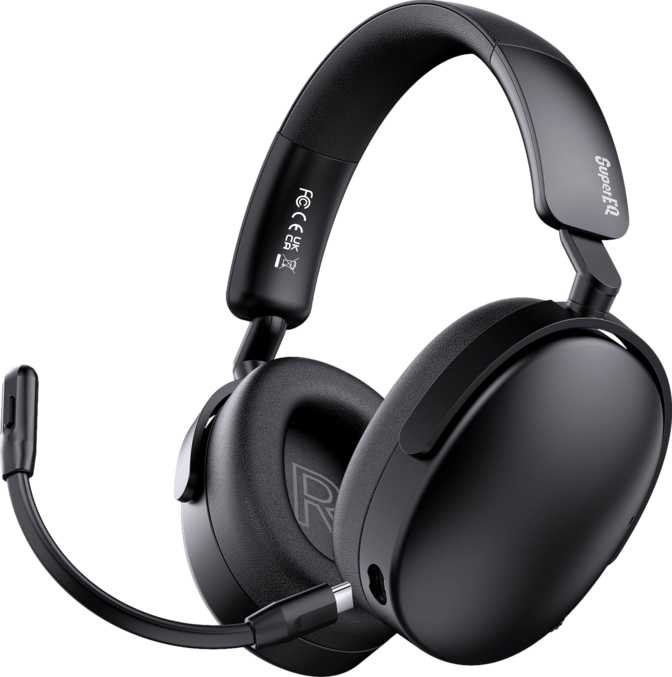
The detachable external microphone is an unusual and practical design choice. Attached, it functions as a dedicated pickup point that improves voice directionality and reduces room reverberation in the call signal. Removed, the built-in array handles voice pickup without any external arm. Desk-based workers who spend hours on video calls can use the dedicated mic for better call quality; commuters and casual listeners can leave it off for a cleaner aesthetic.
- 6-microphone array
- Noise-canceling call pickup
- Removable external boom mic
- Full headset functionality
- No physical mute button
- No inline cable controls
Who This Headphone Is For — and Who It Isn't
The Right Buyer
-
Long-Haul Travelers
Board a flight at full charge and not think about power for the entire journey including layovers. A 15-hour international trip followed by days of transit is where the A200's advantage over a 30-hour headphone is most concrete.
-
Remote and Hybrid Workers
Six to eight hours of daily use across calls and background music benefits from charging once every week or two. Multipoint pairing between phone and laptop removes daily connection friction.
-
Public Transit Commuters
Reliable ANC without the overhead of careful charging management makes for a better daily experience on trains, buses, and subways.
-
Apple Device Users at Standard Quality
AAC is tightly optimized on iOS and macOS. iPhone users pairing with the A200 get a capable, quality-focused wireless connection without needing to pay for codec support they can't use anyway.
Who Should Look Elsewhere
-
Audiophiles with LDAC Android Devices
The absence of LDAC and aptX is an audible limitation for high-resolution source material. The wired connection addresses it — but if wireless convenience is the point of Bluetooth headphones, the compromise stands.
-
Fitness Users and Athletes
No water or sweat resistance makes physical exercise a genuine hardware risk. The A200 is a commuting and office headphone, not a fitness companion.
-
Users Who Want App Customization
EQ profiles, adjustable ANC levels, wear detection, and firmware management through a companion app do not appear to be part of the A200's feature set.
-
Meeting-Heavy Professionals
The absent physical mute button becomes a repeated inconvenience at high call frequency. Muting requires acting on the connected device rather than pressing a dedicated button on the headphone.
Competitive Positioning
The ANC headphone market at value and mid-range tiers includes capable competition from Anker's Soundcore line, EarFun, Edifier, and entry-level options from larger audio brands. The A200's position becomes clear when the comparison is organized around what it actually optimizes for.
| Feature | Oneodio SuperEQ A200 | Typical Value ANC | Typical Premium ANC |
|---|---|---|---|
| Battery with ANC On | 60 hours | 20–40 hours | 20–35 hours |
| Battery without ANC | 100 hours | 40–60 hours | 40–70 hours |
| Bluetooth Version | 5.4 | 5.0–5.2 | 5.2–5.3 |
| Premium Wireless Codecs | None (AAC only) | Limited | LDAC / aptX |
| Microphone Count | 6 | 2–4 | 4–8 |
| Multipoint Pairing | 2 devices | 1–2 devices | 2 devices |
| Water Resistance | Mostly none | Mostly none | |
| Travel Case Included | Sometimes | Usually included |
Category ranges based on general market review. Individual products vary. The A200 is compared against its direct value-tier peers and mainstream premium models.
Honest Strengths and Weaknesses
Where the A200 Excels
The A200's strongest argument is not marginal — the 60-hour ANC runtime is a category-level outlier, not an incremental improvement. If battery endurance is a genuine priority in your decision, this headphone occupies a position that no close competitor at this price can contest. The 100-hour passive figure goes further still, into territory where charging frequency becomes a non-issue for most usage patterns.
The Bluetooth 5.4 implementation is the technical underpinning of the battery claim. The six-microphone array provides meaningful noise-filtered call pickup, and the removable external microphone adds genuine flexibility for users who sit between pure listening and full headset use. At 285 grams, the weight is a practical comfort advantage for extended sessions. And the wired option provides a quality escape valve for listeners who want to bypass Bluetooth entirely.
Where It Falls Short
The wireless codec support is where expectations need calibrating. AAC-only Bluetooth is appropriate for the majority of streaming listeners, but it's below what audiophiles expect and limited for Android users whose devices handle AAC variably. This is a design choice rather than an oversight — efficient Bluetooth and premium codec support involve competing engineering priorities — but it has real consequences for the right buyer.
The absence of water resistance, a travel case, ear detection for auto-pause, a physical mute button, and app-based customization collectively reflect a headphone that prioritizes core function and endurance over the polish layer that premium models offer. Some buyers find this trade entirely acceptable. Others will find the missing features genuinely important to their daily workflow.
Frequently Asked Questions
Final Recommendation
The Oneodio SuperEQ A200 is a headphone built around a single remarkable specification, and that specification is genuinely as strong as it sounds. Its 60-hour ANC runtime and 100-hour passive figure are not incremental improvements over the competition — they are a categorical separation. No comparable headphone at this price point approaches these numbers.
The trade-offs are real and worth stating plainly. The absence of LDAC and aptX codecs limits wireless audio quality for audiophiles and LDAC-capable Android users. There is no water resistance, no included case, no physical mute button, no ear detection, and no app ecosystem. The A200 does not try to be a full-featured premium headphone. It does one thing at the top of the market and handles the rest competently.
The A200 is a focused product with a clear purpose. Within the buyer profile it is designed for, it is the strongest option available in its price class — and for those buyers, nothing else comes close on the one dimension that matters most to them.
Buy This Headphone If...
- You stream at standard quality from Spotify, Apple Music, or similar services
- You use Apple devices, or are comfortable with AAC wireless performance on Android
- You work remotely or commute and want ANC without thinking about charging
- You want the longest ANC runtime available at this price by a significant margin
Look Elsewhere If...
- You own an LDAC-capable Android phone and listen to lossless or hi-res audio
- You need sweat or rain protection for gym use or outdoor activities
- You mute yourself frequently in meetings and need a physical mute button
- You want app-based EQ, adjustable ANC levels, or a companion customization suite