OneOdio Focus A6 Review: Battery Life, LDAC & Real-World Performance
HeadphonesA mid-range wireless headphone that delivers premium-tier battery life, LDAC high-resolution audio, and a ten-microphone call system — with real trade-offs in range, weather resistance, and codec breadth.
Design, Build & Wearability
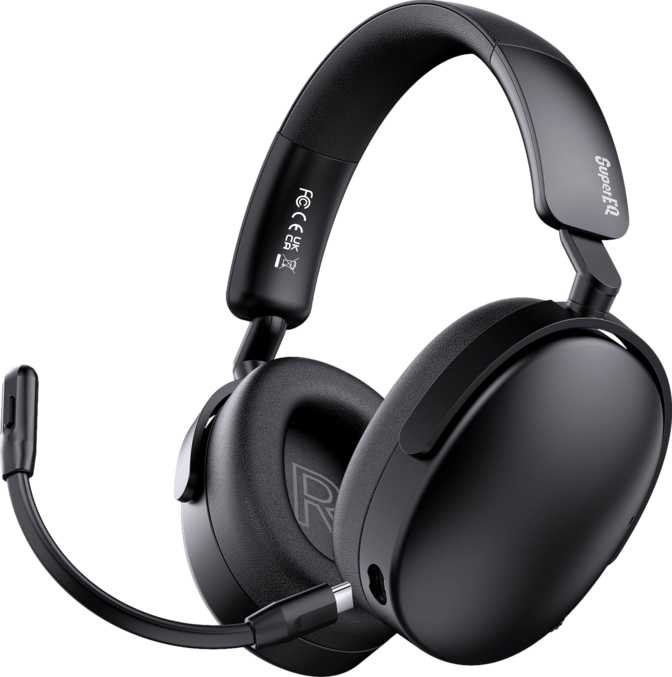
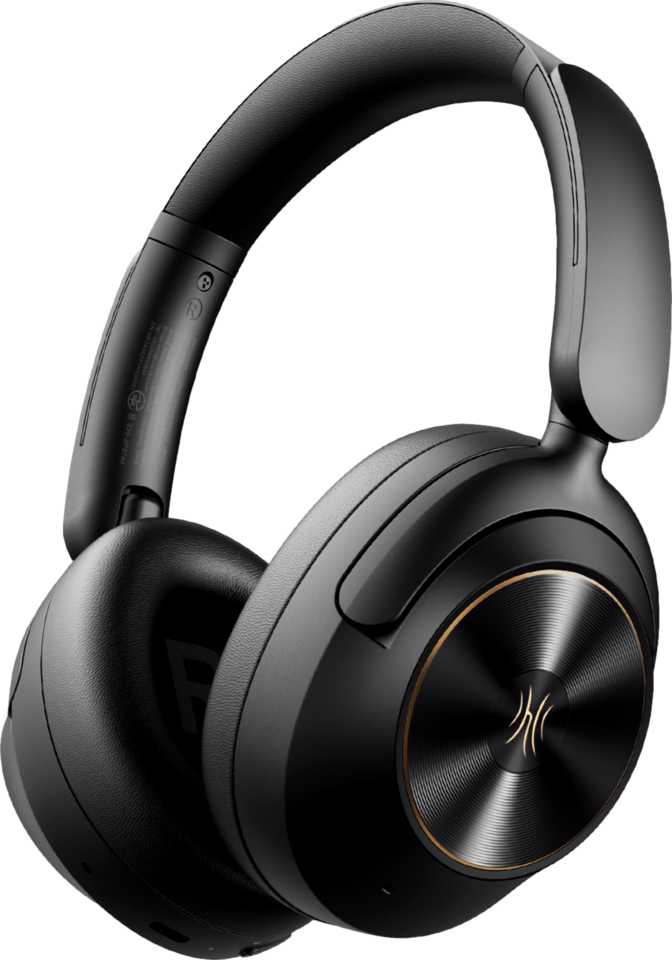
At 240 grams, the Focus A6 lands firmly in the lightweight tier for full-size over-ear headphones. Weight is one of those specifications that feels irrelevant in a store but becomes the most important thing about headphones during hour three of a work session. At this figure, the Focus A6 doesn't demand constant readjusting or remind you it's there — most wearers will forget about it entirely during extended use.
The closed-back, over-ear architecture forms a sealed chamber around your ears, creating a physical barrier against ambient sound before active technology does any work. It also produces a fuller, more present bass response compared to open-backed designs. For commuting, shared offices, travel, and daily use, closed-back is the correct choice. Open-backed designs serve a different, more solitary use case.
The folding design makes practical sense: the Focus A6 collapses to a more compact profile that fits into a laptop bag or backpack without a dedicated case. No carrying case is included in the box — frequent travelers may want to source a separate protective pouch alongside the headphones.
- Over-Ear, Closed-BackPhysical isolation before electronics engage
- Foldable for PortabilityCollapses into bags without a dedicated case
- Detachable, Tangle-Free CableCord damage doesn't retire the headphones
- Lightweight at 240 gComfortable through multi-hour sessions
- No Water or Sweat ResistanceNo moisture rating of any kind
- No Travel Case IncludedA protective pouch is recommended
Sound Quality: Drivers, Frequency & Wireless Fidelity
The 40mm Drivers
The Focus A6 uses 40mm dynamic drivers — a well-established size for over-ear headphones that provides enough surface area to reproduce bass convincingly without the engineering compromises that come with unusually large or small configurations. The frequency response covers the complete range of human hearing, meaning the headphones are not artificially narrowed toward any particular tonal region.
A note for more experienced listeners: the Focus A6's drivers likely use a ferrite magnet system rather than the neodymium magnets found in most competing headphones — an inference from the specification data. Ferrite configurations typically require slightly more output power from source devices. Older smartphones or computers with weaker headphone outputs may need higher source volume in wired mode. Pairing via Bluetooth largely sidesteps this concern through the digital audio chain.
LDAC: High-Resolution Wireless
LDAC is the single most important audio specification on the Focus A6. This high-bandwidth codec transmits dramatically more audio data per second than standard Bluetooth — the difference is comparable to hearing what a recording actually contains versus a noticeably compressed version of it.
For Android users on modern devices, which broadly support LDAC output, the Focus A6 delivers wireless audio quality that rivals a wired connection. Detail, spatial cues, and overall clarity all improve meaningfully over standard Bluetooth. AAC support covers Apple device users above the standard baseline.
LDAC requires Android with LDAC output enabled. iPhones use AAC. The aptX codec family is not supported on either platform — see the breakdown below.
Codec Support at a Glance
Active Noise Cancellation & Transparency Mode
Active Noise Cancellation
The Focus A6's noise cancellation operates on two levels simultaneously. The physical over-ear design blocks a substantial portion of ambient sound through sheer isolation — the earcups create a seal before any electronics engage. Active cancellation then adds a second layer, using the microphone array to sample surrounding noise and generate opposing signals to neutralize what gets through.
With ten microphones distributed across the headphone, the Focus A6 has significantly more acoustic sensing capability than budget ANC models that rely on two or four microphones. More sensing inputs enables the cancellation system to identify and neutralize a wider range of sound signatures — from the drone of an airplane cabin to the HVAC hum of an open-plan office.
Transparency Mode
The ambient sound mode routes external audio through the microphone array and into your ears in real time, effectively making the closed-back headphones transparent to the outside world. The result is the ability to hear a colleague approaching, catch a boarding gate announcement, or follow a conversation without physically removing the headphones.
This feature is practically essential for anyone who lives in shared spaces or moves through public environments. The quality of transparency mode varies considerably by implementation — and with ten microphones contributing to the incoming audio picture, the Focus A6 has hardware resources that lower-spec implementations simply lack.
Battery Life: The Headline Number That Holds Up
The battery life on the Focus A6 is exceptional by any current standard — and it's the specification most likely to influence purchase decisions, rightfully so. This is not a marginal spec improvement; it changes the ownership experience entirely.
Without ANC activated, the Focus A6 runs for 75 hours on a single charge. For the average listener using headphones four hours daily, that's nearly three weeks between charges. For someone logging eight-hour workdays with constant audio, it's still over nine days. The practical result is that the Focus A6 exits the daily-charging cycle and enters a weekly — or for many users, every-other-week — rhythm.
With ANC running continuously, runtime drops to 40 hours — still a full week of eight-hour workdays without a charge. In a category where 25 to 30 hours of ANC runtime is considered competitive, 40 hours is genuinely differentiated.
Battery Runtime Comparison
- USB-C ChargingAny modern cable or power bank works
- Battery Level IndicatorCheck remaining charge at a glance
- No Wireless ChargingA cable is always required — minor given charging frequency
- Non-Removable BatteryCapacity degrades over years of charge cycles
Connectivity: Bluetooth 6, Range & Multipoint
What Bluetooth 6 Changes
Bluetooth 6 brings improvements to connection stability in crowded wireless environments — airports, offices, transit — more efficient battery consumption during transmission, and improved underlying architecture. Users in signal-dense environments should notice fewer dropouts and more reliable connections compared to headphones built on older Bluetooth generations.
Multipoint: The Feature That Earns Its Keep
The Focus A6 maintains simultaneous Bluetooth connections to two devices at once. When a call arrives on your phone while you're listening from your laptop, the headphones shift automatically to the call. When it ends, they return to laptop audio without any manual intervention. For professionals splitting time between calls and focused listening, multipoint removes a persistent daily friction.
The Ten-Microphone System
Ten microphones is a number that belongs in a discussion about professional conference calling equipment, not mid-range consumer headphones. For context: most headphones in this category include two to four microphones. Professional call-center headsets typically reach six to eight. Ten is an unusually high count that enables audio processing capabilities lower-microphone designs cannot replicate.
With enough microphones distributed across the headphone, the system has the hardware foundation for directional processing — focusing on your voice while attenuating background noise arriving from other directions. HVAC systems, open-office chatter, keyboard noise, and household ambience all become targets for attenuation before your voice reaches the other end of the call.
Who the Focus A6 Is Built For — and Who It Isn't
The Right User
- Remote & Hybrid ProfessionalsVideo calls, ANC for home noise, multipoint between laptop and phone
- Commuters & Frequent TravelersANC for transit noise, folding design, battery that lasts a week
- Android LDAC UsersGenuine high-resolution wireless audio at non-premium pricing
- Light PackersFolds into any bag — no dedicated case needed
- Anyone Tired of Constant ChargingCharge once, forget it for a week — or two
The Wrong User
- Gym Users & Outdoor AthletesNo water or sweat resistance — moisture is a real hardware risk
- Wireless Gamers65ms wireless latency is perceptible in real-time gaming
- Heavy Conference Call ParticipantsNo hardware mute — quick muting requires software navigation
- aptX Ecosystem UsersWindows PCs and some Android devices default to AAC or SBC without aptX
- Extended-Range Bluetooth Users10m range limits wandering from your source device
Competitive Positioning: How the Focus A6 Stacks Up
| Feature | OneOdio Focus A6 | Typical Mid-Range ANC | Premium ANC Reference |
|---|---|---|---|
| Bluetooth Generation | 6 (Latest) | 5.2 – 5.3 | 5.2 – 5.3 |
| Battery — ANC Off | 75 hours | 40 – 60 hours | 30 – 40 hours |
| Battery — ANC On | 40 hours | 20 – 30 hours | 20 – 30 hours |
| LDAC Hi-Res Audio | Yes | Rarely | Yes |
| Microphone Count | 10 | 2 – 4 | 4 – 6 |
| Two-Device Multipoint | Yes | Sometimes | Yes |
| Water Resistance | None | Sometimes IPX4 | Sometimes IPX4 |
| Hardware Mute Button | No | Varies | Often yes |
| Wireless Latency | 65ms | 60 – 100ms | 40 – 80ms |
| Bluetooth Range | 10m | 10 – 30m | 10 – 30m |
Honest Assessment: Strengths & Limitations
Where the Focus A6 Earns Trust
The Focus A6's battery life and connectivity specifications are genuinely differentiated for its category. Seventy-five hours of passive runtime is not a number most competing headphones at this price level can match, and LDAC support at this tier opens up high-resolution audio to a broader audience than premium-only headphones have traditionally served.
Bluetooth 6 and two-device multipoint address real workflow frustrations. Moving between a work laptop and personal phone throughout a day without disconnecting and reconnecting manually is the kind of practical feature that improves daily life more than headline audio specs.
The ten-microphone array is ambitious and suggests the engineering team was targeting call quality seriously — not adding microphones for marketing copy, but building genuine directional audio processing capability for real-world noisy environments.
Where It Falls Short
The weaknesses cluster in a few specific areas. The absence of water resistance limits where these headphones can safely go — entirely ruling out athletic or outdoor use. The missing hardware mute button is a gap that will frustrate call-heavy users regularly, and the irony of a ten-microphone design without a mute button is not lost on anyone who runs multiple daily meetings.
The 10-meter Bluetooth range is more restrictive than many competitors claim, and the lack of aptX codec support means certain device configurations won't access above-AAC quality even when the user expects more.
The likely ferrite magnet driver system is worth keeping in mind when pairing with lower-output wired sources. Users pairing with older smartphones or computer headphone outputs in wired mode may need to push source volume higher than they would with neodymium-based designs. Bluetooth pairing largely sidesteps this through the digital audio chain.
Questions Real Buyers Ask Before Purchasing
Final Verdict: A Practical Workhorse with a Standout Battery
The Focus A6 doesn't compete on premium prestige. Instead, it assembles a specification set targeting the most practical daily frustrations — short battery life, device-switching friction, poor call microphones in noisy environments, and high-resolution audio locked away in expensive headphones. On those specific criteria, it delivers in ways that punch significantly above its price point.
Editor's Final Score
Buy the Focus A6 If...
- Battery endurance and not charging every day is your primary criterion
- You use Android with LDAC and want genuine high-resolution wireless audio
- Cross-device multipoint and effortless phone/laptop switching matters to your workflow
- Remote work, commuting, or travel define your daily listening environment
Look Elsewhere If...
- You exercise outdoors — no water resistance makes moisture exposure a genuine hardware risk
- Real-time gaming is a primary use case — 65ms wireless latency is perceptible
- You need a hardware mute button for frequent conference calls
- Your device ecosystem relies on aptX — AAC will be the quality ceiling without it