OneOdio Focus A5 Full Review: LDAC and 75-Hour Battery Tested
HeadphonesBudget wireless headphones almost always compromise on the things that matter most — the audio codec, the noise cancellation tuning, or the battery that barely gets you through three days. The OneOdio Focus A5 takes a notably different path: it ships with LDAC, Sony's high-resolution Bluetooth audio codec, which you typically find on headphones at two or three times this price. That's the headline. But a single impressive specification surrounded by weaker ones can just as easily mislead as it can inform. The full picture tells a more nuanced story — one that makes the Focus A5 a genuinely compelling choice for a specific type of buyer, and a poor match for others.
Design and Build: Portable but Practical
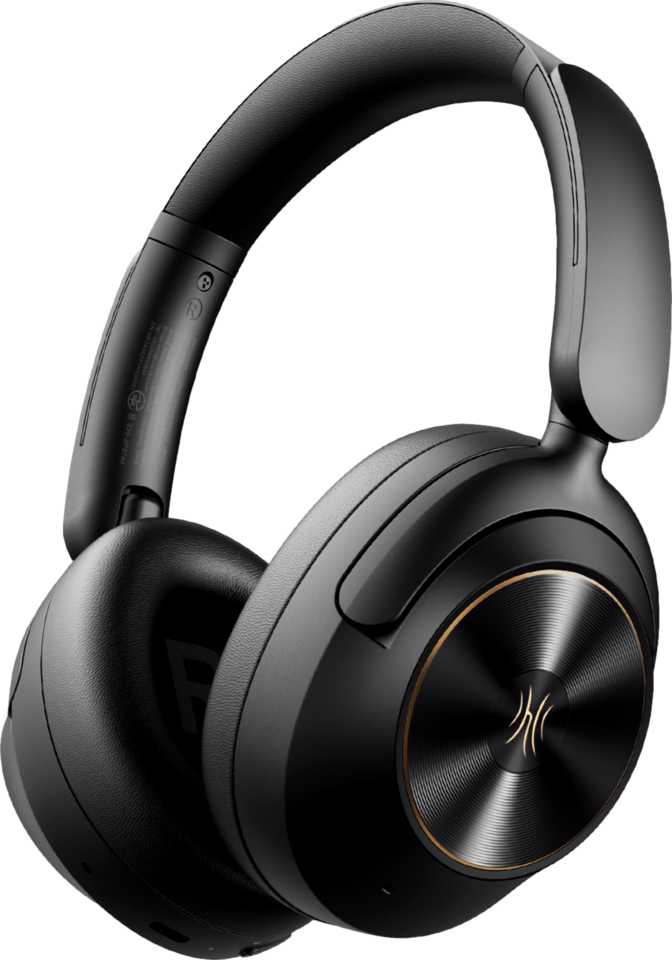
The Focus A5 is a closed-back, over-ear headphone — meaning the cups seal fully around the ears rather than resting on them. This design choice drives several downstream realities: it contributes meaningful passive sound isolation before electronics even enter the picture, it forms the physical foundation that active noise cancellation builds on, and it produces the bass-forward, contained sound character that most noise-canceling headphone users prefer.
The headphones fold flat, with the cups pivoting inward to reduce the overall footprint. This is the right call for a headphone positioned around travel and commuting.
No carrying case is included. A foldable headphone that travels without its own protection is an incomplete package. Budget for a sleeve or pouch if you're putting these into any bag that carries hard items regularly.
There is no detachable audio cable option, which limits your flexibility in situations where Bluetooth isn't available — some in-flight entertainment systems, audio equipment with analog-only inputs, or simply when the battery is empty. For the majority of everyday use, this won't surface. For travelers with specific wired requirements, it's worth confirming before purchasing.
Water and moisture resistance is absent at any level. These headphones are designed for controlled environments — planes, offices, libraries, fixed listening spots. They are not headphones for outdoor exercise or rain commutes.
Audio Codec: Why LDAC Changes the Calculation
The defining technical specification of the Focus A5 is its LDAC support, and it deserves a proper explanation rather than a checklist tick.
Bluetooth audio works by compressing audio signals to transmit them wirelessly. The standard Bluetooth codec and the widely-used AAC codec both compress significantly. They work fine for casual listening, but compression artifacts show up in specific ways when audio quality is a priority: a slight flatness in complex layered passages, reduced definition in high-frequency detail like cymbal shimmer or breath in a vocal, and a diminished sense of space in orchestral recordings.
LDAC transmits roughly 3x the audio data of standard AAC
This substantially reduces compression losses, delivering wireless audio that carries meaningfully more of the original recording's information — particularly noticeable on lossless and hi-res streaming tiers.
LDAC only returns value if your source audio is good enough to reveal the difference. Standard streaming quality produces no meaningful change. But if you subscribe to a lossless or hi-res streaming tier — and many people now do — the Focus A5 is actually capable of transmitting that quality to your ears over Bluetooth. That's something a significant portion of the wireless headphone market, even at higher prices, cannot claim.
Android devices negotiate LDAC automatically. Users of Tidal, Amazon Music HD, Qobuz, or Deezer HiFi receive the full hi-res wireless advantage the codec enables.
iOS enforces AAC for Bluetooth audio. Apple device users receive solid quality — but not the high-resolution tier that LDAC enables exclusively on Android.
Noise Cancellation: Two Systems, One Goal
The Focus A5 combines passive and active noise isolation — a pairing that works better than either approach alone.
Passive Isolation
Entirely physical. The closed-back, over-ear cups press against your head and create a barrier to outside sound without any electronics involved. This is the baseline quiet that exists the moment you put them on — no battery required, always active.
Active Noise Cancellation
Microphones on the exterior continuously capture surrounding sound; electronics generate an opposing signal that partially cancels ongoing noise. Most effective against consistent, low-frequency sound — aircraft hum, HVAC, train rumble. Less effective against sharp or conversational sounds.
Why layered isolation outperforms either system alone: A strong physical seal reduces what ANC has to process. The over-ear, closed-back design gives ANC a head start, letting it handle only residual sound rather than fighting the full ambient noise load — resulting in more effective quiet overall.
Ambient Sound Mode: Staying Connected When You Need To
Ambient sound mode is the deliberate inverse of noise cancellation. The headphones use their external microphones to pipe in surrounding audio, so you can hear conversations, announcements, and environmental cues without removing the headphones.
The practical benefit becomes obvious in daily use — catching a boarding call in an airport, following a question at a coffee counter, staying aware of traffic while crossing an intersection. Headphones without this mode force a choice between audio immersion and environmental awareness. With it, switching takes one button press.
Battery Life: The Specification That Reframes Everything
The Focus A5's battery performance is the second standout specification alongside LDAC — and depending on your priorities, it may actually be the more immediately valuable one.
Battery Endurance at a Glance
For a frequent traveler, this shifts something practical: a single charge at the beginning of a trip is realistically the only charge needed for a full week of moderate daily use, even with ANC running through flights and layovers. For the office listener, charging every ten to twelve days under moderate use is plausible.
The charging caveat. The Focus A5 does not use USB-C for charging. In a world where phones, laptops, earbuds, and most accessories converge on USB-C, carrying an additional proprietary cable adds recurring inconvenience to every charge cycle. Not a dealbreaker — but it is honest to name it.
There is no wireless charging, which is expected at this price. A battery level indicator is included, so remaining charge is always clearly communicated. The battery is non-removable — standard for this category, but relevant for long-term ownership as cells degrade gradually over years of charge cycles.
Bluetooth Connectivity: Clear-Eyed About Range
Pairing is manual — no Google Fast Pair, no NFC tap-to-connect. You hold the pairing button, the headphones announce discovery mode, and you select them from your device's Bluetooth menu. A one-time setup that takes under a minute and is rarely repeated.
The stated maximum Bluetooth range is 10 meters, approximately 33 feet. This is noticeably conservative compared to what many competing headphones advertise, though range claims across the headphone industry vary significantly between ideal-condition theory and real-world performance.
Office desks, airplane seats, library carrels, home sofas — situations where your source device stays nearby. For these intended use cases, 10 meters rarely becomes a practical constraint.
Leaving a phone in one room and walking through a home or office pushes against the limit faster than with most competitors. LDAC transmission also performs best at close range with a stable signal.
Microphone and Call Performance
The built-in microphone includes noise cancellation on the transmission side — meaning it actively suppresses background noise before passing your voice to the caller. In the environments where people typically use ANC headphones (airports, open offices, transit), a noise-canceling mic is a meaningful feature rather than an incidental one. The person on the other end hears substantially less of your surroundings.
The headphones function fully as a call headset, routing both audio output and voice input through the same device.
No dedicated mute button. Silencing yourself during a call requires either reaching for your phone or toggling mute through software. For people who manage meeting calls routinely and need to mute and unmute quickly, this is real workflow friction — not a dealbreaker, but worth honest consideration before purchasing.
Controls and Daily Usability
All controls sit directly on the headphone cups — no in-line remote on a cable. On-cup controls are the more reliable and durable implementation: nothing to fray or catch on things, and button feel doesn't degrade from cable handling. The trade-off is lifting your hand to the headphone rather than pinching a cable control; most users develop the muscle memory quickly.
No in-ear detection or auto-pause. Music continues playing when you lift or remove the headphones. Pulling them off to have a conversation means manually pausing first, or returning to find playback still running. It's a small friction that accumulates visibly over daily use — headphones with sensor-based auto-pause handle it invisibly, and you notice the absence through repetition.
Honest Assessment: Where It Excels and Where It Falls Short
The Focus A5 makes specific bets. Its combination reflects a deliberate choice to concentrate value into two specifications that matter deeply to a specific buyer, and economize everywhere else.
Where It Excels
-
Exceptional battery endurance75 hours without ANC and 45 hours with it active — both figures significantly outperform the segment, including headphones at two to three times the price.
-
LDAC at an accessible priceHi-res wireless audio access that typically requires spending considerably more. A genuine differentiator for Android users on lossless streaming tiers.
-
Layered noise isolationClosed-back passive seal combined with ANC delivers effective quiet for travel and office use — the two systems reinforce each other for better results than either alone.
-
Ambient sound mode includedOne-press switch between full immersion and environmental awareness — a feature that earns its place through daily use.
-
Noise-canceling microphoneCaller-side noise suppression is genuinely useful in the airport and office environments these headphones are built for.
Where It Falls Short
-
No USB-C chargingAn extra proprietary cable in a USB-C world. Recurring friction, not a one-time inconvenience — it compounds over every charge cycle.
-
Conservative Bluetooth range10 meters limits freedom to move away from your source device — a constraint that surfaces in home or multi-room use faster than most alternatives.
-
No carrying caseFoldable without protection is an incomplete travel package for headphones positioned around commuting and long-haul travel.
-
No auto-pause or dedicated muteTwo convenience features that headphones at this price should realistically include — their absence creates small but persistent daily friction.
-
LDAC advantage lost on iPhoneThe headline audio specification simply does not apply for iPhone users — iOS enforces AAC and LDAC is irrelevant on that platform.
How the Focus A5 Compares to the Market
The Focus A5 occupies an unusual position: its battery figures and audio codec sit firmly in premium territory, while its connectivity convenience and daily-use feature set sit closer to the entry level. For the right buyer, this means premium value exactly where it counts most.
| Feature | Entry-Level ANC | OneOdio Focus A5 | Premium ANC |
|---|---|---|---|
| Battery (ANC Off) | 20–35 hrs | 75 hrs | 30–40 hrs |
| Battery (ANC On) | 12–25 hrs | 45 hrs | 20–35 hrs |
| LDAC Support | Uncommon | Yes | Common |
| USB-C Charging | Varies | No | Standard |
| Ambient Sound Mode | Sometimes | Yes | Standard |
| Fast / NFC Pairing | Rarely | No | Typically |
| Auto-Pause Detection | Rarely | No | Usually |
| Spatial Audio | No | No | Sometimes |
Who the Focus A5 Is — and Isn't — For
A Strong Match For
- Android users subscribed to lossless or hi-res streaming tiers who want the quality difference over Bluetooth to be real, not theoretical
- Frequent long-haul travelers whose primary frustration is a headphone dying mid-trip or requiring daily charging
- Fixed-position listeners — office desks, airplane seats, library carrels — where Bluetooth range is rarely tested in practice
- Buyers looking for a secondary pair with exceptional endurance at a price that doesn't require justification
A Weaker Match For
- iPhone users, for whom LDAC does not apply — AAC is the ceiling on iOS, and the headline advantage simply doesn't activate
- Conference call users who need fast hardware mute access without reaching for a separate device mid-meeting
- Daily commuters who need headphones to survive repeated bag wear and want the protection of an included carrying solution
- Anyone in a fully USB-C environment who values consistent cable management and doesn't want proprietary exceptions
Questions Buyers Ask Before Purchasing
The Verdict: Exceptional Value for the Right Buyer
The OneOdio Focus A5 is a narrow-fit product that over-delivers on its chosen specifications and under-delivers on the surrounding experience. If its two headline advantages — exceptional battery endurance and LDAC codec support — directly solve problems you currently have with your headphones, it represents unusual value for the price. The 45-hour ANC-on rating alone makes a strong case for anyone who has watched a noise-canceling headphone die at exactly the wrong moment.
If those two features don't address your primary needs — if you live in the Apple ecosystem, if daily-use convenience features matter as much as raw endurance, if USB-C standardization shapes how you pack and charge — then the Focus A5 asks you to pay for its strengths while working around its limitations in ways that accumulate over daily use.
The purchase decision becomes straightforward once you're honest about which buyer you are. This headphone has a specific skill set built for a specific listener. That listener gets genuine, difficult-to-match value. Everyone else should keep looking.