Moondrop Edge Review: Audiophile Wireless Meets Real-World Trade-Offs
HeadphonesQuick Verdict
The Moondrop Edge is a focused, audio-first over-ear headphone with LDAC support, 48-hour battery life, and dual-layer noise cancellation. It rewards listeners who prioritize wireless fidelity over convenience features — but makes real trade-offs in daily usability that buyers should know upfront.
Editor's Rating
- LDAC hi-res wireless audio
- 48-hour battery life
- Dual-layer ANC system
- No auto-pause or mute button
Moondrop's Big Step: From Earbuds to Over-Ears
Moondrop has built its credibility in a small, obsessive corner of the audio world — in-ear monitors, where its products became go-to references for listeners who care about tuning precision. That heritage matters, but it does not automatically transfer to a full-sized, over-ear wireless headphone. Building a great IEM and building a great over-ear are different engineering challenges, and the audience is broader, the competition denser, and the feature expectations higher.
The Moondrop Edge is the brand's serious attempt at that transition. It arrives with clear priorities: high-quality wireless audio through LDAC codec support, genuine active noise cancellation backed by a physically sealed design, and enough battery capacity to make charging an afterthought. Where it makes trade-offs — and it does make them — is in the convenience and ecosystem features that mainstream brands have made standard.
Whether those trade-offs are acceptable depends entirely on your use case. This review breaks down what the Edge actually delivers and who it is genuinely right for.
Design and Build: Practical, Packable, Purposeful
The Closed-Back Architecture
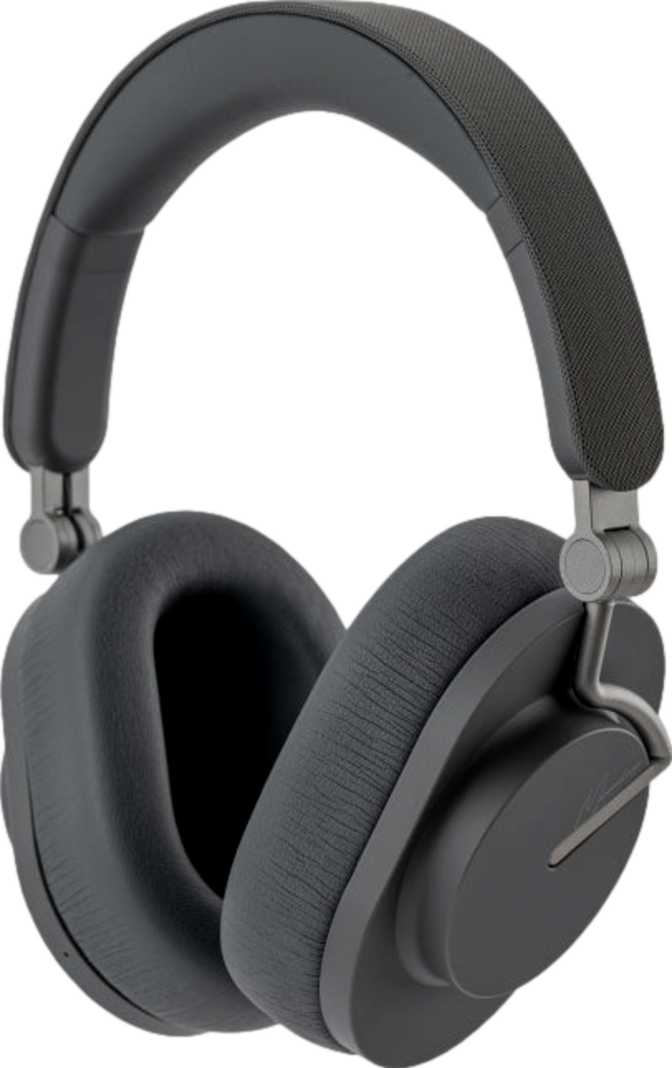
The Edge uses a closed-back, over-ear design. Both decisions have acoustic reasoning behind them, not just aesthetics. Closed-back means the rear of each ear cup is sealed — no venting to the outside. This keeps more sound inside the cups, produces a more intimate and bass-present listening environment, and critically, creates a physical barrier against ambient noise before any electronics get involved. When a headphone combines passive isolation from a sealed design with active noise cancellation, the two systems work together rather than one compensating for the other's shortcomings.
Over-ear fit means the cushioning sits around your ears, not on them. Done well — and with adequate cushion depth and quality — this allows for longer wearing sessions without the ear fatigue that comes from direct contact with the ear's cartilage. The physical seal created by this fit also anchors the passive noise isolation; a poor seal undermines the entire noise reduction system.
Portability
Folds Flat
Collapses into a compact footprint for travel and bag storage without hassle.
Carry Bag Included
Protective carry bag ships in the box — no need to source your own.
Adult-Focused
Sized and engineered for adult listeners making deliberate audio choices.
Sound: What the Drivers and Codec Support Deliver
Driver Engineering
The Edge uses 40mm dynamic drivers — the elements that physically move air to create sound. This is the standard size for well-executed over-ear headphones, sitting at a sweet spot between driver mass (which affects bass control) and physical accommodation within the ear cup. The drivers are actuated by neodymium magnets, the most powerful permanent magnet material available for this type of transducer. A stronger magnet creates a more controlled, faster-responding driver movement, which shows up in the sound as better handling of transient detail — the initial attack of a snare drum, the hammer strike at the start of a piano note, the pop of a plucked bass string.
The full frequency range spans from the deepest sub-bass frequencies up through the highest harmonics in typical recordings, covering the complete audible spectrum without engineered roll-off at either end.
LDAC: The Reason Audiophiles Pay Attention
Why LDAC Changes Wireless Audio
Standard Bluetooth audio compresses audio heavily for stable transmission. LDAC supports a wireless data rate roughly three times higher than the baseline codec — meaning lossless files stay lossless-grade, and high-bitrate streams are transmitted more completely. For listeners who invest in quality source material, this is a genuine, audible improvement.
- LDAC — hi-res wireless up to 3x standard rate
- AAC — optimized for iPhone and iOS devices
- SBC — universal Bluetooth baseline fallback
- aptX / aptX HD / aptX Adaptive
- aptX Low Latency (gaming mode)
- Spatial audio processing
Windows PC and non-LDAC Android users: Without aptX support, connections fall back to the baseline SBC codec rather than a higher-quality alternative. If your primary source is a Windows laptop, the Edge will not deliver its full audio potential wirelessly.
Noise Cancellation: Two Systems, One Result
The Edge combines two distinct noise reduction mechanisms, and understanding how they interact is useful for setting expectations correctly.
Passive Isolation
Pure physics — the sealed, over-ear design physically blocks ambient sound before electronics do anything. Particularly effective on mid and high-frequency noise: voices, surface noise, HVAC hiss.
Active Noise Cancellation
Electronics handle what passive isolation cannot — primarily low-frequency, cyclical rumble from engines, HVAC systems, and urban ambient drone. Four microphones sample external sound and generate counter-signals.
Ambient Sound Mode
When you need to hear the environment around you — an announcement, a colleague, traffic — ambient sound mode electronically pipes in external audio without removing the headphones. The quality of ambient mode varies by tuning across different headphones, but its presence on the Edge is confirmed.
Battery Life: Charging Becomes a Weekly Errand
Battery Life
Full Charge Time
USB-C
Universal standard
A headphone that needs charging every day creates friction. One that needs charging every other day becomes invisible in your routine. The Edge sits firmly in the latter category. A typical commuter listening two to three hours daily would charge this headphone roughly once a week. A remote worker running audio throughout the day can still comfortably reach three to four days before needing a charge.
Charging uses the universal USB-C standard — the same cable as your phone and laptop. From completely empty, the Edge reaches full charge in roughly ninety minutes. A thirty-minute top-up gives meaningful listening time back, which changes charging from a planned event to an incidental one.
The Edge does not support wireless charging — there is no Qi pad compatibility. This is a hardware choice, not an oversight. Whether it matters depends on how embedded wireless charging pads are in your daily environment. A battery level indicator is built in so you always know what remains.
Bluetooth 5.4: Current Standard, Conservative Range
Bluetooth 5.4 is the most current version of the core specification. Practical improvements over earlier generations include more efficient power use during active audio transmission, better handling of interference in congested wireless environments, and generally more reliable connection maintenance across typical usage distances.
What Bluetooth 5.4 Delivers
- Lower battery drain per audio transmission cycle
- Better resilience in crowded RF environments
- More stable connection in standard usage conditions
One Real Limitation: Range
The specified maximum wireless range is 10 meters — notably conservative compared to the 30+ meters many competitors advertise.
For desk-to-pocket use, this is fine. For leaving your phone in another room or moving around large open-plan spaces, the ceiling is real and worth noting.
Pairing and Multi-Device Use
- No fast pairing protocols — initial setup requires the standard Bluetooth pairing process through device settings.
- No NFC tap-to-pair — no shortcut pairing option available.
- No confirmed multi-device pairing — switching between a phone and laptop requires manual re-pairing.
Controls, Calls, and the Missing Pieces
The Edge places physical controls directly on the headphone. Physical buttons are consistently more reliable in varied conditions than capacitive touch surfaces — they work with gloves, do not trigger accidentally when adjusting fit, and provide tactile confirmation that an action registered. There is no separate in-line cable control panel.
- Four microphones across the headphone
- Directional voice capture with beamforming capability
- Noise-canceling processing dedicated to voice
- Full headset functionality — calls and music
- No hardware mute button — muting requires going through software or device controls.
- No in/on-ear detection — music continues playing when the headphone is removed; manual pause required.
- Wireless only — no wired listening mode available.
Call and meeting users should note: The missing hardware mute button is a real daily-use limitation. In video meetings, you will need to mute through your meeting software, device controls, or a keyboard shortcut — rather than a physical button on the headphone itself.
Who the Moondrop Edge Is For — and Who It Is Not
- Android users with LDAC-capable devices who want genuine hi-res wireless audio
- Frequent travelers and daily commuters who need effective ANC and a headphone that packs flat into a bag
- Remote and hybrid workers who spend long stretches in audio — battery rarely demands attention
- iPhone users streaming high-quality audio — AAC delivers a clean, better-than-baseline wireless connection on iOS
- Music-first listeners who prioritize fidelity and endurance over smart features and ecosystem integrations
- Use a Windows PC or device without LDAC or AAC as your primary source — the audio quality advantage won't be accessible
- Frequently put the headphone on and off throughout the day — missing auto-pause becomes a repeated annoyance
- Rely on the headphone for back-to-back video calls and expect a hardware mute button within reach
- Move around large spaces and expect uninterrupted audio from a device left across the room
- Use spatial audio on any platform and consider it part of your listening experience
Competitive Positioning: Where the Edge Stands
The Edge enters a crowded category with a deliberate focus: audio codec quality over feature breadth. Here is how it maps against the competitive landscape.
| Feature | Moondrop Edge | Mid-Range ANC Tier | Premium ANC Tier |
|---|---|---|---|
| Active Noise Cancellation | Active + Passive | Yes | Yes — class-leading |
| LDAC Support | Often missing | Sometimes included | |
| Battery Endurance | ~48 hours | 30–40 hours | 20–35 hours |
| Charge Time | ~90 min | Varies | Varies |
| Spatial Audio | Often absent | Common | |
| Auto-Pause (Ear Detection) | Sometimes | Standard | |
| Hardware Mute Button | Varies | Varies | |
| Wireless Charging | Rare | Common | |
| Fast Pairing | Varies | Common | |
| Specified Bluetooth Range | 10m | 30m+ claimed | 30m+ claimed |
| Foldable Design | Common | Varies | |
| Carry Bag Included | Sometimes | Usually |
Honest Assessment: Strengths and Compromises
The Edge's clearest strength is its audio engineering priority. The decision to include LDAC is a statement about what this headphone is for, and for listeners who understand and use that capability, it delivers a wireless audio quality ceiling that cheaper or more feature-heavy competitors often cannot match. When paired with an LDAC-capable source and high-quality material, the wireless connection ceases to be the weakest link in the audio chain — which is a meaningful achievement.
The battery life is straightforwardly excellent. Approximately forty-eight hours is generous enough that charging becomes a weekly errand rather than a daily obligation. Pairing that with a fast charge time means even a short top-up gives substantial listening time back. The USB-C charging keeps this practical in a world where most people already carry a USB-C cable.
The dual-layer noise management — passive seal plus active electronics backed by four microphones — is a thoughtful architecture. Passive isolation reduces the burden on the ANC system, which typically means ANC performance holds up better at lower intensity levels, preserving battery and reducing the risk of ANC processing artifacts.
The Compromises, Stated Directly
The absence of auto-pause is a usability regression for anyone accustomed to premium headphones. Removing the headphones should pause music — this is expected behavior that the Edge does not deliver. The missing mute button limits its appeal as a professional meeting tool.
The ten-meter Bluetooth range specification deserves honest scrutiny. Real-world Bluetooth performance is affected by many factors, and the Edge will function well within a normal desk or commuting radius. But the specified ceiling is lower than most alternatives in this segment, and for any use case that pushes past that perimeter, the limitation becomes tangible.
The lack of aptX support won't affect most buyers, but it quietly narrows the audience who can access the headphone's higher-quality wireless modes. Windows users are left without a high-quality codec path. Spatial audio is absent — irrelevant for pure stereo music listeners, but a genuine limitation for anyone using platform-specific immersive audio formats.
Questions Real Buyers Ask Before Purchasing
Final Verdict
The Moondrop Edge is a focused headphone for focused listeners. It makes audio quality its organizing principle — LDAC support, a well-constructed driver setup, dual-layer noise management — and delivers on that priority with battery endurance that removes charging anxiety from the equation.
The feature gaps are real but specific. No auto-pause, no hardware mute, no wireless charging, a conservative Bluetooth range specification, and no fast pairing combine to make the Edge feel deliberately spartan outside of its core audio purpose. These are not oversights — they trace the outline of a headphone that chose audio performance over convenience engineering.
Buy If
- You use an LDAC-capable Android device
- You invest in music quality and want the wireless link to stop being the weak point
- You travel or commute regularly and value real ANC and long battery life
- You can live without auto-pause and wireless charging
Look Elsewhere If
- Your primary source is a Windows PC or iPhone and audio codec quality is your main motivation
- You rely on instant hardware mic muting in professional contexts
- Auto-pause is a daily-use feature you are not prepared to give up
- You move around large spaces and need reliable range beyond 10 meters
For the right listener, the Moondrop Edge earns a confident recommendation.
It is a headphone built for people who have chosen audio quality deliberately — and it respects that choice with its hardware.
Full Specifications at a Glance
| Specification | Detail |
|---|---|
| Type | Over-ear, closed-back, wireless |
| Driver Size | 40mm dynamic with neodymium magnet |
| Frequency Range | 20 Hz – 20,000 Hz (full audible spectrum) |
| Bluetooth Version | 5.4 |
| Bluetooth Range | Up to 10 meters (specified) |
| Supported Codecs | LDAC, AAC, SBC |
| Active Noise Cancellation | Yes — active + passive isolation |
| Ambient Sound Mode | Yes |
| Microphones | 4 (noise-canceling array) |
| Battery Life | ~48 hours continuous |
| Charge Time | ~90 minutes (full charge) |
| Charging Port | USB-C |
| Battery Indicator | Yes |
| Wireless Charging | No |
| Foldable | Yes |
| Carry Bag Included | Yes |
| Fast Pairing / NFC | No |
| Auto-Pause (Ear Detection) | No |
| Hardware Mute Button | No |
| Spatial Audio | No |
| Wired Mode | No |
| Warranty | 1 year |